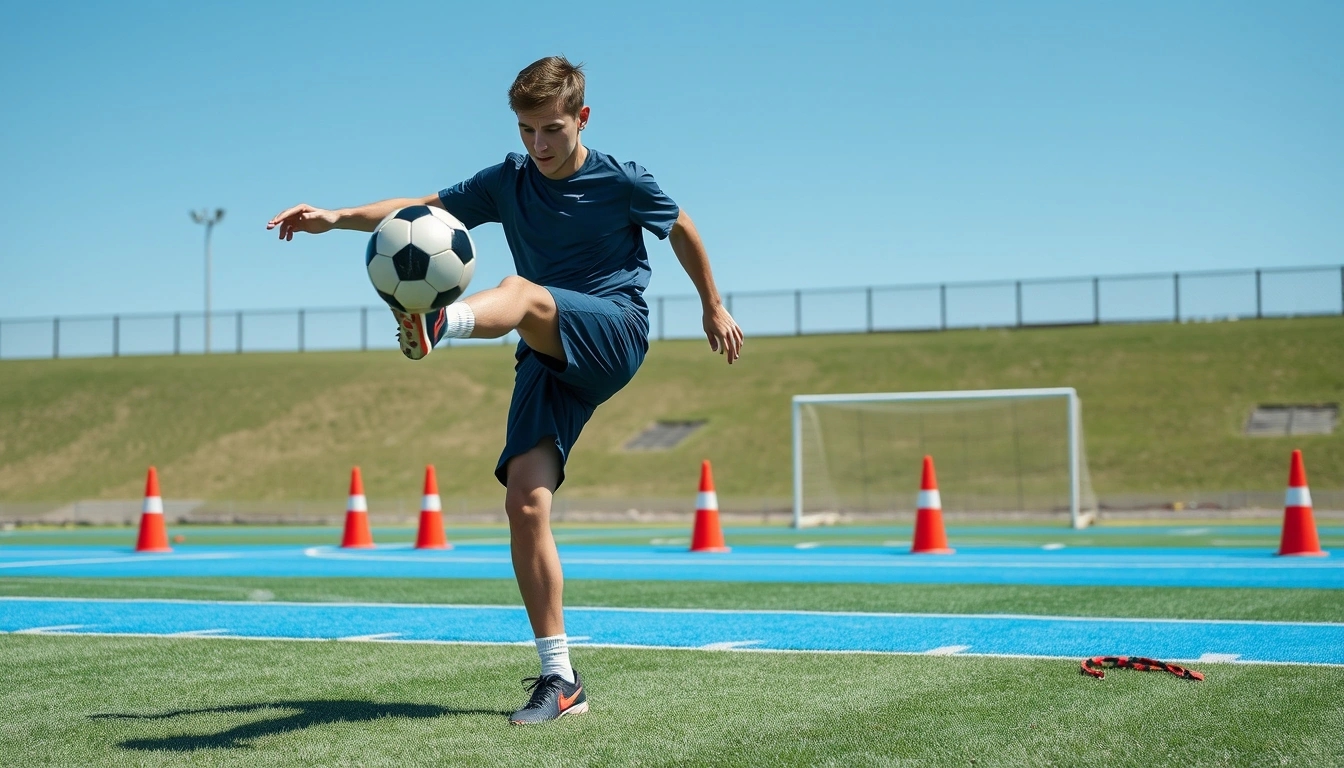
Getting your balance and stability right as a young footballer isn’t just some boring fitness advice your coach throws at you to fill time. It’s the secret sauce that can really crank up your game from “meh” to “wow, did you see that?” Seriously, if you can’t keep your footing, you’re basically asking to be wiped out by the next defender or to trip over your own feet when it counts the most. So, why does balance matter so much, and how do you actually get better at it without turning into a gym rat or losing your mind? Let’s dive in.
First off, balance and stability aren’t just about standing still without falling over. Nope, it’s about controlling your body in motion, especially when you’re darting around the pitch, dodging tackles, or launching yourself into a slide tackle. Think of it like this: your body is a high-performance vehicle, and balance is the suspension system that keeps you steady no matter how rough the ride. Without it, you’re wobbling all over the place, and that’s a one-way ticket to losing the ball or worse, picking up an injury.
| Benefit | Why It Matters |
|---|---|
| Improved Agility | Quick direction changes without losing control |
| Better Injury Prevention | Stronger joints and muscles reduce sprains and strains |
| Enhanced Ball Control | Stay on your feet to maintain possession under pressure |
Now, if you’re thinking, “Okay, but I’m just a kid with no fancy gym membership,” don’t sweat it. You don’t need to lift weights or run endless miles to boost your balance. What you do need is to focus on your core strength — that’s your abs, lower back, and hips all working together like a team. The stronger your core, the less likely you are to wobble when someone shoves you or when you’re sprinting full tilt.
- Planks: Hold a plank for 20-30 seconds. Sounds easy? Try side planks or add leg lifts to crank up the difficulty.
- Bird-Dog: On hands and knees, extend opposite arm and leg. This one’s sneaky tough but awesome for coordination.
- Single-leg stands: Just stand on one foot while brushing your teeth. Multitasking at its finest.
Balancing drills don’t have to be a drag either. Ever tried wobble boards or balance cushions? They’re like standing on a jelly—awkward but brilliant for training those tiny muscles that keep you upright. Plus, throwing in some footwork drills like agility ladders or cone weaving makes it fun and game-like, so you’re not just standing around looking bored.
Quick Balance Drill Routine:- 30 seconds single-leg stand (each leg)- 20 seconds plank with leg lifts- 10 reps bird-dog (each side)- 3 rounds agility ladder (fast feet!)- Cone weaving x 5 laps
Remember, balance and stability don’t magically appear overnight. It’s a bit like learning to ride a bike—wobbly at first, but the more you practice, the smoother you get. And hey, if you fall a few times, no biggie. Just dust yourself off and get back at it. Your future self on the pitch will thank you.
Why Balance and Stability Matter in Football
Let’s get one thing straight: balance and stability in football? They’re not just some fancy jargon coaches throw around to sound smart. Nope, they’re the real deal. Without solid balance and stability, you’re basically that player everyone sees wobbling around like a newborn deer on ice — and trust me, no one wants to be that guy on the pitch. You might have the speed, the fancy footwork, or the killer shot, but if you can’t keep yourself steady, all those skills? Pretty much wasted.
Think about it — every slick dribble, every sharp turn, every bone-crunching tackle depends on your ability to stay upright and controlled. When you’re balanced, you can change directions in a snap, hold your ground against an opponent, and recover quickly after a challenge. Without it, you’re just waiting for that inevitable fall or losing the ball because you can’t keep your footing.
- Balance means keeping your body steady, whether you’re standing still or moving.
- Stability is about controlling your body’s position, especially when you’re under pressure or off-balance.
| Aspect | Balance | Stability |
|---|---|---|
| Definition | Ability to maintain center of gravity | Ability to control body position |
| Importance | Prevents falls and slips | Allows recovery from challenges |
| Example | Standing firm during a free kick | Resisting a tackle without losing footing |
Now, here’s the kicker — young players often overlook these fundamentals. They get caught up trying to master fancy tricks or score goals but forget that if their base isn’t solid, all that flashy stuff crumbles fast. Plus, during those awkward growth spurts, your body feels like it’s got a mind of its own, making balance even trickier. Suddenly, those quick turns become a bit of a mess, and you’re wondering why you keep tripping over your own feet.
Practical tip? Work on your core strength. Your core muscles are the unsung heroes holding everything together. Strengthen them, and you’ll notice a huge difference in how steady you feel. It’s not about bulking up like a bodybuilder — it’s about building endurance and control. Exercises like planks, bird-dogs, or even just balancing on one leg while brushing your teeth (yeah, try it!) can do wonders.
Quick Core Routine:- 30 seconds plank- 20 seconds side plank (each side)- 10 bird-dogs per side- 1-minute single-leg balance (each leg)
In the end, balance and stability are the unsung MVPs of football performance. Nail these, and suddenly everything else — speed, agility, power — falls into place easier. Ignore them, and you’re just asking for a trip to the ground, literally.
So next time you lace up your boots, remember: it’s not just about running fast or kicking hard. It’s about standing tall, staying steady, and owning every move on that pitch.
Common Balance Challenges Young Players Face
When you’re a young footballer, trying to keep your balance on the pitch can sometimes feel like juggling flaming torches—tricky, messy, and occasionally painful. It’s not just about standing still; it’s about staying steady while sprinting, dodging, or getting tackled (ouch!). The thing is, balance isn’t something that magically appears overnight. It’s a complex dance between your body’s coordination, muscle strength, and even how your brain sends signals to your limbs. And for youngsters, this dance can be a bit clumsy at times.
One of the biggest culprits behind balance struggles in young players is the growth spurt. Imagine your body suddenly deciding to stretch like a rubber band that’s been pulled too tight. Bones lengthen faster than muscles and tendons can keep up, leaving you feeling awkward and uncoordinated. It’s like your legs are running a different race than your brain expects. This mismatch often leads to those classic “trip over your own feet” moments.
But wait, there’s more! Coordination itself is a beast of its own. Young athletes are still figuring out how to sync their arms, legs, eyes, and brain to work as a team. When this communication isn’t smooth, balance takes a hit. It’s why you see kids wobbling during drills or losing footing when trying to change direction quickly. It’s not laziness or lack of effort—just the body’s way of saying, “Hey, give me a sec to catch up.”
| Common Balance Challenges | Why It Happens | Effect on Performance |
|---|---|---|
| Growth Spurts | Rapid bone growth outpaces muscle/tendon adaptation | Awkward movements, increased risk of falls |
| Poor Coordination | Immature neural pathways and motor skills | Difficulty in smooth, controlled movements |
| Weak Core Muscles | Underdeveloped stabilizing muscles | Reduced stability, more wobbling |
| Fatigue | Muscle tiredness reduces control | Slower reactions, clumsiness |
Another sneaky factor that messes with balance is core strength—or rather, the lack of it. The core is like the command center of your body’s stability. If it’s not strong enough, everything else wobbles like a jelly on a plate. Young players often focus so much on legs and speed that they forget about the core. Result? They might sprint like lightning but fall flat when asked to hold a tricky pose or absorb a tackle.
Also, don’t underestimate fatigue. After a long training session or match, muscles get tired, and the brain’s ability to coordinate movements takes a nosedive. Ever seen a kid stumble late in the game? That’s fatigue stealing their balance mojo. It’s a reminder that stamina and rest are just as crucial as drills and practice.
- Tip 1: Be patient during growth spurts—awkwardness is normal and temporary.
- Tip 2: Incorporate coordination exercises like juggling or balance boards.
- Tip 3: Don’t skip core workouts; planks and bird-dogs work wonders.
- Tip 4: Listen to your body and rest when tired to prevent sloppy moves.
So yeah, balance isn’t just about standing still; it’s a whole circus act your body’s learning to perform. And if you’re wobbling now, don’t sweat it—every pro was there once. The key is to keep practicing, strengthening, and understanding your body’s quirks. Soon enough, those shaky moments will turn into smooth, confident moves that make defenders think twice.
Remember: Balance is a journey, not a destination. Embrace the falls, learn from them, and get back up stronger every time. Your future self will thank you on the pitch.

Core Strength: The Unsung Hero
You know, when it comes to football, everyone talks about speed, skill, or fancy footwork. But here’s a little secret: your core is the real MVP behind the scenes. Think of it as the engine room that keeps everything running smoothly. Without a solid core, your balance is like a house of cards—one wrong move and it all comes tumbling down. Seriously, if you want to stop wobbling like a newborn deer on the pitch, focusing on core strength is where you gotta start.
Now, don’t get me wrong, your legs and arms do a lot of the heavy lifting, but it’s your core that holds the whole operation together. It’s what helps you stay steady when you’re dribbling past defenders or absorbing a tough tackle without hitting the deck. Strengthening the core means less flailing and more control—basically, turning you into a rock-solid force that’s tough to knock off balance.
- Why is core strength so crucial? Because it stabilizes your entire body, making every movement smoother.
- It prevents injuries by supporting your spine and reducing strain on muscles.
- Improves posture which is key for quick reactions and efficient movement on the field.
Let’s be real, though—working on your core doesn’t mean endless sit-ups or boring crunches. There are plenty of ways to build up that midsection without feeling like you’re stuck in a never-ending gym class. And trust me, your back will thank you.
| Exercise | Why It Helps | How to Do It |
|---|---|---|
| Planks | Builds endurance in core muscles | Hold a push-up position, keeping your body straight for 30-60 seconds |
| Side Planks | Targets obliques to improve lateral stability | Lie on your side, lift hips off ground, hold for 30 seconds each side |
| Bird-Dog | Enhances coordination and balance | On all fours, extend opposite arm and leg, hold, then switch |
Here’s the kicker: you don’t need fancy equipment or a gym membership to get this done. Just a little space and some determination. Plus, mixing these exercises into your routine can seriously up your balance game. You’ll notice you’re less shaky when making quick turns or holding your ground during tackles.
Pro tip: Consistency beats intensity. Doing a couple of minutes every day will beat a grueling hour once a week. And don’t forget, balance isn’t just about standing still—it’s dynamic. Your core needs to be ready for those sudden twists, turns, and jumps football throws at you.
So, next time you’re out on the pitch, remember: behind every smooth move and steady stance is a core that’s been put to work. Strengthen it, and you’re not just playing the game—you’re owning it.
Simple Core Exercises to Try at Home
Look, not everyone’s got access to a fancy gym packed with all the bells and whistles. And honestly, you don’t need those to get your core firing and your balance on point. If you’re a young footballer looking to up your game without shelling out for equipment or gym memberships, this is your lucky day. Here’s a rundown of some straightforward, no-frills exercises that’ll have your core screaming in a good way and your stability improving faster than you can say “nutmeg.”
- Basic Plank: Yeah, it’s old hat, but planks are the unsung heroes of core strength. Just hold your body off the ground on your forearms and toes, keeping a straight line from head to heels. Start with 20 seconds and work your way up. It’s not fancy, but it works.
- Side Plank: Want to spice things up? Roll onto one side, supporting yourself on one forearm and the side of your foot. This one targets your obliques and helps with lateral stability – super important when you’re dodging defenders.
- Bird-Dog: Don’t let the name fool you. This move asks you to balance on hands and knees while extending opposite arm and leg. Sounds easy? Try holding it steady for 10 seconds and you’ll feel your coordination and core stability begging for mercy.
- Glute Bridge: Lie on your back with knees bent, feet flat on the floor. Push through your heels to lift your hips until your body forms a straight line from shoulders to knees. This one’s fantastic for your lower back and glutes, which are key players in balance.
| Exercise | Primary Focus | Time/Reps | Equipment Needed |
|---|---|---|---|
| Basic Plank | Core endurance | Start with 20 seconds, increase gradually | None |
| Side Plank | Obliques, lateral stability | 15 seconds each side | None |
| Bird-Dog | Coordination, core stability | 10 reps each side, hold 10 seconds | None |
| Glute Bridge | Lower back, glutes | 15 reps, 3 sets | None |
Now, before you roll your eyes and say “Yeah, yeah, I’ve heard it all before,” hear me out. These exercises aren’t just filler. They build a rock-solid foundation that’ll make you more stable, less prone to wobbling, and ultimately, a nightmare for defenders trying to knock you off your feet. Plus, doing these at home means no excuses. You can sneak a quick session before dinner or right after school — no gym membership or fancy gear required.
Here’s a little insider tip: consistency beats intensity. Doing these exercises for just 10 minutes a day, three to four times a week, can make a noticeable difference in a couple of months. Don’t go all Hulk on day one and then vanish for a month because your muscles are screaming. Slow and steady wins the race.
Pro Tips:- Keep your core tight during every move; imagine pulling your belly button toward your spine.- If you feel any pain (not the usual burn, real pain), stop immediately.- Mix it up! Variety keeps your muscles guessing and your mind interested.
So, no gym? No problem. Your living room, backyard, or even your bedroom floor is all the arena you need to start building a core that’s as tough as nails. Remember, balance isn’t just about standing still; it’s about controlling your body when the action gets crazy. Nail these exercises, and you’ll be that player who’s always one step ahead, steady on your feet, and ready to take on whatever the game throws at you.
Planks and Variations
Alright, let’s get real about planks. They might look like the simplest thing in the world—just hold yourself up, right? But don’t let that fool you. Planks are like the secret sauce for building a rock-solid core, which, let’s face it, every young footballer desperately needs. Without a strong core, you’re basically a puppet on strings out there, wobbling and struggling to stay upright when the game gets intense. So yeah, planks are anything but basic once you give them a chance.
Now, here’s the kicker: doing the same old plank every day? Snooze fest. Your muscles get comfy, stop growing, and your progress stalls. The trick is to shake things up. Side planks? Absolutely. They target those obliques, the muscles on the sides of your torso, which help you twist and turn like a pro. And if you really wanna spice things up, try planks with leg lifts. Sounds easy? Nah, it’s a sneaky way to challenge your balance and stability all at once. Plus, it mimics those moments on the pitch when you’re balancing on one leg while kicking or dodging. Win-win.
- Regular Plank: Forearms on the ground, body straight as a board. Hold it. Feel the burn.
- Side Plank: Balance on one forearm, feet stacked, hips lifted. Switch sides. Hello, obliques!
- Plank with Leg Lift: Regular plank position, but lift one leg at a time. Keep your hips steady.
Pro Tip: Start with 20-30 seconds per plank variation and gradually increase as you get stronger. Don’t rush it—quality over quantity.
If you’re thinking, “But I get bored fast,” I hear ya. So mix in some weird plank combos—like plank to push-up, or plank with shoulder taps. These not only keep things interesting but also bring in your upper body and shoulders, making you a more balanced athlete overall.
| Plank Variation | Main Muscles Worked | Why It Helps Footballers |
|---|---|---|
| Regular Plank | Rectus abdominis, transverse abdominis | Builds core endurance to stay stable during tackles and sprints. |
| Side Plank | Obliques, gluteus medius | Improves lateral stability and helps with quick side-to-side movements. |
| Plank with Leg Lift | Core, glutes, lower back | Enhances balance on one leg, essential for kicking and sudden direction changes. |
Look, nobody’s saying planks are the only thing you need. But if you’re skipping them, you’re missing out on a core foundation that can seriously boost your balance and stability on the pitch. So next time you’re chilling, throw in a quick plank session. Your future self—dodging defenders and staying upright—will thank you.
Remember: It’s not about being perfect or holding a plank for ages. It’s about consistency and making your core work harder than your excuses. Now, go on, get that plank game strong and watch your balance improve like magic!
Bird-Dog Exercise
Bird-Dog Exercise: A Surprisingly Tricky Balance Booster for Young Footballers
Alright, so the Bird-Dog exercise might look like a piece of cake at first glance. You’re just on all fours, reaching out an arm and the opposite leg, right? Easy peasy. But don’t be fooled — this move is a sneaky little beast when it comes to testing your coordination and stability. For young footballers, it’s a golden ticket to leveling up balance, which, let’s face it, is the backbone of every slick dribble and solid tackle on the pitch.
Why bother with Bird-Dog? Well, it’s not just about looking like a bird or a dog stretching out in the morning. This exercise targets your core, back, and hips all at once, forcing your body to stay stable while moving opposite limbs. If you’ve ever tried it and wobbled like a newborn deer, you’re in good company. It’s challenging your brain and muscles to work together — a combo that’s crucial when you’re dodging defenders or holding your ground.
- Coordination: Balancing on one arm and the opposite leg requires your brain to send signals that keep your body aligned. It’s like a mini neurological workout.
- Core stability: Your abs and lower back are the unsung heroes here, keeping everything tight so you don’t collapse mid-move.
- Hip control: Helps prevent those awkward falls or slips when you’re sprinting or changing direction.
Now, let’s be honest: it’s easy to mess up. You might find yourself sagging in the middle or twisting your hips like you’re doing some weird dance move. That’s normal! The key is to keep your spine neutral and move slowly. Rushing through it? Nah, that’s just asking for trouble.
| Step | What to Do | Common Mistakes |
|---|---|---|
| 1 | Start on all fours, hands under shoulders, knees under hips. | Hands too far forward or knees too close together. |
| 2 | Extend your right arm forward and left leg backward simultaneously. | Arching your back or letting hips drop. |
| 3 | Hold for 3-5 seconds, keeping body steady. | Looking up or down excessively, losing neck alignment. |
| 4 | Slowly return to starting position and switch sides. | Rushing or losing control during movement. |
Pro tip: If balancing on your hands and knees feels like a circus act, try doing the Bird-Dog with just your arm or leg at first. Build up your strength and coordination gradually — Rome wasn’t built in a day, and neither is a rock-solid balance.
And here’s a fun fact to keep you motivated: incorporating Bird-Dog exercises regularly can reduce injury risks by improving your body’s ability to stabilize during sudden movements. So, not only does it make you look like a ninja on the field, but it also keeps you in one piece.
- Try adding 2-3 sets of 10 reps per side into your warm-up or cooldown.
- Mix it with planks or hip bridges for a killer core routine.
- Challenge yourself by holding the extended position longer as you get stronger.
In the end, the Bird-Dog might seem humble, but it’s a quiet game-changer. For young footballers eager to sharpen their balance and coordination, it’s worth sticking with—even if it feels awkward or frustrating at first. Because when you nail it, your stability on the pitch will thank you big time.
Keep practicing, don’t rush, and watch your balance go from wobbly to wow!
Incorporating Balance Drills into Training
Alright, let’s get real for a second — balance drills might sound about as exciting as watching paint dry, but trust me, they’re a game-changer if you want to stay on your feet and outsmart your opponent on the pitch. You don’t have to stick to the usual boring routine. There’s a whole playground of exercises waiting for you that can actually make balance training fun and effective. From wobble boards that feel like a mini roller coaster for your ankles to single-leg stands that test your patience (and your willpower), mixing these bad boys into your training will seriously sharpen your stability. No more wobbling like a newborn deer when you try to dodge defenders!
- Wobble Boards: These are like the Swiss army knife of balance drills. Stand on one and try not to fall off — sounds simple, right? But it’s a sneaky way to engage all those tiny muscles around your ankles and knees that usually get ignored. Start with 30 seconds, then work your way up. Bonus points if you can do it while juggling a ball or shouting out your favorite football chants.
- Single-Leg Stands: Classic but gold. Stand on one leg and hold it as long as you can. To spice it up, close your eyes or toss a ball against a wall and catch it while balancing. It’s like patting your head and rubbing your tummy, but for your feet.
- Dynamic Balance Movements: Think lunges with a twist, hopping from one foot to the other, or even walking heel-to-toe in a straight line. These mimic real-game moves and help your body react faster when the pitch gets chaotic.
| Drill | Duration/ Reps | Focus Area | Pro Tip |
|---|---|---|---|
| Wobble Board | Start 30 sec, increase to 2 min | Ankle stability, proprioception | Try tossing a ball to partner |
| Single-Leg Stand | 3 sets of 30 sec each leg | Overall balance, core engagement | Close eyes for extra challenge |
| Heel-to-Toe Walk | 2 sets, 10 steps each | Coordination, foot control | Use a straight line on the floor |
Now, don’t get me wrong — you won’t turn into a balance wizard overnight. It’s about consistency and not giving up when you wobble like crazy the first few times. Oh, and don’t be that person who rushes through these drills. Slow and steady wins this race because your brain needs time to figure out how to keep you upright when the game heats up.
Also, mixing in some core strengthening alongside these drills is like adding rocket fuel to your balance training. Your core is the unsung hero that keeps everything tight and controlled. Without it, you’re basically a puppet with cut strings. So, next time you’re tempted to skip those planks or bird-dogs (yes, bird-dogs), remember they’re the secret sauce.
- Pro tip: Make a little circuit of balance drills and core exercises. For example: wobble board for 1 minute, then 30 seconds plank, followed by single-leg stand, and finish with bird-dog. Repeat 3 times. It’s quick, effective, and keeps boredom at bay.
In the end, incorporating balance drills into your training is less about perfection and more about having fun while building that rock-solid foundation. The better your balance, the more confident you’ll feel when you’re darting past defenders or holding your ground during a tough tackle. So, next time you hit the training ground, don’t just run around like a headless chicken — stand tall, stay steady, and watch your game get that extra edge.
Remember: Balance isn’t just a skill, it’s your secret weapon. Use it well.
Footwork and Agility: The Dynamic Duo
Alright, let’s get real for a second: footwork and agility aren’t just buzzwords coaches throw around to sound fancy. They’re the bread and butter of every young footballer who wants to stay sharp and outmaneuver opponents on the pitch. If you think you can skate by without working on these, well… good luck with that. Because without quick feet and nimble moves, you might as well be playing tag in slow motion.
So, what’s the deal with footwork drills? Simply put, they’re exercises that sharpen your ability to move your feet fast, precise, and balanced. But here’s the kicker — they don’t just make you quicker; they also help you keep your balance when things get wild during a game. Imagine dodging a defender, changing direction on a dime, and not face-planting. That’s footwork and agility working their magic.
- Why balance and agility go hand in hand: When your feet move fast but your body wobbles like a jelly, you lose control. Good footwork helps you stay steady, even when you’re sprinting or twisting.
- Quick thinking meets quick feet: Agility isn’t just physical; it’s mental too. You gotta react fast and adjust your steps instantly.
Now, let’s break down some footwork drills that aren’t just effective, but also kinda fun (yes, drills can be fun, don’t roll your eyes).
| Drill Name | What It Does | Why It’s Cool |
|---|---|---|
| Agility Ladder | Improves foot speed and coordination | Feels like a dance party for your feet — fast, rhythmic, and precise |
| Cone Weaving | Enhances control and balance during quick direction changes | Simulates dodging defenders, so you’re ready for game chaos |
| Dot Drills | Boosts quickness and foot placement accuracy | Simple but gets your brain and feet working overtime |
Here’s a little secret: consistency is king. Doing these drills once in a blue moon won’t cut it. You gotta make them part of your routine — like brushing your teeth, but way cooler.
Also, don’t be afraid to mess up. Tripping over your own feet during a drill? Happens to the best of us. The key is to get back up and try again. Footwork is as much about muscle memory as it is about patience.
Practical Tips to Boost Your Footwork and Agility:
- Start slow: Nail the technique before cranking up the speed.
- Mix it up: Combine ladder drills with cone exercises to keep your body guessing.
- Use a mirror or record yourself: Watching your form can help you spot wobbles and fix them.
- Challenge yourself: Set small goals like shaving off a second from your drill time.
In the end, footwork and agility drills might seem like a grind, but they’re your secret weapon to becoming a footballer who’s not just fast, but also balanced and ready for anything the game throws at you. So lace up, get moving, and keep those feet dancing!
Agility Ladder Drills
Look, if you think ladders are just for firefighters or for those awkward DIY moments in your garage, think again. Agility ladder drills are a total game-changer for young footballers aiming to boost their foot speed and coordination. And honestly, they’re way more fun than they sound—promise! These drills are not just about hopping in and out of rungs; they’re about training your brain and body to move in sync, which is absolutely crucial when you’re darting across the pitch trying to dodge defenders or make that lightning-fast pass.
So why bother with ladders at all? Well, here’s the deal: football isn’t just about raw power or endurance. It’s about control—how quickly you can adjust your feet, keep your balance, and stay on your toes. Agility ladders force you to think fast and move faster, improving your neuromuscular coordination. That’s a fancy way of saying your brain and muscles get better at working together. When you practice these drills regularly, you’re basically rewiring your body to handle those rapid, unpredictable movements football throws at you.
- Foot speed: Quick feet mean you can change direction without tripping over yourself.
- Coordination: Helps you keep your balance even when you’re off the ground or twisting mid-air.
- Balance: Essential for staying upright during tackles or when you’re sprinting full tilt.
Now, if you’re wondering how to get started, here’s a simple breakdown of some classic ladder drills that don’t require a coach yelling at you every two seconds:
| Drill Name | What You Do | Benefits |
|---|---|---|
| One-Foot In Each Square | Run through the ladder placing one foot in each rung, as fast as possible. | Builds speed and foot placement accuracy. |
| Two-Foot In Each Square | Step both feet into each rung before moving on. | Improves coordination and rhythm. |
| Lateral Side Steps | Move sideways through the ladder, stepping both feet in each rung. | Enhances lateral movement and balance. |
| In & Out | Jump both feet in and out of each square quickly. | Boosts explosive power and agility. |
But hey, don’t expect to be Usain Bolt or Lionel Messi after one session. These drills demand patience and consistency. And yes, you will trip over your own feet a few times—welcome to the club! The key is to keep pushing, even when your legs feel like jelly.
One practical tip? Start slow. Nail the movements at a comfortable pace before trying to speed things up. It’s tempting to rush because, well, who wants to look slow? But trust me, mastering form first saves you from embarrassing faceplants later.
Quick Ladder Drill Routine for Beginners:- Warm-up (5 mins light jogging)- One-Foot In Each Square (2 sets of 20 meters)- Two-Foot In Each Square (2 sets of 20 meters)- Lateral Side Steps (2 sets each direction)- In & Out (2 sets)- Cool-down stretches
Incorporating agility ladder drills into your weekly routine will not only sharpen your footwork but also give your balance a serious upgrade. So grab a ladder, or if you’re feeling creative, just tape some lines on the floor and get moving. Your future self (and your coach) will thank you.
Remember: Agility ladder drills aren’t just about speed—they’re about training your body to respond quickly and stay steady no matter how crazy the game gets. So, lace up, focus, and get those feet flying!
Cone Weaving
Alright, let’s talk cone weaving. If you think it’s just some boring drill where you zigzag around plastic cones, think again. This exercise is like your secret weapon on the football pitch. It’s all about improving your control, balance, and agility when the heat is on — basically, when you’ve got defenders breathing down your neck and you gotta make that split-second move.
You see, weaving through cones isn’t just about speed; it’s a full-on test of your body’s ability to stay balanced while changing direction quickly. Imagine you’re dribbling the ball, and suddenly a defender pops up. What do you do? You don’t just run straight into them, right? You twist, turn, and dart around — and cone weaving drills train you to do exactly that, but without the bruises. It’s like a dance with the cones, but with a lot more sweat and less grace.
- Why does it help? Because it forces your muscles to react fast and keep your center of gravity in check.
- Balance under pressure: When you’re weaving, your body is constantly adjusting — tiny shifts in weight, quick foot placements, and core engagement all come into play.
- Improved coordination: Your brain and body learn to communicate faster, which means smoother moves on the pitch.
| Setup | Execution | Focus Area |
|---|---|---|
| Place 5 cones evenly spaced about 1 meter apart in a straight line. | Dribble the ball weaving through cones as fast as possible without losing control. | Footwork, balance, ball control |
| Use cones spaced wider for advanced players. | Try weaving backwards or with your weaker foot. | Agility, coordination, ambidexterity |
Now, don’t get me wrong — it’s not all sunshine and rainbows. Cone weaving can be frustrating, especially when you trip over your own feet or the ball decides to take a little detour. But hey, that’s part of the process. Each stumble is a lesson. Plus, it’s a great way to build mental toughness, because keeping your cool while weaving through cones is like trying to thread a needle during an earthquake.
Here are some quick tips to get the most out of your cone weaving drills:
- Start slow: Master the technique before cranking up the speed.
- Keep your eyes up: Don’t just stare at the ball — awareness is key in real games.
- Engage your core: A strong core keeps you stable and ready for sudden moves.
- Practice both feet: Don’t let your dominant foot hog all the fun.
In the end, cone weaving is one of those drills that might seem simple but packs a punch in helping you become a sharper, more balanced player. So next time you see those cones lined up on the field, don’t groan — embrace the challenge. Your future self, dodging defenders with ease, will thank you.
Frequently Asked Questions
- Why is balance so important for young footballers?
Think of balance as the secret sauce that makes every move on the pitch smoother and more powerful. Without good balance, even the simplest dribble or tackle can leave you wobbling or off-target. It’s what keeps you upright and ready to react in a split second—kind of like having your own built-in stability system that keeps you from falling flat on your face.
- How can core strength improve my balance?
Your core is like the powerhouse engine of a car. When it’s strong, everything runs smoothly. A solid core supports your spine and pelvis, which means your body can stay steady even when you’re twisting, turning, or sprinting. Strengthening your core reduces that annoying wobble and gives you the confidence to take on opponents without losing your footing.
- What are some easy core exercises I can do at home?
No fancy equipment needed here! Planks and their variations are a fantastic start—they build endurance and stability. The bird-dog exercise is another winner, challenging your coordination while keeping things fun. These moves are quick, effective, and perfect for squeezing into your daily routine.
- How do balance drills fit into football training?
Balance drills aren’t just boring routines—they’re game-changers. Using wobble boards or practicing single-leg stands can sharpen your stability dramatically. Think of these drills as training your body’s GPS, helping you stay centered and agile no matter how wild the game gets.
- Can footwork drills really improve both agility and balance?
Absolutely! Footwork drills like agility ladder routines and cone weaving are like a double espresso shot for your coordination and quickness. They train your feet to move fast and precisely, which naturally boosts your balance because your body learns to adjust quickly to every step.
- What should I do if I feel unsteady during growth spurts?
Growth spurts can feel like your body’s doing a juggling act—limbs growing faster than your balance can catch up. The best approach? Be patient and keep focusing on core and balance exercises. These help your body adapt smoothly, turning those awkward moments into a stepping stone for stronger stability.