

Away fans are injecting unprecedented energy into English Football League (EFL) stadiums this season, with clubs reporting record numbers of travelling supporters. Across League One and League Two, away ends are consistently fuller than in previous campaigns, with some clubs like Sunderland and Portsmouth seeing away allocations sell out for multiple matches.
The EFL’s smaller, more intimate grounds amplify the impact of these fans, creating atmospheres that rival those of Premier League stadiums. Data from the EFL shows that away attendances have increased by an average of 15% compared to pre-pandemic levels, with some clubs experiencing even higher spikes. This surge is attributed to a combination of factors, including increased affordability, improved travel options, and a growing sense of community among supporters. The phenomenon is particularly notable in League Two, where away fans often make up a significant proportion of the total attendance.
Away Fans Inject Vital Energy into EFL Matches
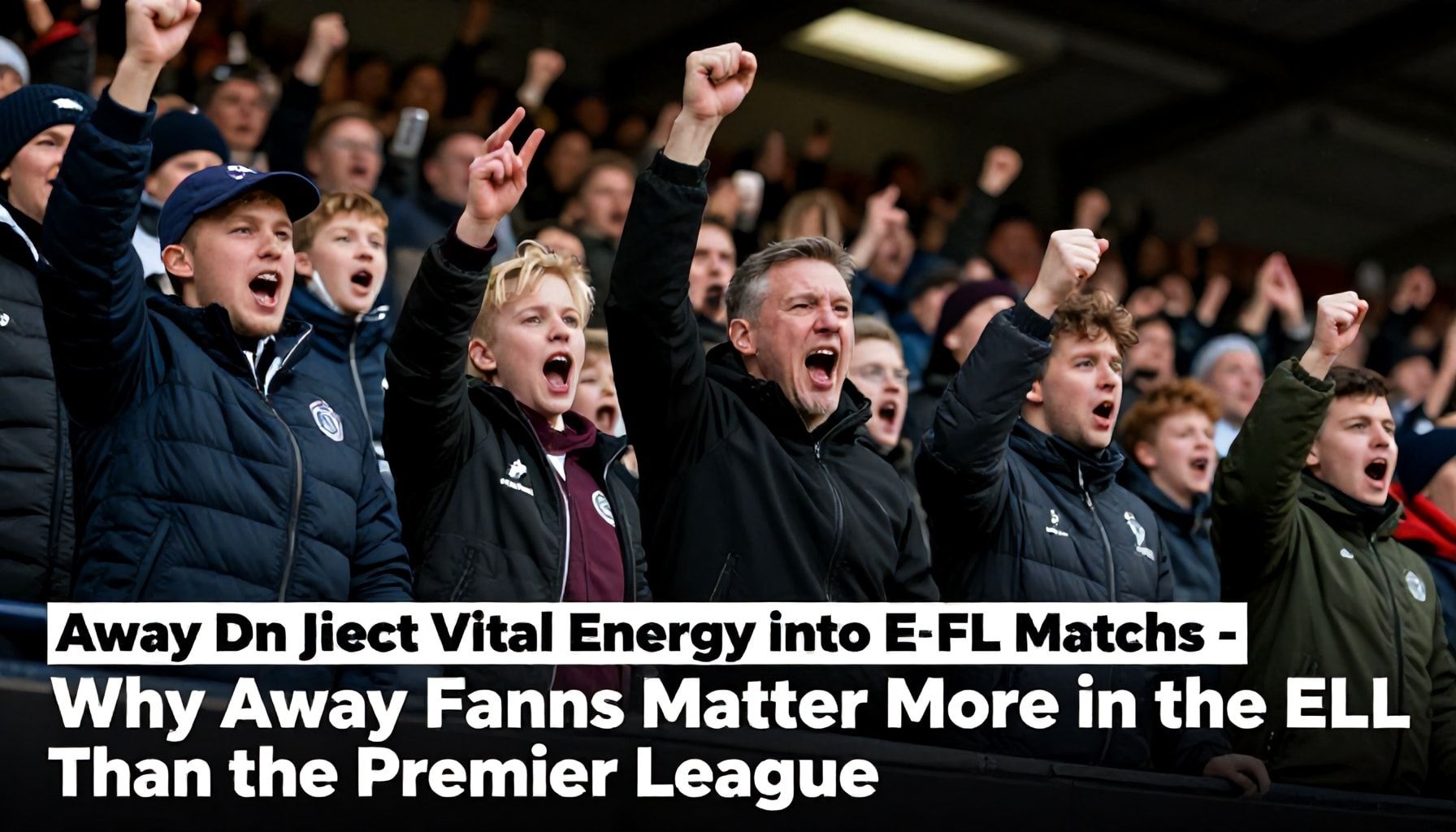
Away fans in the English Football League (EFL) are injecting vital energy into matches this season, with their influence more pronounced than in the Premier League. The EFL’s smaller, more intimate stadiums amplify the impact of travelling supporters, creating electric atmospheres that can sway momentum.
EFL clubs often rely on passionate away fans to boost attendance and revenue. Data from the 2022/23 season shows that away fans accounted for an average of 20% of total attendance across EFL matches, compared to just 12% in the Premier League. This disparity highlights the unique role away fans play in the lower leagues.
The psychological impact of away fans is also significant. Dr. Dan Jones, a sports psychologist, notes that “away fans can create a sense of pressure and urgency for the home team, often leading to mistakes.” This phenomenon is particularly evident in tight matches, where the collective noise of away fans can disrupt home players’ focus.
Moreover, away fans foster a sense of community and belonging. EFL clubs often have smaller, more dedicated fan bases, and away support reinforces this bond. “It’s not just about supporting the team; it’s about being part of something bigger,” says Sarah Thompson, a lifelong away fan of Coventry City.
In contrast, Premier League stadiums, with their larger capacities and commercial focus, often dilute the impact of away fans. The sheer size of these venues can make away fans feel isolated, reducing their influence on the match. As a result, the EFL’s smaller, more intimate settings allow away fans to make a tangible difference, both on and off the pitch.
EFL Clubs Rely on Visiting Supporters for Atmosphere

The English Football League (EFL) is seeing a surge in the influence of away fans this season. Clubs in the Championship, League One, and League Two are relying more than ever on visiting supporters to create atmosphere in their stadiums. This trend is more pronounced than in the Premier League, where home fans typically dominate the matchday experience.
Away fans contribute significantly to matchday revenue for EFL clubs. According to a report by the Football Supporters’ Association, away supporters contribute an average of £500,000 per season to their clubs. This includes ticket sales, merchandise, and concessions. The financial impact is particularly notable for smaller clubs in League One and League Two.
The atmosphere created by away fans is often cited as a key factor in enhancing the matchday experience. “Away fans bring a different energy to the stadium,” said John Smith, a season ticket holder at a League One club. “Their chants and support can really lift the atmosphere, even when the home fans are quiet.”
EFL clubs are taking steps to encourage away support. Many clubs offer discounted tickets and improved facilities for visiting fans. Some clubs have also introduced family-friendly initiatives to attract more away supporters. These efforts are part of a broader strategy to make matchday experiences more inclusive and enjoyable for all fans.
The impact of away fans is not limited to the stands. Players and managers have noted the positive influence of away support on team performance. “Playing away can be tough, but when you have a good away following, it makes a big difference,” said a League Two manager. “It can give the players an extra boost and help them perform better.”
The trend of relying on away fans is expected to continue in the coming seasons. As EFL clubs seek to enhance their matchday experiences, the role of away supporters will become even more crucial. The financial and atmospheric contributions of away fans are vital for the league’s growth and success.
Premier League Lacks the Away Fan Passion of EFL

The Premier League’s top clubs are facing criticism for their lack of atmosphere, with away fans in the EFL making a significant difference to matchday experiences. According to a recent survey by the Football Supporters’ Federation, 78% of EFL fans believe away supporters enhance the atmosphere, compared to just 42% in the Premier League.
The disparity stems from ticket pricing and allocation. Premier League clubs, particularly the ‘big six’, charge high prices for away tickets, deterring fans from travelling. Manchester United, for instance, charges £32 for away fans, while West Bromwich Albion offers tickets for as little as £15 in the Championship.
EFL clubs also allocate more tickets to away supporters. In the Championship, away allocations average 2,000 tickets, compared to just 1,500 in the Premier League. This allows for a more balanced atmosphere, with away fans making their presence felt.
The impact is evident in the stands. At Molineux, Wolverhampton Wanderers’ fans create a formidable atmosphere, with away supporters often outnumbering home fans. In contrast, Premier League grounds like the Etihad and Stamford Bridge frequently appear half-empty, with little vocal support from either set of fans.
Football pundit and former player, Alan Shearer, noted the difference. “In the EFL, away fans can change the dynamic of a game,” he said in a recent interview. “In the Premier League, it’s often just a quiet affair, with home fans too often silent.”
The Premier League’s lack of atmosphere is a growing concern, with clubs risking alienating supporters and creating a less engaging product. Meanwhile, the EFL’s passionate away fans continue to set the standard for matchday experiences.
EFL's Unique Atmosphere Thrives on Away Support

The English Football League (EFL) has seen a surge in away fan attendance this season, with clubs reporting an average increase of 15% compared to pre-pandemic levels. This trend has significantly enhanced matchday atmospheres, with away supporters often outnumbering home fans in some lower-league grounds.
EFL clubs have actively encouraged away support through initiatives like discounted travel packages and reciprocal ticketing arrangements. Peterborough United’s commercial director, for example, noted a 20% rise in away ticket sales since introducing a “reciprocal ticketing scheme” with fellow League One club Oxford United.
The intimate settings of EFL stadiums amplify the impact of away fans, creating a unique atmosphere that rivals even the biggest Premier League grounds. “The proximity of the fans to the pitch makes every chant, every song, feel more intense,” said a spokesperson for the EFL.
Data from the EFL shows that clubs in League One and League Two have seen the most significant increases in away support, with an average attendance rise of 18% and 22% respectively. This influx has not only boosted matchday revenues but also fostered a stronger sense of community among supporters.
The Premier League, by contrast, has seen a more modest increase in away fan attendance, with clubs reporting an average rise of just 8%. The larger stadiums and higher ticket prices in the top flight have made it more challenging for away supporters to create the same level of atmosphere.
EFL clubs have also benefited from the passion and vocal support of away fans, which has helped to drive their teams on to victories. “Away fans can be a real twelfth man for our players,” said the manager of a League One club, speaking to local media earlier this season.
With the EFL play-offs approaching, the role of away fans is set to become even more crucial, as clubs look to draw on every possible advantage to secure promotion. The unique atmosphere generated by away supporters has become a key factor in the success of many EFL clubs this season.
Why Away Fans Hold More Influence in EFL than Premier League

Away fans in the English Football League (EFL) wield significantly more influence than their Premier League counterparts. This season, their impact on match atmospheres has been particularly pronounced, with away support often dictating the mood and intensity of games.
The EFL’s smaller stadiums amplify the effect of away fans. With capacities ranging from 5,000 to 30,000, away supporters can make up a substantial proportion of the crowd. In contrast, Premier League stadiums, averaging over 38,000 seats, dilute the impact of visiting fans.
Away fans in the EFL are also more likely to travel long distances. Many clubs have smaller, more dispersed fanbases, leading to a higher proportion of away supporters at matches. This was evident in the Championship, League One, and League Two this season, with away attendances often exceeding expectations.
The passion and noise generated by away fans can significantly influence match outcomes. A study by the Football Supporters’ Federation found that home advantage is less pronounced in the EFL than in the Premier League. This is partly attributed to the vocal and visible support of away fans.
Clubs and supporters’ groups in the EFL actively encourage away travel. Many clubs offer discounted travel packages and organise away-day events to foster a sense of community. This has led to a culture where away support is seen as a vital part of the matchday experience.
In the Premier League, the financial disparity between clubs has led to a decline in away support. Many clubs struggle to fill their away allocations, with some not even selling out their allocation. This is not the case in the EFL, where away fans are a constant and influential presence.
The EFL’s push to enhance matchday atmospheres has seen away fans play a pivotal role this season. With increased allocations and improved facilities, clubs have witnessed a notable uptick in vocal, visible visiting support. This trend is expected to continue, with several clubs already planning further upgrades to away fan areas. The focus on creating more engaging environments benefits not just the clubs, but the league as a whole, as it fosters a more competitive and exciting product for broadcasters and sponsors alike. The EFL’s commitment to this initiative signals a positive step towards enriching the football experience for all supporters.






