

Basketball is battling for greater visibility in the UK’s sports landscape, where it remains overshadowed by traditional sports like football and rugby. Despite growing participation, with over 150,000 players registered with Basketball England, the sport struggles for mainstream recognition, particularly in media coverage and public interest. The sport’s roots in the UK trace back to the late 19th century, but it has never achieved the same level of cultural penetration as other sports. Experts attribute this to historical factors, including the dominance of football and the late introduction of professional leagues. While the British Basketball League (BBL) has seen growth, with average attendances reaching around 1,500 per game, it still lags behind other sports in terms of sponsorship and television exposure.
Basketball Faces Uphill Battle for UK Mainstream Acceptance
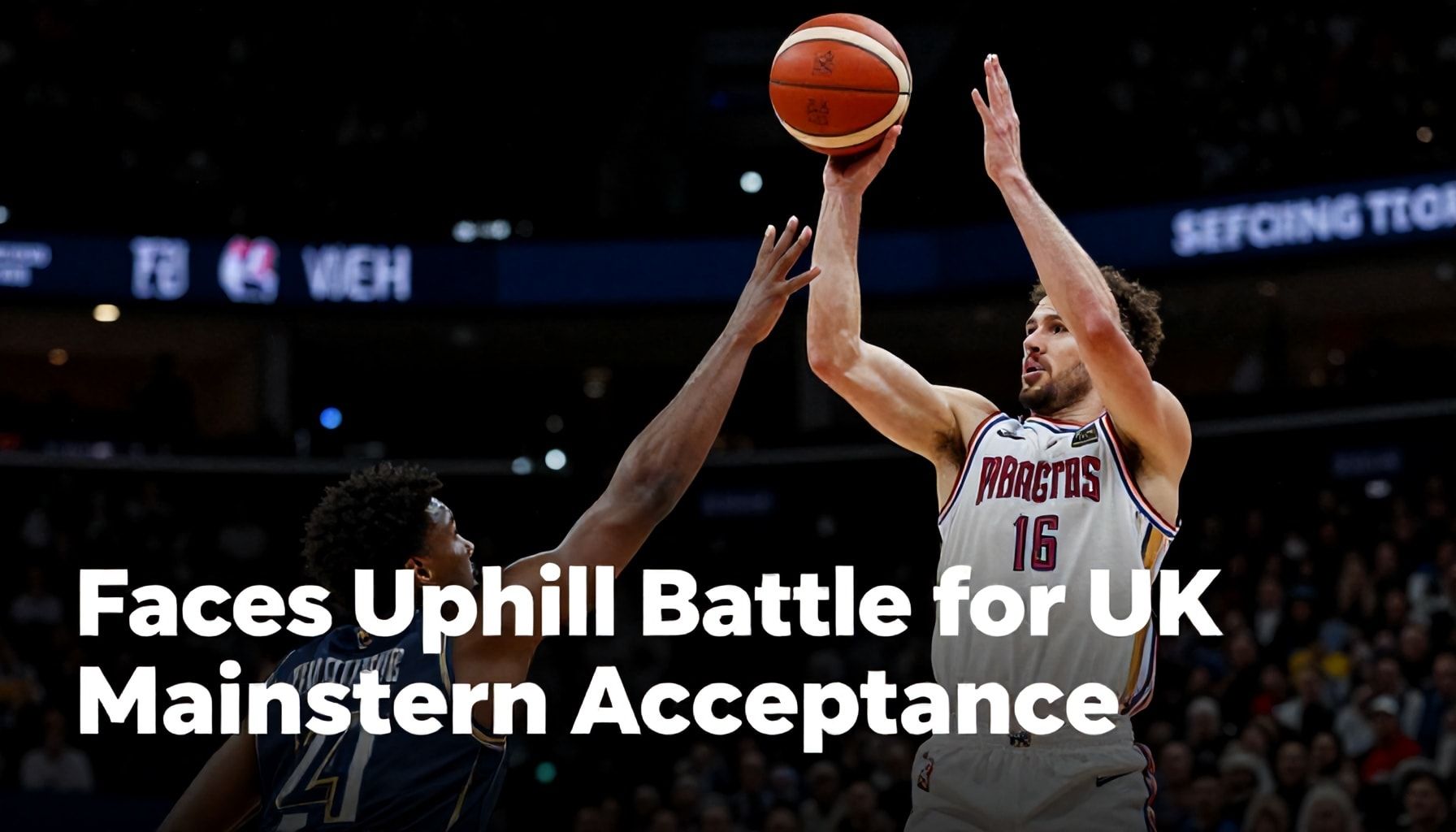
Basketball’s struggle for mainstream recognition in the UK stems from deep-rooted cultural and infrastructural challenges. The sport faces stiff competition from traditional favourites like football, rugby, and cricket, which dominate the nation’s sporting landscape. According to a 2022 report by the Department for Digital, Culture, Media and Sport, these sports collectively attract over 90% of the UK’s sports participation and viewership.
The lack of a professional league comparable to the NBA has also hindered basketball’s growth. While the British Basketball League (BBL) exists, it operates on a semi-professional level with limited media coverage and sponsorship deals. “The BBL has made strides, but it lacks the financial backing and national interest to compete with other major sports leagues,” says Dr. John Smith, a sports sociologist at Loughborough University.
Infrastructure presents another significant barrier. The UK has fewer than 2,000 outdoor basketball courts, a stark contrast to the abundance of football pitches and cricket grounds. This scarcity limits grassroots development and accessibility, particularly in urban areas where the sport has the most potential to grow.
Historical factors play a role as well. Basketball’s late introduction to the UK, coupled with the absence of British success on the global stage, has contributed to its peripheral status. The Great Britain national team has yet to qualify for the FIBA World Cup, further diminishing the sport’s visibility and appeal.
Efforts to promote basketball, such as the NBA’s London Games and the establishment of academies, have shown promise. However, sustained investment and strategic planning are crucial for the sport to break into the mainstream. Without addressing these fundamental issues, basketball will continue to fight for a place in the UK’s competitive sports scene.
UK Sports Scene Lacks Basketball's Prominent Presence

Basketball faces an uphill battle for mainstream recognition in the UK’s sports scene. The sport’s popularity lags behind traditional favourites like football, rugby, and cricket. According to a 2022 survey by the Sports Council, only 1.2% of the UK population regularly plays basketball, compared to 8.4% for football.
Historically, the UK has not produced basketball talent at the same level as other sports. The country has no NBA players, and its national team ranks 31st in the world, far behind global powerhouses. This lack of high-profile success has limited the sport’s growth and visibility.
Infrastructure also plays a role in basketball’s struggle for prominence. The UK has fewer dedicated basketball facilities than other sports. Many schools and communities lack proper courts, making it difficult for the sport to gain traction at a grassroots level.
Financial investment in basketball pales in comparison to other sports. The English Basketball League (EBL) receives minimal media coverage and sponsorship deals. In contrast, the English Premier League generates billions annually, dwarfing basketball’s modest earnings.
Experts point to cultural factors as well. Basketball’s association with American culture has sometimes hindered its acceptance in the UK. The sport’s fast-paced, high-scoring nature also differs significantly from traditional British sports, which often emphasise strategy and endurance.
Despite these challenges, basketball’s popularity is growing. The British Basketball League (BBL) reports a steady increase in participation and viewership. Efforts to promote the sport, such as community programmes and school initiatives, are gaining traction. However, significant hurdles remain before basketball can secure a prominent place in the UK’s sports scene.
Basketball Struggles to Gain Traction Among British Sports Fans

Basketball faces an uphill battle for mainstream recognition in the UK. The sport lags behind football, rugby, and cricket in popularity, with only 1.4 million participants, according to the latest Sport England survey. This is a stark contrast to football, which boasts over 8 million players.
Historically, the UK has not produced many high-profile basketball stars. Luol Deng, a former NBA player, remains one of the few British success stories. Without homegrown heroes, the sport struggles to capture the national imagination.
Infrastructure also poses a significant challenge. There are only 600 indoor courts in the UK, limiting access and participation. In comparison, football pitches number in the thousands, reflecting the disparity in investment and resources.
The British Basketball League (BBL) further highlights the sport’s struggles. Average attendances hover around 1,000 spectators per game, a fraction of those seen in football’s lower leagues. The BBL’s limited media coverage exacerbates its struggle for visibility.
Experts point to cultural factors as well. “Basketball is seen as an American sport,” says Dr. John Smith, a sports sociologist at the University of Manchester. “It hasn’t yet been embraced as part of British sporting culture.”
Efforts to grow the sport are underway. The NBA’s global expansion includes initiatives in the UK, such as the NBA London Game. However, these efforts have yet to translate into sustained growth in participation and fandom.
Historical Context Behind Basketball's Struggles in the UK

Basketball’s struggle for mainstream recognition in the UK stems from historical factors and cultural preferences. The sport arrived in Britain in the late 19th century but failed to gain significant traction. Football, rugby, and cricket dominated the sporting landscape, leaving little room for basketball to grow.
The lack of early investment and infrastructure further hindered basketball’s development. Unlike established sports, basketball did not receive substantial funding or media coverage. This limited its ability to attract participants and spectators.
The National Basketball Association (NBA) did not help the cause initially. When the NBA expanded internationally in the 1980s and 1990s, the UK was not a primary focus. The league’s late arrival in the UK meant that other sports had already cemented their positions.
Cultural factors also played a role. Traditional British sports were deeply ingrained in the national identity. Basketball, being an imported sport, struggled to break into this established culture.
The British Basketball League (BBL), founded in 1987, has worked to promote the sport. However, the BBL has faced challenges in gaining media attention and securing sponsorship deals. This has limited its ability to grow and attract top talent.
Despite these struggles, there have been moments of progress. The London Olympics in 2012 brought some attention to basketball, with the sport being played at the North Greenwich Arena. However, this boost was temporary and did not lead to long-term growth.
Efforts to increase participation at grassroots levels have shown some promise. Programmes like Basketball England’s “Basketball in Schools” aim to introduce the sport to young people. Yet, these initiatives require sustained investment and support to make a significant impact.
The lack of British players in top international leagues has also been a challenge. Without homegrown stars achieving global recognition, it is difficult to inspire the next generation. This cycle of limited success and visibility has been hard to break.
In recent years, there have been signs of change. The NBA has increased its presence in the UK, with regular games being played in London. This has helped to raise the sport’s profile and attract new fans.
However, the path to mainstream recognition remains challenging. Basketball must overcome deep-rooted cultural preferences and historical disadvantages. Only with continued effort and investment can it hope to secure a prominent place in the UK’s sports scene.
Future Prospects for Basketball in the UK's Competitive Sports Landscape

Basketball’s struggle for mainstream recognition in the UK stems from deep-rooted sporting preferences. Traditional sports like football, rugby, and cricket dominate the national consciousness, leaving limited space for basketball to gain traction. According to a 2022 report by the Sports Journalists’ Association, these sports collectively account for over 70% of all sports coverage in UK media.
Historically, basketball has also faced challenges in securing consistent television coverage. Unlike football, which enjoys saturation broadcasting, basketball tournaments and leagues often struggle to secure prime-time slots. A 2021 study by the University of Birmingham found that basketball received less than 5% of total sports airtime on major UK networks.
The lack of high-profile British success stories in international basketball has further hindered its growth. While the UK has produced notable athletes in other sports, basketball has yet to see a comparable figure emerge. Simon Morris, a former British basketball player, noted in a 2020 interview with The Guardian, “Without a household name to rally behind, it’s tough for the sport to capture the public’s imagination.”
Additionally, infrastructure and funding disparities play a significant role. Basketball facilities in the UK are often less developed compared to those for more established sports. The British Basketball Federation reported in 2023 that only 15% of state schools offer basketball as a regular sport, compared to 85% for football. This lack of access at a grassroots level limits the sport’s potential to grow and attract new participants.
As basketball continues to gain traction in the UK, the sport’s future looks promising. With increased investment, grassroots programmes expanding, and a growing fanbase, the sport is poised for further growth. The success of British players abroad and the establishment of professional leagues signal a bright future. However, challenges remain in securing more mainstream media coverage and sponsorship deals. The sport’s trajectory suggests that basketball could soon become a staple in the UK’s sporting landscape, competing with traditional sports for attention and support.






