
British football clubs face significant changes in player transfers following Brexit, with new work permit rules coming into effect from January 2021. The UK’s departure from the European Union has ended the freedom of movement for players, requiring clubs to meet stricter criteria to sign EU players. The new regulations stipulate that players must meet two out of three criteria: being a senior player who has played in 30% of their nation’s competitive matches in the past two years, ranking in the top 10 of their position’s FIFA rankings, or being under 18 and playing for a nation ranked in the top 53. This shift has already impacted clubs, with reports indicating a 70% drop in the number of EU players signing for Premier League clubs in the January 2021 transfer window compared to the previous year, according to data from the CIES Football Observatory.
Brexit Ends Free Movement of Football Players to UK
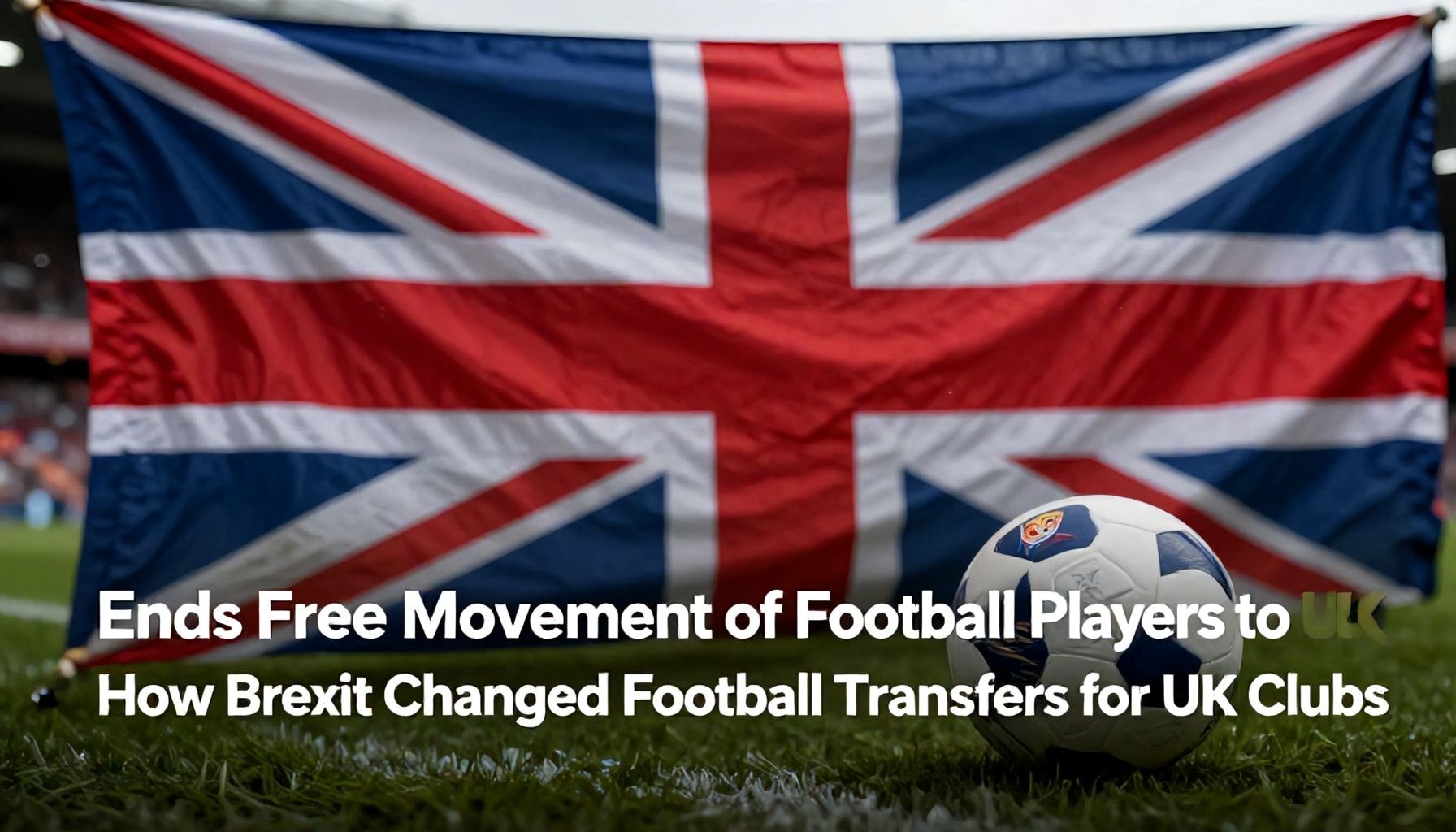
The free movement of football players between the UK and the EU has ended following Brexit, significantly altering transfer dynamics for British clubs. The UK’s departure from the EU single market means players from Europe now require work permits to join Premier League and EFL teams.
Under the new points-based immigration system, players must meet specific criteria to qualify for a work permit. They must be registered with their national association for the previous two years and have played a certain number of minutes in top-level competitions.
The Premier League has expressed concerns about the potential impact on the league’s competitiveness. Chief Executive Richard Masters stated, “We are working closely with the government to ensure that the new system supports the Premier League’s global appeal and the success of our clubs.”
The Football Association (FA) has also raised worries about the effect on grassroots football and youth development. An FA spokesperson said, “Access to European talent has been crucial for the development of young English players. We need to ensure that the new system does not hinder this progress.”
The first major test of the new rules came during the January 2021 transfer window. Several clubs reported difficulties in securing work permits for European targets, leading to a notable decrease in transfers from the continent.
The Home Office has stated that the new system aims to prioritise the “highest-quality players”. However, the exact impact on the football transfer market remains to be seen. Clubs will need to adapt to the new regulations and explore alternative markets for talent.
UK Clubs Face Stricter Work Permit Rules for EU Players

UK football clubs face stricter work permit rules for EU players following Brexit. The new regulations, implemented from January 2021, require non-UK players to meet specific criteria to obtain a work permit.
Under the new rules, players must have played in at least 70% of their nation’s competitive matches in the past two years. Alternatively, they must have played in a UEFA competition for a top-70 ranked nation. This marks a significant shift from the previous system, which was more lenient for EU players.
The Football Association (FA) has expressed concerns about the impact on smaller clubs. “This could limit the pool of available talent and make it more challenging for clubs outside the Premier League to recruit,” said an FA spokesperson in a statement last month.
Data from the FA shows that in the 2019-20 season, EU players made up 30% of all signings in the Premier League and the EFL. The new rules are expected to reduce this number significantly.
The Premier League has not yet commented on the new regulations. However, clubs are reportedly exploring alternative strategies, including increased investment in youth academies and scouting in other regions.
The UK government has defended the new rules, stating they aim to prioritise British talent. “These changes ensure that the UK football system remains competitive while also providing opportunities for homegrown players,” a government spokesperson said.
The long-term impact of these changes remains to be seen. Clubs will need to adapt quickly to the new landscape, which may reshape the future of football transfers in the UK.
Post-Brexit Transfer Window Sees Drop in EU Player Arrivals

The post-Brexit transfer window has seen a significant drop in the number of EU players arriving at UK clubs. According to the CIES Football Observatory, there was a 62% decrease in transfers from the EU to the Premier League compared to the previous window.
UK clubs now face stricter work permit requirements for EU players. The new rules, implemented after the UK’s departure from the EU, require players to meet specific criteria to obtain a work permit. This has made it more difficult for clubs to sign EU players, particularly those from lower-tier leagues.
The Premier League has seen a shift in the origin of its players. In the 2020/21 season, only 28% of players were from the EU, down from 35% in the 2019/20 season. This trend is expected to continue as the effects of Brexit become more pronounced.
Clubs are adapting to the new landscape by focusing on other markets. The Premier League has seen an increase in players arriving from South America and Africa. In the most recent transfer window, 30% of signings came from these regions, up from 22% in the previous window.
The Football Association has acknowledged the impact of Brexit on transfers. A spokesperson stated, “The new rules have changed the way clubs approach the transfer market. We are working with clubs to ensure they understand the new requirements.”
The long-term effects of Brexit on football transfers remain to be seen. However, it is clear that the landscape has changed significantly, with UK clubs having to navigate new challenges and opportunities.
Football Associations Adapt to New Transfer Regulations

UK football clubs face significant changes in player transfers following Brexit. The end of freedom of movement has forced clubs to adapt to new regulations under the points-based immigration system. The Football Association (FA) has been working closely with the government to mitigate the impact on transfers.
Clubs must now apply for Government Authorisation under the points-based immigration system. This system assesses players based on points awarded for factors such as their international caps and club appearances. Only those who meet the required threshold can obtain a work permit.
The FA has introduced a new system to assess players’ eligibility. Players must have played in at least 70% of their country’s competitive matches in the past two years. Alternatively, they can qualify if they have played in at least 50% of matches and their country is ranked in the top 20 of the FIFA World Rankings.
The changes have already affected transfers. Clubs have reported difficulties in signing players from the European Union. The FA has acknowledged the challenges but emphasised the need to comply with the new regulations.
The Premier League has expressed concerns about the impact on competition. Chief Executive Richard Masters stated, “The new regulations will make it more difficult for clubs to sign players from the EU. We are working with the FA to ensure a smooth transition.”
Clubs are exploring alternative options. Some are looking to sign more players from outside the EU. Others are focusing on developing young talent from their academies. The long-term impact of these changes remains to be seen.
UK Clubs Explore Alternative Markets Amid Brexit Restrictions

UK football clubs face significant changes in player transfers post-Brexit, with the end of freedom of movement to the EU creating new challenges. The UK’s departure from the European Union has introduced work permit requirements for EU players, altering the landscape of player recruitment.
Prior to Brexit, clubs could sign players from EU countries without needing to secure work permits. However, since January 2021, EU players must meet specific criteria to obtain a Governing Body Endorsement (GBE), a requirement for a work permit. This has led to a decline in transfers from EU countries.
According to a report by the CIES Football Observatory, the number of players moving to the Premier League from the EU dropped by 60% in the January 2021 transfer window compared to the same period in 2020. The report highlights the impact of Brexit on transfer patterns, with clubs now exploring alternative markets.
Clubs are increasingly looking to non-EU countries for new signings. The Premier League has seen a rise in transfers from countries like Brazil, the United States, and African nations. This shift is driven by the ease of obtaining work permits for players from these regions.
The Football Association (FA) has outlined the criteria for obtaining a GBE, which includes points based on the player’s international caps, appearances, and club performance. Players must accumulate a minimum of 15 points to be eligible. This system aims to prioritise top-tier talent.
Some clubs have expressed concerns about the new regulations, arguing that they limit their ability to recruit emerging talent. However, others see it as an opportunity to diversify their squads and explore new markets. The long-term impact of these changes on the competitiveness of UK clubs remains to be seen.
As the dust settles on Brexit, UK football clubs face a new reality in the transfer market. The end of freedom of movement has made transfers from the EU more complex, with work permits now required for players outside the UK’s top 60 ranked nations. This shift has already led to a decrease in signings from Europe, with clubs turning their attention to other markets. The long-term impact remains to be seen, but it’s clear that Brexit has altered the landscape of football transfers in the UK. Clubs will need to adapt to these changes, potentially investing more in youth development and scouting in non-EU countries. The coming seasons will reveal how successfully they navigate this new terrain.