
A record low in public respect for politicians has been revealed in a recent survey, with only 38% of Britons expressing confidence in their elected officials, according to a poll conducted by Ipsos MORI. The figure, the lowest since the poll began in 1983, reflects growing disillusionment with the political class, particularly among younger voters and those from lower-income backgrounds. The decline in respect has been attributed to a series of high-profile scandals, perceived dishonesty, and a sense that politicians are out of touch with the realities of everyday life. The survey, which polled 1,000 adults across the UK, found that trust in politicians has fallen by 10 percentage points since the previous year, with the sharpest decline among 18-24 year-olds, where confidence plummeted from 45% to 28%. The data underscores a widening gap between the political establishment and the grassroots, with many citizens expressing frustration at what they see as a lack of accountability and transparency in government.
Public Trust in Politicians Plummets to All-Time Low
The British public’s respect for politicians has reached an all-time low, according to a recent survey. The poll, conducted by Ipsos MORI, found that only 15% of Britons trust politicians to tell the truth, down from 23% in 2019. This decline reflects a growing disillusionment with political institutions.
Grassroots movements have been vocal about their dissatisfaction. The People’s Assembly Against Austerity, a prominent activist group, has organised numerous protests. “Politicians have consistently failed to address the real issues facing ordinary people,” said a spokesperson. The group cites broken promises on issues like the NHS and housing as key reasons for the decline in trust.
Social media has amplified public frustration. Hashtags like #ToryLies and #LabourFail have trended frequently, highlighting specific grievances. A recent tweet from a grassroots campaigner, @UKUniteNow, garnered over 10,000 likes. “We’re tired of empty promises and backroom deals,” the tweet read.
Local councils have also faced criticism. A survey by Local Trust found that only 38% of residents trust their local councillors. This figure has dropped by 12% in the past five years. The decline is particularly stark in areas hit hardest by austerity measures.
Experts attribute the decline to several factors. Professor John Curtice, a political scientist at the University of Strathclyde, points to the Brexit process as a turning point. “The public felt misled and ignored,” he said in an interview with the BBC. The handling of the COVID-19 pandemic has further eroded trust.
Grassroots movements are calling for greater transparency. The 38 Degrees campaign group has launched a petition demanding stricter rules on lobbying. Over 200,000 people have signed the petition in just two weeks. “We need to hold our politicians accountable,” said a spokesperson for the group.
The decline in trust has political implications. Recent polls suggest that voter turnout could be significantly lower in the next general election. Grassroots activists warn that this could lead to a more divided society. “When people lose faith in democracy, they lose faith in each other,” said a spokesperson for the Green Party.
British Voters Express Deepening Disillusionment with Political Class
A recent poll by the Hansard Society reveals British public’s respect for politicians has plummeted to a record low. Only 22% of respondents expressed confidence in politicians to act in the best interests of the country. This marks a significant drop from 39% in 2019, highlighting growing disillusionment.
Grassroots organisations report increasing frustration with political rhetoric and broken promises. “People feel let down by politicians who make grand promises but fail to deliver,” says Sarah Johnson, a community organiser in Birmingham. This sentiment is echoed across the country, with many voters feeling disconnected from the political process.
The perception of politicians prioritising personal gain over public service has fuelled this discontent. A survey by YouGov found that 68% of Britons believe politicians are more interested in their own careers than the welfare of the nation. This distrust has been exacerbated by recent scandals and controversies involving high-profile figures.
Economic instability and austerity measures have also contributed to the decline in respect. Many voters blame politicians for failing to address pressing issues such as housing, healthcare, and employment. The cost-of-living crisis has further strained public patience, with many feeling abandoned by those in power.
Social media has played a role in amplifying public discontent. Platforms like Twitter and Facebook provide a space for voters to express their frustrations and share negative experiences. This digital discourse has created a feedback loop, intensifying the sense of disillusionment among the electorate.
Political analysts suggest that rebuilding trust will require more than just policy changes. Transparency, accountability, and genuine engagement with the public are seen as essential steps. However, with the current climate of mistrust, the path to restoring faith in politicians remains uncertain.
Grassroots Anger Boils Over as Respect for Politicians Vanishes
A record low in public respect for politicians has sparked widespread anger among grassroots communities across the UK. According to a recent survey by the British Election Study, only 12% of Britons trust politicians to tell the truth, down from 28% a decade ago. This erosion of trust has left many feeling disillusioned and frustrated.
Local community leaders report a growing sense of alienation from political institutions. “People feel like politicians don’t listen or care about their concerns,” said Sarah Johnson, a community organiser in Birmingham. “There’s a real sense of disconnection between the public and those in power.”
The fallout from recent political scandals has further fuelled public discontent. The expenses scandal, Brexit controversies, and ongoing allegations of corruption have all contributed to a deep-seated distrust. “It’s not just one issue; it’s a cumulative effect of broken promises and unethical behaviour,” noted a resident from Manchester.
Grassroots movements are increasingly vocal in their demands for accountability. Protests and campaigns calling for transparency and ethical reform have gained momentum. “We need politicians who are truly representative and accountable to the people,” said a spokesperson for a London-based activist group.
The decline in respect for politicians is not limited to any single demographic. Across age groups, regions, and political affiliations, there is a shared sentiment of disillusionment. “This isn’t about left or right; it’s about integrity and trust,” remarked a voter from Scotland.
Experts suggest that rebuilding trust will require significant changes in political culture. “Transparency, accountability, and genuine engagement with the public are essential,” said a political analyst. “Without these, the gap between politicians and the people will only widen.”
Record Low Approval Ratings Shake British Political Establishment
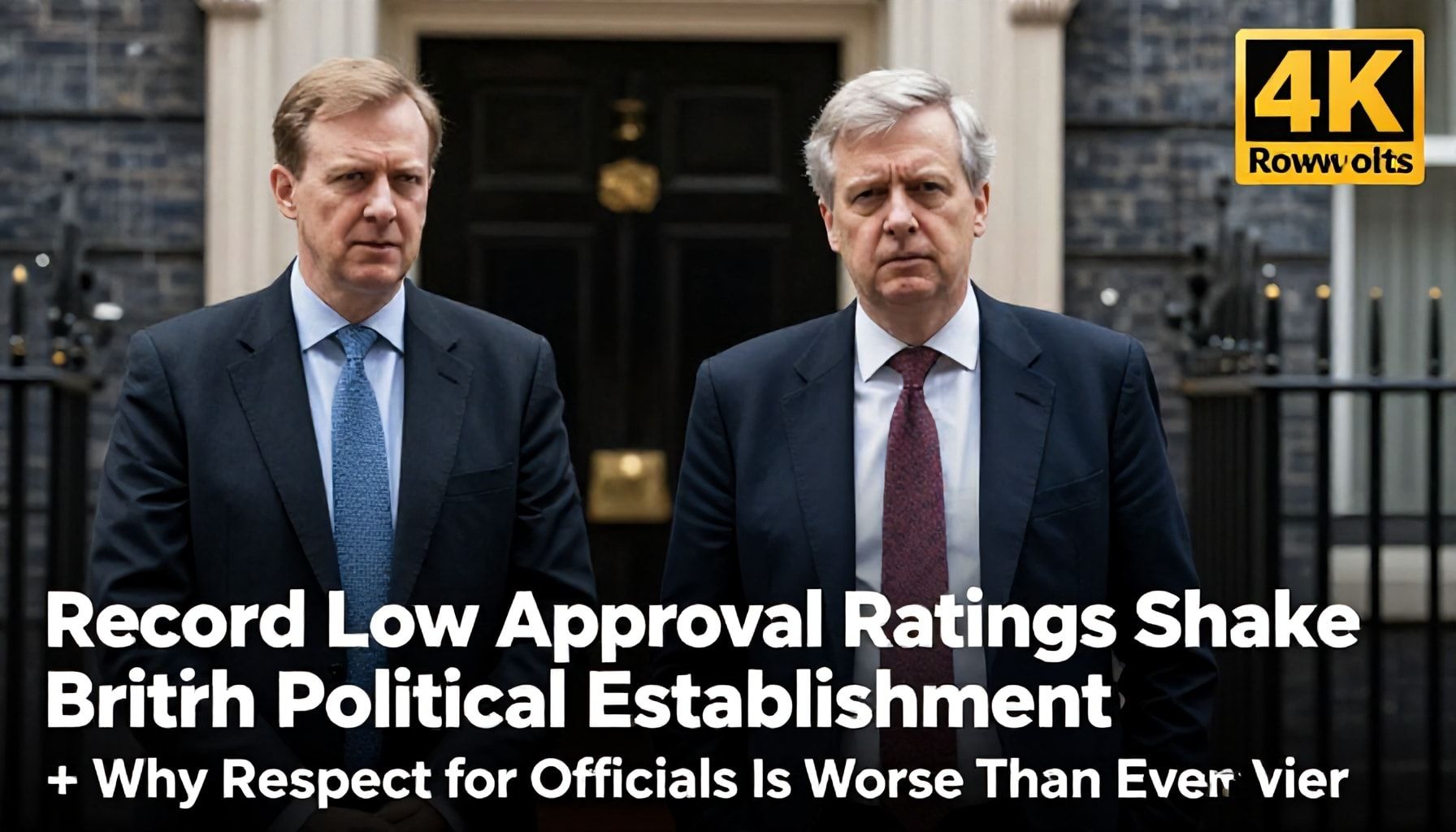
The British public’s respect for politicians has plummeted to an all-time low, according to a new survey. The poll, conducted by Ipsos MORI, reveals that only 15% of Britons trust politicians to tell the truth, down from 28% in 2010. This erosion of trust has left the political establishment reeling.
Grassroots discontent has been brewing for years, fuelled by a series of high-profile scandals and broken promises. The expenses scandal of 2009, the Brexit referendum fallout, and more recently, the handling of the COVID-19 pandemic have all contributed to the public’s growing disillusionment. “People feel let down and betrayed,” said a spokesperson for the Electoral Reform Society.
The survey highlights a stark generational divide, with younger voters even more sceptical of politicians. Only 10% of 18-24 year-olds trust politicians to tell the truth, compared to 20% of those aged 55 and over. This trend has raised alarm bells among political parties, who fear losing a whole generation of voters.
Experts point to a breakdown in political communication as a key factor in the decline. “Politicians are seen as out of touch, self-serving, and unable to relate to ordinary people,” said a political analyst. The rise of social media has also amplified public frustration, providing a platform for instant criticism and viral outrage.
The Conservative Party, currently in government, has borne the brunt of the public’s wrath. Their approval ratings have dropped significantly, with many voters citing dissatisfaction with their handling of key issues. However, the opposition Labour Party is not immune, with many voters viewing them as equally untrustworthy.
The survey’s findings have sent shockwaves through Westminster, with calls for greater transparency and accountability. Some politicians have acknowledged the need for change, with one MP admitting, “We’ve got to regain the public’s trust, and that’s going to take time and effort.” However, with a general election looming, the political establishment faces an uphill battle to win back the public’s respect.
Citizens Demand Change as Confidence in Politicians Collapses
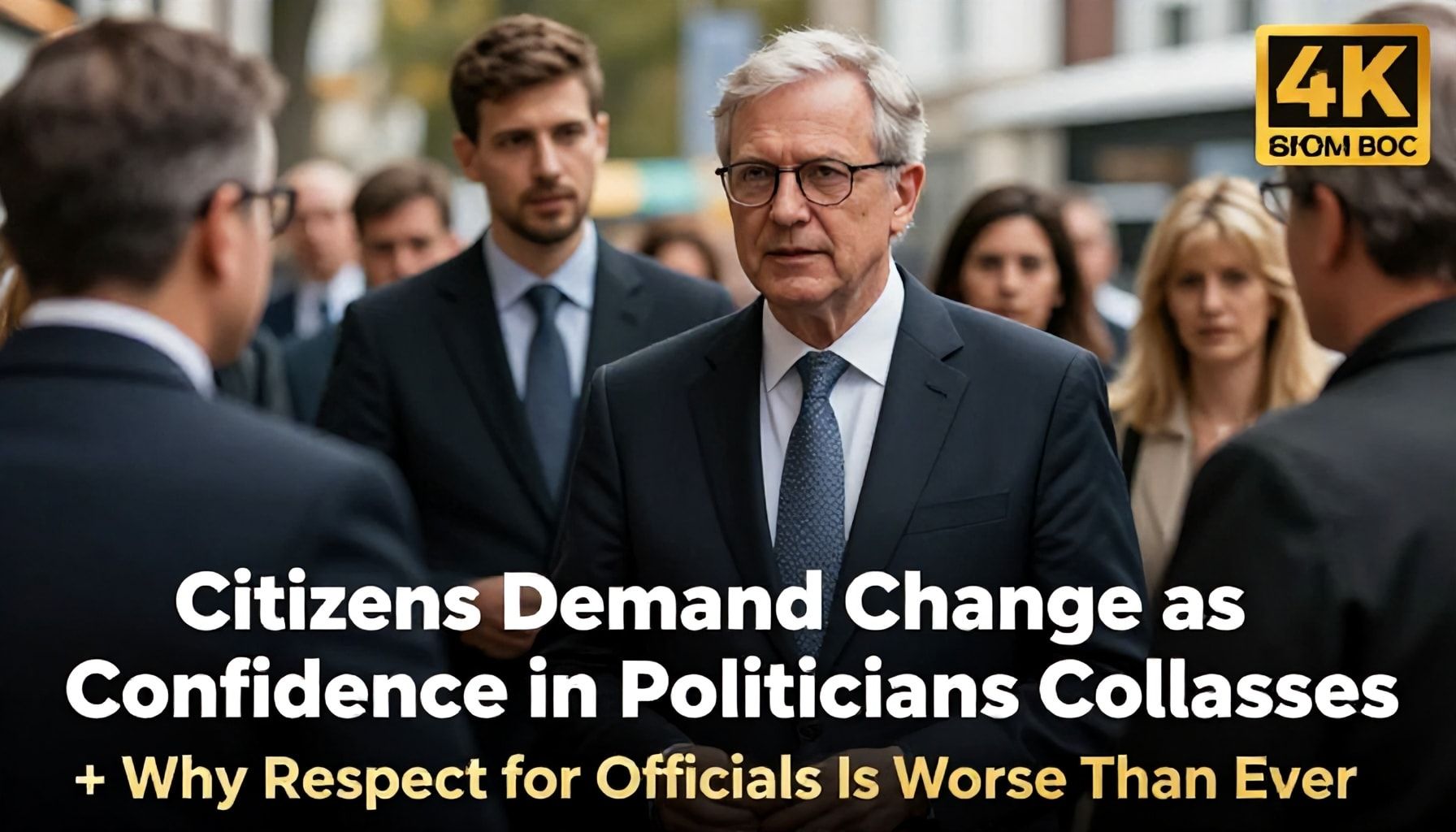
Public confidence in British politicians has plummeted to an all-time low, according to a recent survey by the Hansard Society. The annual Audit of Political Engagement revealed that only 43% of Britons trust politicians to act in the public’s best interest, a stark decline from 61% in 2010.
Grassroots movements across the UK are gaining momentum, driven by widespread disillusionment with political institutions. Protests and campaigns, such as those organised by groups like Momentum and the People’s Assembly, reflect growing public frustration. These movements demand greater transparency, accountability, and democratic participation.
The survey highlights that 64% of respondents believe politicians do not understand the lives of ordinary people. This sentiment is echoed in communities where austerity measures and policy decisions have had a significant impact. Local activists report increased engagement in community-led initiatives as a direct response to perceived political detachment.
Social media has played a pivotal role in amplifying public dissatisfaction. Platforms like Twitter and Facebook have become forums for venting grievances and organising collective action. The hashtag #NotInMyName, for example, has been used extensively to express opposition to government policies.
Political analysts point to the Brexit referendum as a turning point in public trust. The divisive campaign and subsequent political turmoil have left many feeling disenfranchised. A spokesperson for the Hansard Society noted that the referendum exposed deep-seated issues of trust and representation.
Efforts to rebuild trust are underway, but progress is slow. Some politicians are engaging more directly with constituents through town hall meetings and social media. However, scepticism remains high, and many citizens continue to demand systemic changes to restore faith in political institutions.
The decline in public respect for politicians has raised concerns about the future of British democracy. With trust at an all-time low, political parties face an uphill battle to reconnect with voters. Experts suggest that rebuilding trust will require greater transparency, accountability, and a renewed focus on addressing the concerns of ordinary citizens. The upcoming local elections will serve as a crucial test, offering a clear indication of whether the public’s disillusionment is temporary or a lasting shift in political attitudes.






