
The enduring legacies of football clubs continue to shape playing styles across Europe’s top leagues, with historical influences evident in modern tactics and strategies. From the possession-based football of Barcelona, rooted in Johan Cruyff’s vision, to the high-pressing intensity of Liverpool, echoing Bill Shankly’s revolutionary approach, club histories remain pivotal in defining contemporary football.
The tactical philosophies of legendary managers, such as Arrigo Sacchi’s defensive mastery at AC Milan and Pep Guardiola’s innovative possession play at Barcelona, have left indelible marks on their respective clubs. These historical foundations continue to guide current managers, with clubs often adhering to their established playing styles, even as the game evolves. The impact of club histories on modern football is a testament to the enduring influence of past successes and the strategic decisions that have shaped the beautiful game.
Legacy on the Pitch: How Club Histories Define Modern Football Styles

Football clubs’ histories significantly influence their modern playing styles. Tactics, formations, and philosophies often stem from traditions established decades ago. For instance, Arsenal’s reputation for technical, possession-based football traces back to Herbert Chapman’s innovations in the 1930s.
Manchester United’s attacking ethos finds its roots in Sir Matt Busby’s Busby Babes era. The club’s focus on youth development and attacking play continues to define its identity. Sir Alex Ferguson, who managed the club for 26 years, often cited Busby’s influence on his own management style.
Liverpool’s high-pressing, fast-paced style is a legacy of Bill Shankly’s and later Bob Paisley’s reigns in the 1970s and 1980s. This approach has been modernised by Jürgen Klopp, who has emphasised the importance of maintaining the club’s attacking traditions. “The DNA of the club is to attack, to play with intensity and to never give up,” Klopp stated in a 2019 interview.
Chelsea’s evolution under different managers reflects a blend of defensive solidity and attacking flair. José Mourinho’s defensive masterclasses in the mid-2000s contrasted with Antonio Conte’s high-pressing system. However, the club’s adaptability remains a hallmark of its history.
Historical rivalries also shape playing styles. The Manchester derby, for example, often sees contrasting approaches. Manchester City’s possession-based style under Pep Guardiola contrasts with United’s more direct approach under Ole Gunnar Solskjær. These differences highlight how clubs’ histories and identities influence their modern tactics.
Clubs’ histories also impact player recruitment. Barcelona’s La Masia academy has produced players like Lionel Messi, who embody the club’s tiki-taka style. Similarly, Ajax’s focus on youth development has resulted in a steady stream of talented players who fit their attacking philosophy.
In conclusion, football clubs’ histories play a crucial role in shaping their modern playing styles. From tactics to player recruitment, the past continues to influence the present. Understanding this historical context provides a deeper appreciation of the beautiful game.
The Roots of Modern Football: Tracing Club Histories to Today's Tactics

The roots of modern football stretch back over a century, with club histories shaping today’s playing styles. Many tactics and philosophies trace their origins to early 20th-century strategies. For instance, Arsenal’s WM formation, pioneered in the 1930s, laid the groundwork for modern 4-4-2 systems.
Historical rivalries have also influenced playing styles. The intense Manchester derby, dating back to 1881, has seen tactics evolve from physical play to technical duels. Manchester United’s emphasis on attacking football stems from Sir Matt Busby’s post-war rebuild, while Manchester City’s possession-based style reflects Pep Guardiola’s modern influence.
European giants like Barcelona and Juventus have similarly evolved. Barcelona’s tiki-taka style, developed under Johan Cruyff in the 1990s, revolutionised possession football. Juventus’ defensive solidity, honed during their Serie A dominance, has become a blueprint for modern counter-attacking teams.
Clubs’ geographical locations and cultural backgrounds also shape their styles. English clubs often prioritise physicality, a legacy of the industrial revolution. Meanwhile, Spanish and Italian clubs focus on technical skill, reflecting their nations’ footballing philosophies.
The globalisation of football has further blurred these lines. Clubs now adopt tactics from various leagues, creating a hybrid of traditional and modern styles. This evolution ensures that club histories remain relevant, even as the game continues to change.
From Past to Present: How Club Histories Shape Today's Football Styles

The history of football clubs significantly influences their modern playing styles, with traditional tactics often evolving rather than disappearing entirely. Many clubs maintain core principles established decades ago, adapting them to contemporary football’s demands.
Arsenal’s reputation for possession-based football traces back to Herbert Chapman’s era in the 1930s. The club’s focus on ball retention and quick passing remains a hallmark of their style today, as seen in their 2003-04 Invincibles season under Arsène Wenger.
Liverpool’s high-pressing game finds its roots in Bill Shankly’s era in the 1960s. This aggressive style was later refined by Jürgen Klopp, leading to the club’s 2019-20 Premier League title triumph. “The mentality of pressing and intensity comes from the history of the club,” Klopp stated in a 2020 interview.
Manchester United’s direct approach, known as “Route One” football, originated in Matt Busby’s era in the 1950s. This style was epitomised by Sir Alex Ferguson’s teams, particularly during their 1990s and early 2000s dominance.
Chelsea’s defensive solidity under Antonio Conte and Maurizio Sarri reflects the club’s history of pragmatic football. This approach was initially established by José Mourinho during his first spell at the club from 2004 to 2007.
Tottenham Hotspur’s emphasis on youth development and attacking football can be traced back to the 1960s under Bill Nicholson. This philosophy was evident in Mauricio Pochettino’s team, which reached the 2018-19 Champions League final.
The evolution of football tactics is a complex process, with clubs often drawing inspiration from their past. As football continues to evolve, the influence of club history on playing styles remains a crucial factor in shaping modern football.
Football's Evolution: The Lasting Impact of Club Histories on Modern Play

The history of football clubs profoundly influences their modern playing styles, shaping tactics, philosophies, and identities on the pitch. This legacy is evident in the distinct approaches of clubs like Arsenal, known for their possession-based football, or Liverpool, renowned for their high-pressing game. These styles are not mere coincidences but are deeply rooted in the clubs’ histories and the managers who have left indelible marks.
Arsenal’s emphasis on possession football can be traced back to Arsène Wenger’s arrival in 1996. Wenger revolutionised the club’s approach, introducing a style that prioritised ball retention and technical prowess. This philosophy has endured, even after Wenger’s departure, as evidenced by Mikel Arteta’s continued focus on possession-based football. The Gunners’ playing style is a testament to the lasting impact of managerial influence on a club’s identity.
Liverpool’s high-pressing game, on the other hand, is a product of Jürgen Klopp’s tenure, which began in 2015. Klopp’s “Gegenpressing” strategy, characterised by intense pressing and rapid transitions, has become synonymous with Liverpool’s modern play. This style has not only brought success but also redefined the club’s identity on the pitch. The impact of Klopp’s philosophy is evident in Liverpool’s recent performances, with the team often dominating possession and creating numerous scoring opportunities through their high-intensity pressing.
The influence of club history on playing styles is not limited to tactical approaches. It also extends to the recruitment of players who fit the club’s ethos. For instance, Arsenal’s focus on technical players with high footballing intelligence aligns with their possession-based style. Similarly, Liverpool’s recruitment of athletic, high-energy players reflects their commitment to Klopp’s pressing game.
In conclusion, the history of football clubs plays a pivotal role in shaping their modern playing styles. From tactical philosophies to player recruitment, the legacy of managers and the club’s ethos leave a lasting impact on the pitch. This historical influence is a testament to the rich tapestry of football, where the past and present intertwine to create unique and enduring identities.
The DNA of Football: How Club Histories Influence Today's Playing Styles
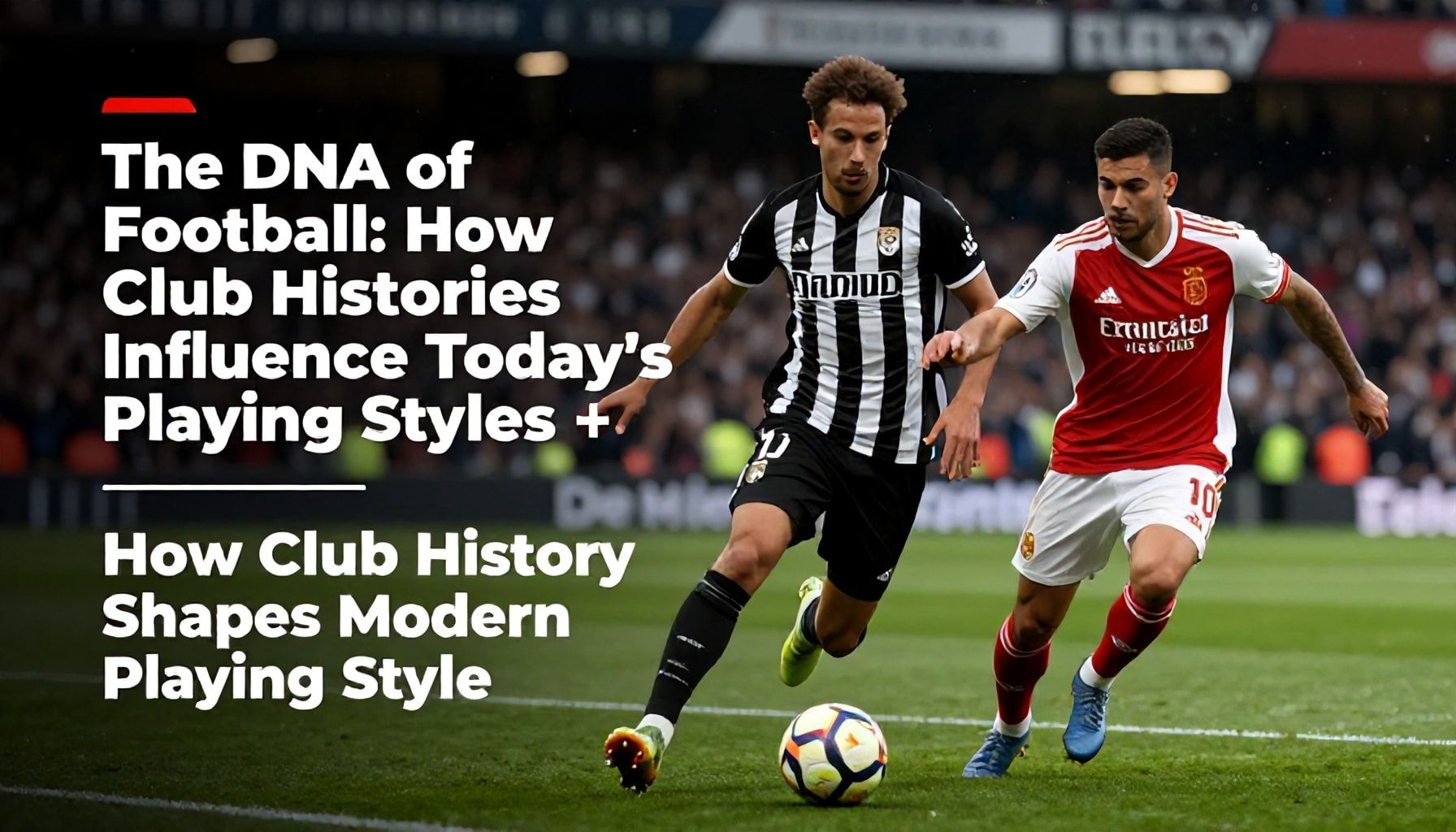
Football clubs carry legacies that shape their modern playing styles. Histories of success, failure, and identity mould how teams approach the game today. These influences create distinct footballing philosophies across leagues.
Manchester United’s history of attacking football dates back to the Busby Babes era. That legacy continues under current manager Erik ten Hag. The club’s emphasis on youth development and attacking play remains central to its identity.
Liverpool’s playing style evolved from the high-pressing, counter-attacking tactics of the Rafa Benítez era. Jürgen Klopp’s arrival in 2015 reinforced this approach. The club’s success with this style has cemented its place in modern football tactics.
Chelsea’s playing style has shifted dramatically over the years. The arrival of José Mourinho in 2004 introduced a defensive, counter-attacking approach. This style brought immediate success, winning multiple trophies. However, recent managers have blended this with more possession-based football.
Arsenal’s history of attractive, possession-based football stems from the Arsène Wenger era. His influence transformed the club’s playing style. Current manager Mikel Arteta continues to build on this legacy, focusing on technical ability and possession.
Historical contexts also shape playing styles in European football. Real Madrid’s emphasis on attacking football dates back to the Alfredo Di Stéfano era. Barcelona’s tiki-taka style evolved from Johan Cruyff’s vision. These clubs’ historical successes influence their modern approaches.
Clubs’ histories also shape their recruitment strategies. Manchester City’s recent success is built on a mix of homegrown talent and high-profile signings. This approach reflects the club’s ambition and financial power. Other clubs follow similar strategies, adapting to their historical contexts.
In conclusion, football clubs’ histories significantly influence their modern playing styles. These legacies shape tactics, recruitment, and club identities. Understanding these influences provides insight into the beautiful game’s evolution.
The legacy of these historic clubs continues to influence football today, with their distinctive styles and philosophies shaping the modern game. As clubs evolve, they often look to their past for inspiration, blending tradition with innovation. The tactical innovations born in these historic rivalries remain central to contemporary football strategies. Moving forward, the preservation and celebration of these club histories will be crucial in maintaining the rich tapestry of the sport. Football’s future will undoubtedly be shaped by its past, as clubs continue to draw on their heritage to inspire new generations of players and fans alike.