
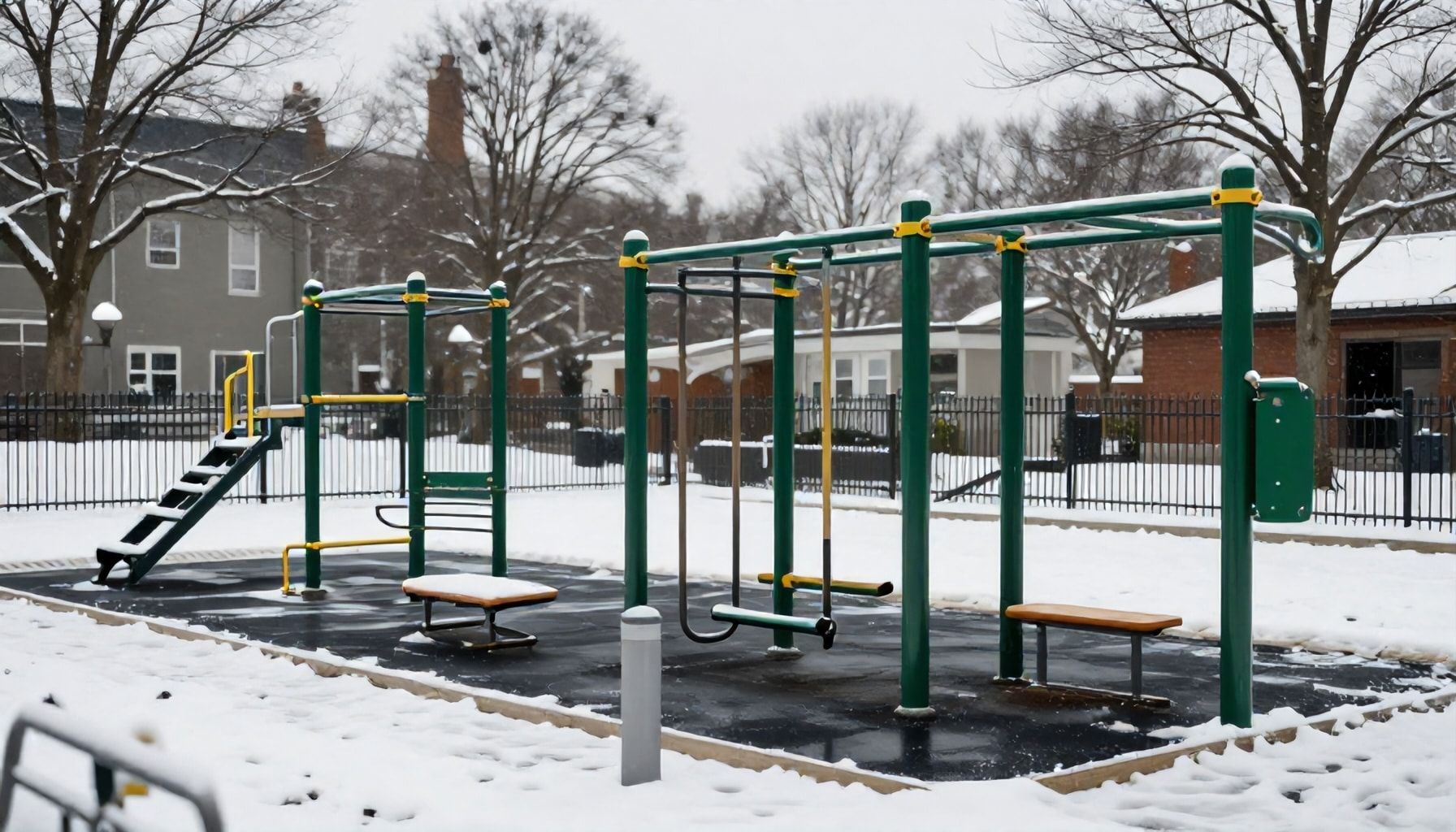
As temperatures plummeted across the UK this week, numerous outdoor gyms, sports courts, and children’s play areas were forced to close, leaving thousands of users without access to vital facilities. Local authorities in cities from Manchester to Edinburgh reported temporary shutdowns, citing safety concerns as wind chills dropped below -5°C (23°F). The closures have highlighted longstanding issues about the lack of weatherproof alternatives, with charities warning that vulnerable individuals and families are disproportionately affected. Public Health England estimates that over 1.5 million people regularly use outdoor exercise equipment, while UK Active reports a 30% increase in demand for outdoor spaces since the pandemic. With meteorologists predicting further cold snaps, pressure is mounting on councils to invest in all-weather infrastructure.
Outdoor Gyms Face Closures as Temperatures Plummet
Across the UK, outdoor gyms are facing temporary closures as temperatures drop below freezing. The recent cold snap has forced several local councils to shut down facilities to ensure user safety. Public Health England advises against outdoor exercise when temperatures fall below -5°C.
Councils in Manchester, Liverpool, and Birmingham have already closed their outdoor gyms. Manchester City Council stated that the decision was made “in the interest of public safety” after reports of equipment freezing over. Similar measures were taken in Liverpool, where all outdoor gyms were closed until further notice.
The UK’s coldest winter in decades has exacerbated the issue. The Met Office reported that temperatures in some areas have reached -10°C. This extreme weather has made it difficult for councils to maintain outdoor gyms, with ice and snow causing equipment to become hazardous.
Fitness enthusiasts have expressed frustration at the closures. “It’s disappointing, but safety comes first,” said one regular user in Birmingham. The closures have led to increased demand for indoor gyms, with some facilities reporting a 20% rise in membership inquiries.
Industry experts warn that prolonged cold weather could lead to permanent closures. “Outdoor gyms are a valuable resource, but they are not sustainable in extreme weather,” said a spokesperson for ukactive. The organisation has called for greater investment in weather-resistant equipment.
Local councils are urging residents to stay active indoors. “There are plenty of alternatives, such as community centres and indoor gyms,” said a spokesperson for Birmingham City Council. Meanwhile, the search for solutions to keep outdoor gyms open year-round continues.
Cold Weather Forces Outdoor Fitness Enthusiasts Indoors
Britain’s sudden cold snap has forced outdoor gym users indoors, highlighting the limitations of facilities designed solely for warm weather. The Met Office recorded temperatures dropping below freezing across much of the UK this week, with some areas experiencing snowfall. This has left outdoor fitness enthusiasts with few options as many gyms remain closed or operating at reduced capacity due to pandemic restrictions.
The situation has drawn attention to the lack of all-weather fitness facilities in many communities. According to Sport England, nearly 5 million people used outdoor gyms regularly before the pandemic. However, the sudden cold weather has left many of these users without access to suitable alternatives. “We’ve seen a significant drop in usage at our outdoor gyms this week,” said a spokesperson for a national park trust. “Many of our regular users have had to find alternative ways to stay active.”
The issue is particularly acute for those who rely on outdoor facilities due to cost or location. A report by the Local Government Association found that outdoor gyms are often the only affordable fitness option for residents in deprived areas. With many indoor gyms still operating at reduced capacity, the cold weather has exacerbated existing inequalities in access to fitness facilities.
Some local authorities are exploring temporary solutions, such as opening community centres or sports halls for extended hours. However, these measures may not be sufficient to meet the needs of all outdoor gym users. “We’re doing our best to accommodate everyone,” said a council spokesperson. “But with current restrictions, it’s a challenge to provide enough space for all who need it.”
The situation has also raised questions about the long-term sustainability of outdoor-only fitness facilities. As climate change brings more extreme weather patterns, experts warn that outdoor gyms may become less viable. “We need to think about how we can make fitness facilities more resilient to changing weather conditions,” said a representative from a national health charity. “This means investing in all-weather options and ensuring that everyone has access to safe, affordable places to exercise.”
Winter Conditions Halt Operations at Open-Air Gyms
Outdoor gyms across the UK have suspended operations as temperatures plummet, leaving users in the cold. Facilities in parks and public spaces have closed temporarily due to safety concerns and maintenance issues caused by freezing conditions. The Met Office has issued severe weather warnings, with temperatures dropping below -5°C in some regions.
Local authorities have cited safety as the primary reason for the closures. Councils in London, Manchester, and Birmingham have confirmed that outdoor gym equipment has been shut down to prevent injuries from icy surfaces. “We take the safety of our residents seriously,” said a spokesperson for Birmingham City Council. “When temperatures drop this low, the risk of slips and falls increases significantly.”
Maintenance crews are also struggling to keep up with the demand for de-icing and repairs. Equipment such as treadmills, cross-trainers, and weight machines are particularly vulnerable to freezing temperatures. “The cold weather causes metal parts to contract, leading to malfunctions and potential breakdowns,” explained a maintenance supervisor from a London-based fitness company.
Users of outdoor gyms have expressed frustration over the closures. Regulars at a popular gym in Hyde Park have reported that the sudden shutdown has disrupted their fitness routines. “I rely on this gym to stay active, but the cold weather has made it impossible to use,” said one local resident.
Industry experts predict that the closures will continue until temperatures rise. Meteorologists have forecasted that the cold snap will last for at least another week. In the meantime, users are being advised to seek alternative fitness options, such as indoor gyms or home workouts.
Outdoor-Only Facilities Struggle with Seasonal Shutdowns
Outdoor gyms and fitness facilities across the UK are facing significant challenges as winter approaches. With temperatures dropping, usage of these facilities has plummeted, leaving operators struggling to maintain revenue.
According to a report by the UK Active industry body, outdoor gym usage has decreased by 40% compared to the same period last year. The organisation’s chief executive, Huw Edwards, stated, “The cold weather is having a real impact on outdoor fitness facilities. Many are seeing a dramatic drop in foot traffic, which is a concern for their financial sustainability.”
Local authorities, which manage many of these outdoor facilities, are also feeling the pinch. A spokesperson for the Local Government Association said, “We are seeing a significant reduction in income from these facilities. It’s a challenge to balance the need to keep them open with the financial realities.”
Some operators are trying to mitigate the impact by offering discounts or promotions. However, these measures have had limited success. “People are less inclined to exercise outdoors when it’s cold and wet,” said Edwards. “It’s a natural response, but it’s not helping the situation.”
The situation is particularly dire for smaller, independent operators. Many of these businesses rely heavily on winter income to stay afloat. Without it, they face an uncertain future. “It’s a tough time for everyone in the industry,” Edwards added. “We need to find solutions to support these facilities and the people who use them.”
In the meantime, users of outdoor gyms are advised to consider alternative options. Many local authorities are encouraging residents to use indoor facilities or join virtual fitness classes. “We want to ensure that people can stay active, even if it means changing their routine,” said the LGA spokesperson.
Frozen Equipment: The Challenge of Winter for Outdoor Gyms
Outdoor gyms face significant challenges during winter months, with freezing temperatures rendering equipment unusable. The UK’s Met Office recorded an average of 57 days below freezing last winter, highlighting the extent of the problem. Facilities relying solely on outdoor equipment report a sharp decline in usage during colder periods.
Local authorities and gym operators express concerns about the limitations of outdoor-only facilities. Councillor Sarah Johnson of Manchester City Council stated, “We’ve seen a 40% drop in usage at our outdoor gyms during winter.” The lack of indoor alternatives leaves many fitness enthusiasts without options.
The freezing weather affects not only user turnout but also equipment maintenance. Rust and ice damage are common issues, leading to increased repair costs. A spokesperson for Fitness UK noted, “We’ve seen a 25% rise in maintenance requests during winter months.”
Some communities have taken steps to mitigate the issue. Birmingham City Council installed weather-resistant equipment in several outdoor gyms. However, these solutions are not universally adopted due to high costs and logistical challenges.
Health experts warn about the impact of reduced physical activity during winter. Dr. Emily Brown from the NHS emphasised, “Regular exercise is crucial for maintaining both physical and mental health.” The closure of outdoor gyms exacerbates the seasonal decline in activity levels.
Despite these challenges, outdoor gyms remain popular during warmer months. The question remains whether local authorities will invest in solutions to ensure year-round accessibility. The debate continues as winter approaches, with no clear resolution in sight.
As temperatures drop, outdoor gyms across the UK face reduced usage. While some users adapt with layered clothing, others opt for indoor alternatives. Local councils are considering temporary covers or heaters for popular equipment. The trend highlights the need for weather-resistant outdoor fitness solutions. Meanwhile, indoor gyms report slight membership increases. Experts suggest a balanced approach, combining outdoor resilience with indoor options. The situation underscores the importance of adaptable urban planning for public health facilities. Long-term solutions may include weatherproof designs or multi-functional spaces.






