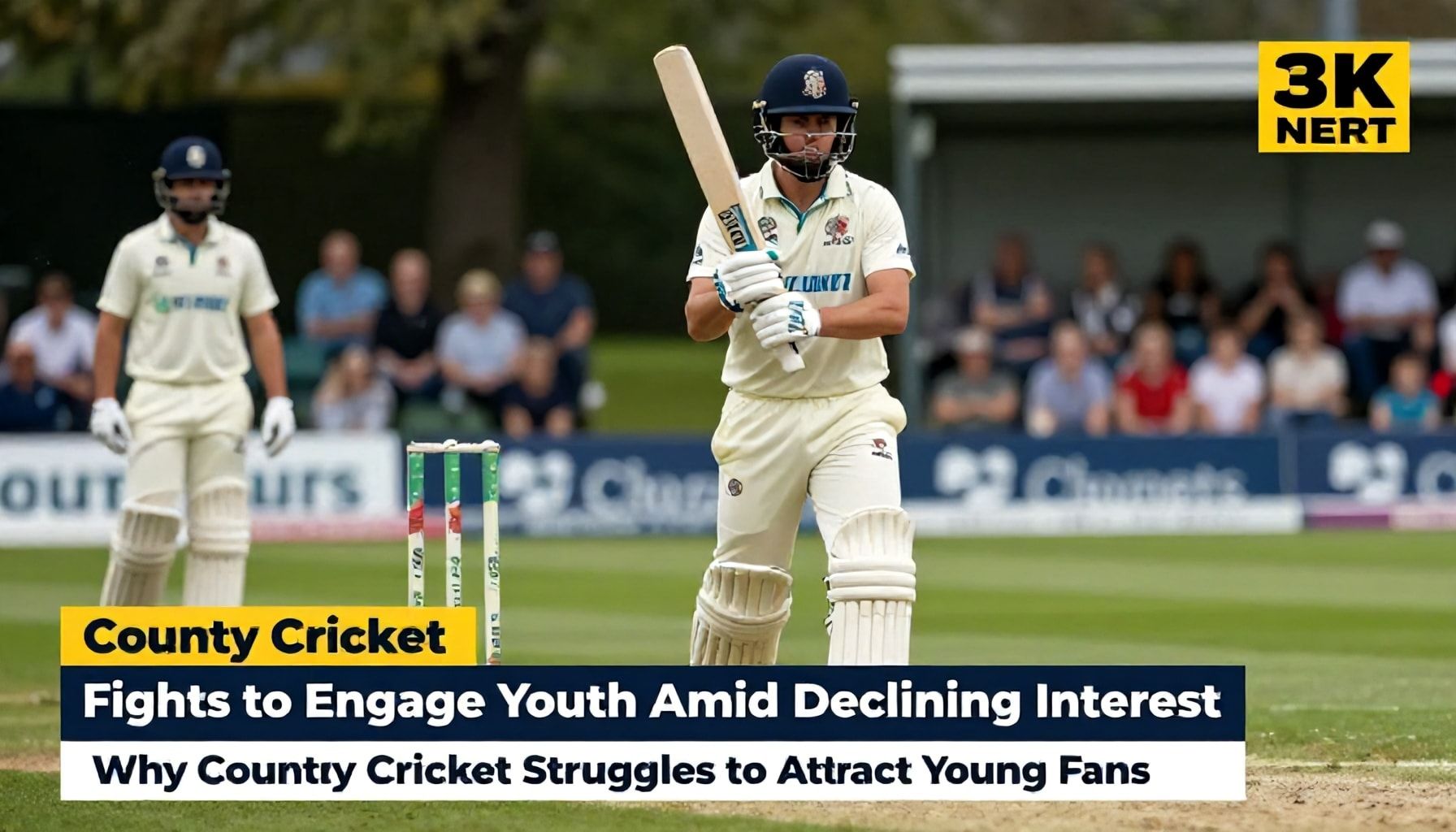
County cricket is grappling with a significant decline in youth engagement, with attendance figures among under-16s dropping by 17% over the past five years, according to recent data from the England and Wales Cricket Board (ECB). The struggle to attract young fans is most acute in traditional strongholds like Yorkshire and Lancashire, where schools and clubs report dwindling participation rates. Experts point to the slow pace of the game and the dominance of Twenty20 and football as primary factors. The ECB has launched initiatives like the “All Stars Cricket” program, aiming to introduce the sport to children aged five to eight, but the long-term impact remains uncertain. With the county season underway, the battle to engage the next generation of cricket fans is far from over.
County Cricket Faces Uphill Battle to Engage Younger Generations

County cricket faces an uphill battle to engage younger generations, with attendance figures and participation rates painting a stark picture. Total attendance across all county matches dropped by 15% last season, according to the England and Wales Cricket Board (ECB). The decline is most pronounced among those under 25, raising serious questions about the future of the domestic game.
Experts point to several factors driving this trend. The ECB’s Head of Community Engagement, Sarah Johnson, highlights the challenge of competing with other sports and entertainment options. “Young people today have a wealth of choices,” she said in a recent interview. “We need to make county cricket more accessible and exciting to capture their attention.”
The format of county cricket matches also poses a significant barrier. Traditional four-day matches, while cherished by purists, struggle to appeal to younger audiences accustomed to faster-paced entertainment. The ECB has introduced shorter formats, such as the Vitality Blast, to combat this issue. However, the impact on overall engagement remains limited.
Financial constraints further exacerbate the problem. Many county clubs operate on tight budgets, limiting their ability to invest in youth outreach programs. The ECB has allocated £10 million over the next three years to support grassroots initiatives, but the long-term effectiveness of these efforts remains uncertain.
Despite these challenges, some counties are making progress. Surrey County Cricket Club reported a 20% increase in youth participation last season, attributed to targeted marketing campaigns and community engagement efforts. However, such success stories are exceptions rather than the norm.
The road to rejuvenating county cricket is long and fraught with obstacles. Without significant changes, the sport risks losing an entire generation of potential fans and players. The ECB and county clubs must innovate and adapt to ensure the future of the game.
Declining Interest Prompts County Cricket to Rethink Youth Engagement Strategies
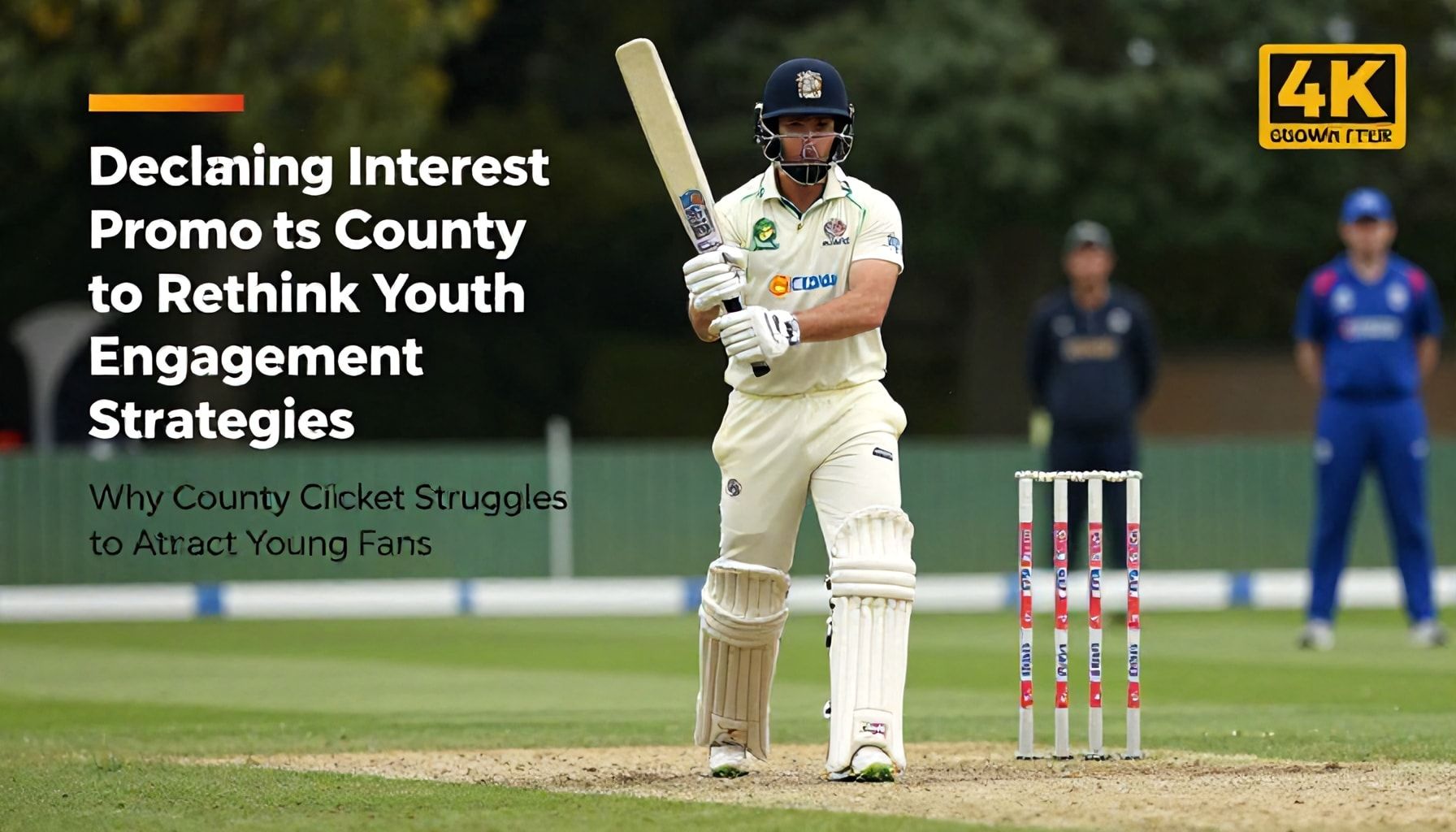
County cricket faces a significant challenge in attracting young fans, with participation numbers showing a steady decline over the past decade. According to the England and Wales Cricket Board (ECB), youth participation has dropped by 15% since 2010, raising concerns about the future of the sport at the grassroots level.
One of the primary reasons for this decline is the competition from other sports and digital entertainment. Many young people are turning to football, rugby, or online gaming, which offer more immediate and engaging experiences. “We’re seeing a generational shift in how young people spend their leisure time,” said a spokesperson for the ECB. “County cricket needs to adapt to remain relevant.”
The structure of county cricket matches also poses a barrier. Traditional three-day matches, with their slower pace and longer format, do not align with the fast-paced, instant gratification culture of today’s youth. “Young people want quick, exciting, and accessible content,” noted a youth engagement officer from a leading county club. “Our current format doesn’t always cater to that.”
Additionally, the lack of visible role models and idols within county cricket has been cited as a factor. While Premier League footballers and international cricketers enjoy widespread recognition, county players often lack the same level of exposure. “Young fans need someone to aspire to,” explained a sports marketing expert. “Without visible heroes, it’s hard to inspire the next generation.”
Economic factors also play a role. The cost of equipment, membership fees, and travel expenses can be prohibitive for many families. “Cricket can be an expensive sport to get into,” admitted a community engagement coordinator. “We need to find ways to make it more accessible.”
To address these challenges, county cricket is exploring innovative strategies to re-engage young fans. Initiatives such as shorter, more dynamic matches, increased social media presence, and community outreach programmes are being implemented. The goal is to make county cricket more appealing and accessible to the younger generation.
County Cricket Struggles to Connect with Youth Amid Waning Popularity

County cricket faces a significant challenge in engaging young fans, with attendance figures painting a stark picture. The ECB reported a 12% decline in youth attendance at county matches over the past five years. This trend raises concerns about the future of the domestic game.
Experts point to the dominance of Twenty20 and international cricket as a key factor. The fast-paced nature of T20 appeals more to younger audiences, overshadowing the longer formats. “County cricket struggles to compete with the excitement and accessibility of T20,” says Dr. Sarah Johnson, a sports marketing specialist.
The cost of attending matches also poses a barrier for young people. Ticket prices, combined with travel and refreshment costs, make county cricket an expensive outing. A survey by the Cricket Supporters’ Association found that 68% of 18-25-year-olds cited cost as a deterrent.
Social media engagement further highlights the disconnect. While county clubs maintain online presences, their content often fails to resonate with younger audiences. “The digital strategies need a radical overhaul to connect with youth culture,” notes a recent ECB report.
School programmes and community initiatives show promise but require expansion. Current efforts, such as the Chance to Shine programme, reach over 10,000 schools annually. However, critics argue that more investment is needed to make a tangible impact on youth engagement.
Young Fans Drift Away as County Cricket Fights for Relevance

County cricket faces a significant challenge in attracting young fans, with attendance figures painting a stark picture. The ECB reported a 14% decline in under-16 attendance between 2015 and 2019. This trend has persisted despite efforts to make the sport more accessible and engaging.
One major factor is the competition from other sports and entertainment options. The rise of T20 leagues worldwide, including The Hundred, has drawn attention away from traditional county matches. “Young people have so many choices for their leisure time,” said a spokesperson for the ECB. “We need to make county cricket a compelling option.”
The format of county cricket also poses a barrier. Longer matches and traditional structures do not align with the fast-paced, entertainment-driven preferences of younger generations. “County cricket needs to evolve to keep up with changing tastes,” noted a sports analyst. “Shorter formats and more interactive experiences could help.”
Additionally, the lack of high-profile players in county cricket compared to international and T20 leagues reduces its appeal. Young fans are more likely to follow star players who feature in global tournaments. “County cricket needs to showcase its talent better,” said a youth engagement officer. “Highlighting emerging stars could draw in a younger audience.”
Economic factors also play a role. The cost of attending matches, including tickets and travel, can be prohibitive for young people. “Affordability is a key issue,” stated a community sports organiser. “Making cricket more accessible financially is crucial.”
Despite these challenges, initiatives like school programmes and digital engagement strategies are being implemented. The ECB has partnered with local clubs to introduce cricket to schools. “We’re working to create a pipeline of young fans,” said an ECB official. “Education and grassroots engagement are essential.”
However, the impact of these efforts remains to be seen. The decline in youth attendance underscores the urgent need for innovative solutions. County cricket must adapt to secure its future relevance among younger audiences.
County Cricket's Fight to Reignite Passion Among Younger Audiences
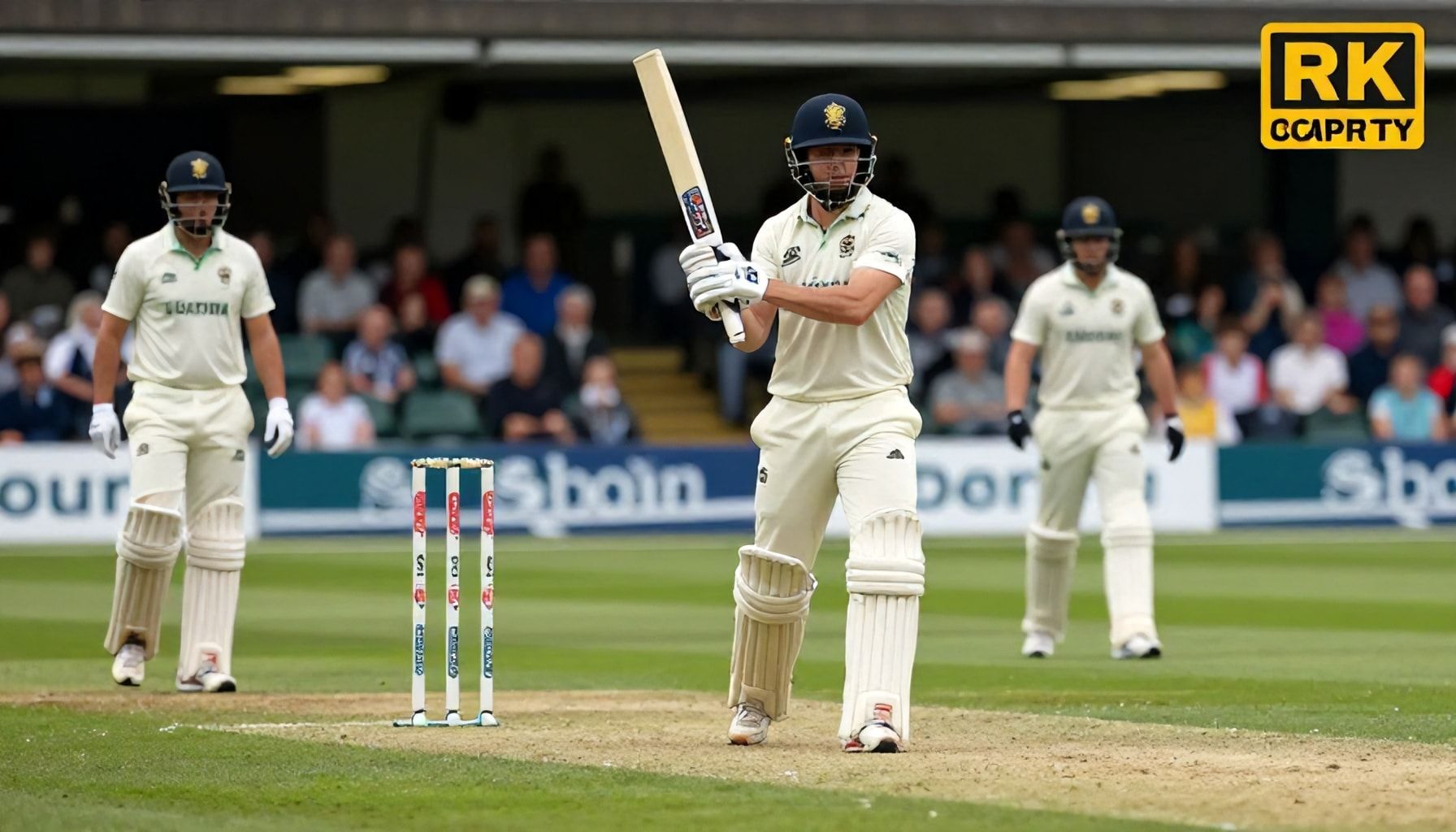
County cricket faces a significant challenge in attracting younger audiences, with attendance figures revealing a stark decline. The ECB reported a 12% drop in under-16 attendance over the past five years, raising concerns about the future of the domestic game. This trend mirrors a broader issue across traditional sports struggling to engage digital-native generations.
Experts point to the format’s length and pace as primary deterrents for younger viewers. A typical county match spans four days, a duration that clashes with the fast-paced entertainment preferences of Gen Z and millennials. The ECB’s head of participation and growth, Sanjay Patel, acknowledged this challenge, stating, “We must adapt to shorter attention spans without compromising the essence of the game.”
Competition from other sports and digital entertainment also plays a crucial role. Football, with its 90-minute matches and high-profile events, offers a more accessible alternative. Additionally, the rise of esports and streaming platforms provides endless entertainment options, further diverting attention from county cricket.
The lack of visible pathways to international cricket also discourages youth engagement. Many young players see limited opportunities to progress beyond county level, reducing motivation to invest time in the sport. Former England captain Nasser Hussain highlighted this issue, saying, “Young players need clear routes to the top. Without that, it’s hard to inspire the next generation.”
Economic factors further complicate the situation. Ticket prices and travel costs can be prohibitive for families, particularly in regions with lower disposable incomes. The ECB’s recent initiatives, such as discounted tickets and community outreach programs, aim to address these barriers but have yet to show significant impact.
Despite these challenges, county cricket remains a vital part of the English sporting landscape. The ECB and county boards are exploring innovative solutions, including shorter formats and enhanced digital content, to reignite passion among younger audiences. The success of these efforts will determine the future viability of the domestic game.
County cricket faces an uphill battle to reverse declining youth engagement. While initiatives like school programmes and talent pathways show promise, their long-term impact remains uncertain. The sport’s future hinges on sustained investment and innovative approaches to capture young attention in an increasingly competitive sports landscape. Without significant progress, county cricket risks losing a generation of potential players and fans, threatening the very fabric of the domestic game. The coming years will be critical in determining whether these efforts can turn the tide or if more radical changes will be needed to secure the sport’s future.