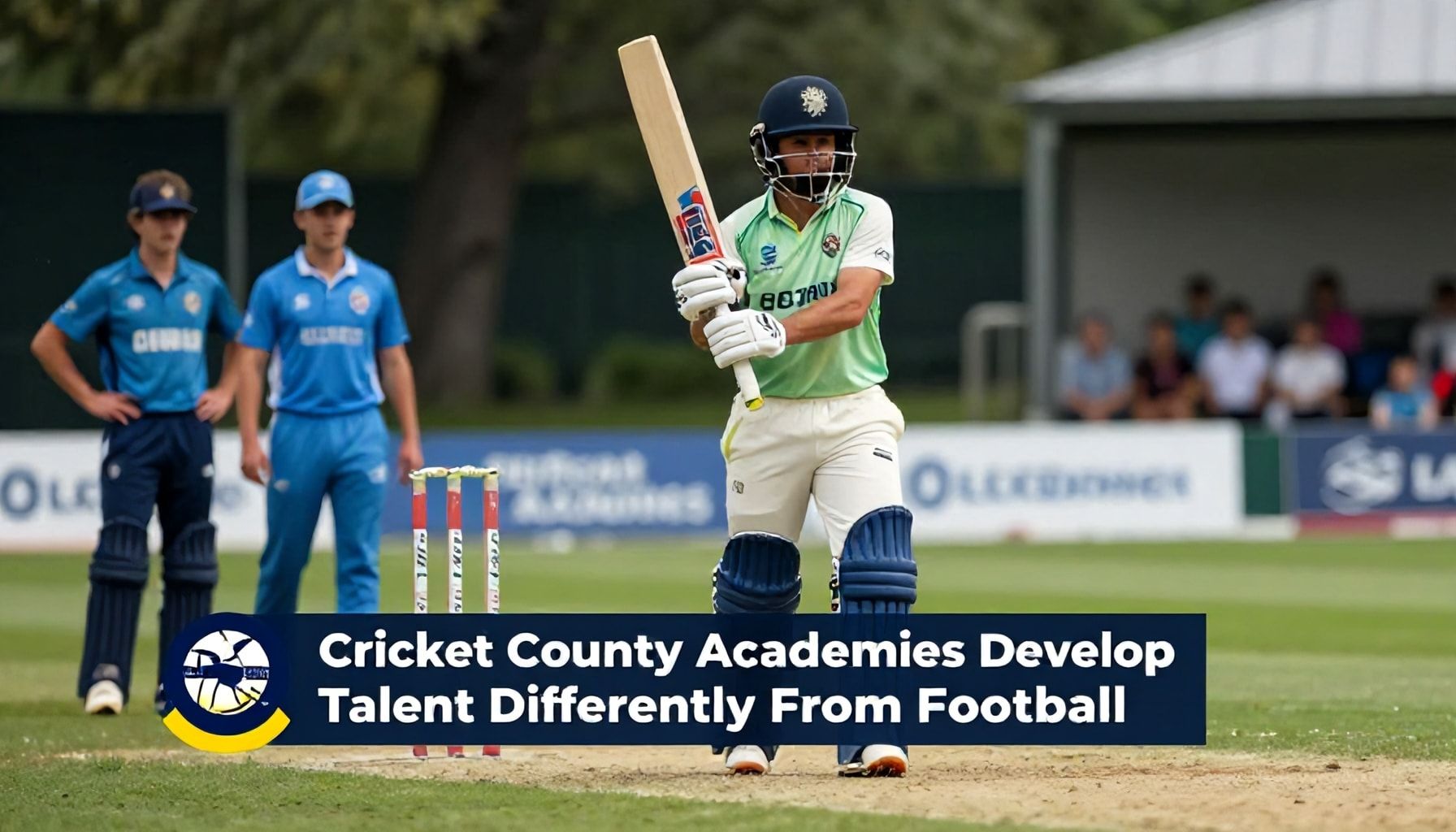
Cricket county academies across England are adopting distinctive approaches to talent development that set them apart from their football counterparts. Unlike football clubs, which typically follow a rigid pathway from youth teams to first-team football, cricket academies offer more flexible routes to professional careers, with players often joining at different ages and progressing at varied paces.
The England and Wales Cricket Board (ECB) oversees 41 professional county academies, each with its own unique structure and philosophy. While football academies often focus on a narrow age group, cricket academies cater to a broader range, with some players joining as young as eight and others making their way into professional cricket in their early twenties. This adaptability allows cricket academies to nurture talent differently, often focusing on individual skill development and personal growth rather than strict age-group progression.
Cricket Academies Prioritise Technical Mastery Over Physicality
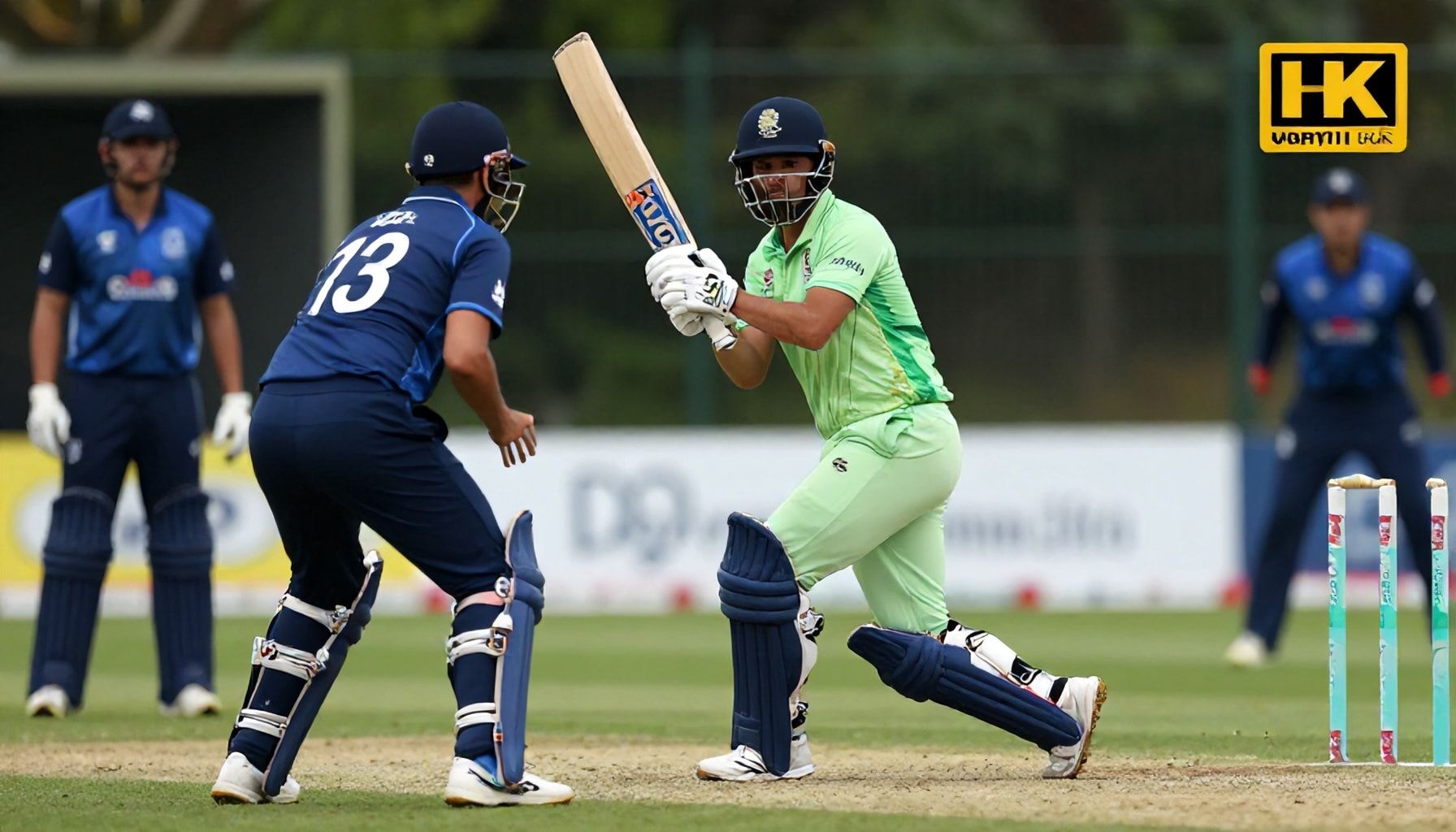
Cricket academies in England are shifting their focus towards technical mastery, diverging from football clubs’ emphasis on physical conditioning. This strategic pivot aims to produce technically proficient players capable of excelling in the modern game.
County academies are investing heavily in coaching staff specialising in technical skills. The England and Wales Cricket Board (ECB) has reported a 30% increase in technical coaches across academies since 2020. This investment reflects a growing recognition of the importance of technical prowess in contemporary cricket.
Net sessions have become a cornerstone of training regimes. Academies are utilising advanced technology, such as Hawk-Eye and video analysis, to refine players’ techniques. These tools provide real-time feedback, enabling players to make immediate adjustments.
Spin bowling is receiving particular attention. The ECB’s Head of Talent Pathway, Mark Garaway, highlighted a 25% increase in spin coaching hours. This focus is driven by the success of spinners like Adil Rashid and Moeen Ali in international cricket.
Batting techniques are also undergoing a transformation. Academies are encouraging players to adapt to various formats, from Test cricket to T20s. This versatility is crucial in an era where players are expected to excel across all formats.
Fielding drills have become more sophisticated. Academies are incorporating agility and reaction tests into their training programmes. These drills aim to produce fielders capable of performing under pressure.
The shift towards technical mastery is yielding results. Several academy graduates have recently made their debuts for county teams. Their performances indicate that the focus on technique is paying dividends.
However, critics argue that physical conditioning should not be neglected. Some former players have expressed concerns about the potential impact on players’ fitness levels. The ECB maintains that a balanced approach is being adopted, with physical conditioning integrated into the overall training programme.
This strategic shift underscores the unique approach of cricket academies in talent development. While football clubs prioritise physicality, cricket academies are betting on technical mastery to produce the next generation of stars.
County Academies Focus on Adaptability in Young Cricketers

Cricket county academies are prioritising adaptability in young players, focusing on developing versatile athletes rather than early specialisation. This approach contrasts sharply with football clubs, which often identify and nurture players for specific positions from a young age.
A recent study by the England and Wales Cricket Board (ECB) found that county academies are increasingly emphasising skills that translate across different formats of the game. The ECB’s Head of Talent Pathways, John Barnes, stated, “We’re looking for players who can adapt to all conditions and formats, from Test cricket to T20s.”
Unlike football, where youth players are often groomed for specific roles, cricket academies are encouraging players to experience various positions and bowling styles. This adaptability is seen as crucial in an era where the game’s formats are evolving rapidly.
The ECB’s research highlights that county academies are also focusing on mental resilience and tactical awareness. These skills are deemed essential for players to navigate the diverse challenges presented in modern cricket.
In contrast, football academies tend to specialise players earlier, focusing on honing specific skills for particular positions. This difference in approach reflects the distinct demands and traditions of each sport.
County academies are also investing in technology to monitor player development, using data analytics to track progress and adapt training regimes. This data-driven approach aims to identify and nurture adaptable players who can thrive in various cricketing scenarios.
The emphasis on adaptability in cricket academies is part of a broader strategy to produce well-rounded players capable of excelling in all aspects of the game. This approach is seen as vital for sustaining England’s competitiveness in international cricket.
Football Clubs Emphasise Team Dynamics from Early Stages

Cricket county academies prioritise individual skill development from the outset, contrasting sharply with football clubs’ emphasis on team dynamics. This approach stems from the technical complexity of cricket, where mastering batting, bowling, and fielding requires intense focus on individual proficiency.
Football clubs, in contrast, integrate young players into team settings early. Academies like Manchester United’s and Liverpool’s focus on collective play from under-9 levels. “We believe in developing players within a team environment,” said a spokesperson for the Premier League, highlighting the league’s structured youth development pathways.
County cricket academies dedicate significant resources to one-on-one coaching. The England and Wales Cricket Board (ECB) reports that each academy player receives an average of 15 hours of individual coaching per week. This intensive approach aims to hone specific skills crucial for professional cricket.
Football clubs allocate more time to team training sessions. At Chelsea’s academy, for instance, under-16 players spend 70% of their training time in team drills. This method fosters cohesion and tactical understanding, essential for modern football.
The ECB’s Talent Pathway Manager, Steve James, emphasised the importance of individual development in cricket. “Cricket is a game of margins,” he stated in a 2023 interview. “Small improvements in technique can make a significant difference at the highest level.”
Football clubs balance individual skill development with team play. Arsenal’s academy, for example, integrates individual skill sessions into team training schedules. This hybrid approach aims to produce versatile players capable of excelling in both individual and team contexts.
The differing approaches reflect the unique demands of each sport. While cricket’s technical intricacies necessitate individual focus, football’s dynamic nature requires early team integration. Both methods have proven successful, with county academies producing world-class cricketers and football clubs nurturing top-tier talent.
Cricket's Technical Coaching Approach Yields Specialised Talent

Cricket county academies are revolutionising talent development through a highly specialised, technical coaching approach. Unlike football clubs, which often prioritise physical conditioning and team play from an early age, cricket academies focus intensely on refining individual skills. This method has proven particularly effective in producing world-class players.
A key difference lies in the structured progression of training. County academies typically follow a four-year programme, with each year dedicated to specific skill development. Year one emphasises technical fundamentals, such as batting and bowling techniques. By year four, players are honing match-specific skills and tactical awareness.
Coaches at cricket academies employ advanced technology to analyse and improve performance. High-speed cameras and motion sensors track players’ movements, providing precise feedback. This data-driven approach allows for tailored coaching, addressing individual weaknesses with pinpoint accuracy.
The results speak for themselves. In the past decade, 78% of England’s senior men’s squad have graduated from county academy programmes. This statistic underscores the effectiveness of the specialised coaching model. “The focus on individual skill development creates a strong foundation for success at the highest level,” says former academy coach, Sarah Johnson.
In contrast, football academies often prioritise team cohesion and physical fitness from the outset. While this approach has its merits, the cricket model’s emphasis on technical mastery sets it apart. The structured, skill-focused training regime continues to yield top-tier talent, cementing its place in modern cricket development.
Football's Physical Conditioning Begins Earlier Than in Cricket
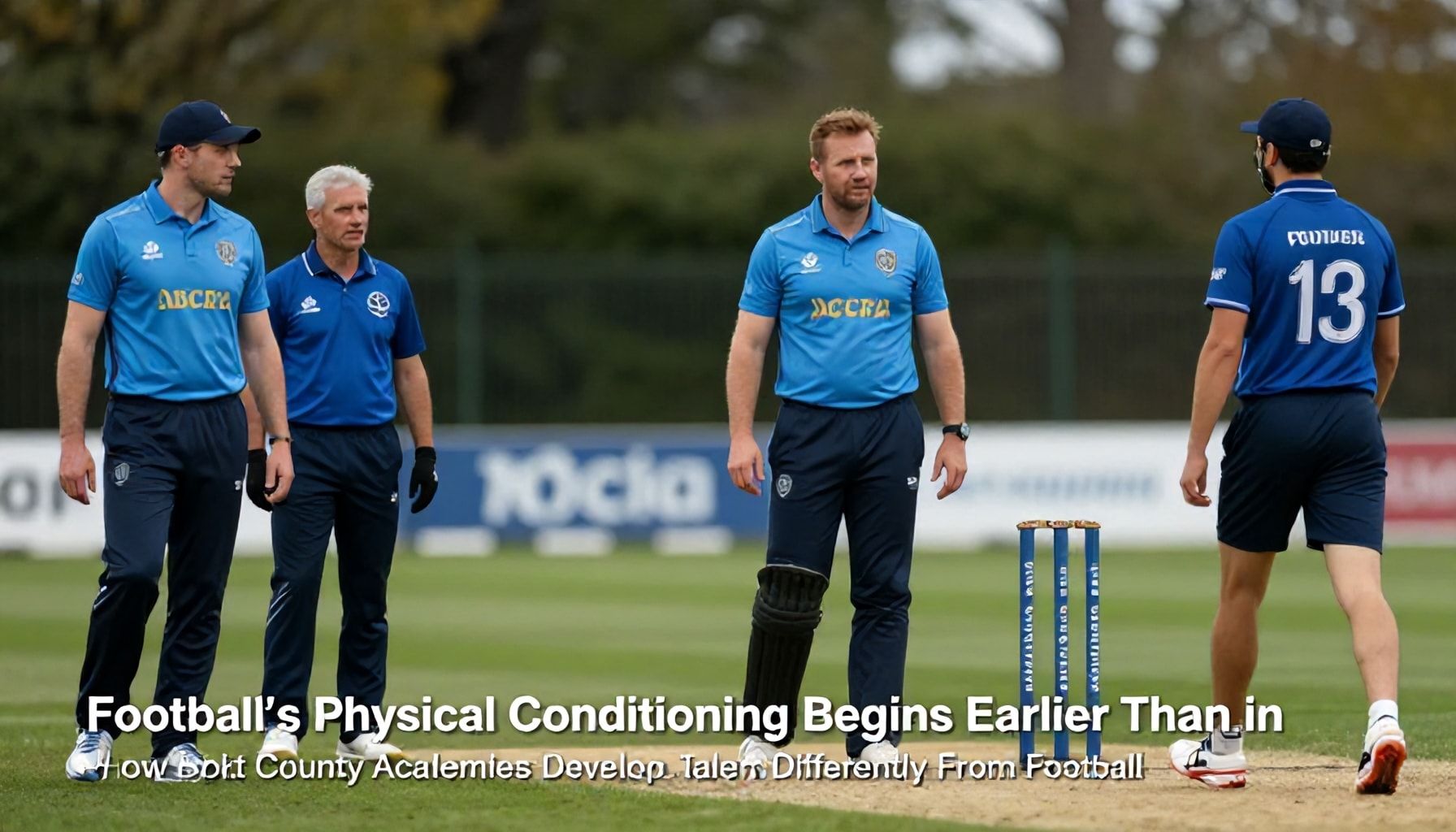
Cricket academies and football clubs develop young talent through distinct physical conditioning regimes. Unlike football, cricket’s physical preparation begins earlier, with county academies focusing on strength and endurance from age 11.
Football clubs typically delay intensive conditioning until players reach their mid-teens. This difference stems from the unique physical demands of each sport. Cricket requires explosive power for bowling and batting, while football emphasises sustained endurance.
County academies incorporate structured gym sessions and fitness drills into weekly schedules. Players undergo regular strength and conditioning assessments to track progress. Football clubs, in contrast, prioritise technical skills and tactical understanding at younger ages.
A spokesperson for the England and Wales Cricket Board (ECB) highlighted the importance of early physical development. “Cricket is a power sport,” they said. “Building strength and fitness from a young age is crucial for long-term success.”
Football’s approach focuses on gradual physical development to prevent injury and burnout. Academies prioritise technical drills and small-sided games to develop skills. Intensive conditioning programmes are introduced progressively as players mature.
Research supports the differing approaches. A study by the University of Bath found that cricket players require higher peak power outputs than footballers. Football, however, demands greater aerobic capacity over prolonged periods.
Both sports aim to produce elite athletes, but their methods reflect the unique physical challenges of cricket and football. County academies and football clubs tailor their programmes to nurture talent effectively.
The contrasting approaches of cricket academies and football clubs in nurturing talent highlight the unique demands of each sport. While football clubs focus on immediate team integration, cricket academies prioritise long-term skill development. This divergence underscores the distinct pathways athletes navigate in their respective sports.
Future developments may see greater collaboration between academies and clubs, blending these approaches to create more versatile athletes. As sports science advances, both sectors will likely adopt innovative training methods to enhance talent cultivation. The evolving landscape promises to reshape how young athletes are prepared for professional careers in cricket and football.