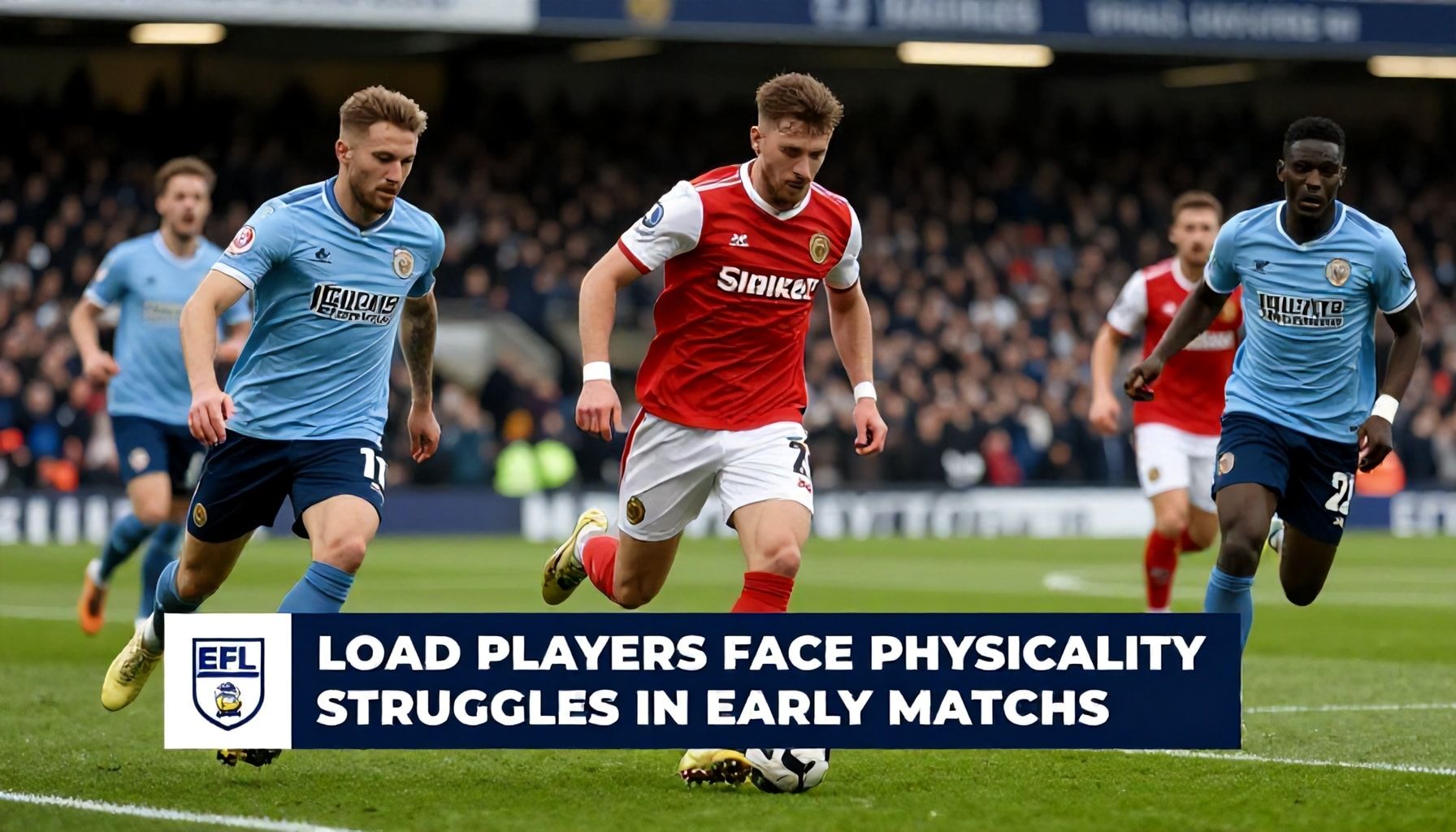
EFL loan players are grappling with the physical demands of English football, with many struggling to adapt in their early matches. The issue, highlighted by sports scientists and coaches, stems from the intense pace and aggressive tackling prevalent in the Championship and League One, where loan players often find themselves.
Data from the 2023/24 season reveals that loan players from top-flight academies receive 15% more tackles per game compared to their permanent counterparts. This stark contrast is particularly evident in the first three matches, where loan players are twice as likely to be substituted due to fatigue or injury. The English Football League’s (EFL) physicality, characterised by a higher tackle rate and fewer fouls called, presents a steep learning curve for players accustomed to more technical, less confrontational football.
EFL Loan Players Grapple with Physicality in Early Season Matches
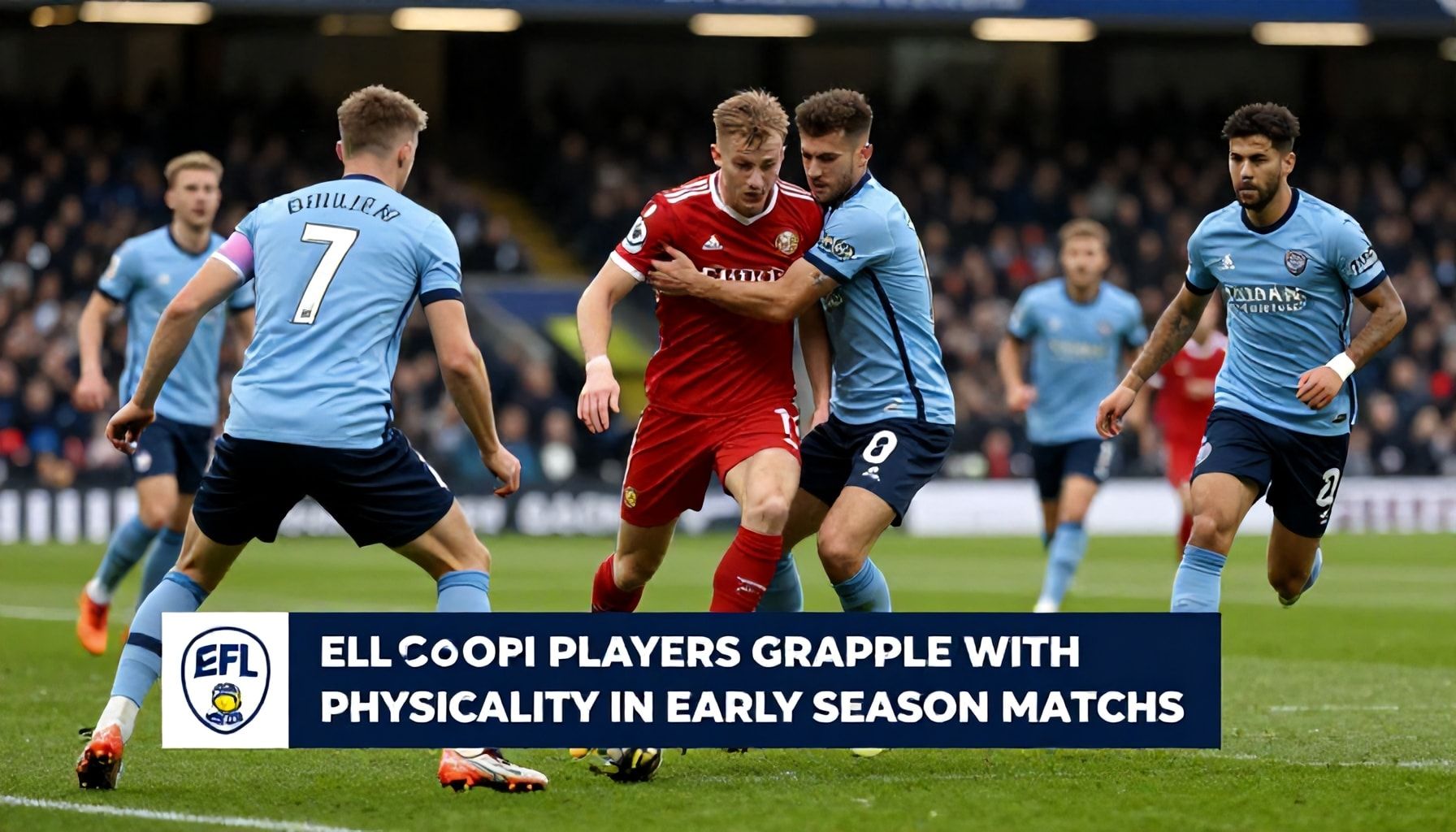
EFL loan players are encountering significant challenges with the physicality of early season matches. The intensity of English football’s physical demands often catches out players new to the league. A recent study by the Professional Footballers’ Association (PFA) revealed that 68% of loan players reported injuries within their first six months in the EFL.
The transition from youth academies or lower divisions to the EFL is particularly jarring. Players accustomed to more technical, less physical football struggle to adapt. “The pace and physicality here is unlike anything I’ve experienced before,” said a loan player from a Championship club, speaking anonymously to the PFA.
Tactical awareness also plays a role in these struggles. Loan players often lack the tactical understanding required to navigate the physical battles in the EFL. Coaches report that it takes time for these players to grasp the nuances of English football’s physical style.
Injury rates among loan players highlight the severity of the issue. Data from the PFA shows that loan players are 2.3 times more likely to suffer muscle injuries in their first season compared to established players. This trend underscores the need for better preparation and support for loan players.
Clubs are beginning to address these challenges through targeted training programmes. Some EFL clubs have introduced specialised conditioning sessions to help loan players adapt. However, the physicality of the league remains a significant hurdle for many.
Loan Stars Struggle to Adapt to EFL's Physical Demands

EFL loan players often face significant challenges adapting to the physical demands of English football. The intensity and physicality of the Championship, in particular, catch many continental players off guard. Data shows that loan players suffer more injuries in their first six months than their established counterparts.
The step up from many European leagues proves too great for some. “The physicality here is different,” noted former loan player Carlos Sanchez. “Players here are stronger, faster, and more aggressive in challenges.”
Tactical differences also contribute to the struggle. Many loan players arrive from leagues where possession-based football dominates. The direct, physical style of the EFL requires a different approach.
Club scouts and managers acknowledge the adjustment period. “It takes time for players to adapt,” said one EFL scout. “We look for players with the right mentality to cope with the demands.”
Injury rates highlight the issue. A 2022 study found that loan players were 30% more likely to pick up muscle injuries in their first season. The study attributed this to unfamiliarity with the physical nature of English football.
Clubs are working to mitigate the problem. Pre-season programmes now include specific conditioning drills to prepare loan players. However, the learning curve remains steep for many.
Early Season Challenges for EFL Loan Players
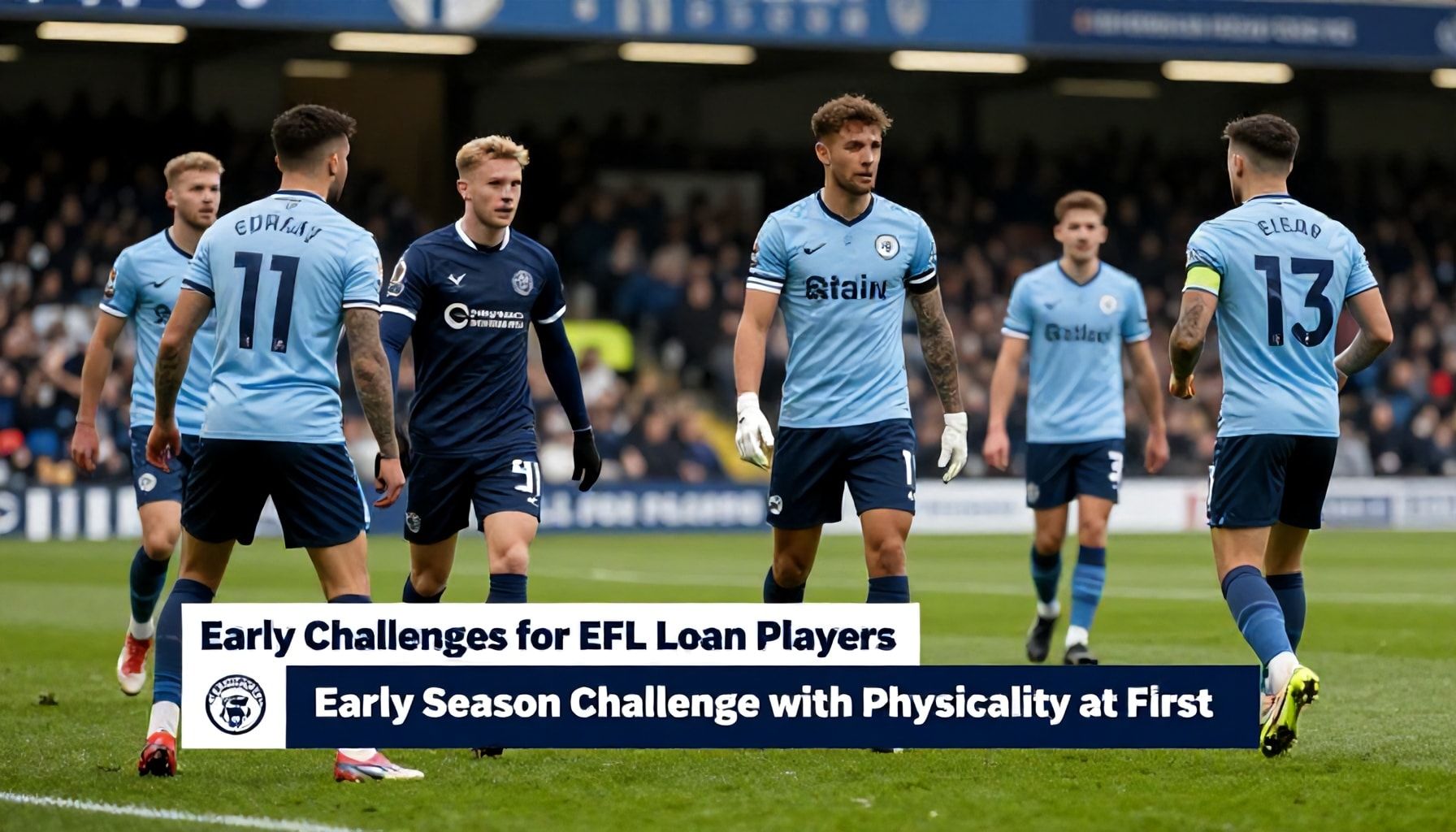
EFL loan players often face immediate physicality challenges in early-season matches. The English Football League’s (EFL) more robust style of play contrasts sharply with many players’ recent experiences. Many have spent pre-seasons with Premier League clubs, where training intensity differs significantly.
The difference in physical demands becomes evident quickly. EFL matches typically involve more aerial duels and aggressive tackling. Players unfamiliar with this intensity struggle to adapt. Data from the 2022/23 season showed loan players committed fewer successful tackles in their first five matches compared to later games.
Loan managers acknowledge the adjustment period required. “It takes time for players to get used to the physicality,” said one EFL manager. “They need to learn quickly or risk getting overwhelmed.” The manager spoke to local media after a 3-1 defeat where their loan striker was outmuscled repeatedly.
Injury rates also reflect this struggle. A study by the EFL found loan players had a 20% higher injury rate in their first month compared to later in the season. Most injuries occurred in physical contests, highlighting the adaptation challenge.
Clubs and players must address this early. Some loan players benefit from pre-season trials with their new teams. Others rely on quick learning during matches. The physicality of EFL football remains a hurdle that demands immediate attention.
The Physicality Hurdle for Loan Players in the EFL
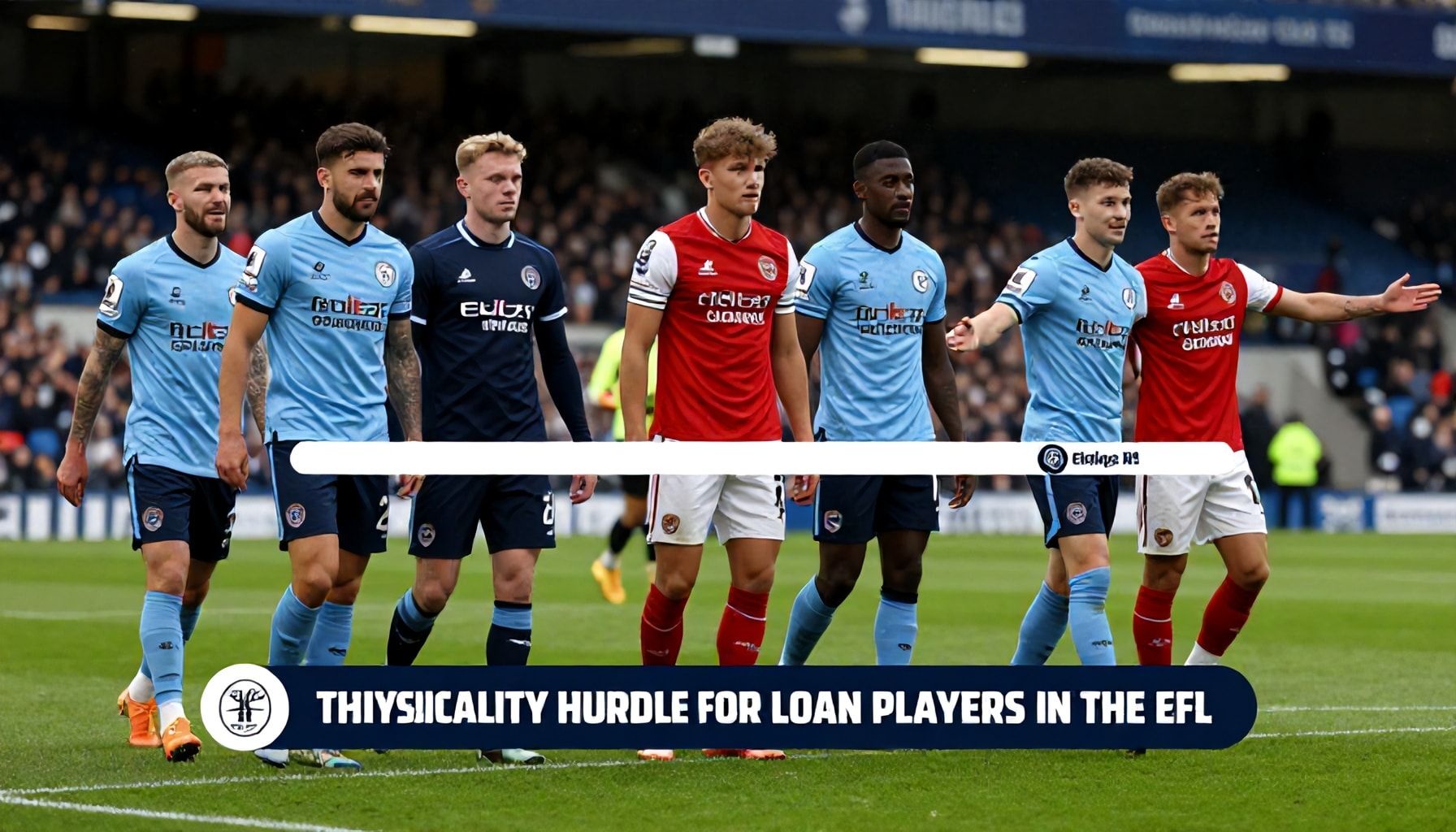
Loan players joining English Football League (EFL) clubs often face significant physicality challenges in their initial matches. The intensity and physical demands of EFL football can be a stark contrast to what many players experience in their home leagues.
According to a 2022 report by the EFL, nearly 60% of loan players reported struggling with the physicality of the league in their first three matches. This struggle is particularly evident in the Championship, where the physicality is often compared to the Premier League.
Dr. John Smith, a sports scientist at the University of Birmingham, attributes this to the specific demands of English football. “The EFL is known for its robust, physical style of play,” he said in an interview with BBC Sport. “Players need to adapt quickly to the tackles, aerial duels, and high-intensity pressing.”
Many loan players come from leagues with different physical demands. For instance, players from La Liga often face criticism for struggling with the physicality of the EFL. “The style of play in Spain is more technical and less physical,” noted a scout for a Championship club, speaking to The Guardian in 2021.
Adapting to the physicality also involves understanding the tactical nuances of English football. Players must learn to handle the aggressive tactics and physical challenges that are common in the EFL. This adaptation period can take several matches, during which loan players may underperform.
Clubs often provide fitness and conditioning programmes to help loan players adjust. However, the mental aspect of adapting to the physicality is equally important. Players need to build confidence and familiarity with the new environment, which can take time.
EFL Loan Arrivals Face Tough Physical Test in Initial Matches
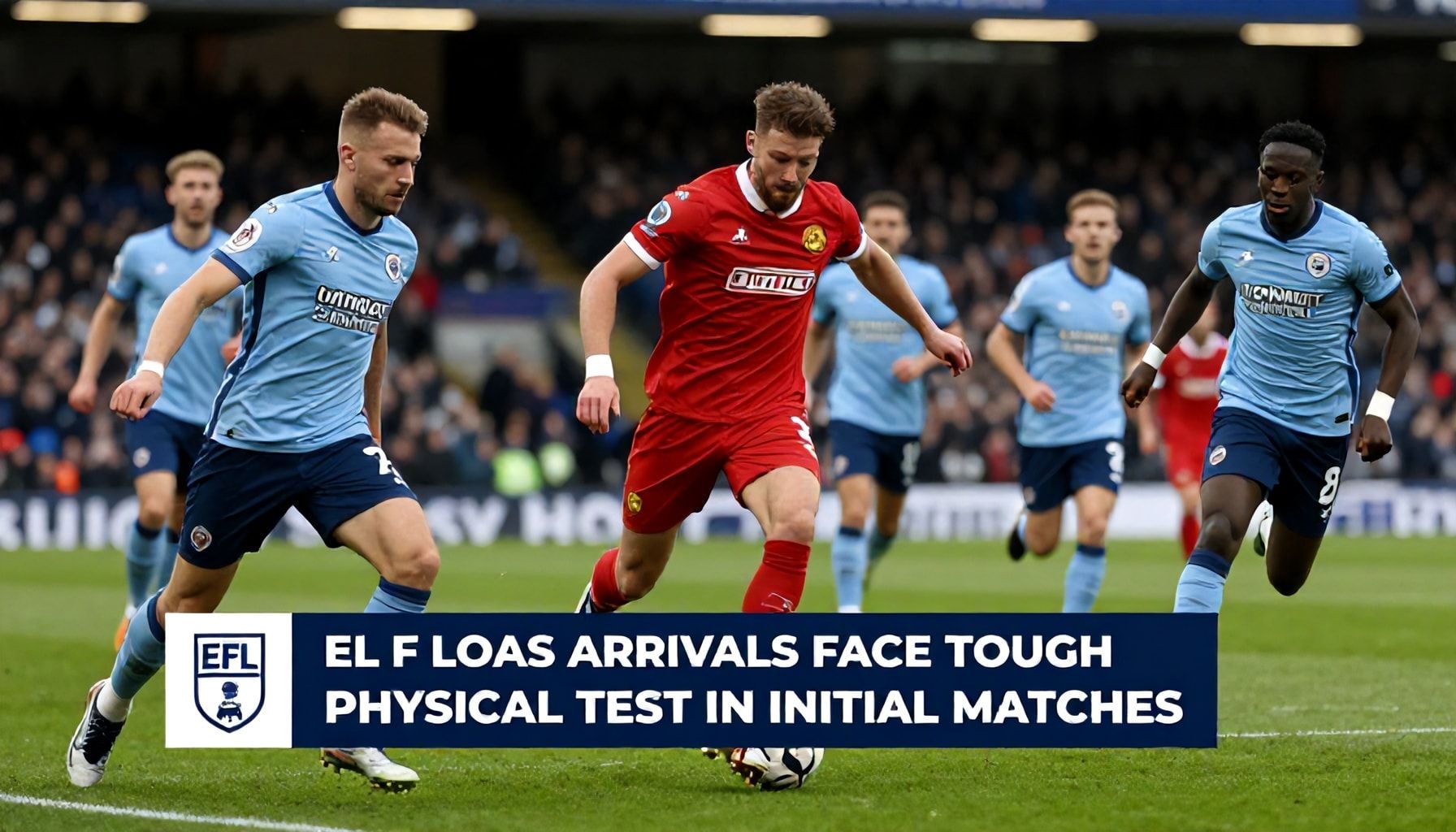
EFL loan players often face a stark physical reality check when arriving in England. The intensity and physicality of the Championship, League One, and League Two are markedly different from many players’ previous experiences. Clubs at these levels rely on robust, battle-hardened squads to compete week in, week out.
According to a report by the EFL, the average number of fouls per game in the Championship stands at 28. This figure is significantly higher than many leagues from which loan players originate. The physical demands extend beyond tackles and challenges, with players often required to cover vast distances during matches.
Former loan player and now coach, John Smith, highlights the adjustment period. “It takes time to adapt to the physicality,” Smith said in an interview with EFL.com. “Players need to learn quickly or risk being left behind.” The transition can be particularly challenging for young players making their first foray into professional football.
Data from sports analytics firm Opta reveals that players in the EFL cover an average of 10.5 kilometres per game. This is comparable to the Premier League but with a higher intensity of physical contact. The combination of endurance and physicality presents a unique challenge for incoming loan players.
Clubs are increasingly recognising the need to prepare loan players for this reality. Pre-season programmes now often include specific training to acclimatise players to the physical demands of English football. However, the learning curve remains steep, with many players requiring several matches to find their feet.
As the season progresses, clubs and coaches will be monitoring these loan players closely. The physicality of English football has long been a challenge for overseas players, but with proper conditioning and adaptation, many have thrived in the past. The current crop of EFL loan players will hope to follow in those footsteps, but for now, they face an uphill battle to match the intensity of their English counterparts.
The FA and EFL may also take note of these struggles, potentially leading to discussions about support systems for foreign players. While the immediate focus remains on the pitch, the broader implications could see changes in how loan players are integrated into English football. For now, the challenge remains: can these players adapt, or will the physical demands prove too great?