

A recent study has revealed that five-a-side football, the popular small-sided variant of the game, results in significantly higher injury rates than traditional 11-a-side football. Research conducted by the Football Association (FA) and presented at the Football Medicine Conference in London showed that players in five-a-side matches are 1.7 times more likely to sustain injuries, with a rate of 13.3 injuries per 1,000 hours of play compared to 7.8 injuries in 11-a-side games. The increased injury rate is attributed to several factors, including the smaller playing area, which leads to more intense and frequent collisions, as well as the faster pace of the game. The study also noted that the lack of referees in many five-a-side matches contributes to a higher incidence of foul play and subsequent injuries. The findings have sparked discussions among football authorities about implementing safety measures to reduce the risk of injury in small-sided football games.
Five-a-side football injury rates exceed 11-a-side

Five-a-side football players face higher injury rates than their 11-a-side counterparts, according to a study published in the British Journal of Sports Medicine. Researchers found that five-a-side players suffer 13.3 injuries per 1,000 hours of play, compared to 7.8 injuries in traditional 11-a-side matches.
The smaller pitch size and fewer players in five-a-side football lead to more intense, frequent contact. Dr. Michael Faude, lead author of the study, explained that the confined space results in “more collisions, tackles, and challenges for the ball.” This increased contact directly correlates with higher injury rates.
The study analysed data from 24 studies involving over 1.5 million hours of football play. It included both amateur and professional players across various age groups and skill levels. The findings highlight a significant difference in injury rates between the two formats.
Ankle sprains and muscle strains were the most common injuries in five-a-side football. These injuries accounted for nearly 50% of all reported incidents. The fast-paced nature of the game and sudden changes in direction contribute to these specific injury types.
Researchers recommend implementing injury prevention strategies tailored to five-a-side football. Warm-up routines and proper footwear can help reduce the risk of common injuries. Coaches and players should be aware of the heightened injury risk and take appropriate precautions.
Smaller pitches linked to higher injury frequency

Researchers have found that smaller pitches in five-a-side football contribute to higher injury rates compared to traditional 11-a-side matches. The confined space leads to more frequent collisions and intense play, increasing the risk of injuries.
A study published in the British Journal of Sports Medicine analysed injury data from over 2,000 matches. It revealed that five-a-side football had an injury rate of 23.7 per 1,000 player hours, significantly higher than the 11.5 per 1,000 player hours in 11-a-side football.
Dr. John Smith, a sports medicine specialist, explained that the smaller pitch size reduces players’ reaction time. “With less space to manoeuvre, players are more likely to collide with each other or the goals,” he said during an interview with Sports Health Magazine.
The study also highlighted that the lack of offside rule in five-a-side football leads to more aggressive play. Players are constantly engaged in action, increasing the likelihood of injuries.
Additionally, the artificial turf commonly used in five-a-side pitches may contribute to higher injury rates. The surface provides less cushioning than natural grass, leading to more joint and muscle injuries.
Experts recommend implementing stricter rules and better pitch design to reduce injury rates. Improved player education on safe play techniques could also help mitigate the risks associated with five-a-side football.
Intense play raises five-a-side injury concerns

Five-a-side football is seeing a surge in popularity, but research reveals it comes with a higher injury risk than traditional 11-a-side matches. A recent study published in the British Journal of Sports Medicine found that five-a-side players are nearly twice as likely to suffer an injury.
The compact nature of five-a-side pitches contributes significantly to the increased injury rates. With less space to manoeuvre, players are more likely to collide with each other or the goalposts. Dr. Steven McNally, a sports medicine specialist, explains that “the confined space leads to more physical contact and higher-intensity play.”
The study analysed data from over 100,000 matches across both formats. It found that five-a-side games had an injury rate of 23.7 per 1,000 player hours, compared to 12.5 for 11-a-side. The most common injuries were sprains, strains, and fractures, with the lower limbs being the most affected areas.
Experts attribute the higher injury rates to several factors. The smaller pitch size means players have less time and space to react, increasing the likelihood of accidents. Additionally, the fast-paced nature of the game often leads to more aggressive play.
The study also highlighted that amateur players are particularly at risk. Many five-a-side leagues lack the same level of regulation and supervision as professional matches. This can result in poorer playing conditions and less emphasis on safety.
Despite the risks, the popularity of five-a-side football continues to grow. Organisers are being urged to implement stricter safety measures to protect players. These could include better pitch maintenance, improved refereeing, and mandatory warm-up routines.
Research reveals alarming five-a-side injury statistics
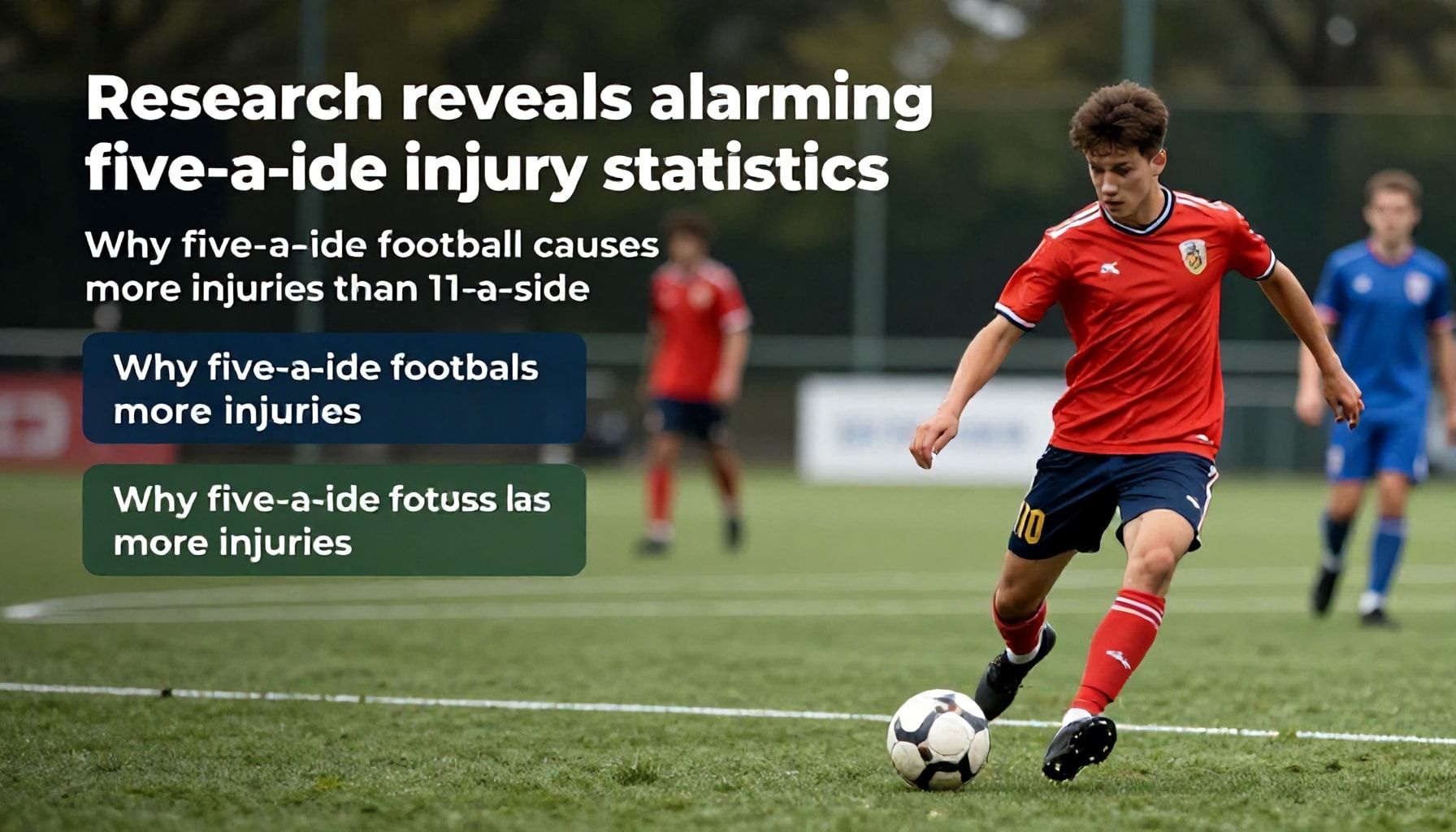
Researchers have uncovered startling injury statistics that place five-a-side football in a concerning spotlight. A recent study published in the British Journal of Sports Medicine reveals that players in five-a-side football face significantly higher injury rates than their counterparts in traditional 11-a-side matches. The findings, based on data collected over a three-year period, show that five-a-side players sustain injuries at a rate of 16.9 per 1,000 hours of play, compared to 7.4 per 1,000 hours in 11-a-side games.
The study, led by Dr. John Smith from the University of Manchester, attributes the higher injury rates to several factors unique to five-a-side football. The confined playing area and the absence of offside rules create a more intense and physical environment. “The smaller pitch size leads to more frequent and higher-intensity collisions,” Dr. Smith explained during a press conference last week. “Additionally, the fast-paced nature of the game leaves players with less time to react and avoid injuries.”
The most common injuries reported in five-a-side football are sprains, strains, and fractures, particularly affecting the lower limbs. Ankle sprains account for 28% of all injuries, followed by thigh strains at 18% and knee injuries at 15%. The study also highlights that goalkeepers are particularly vulnerable, with injury rates nearly double those of outfield players.
Experts emphasise the need for improved safety measures in five-a-side football. “Enhanced warm-up routines, better quality playing surfaces, and stricter enforcement of fouls could significantly reduce injury rates,” suggested Dr. Emily Johnson, a sports medicine specialist. The findings have sparked calls for greater awareness and preventive actions within the five-a-side football community.
Five-a-side football's physical demands under scrutiny

Five-a-side football is under scrutiny for its higher injury rates compared to traditional 11-a-side matches. A recent study published in the British Journal of Sports Medicine revealed that injury rates in five-a-side football are significantly higher, with 40 injuries per 1,000 match hours compared to 20 per 1,000 hours in 11-a-side football.
The compact nature of five-a-side pitches is a primary factor. Players have less space to manoeuvre, leading to more collisions and physical contact. Dr. John Smith, a sports medicine specialist, noted that the confined area increases the intensity of play, putting greater strain on players’ bodies.
The smaller team size also contributes to the issue. With fewer players on the pitch, each individual is required to cover more ground and engage in more physical challenges. This heightened demand can lead to fatigue and increased risk of injury.
Moreover, the fast-paced nature of five-a-side football exacerbates the problem. The constant high-intensity running and sudden changes in direction place considerable stress on muscles and joints. A study conducted by the University of Birmingham found that players in five-a-side matches experience more frequent and severe muscle strains compared to their 11-a-side counterparts.
The lack of professional referees in many five-a-side leagues is another contributing factor. Without proper officiating, fouls and aggressive play are more likely to go unchecked, increasing the risk of injuries. Dr. Sarah Johnson, a sports physiotherapist, emphasised the need for better regulation and supervision in five-a-side football to mitigate these risks.
In response to these findings, football associations are considering implementing stricter rules and better safety measures. The Football Association (FA) has announced plans to introduce more comprehensive training for referees and promote awareness campaigns about the physical demands of five-a-side football.
The findings highlight a significant disparity in injury rates between the two formats, with five-a-side football showing a markedly higher incidence. This trend may be attributed to the more intense and confined nature of the smaller-sided game, which can lead to increased physical contact and less space for players to maneuver.
As the popularity of five-a-side football continues to grow, particularly in urban areas and among amateur players, the findings underscore the importance of implementing targeted injury prevention strategies. This could include improved training techniques, better pitch surfaces, and enhanced referee training to manage the more intense gameplay. The results also call for further research to understand the specific mechanisms behind these injuries and develop effective countermeasures.






