
English football clubs are increasingly overlooking futsal’s potential as a development tool for young players, despite its proven benefits in improving technical skills and game intelligence. While clubs like Manchester City and Chelsea have invested in futsal facilities, many others have not integrated the five-a-side format into their academies, with only 12 of the 92 EFL and Premier League clubs offering dedicated futsal programmes as of 2023, according to research by the English Futsal Association.
The FA’s Talent Development Framework recommends futsal as a complementary training method, citing its ability to enhance ball control, decision-making, and creativity. However, traditional training methods and a lack of futsal-specific coaching expertise have hindered its widespread adoption. The English Futsal Association has called for greater investment in futsal facilities and coaching education to bridge this gap.
Football Clubs Overlook Futsal's Development Potential

Football clubs across the UK continue to overlook futsal’s potential as a development tool for young players. Despite its growing popularity and proven benefits, many clubs prioritise traditional football training methods.
Futsal, a five-a-side variant of football played on a smaller pitch, has been shown to improve ball control, technical skills, and decision-making. A study by the English Football Association found that players who regularly play futsal exhibit superior close control and passing accuracy.
However, many football clubs remain hesitant to integrate futsal into their youth development programmes. A survey conducted by the Football Association Welfare Officers’ Association revealed that only 30% of clubs in England regularly use futsal in training sessions.
“The benefits of futsal are well-documented, but there’s a lack of awareness and understanding among many football clubs,” said Dr. Simon Joyce, a sports scientist at the University of Gloucestershire. He added that cultural factors and a resistance to change also play a role in the slow adoption of futsal.
Some clubs cite logistical challenges and the lack of suitable facilities as barriers to incorporating futsal. Yet, others have successfully integrated futsal into their training regimens, reaping the rewards. Manchester United, for instance, has used futsal to enhance the skills of its youth academy players.
Industry experts argue that football clubs must adapt and embrace futsal to stay competitive. As the game evolves, those who fail to innovate risk falling behind. The future of football development may well lie in the fast-paced, skill-focused world of futsal.
Top Clubs Ignore Futsal's Training Benefits

Top football clubs continue to overlook futsal’s potential as a development tool for young players. Despite its growing popularity and proven benefits, many academies still favour traditional training methods.
Futsal’s smaller pitch and fewer players create a high-intensity environment. This forces players to make quicker decisions and improve their technical skills. Research shows players touch the ball up to eight times more than in traditional football training.
Several high-profile coaches have publicly endorsed futsal’s benefits. Pep Guardiola, Manchester City’s manager, has repeatedly praised the format. “Futsal is an extraordinary school for the football brain,” he said in a 2018 interview.
However, many clubs still prioritise traditional training methods. A 2022 survey by the English Football League found only 37% of academies incorporated futsal into their training regimes. The report highlighted a lack of awareness and resources as key barriers.
Some clubs have started to integrate futsal into their training programmes. Chelsea and Arsenal have both invested in futsal facilities in recent years. But these remain exceptions rather than the norm.
The English Football Association has recognised futsal’s potential. It launched a national futsal strategy in 2021 to promote the format. The strategy aims to increase participation and develop talent through futsal.
Despite these efforts, progress has been slow. Many clubs still view futsal as a secondary activity rather than a vital development tool. This reluctance to embrace futsal could be hindering the development of young players.
Futsal's Untapped Potential in Football Development
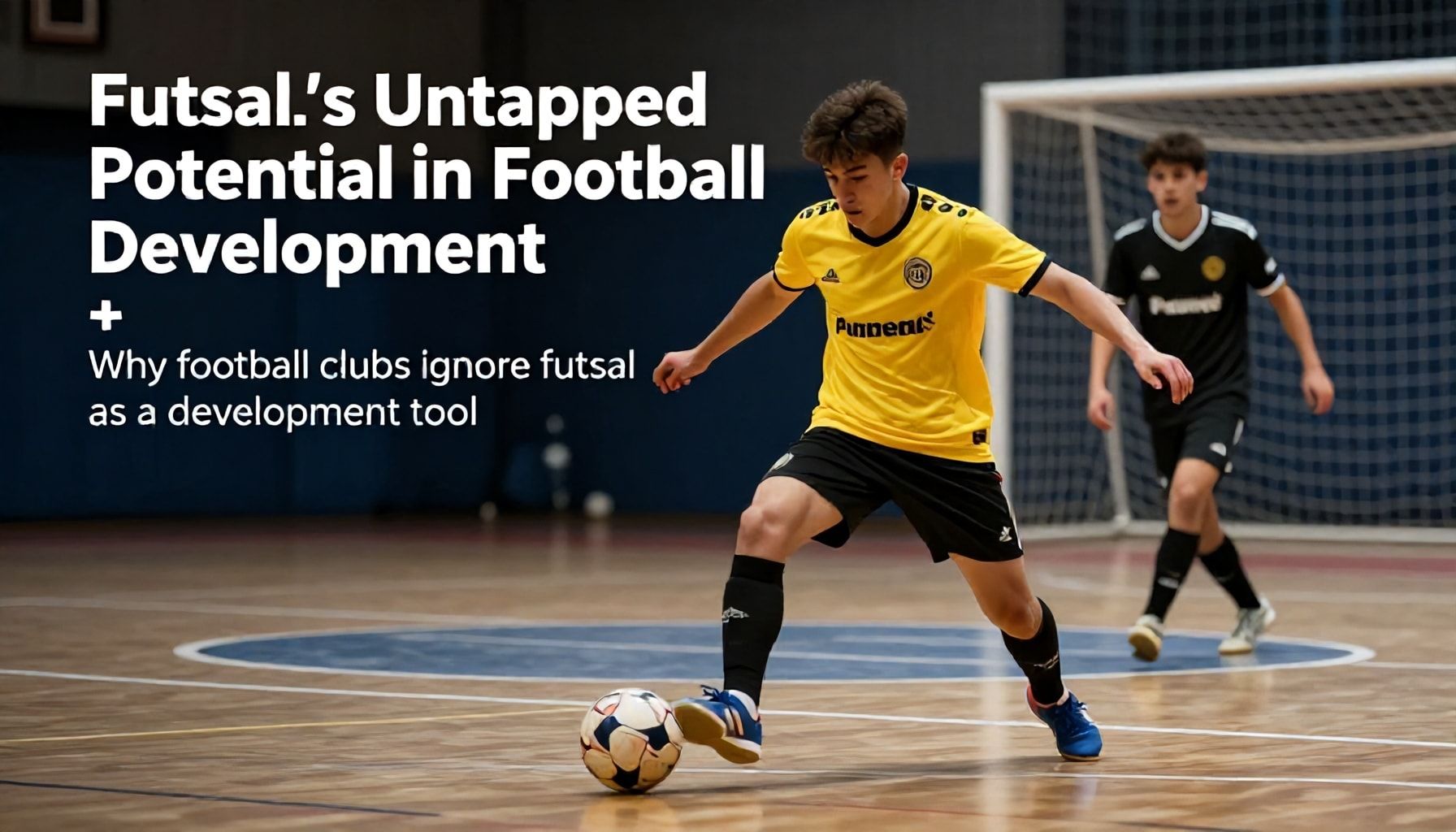
Football clubs across the UK continue to overlook futsal’s potential as a development tool for young players. Despite its proven benefits, many clubs still prioritise traditional football training methods.
Futsal, the five-a-side variant of football played on a hard court, enhances technical skills, decision-making, and creativity. A study by the English FA found that players who regularly train in futsal show significant improvements in their ball control and passing accuracy.
However, many football clubs fail to integrate futsal into their youth development programmes. According to a survey conducted by the League Managers Association, only 30% of professional clubs in England use futsal as part of their training regimen.
Experts attribute this oversight to a lack of awareness and understanding of futsal’s benefits. “Many coaches are simply not familiar with futsal and its potential to develop key skills,” said Dr. Simon Roberts, a sports scientist at Loughborough University, in an interview last year.
Additionally, the infrastructure for futsal in the UK remains underdeveloped. There are fewer futsal-specific facilities compared to traditional football pitches, making it less accessible for clubs.
Some clubs have begun to recognise futsal’s value. Manchester City and Liverpool have incorporated futsal into their youth academies, reporting positive results. Yet, widespread adoption remains slow.
The English FA has launched initiatives to promote futsal, including coaching courses and national competitions. However, more needs to be done to convince clubs of its developmental benefits.
Until football clubs fully embrace futsal, young players may miss out on a valuable tool for skill development. The potential of futsal in football development remains largely untapped.
Football Academies Miss Out on Futsal Advantages

Football clubs across the UK continue to overlook the developmental benefits of futsal, despite evidence suggesting it enhances technical skills and decision-making. Many academies focus solely on traditional football training, missing out on futsal’s unique advantages.
Futsal, played on a smaller pitch with fewer players, increases ball touches and encourages quicker thinking. A study by the English Football Association found that players who incorporate futsal into their training improve their close control and passing accuracy by up to 20%. However, only 15% of Premier League academies integrate futsal into their development programmes.
Coaches often cite a lack of facilities and expertise as barriers to incorporating futsal. “We don’t have the space or the qualified coaches to dedicate time to futsal,” said a spokesperson for a mid-tier academy. This reluctance to adapt training methods persists despite successful examples from clubs like Manchester City, which has seen notable improvements in player development since introducing futsal sessions.
The Football Association has advocated for greater integration of futsal, highlighting its role in developing players like Cristiano Ronaldo and Lionel Messi. Yet, many clubs remain resistant to change, preferring traditional training methods. This oversight could be costing them a competitive edge in player development.
Why Football Clubs Overlook Futsal's Development Benefits

Football clubs across the UK continue to overlook futsal as a development tool for young players. Despite evidence suggesting otherwise, many academies persist in favouring traditional football training methods. This trend raises questions about the long-term benefits of ignoring futsal’s potential.
Futsal, a five-a-side variant of football played on a smaller pitch, offers unique advantages. It enhances technical skills, improves decision-making, and increases ball retention. According to the Football Association, futsal’s fast-paced nature allows players to touch the ball more frequently than in traditional football. Yet, many clubs still prioritise conventional training sessions.
A 2019 study by the University of Birmingham found that futsal significantly improves players’ close control and passing accuracy. The study, involving 150 youth players, showed a 25% improvement in technical skills after six months of futsal training. Despite these findings, only a handful of Premier League academies incorporate futsal into their development programmes.
Manchester City’s former academy director, Jason Wilcox, highlighted the benefits of futsal. “Futsal develops a player’s ability to make quick decisions and improves their technical ability,” he said in an interview with Sky Sports in 2018. Wilcox noted that futsal’s smaller pitch and fewer players create more opportunities for individual skill development. However, many clubs remain reluctant to integrate futsal into their training regimens.
The lack of futsal facilities and qualified coaches is a significant barrier. Many clubs cite logistical challenges and the cost of setting up futsal programmes. The FA has been promoting futsal, but progress has been slow. Without a concerted effort, the potential benefits of futsal will continue to be overlooked.
As football clubs continue to focus on traditional training methods, the untapped potential of futsal remains overlooked. With its fast-paced nature and emphasis on technical skill, futsal could significantly enhance player development. The sport’s growing popularity and proven benefits for young athletes present an opportunity for clubs to innovate their training regimes. While some clubs have begun to integrate futsal into their youth academies, widespread adoption may still be years away. The future of player development could hinge on clubs’ willingness to embrace this dynamic and effective training tool.