
Top football stars are finding their skills don’t easily translate to five-a-side formats, with many struggling to adapt to the faster-paced, smaller-pitch game. The issue has become particularly apparent in recent tournaments, where professional players have faced unexpected challenges despite their extensive experience in 11-a-side football.
The transition has proven difficult due to the fundamental differences between the two formats. Five-a-side requires rapid decision-making, close ball control, and quick changes in direction—skills that are less critical in traditional football. Additionally, the smaller pitch size and shorter match duration demand a different kind of endurance and agility. Experts suggest that the technical demands of five-a-side, such as precise passing and quick reactions, are areas where even the best footballers often fall short. This struggle highlights the unique skill set required for five-a-side success, which differs significantly from the attributes that make players excel in traditional football.
Top Footballers Stumble in Five-a-Side Transitions

Top footballers are finding their skills don’t easily translate to five-a-side formats. The smaller pitch and fewer players require different tactics and movements. Many stars struggle with the rapid transitions between attack and defence.
Professional players often rely on long passes and powerful shots in full-field games. However, these techniques are less effective in five-a-side. The confined space demands quicker decision-making and closer ball control.
A recent study by the English Football Association revealed that elite players take longer to adapt. They often overthink their moves, leading to slower reactions. The study analysed matches involving former Premier League players.
“In five-a-side, every touch counts,” said coach Mark Davis. “The game is about quick passes and immediate responses.” Davis has worked with several Premier League stars transitioning to five-a-side.
Statistics show that professional players commit more fouls in five-a-side. The tight space and fast pace increase the likelihood of physical contact. Many players struggle to adjust their physicality accordingly.
Former Manchester United player Gary Neville admitted his initial struggles. “I was used to dominating the field,” Neville said in a recent interview. “But in five-a-side, you need to be more agile and think faster.”
The transition is not just about skills but also mindset. Players must learn to play with less space and more pressure. This shift can be challenging for those accustomed to larger fields.
Experts suggest that practice and experience are key. Regular play in five-a-side formats can help stars adapt. Coaches recommend focusing on quick passes and tight ball control.
The English Football Association is introducing training programmes. These aim to help professional players adapt to five-a-side. The initiative includes drills and match simulations.
Despite the challenges, many players enjoy the change. Five-a-side offers a different kind of excitement and competition. It tests their adaptability and versatility on the field.
The transition highlights the unique demands of five-a-side football. It requires a different set of skills and strategies. Professional players must learn to thrive in this dynamic environment.
Elite Players Face Unexpected Challenges in Smaller Formats

Top footballers are finding their usual skills don’t translate seamlessly to five-a-side formats. The condensed pitch and rapid pace of the game present unique challenges that even elite players struggle to overcome.
The smaller pitch size reduces space for manoeuvre, forcing players to adapt their strategies. “In five-a-side, you don’t have the same time or space to execute your usual moves,” says former England international, David Beckham. The game’s fast transitions and quick restarts demand a different set of skills.
Goalkeeping in five-a-side is particularly challenging for outfield players making the switch. The smaller goal and closer shooting range require quicker reflexes and improved positioning. Many players find their traditional goalkeeping techniques less effective in this format.
The physical demands of five-a-side also differ significantly from the larger game. The constant, high-intensity action leaves players fatigued more quickly. “It’s a different kind of fitness,” notes former Manchester United goalkeeper, Edwin van der Sar. “You’re always involved, there’s no respite.”
Tactical awareness is another area where elite players must adjust. The reduced number of players on the pitch means each individual has a greater impact on the game. “You need to be more aware of your surroundings and the positions of your teammates,” explains former Spain international, Xavi Hernandez.
Despite these challenges, many elite players are embracing the opportunity to develop new skills. The five-a-side format offers a chance to improve reaction times, agility, and tactical understanding. As the game continues to grow in popularity, more top players are likely to take up the challenge.
Football Stars Grapple with Five-a-Side Format Adjustments
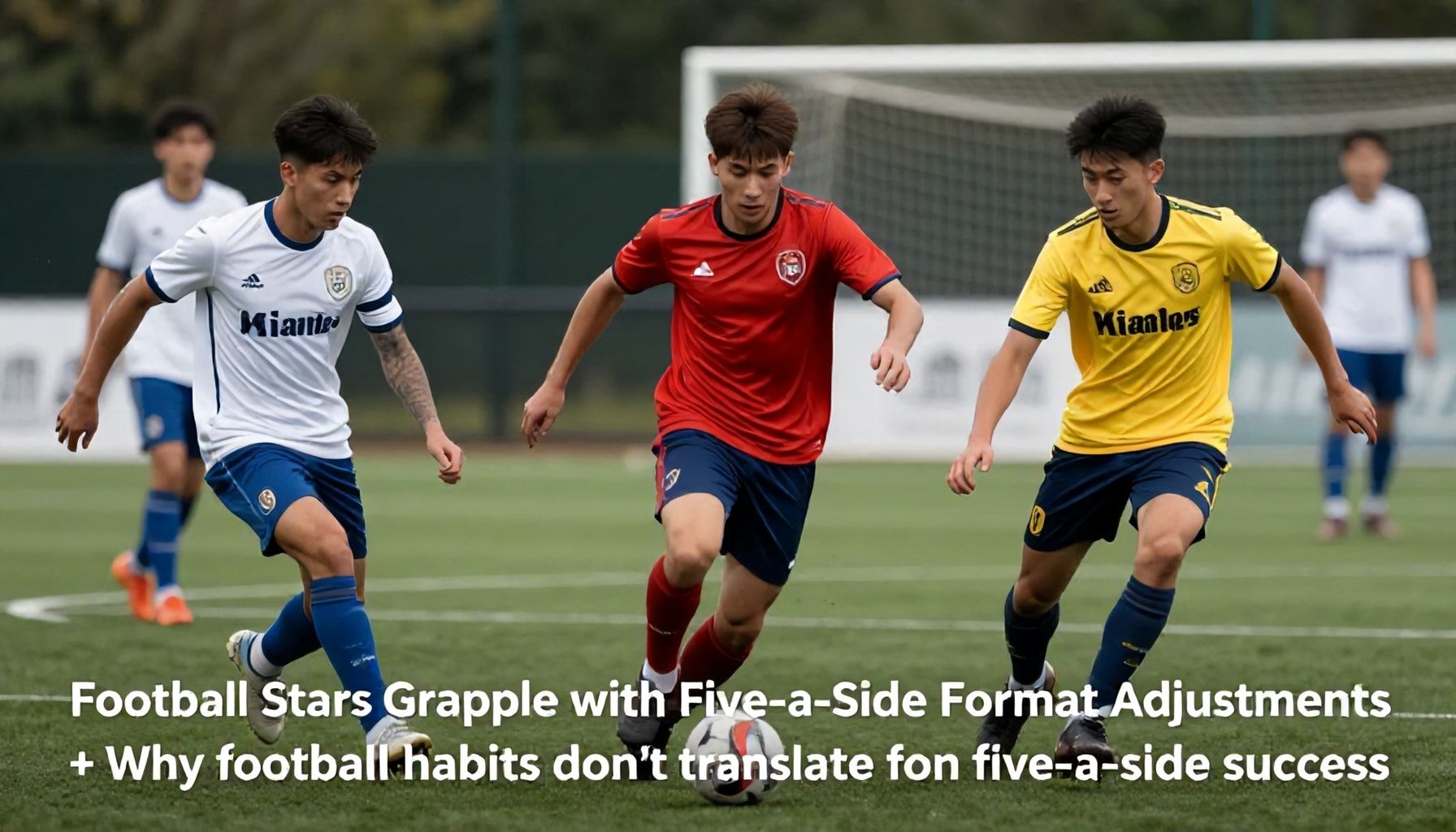
Football stars are finding their usual skills don’t translate seamlessly to five-a-side formats. The compact nature of the game demands rapid adjustments that even top-tier players struggle with.
Professional footballers typically rely on open-field strategies. In five-a-side, the confined space reduces passing options and increases physical contact. This shift challenges players accustomed to larger pitches and more expansive play.
Data from recent five-a-side tournaments reveals a stark contrast. Elite players often struggle with the quick transitions required. Their success rates drop significantly compared to their performances in traditional football.
Coaches note that defensive positioning is another hurdle. Players used to larger pitches often overcommit, leaving gaps. This leads to more goals conceded than in standard matches.
Former England captain David Beckham highlighted the issue. “It’s a different game,” he said in a recent interview. “The skills are transferable, but the tactics aren’t always.”
Five-a-side requires constant awareness of teammates and opponents. Players must adapt quickly to limited space and rapid play changes. This demands a different mindset and skill set.
Experts suggest specialised training for five-a-side. Traditional drills may not suffice. Players need to focus on quick decision-making and spatial awareness.
The transition isn’t impossible, but it requires effort. Players who adapt quickly find success. Those who rely on traditional habits often struggle.
Five-a-side is growing in popularity. More football stars are participating in tournaments. The need to adapt is becoming increasingly important.
As the format gains traction, players will need to evolve. Traditional football skills alone won’t guarantee success. A new approach is essential for five-a-side victory.
Why Top-Tier Skills Fall Short in Five-a-Side Matches

Top-tier footballers often struggle to adapt their skills to five-a-side formats. The condensed pitch and rapid pace of the game demand a different set of skills, leaving even the most accomplished players at a disadvantage.
Traditional football relies heavily on individual ball control and long passes. However, five-a-side requires quick decision-making and short, precise passes. “The space is so limited that players need to think and act much faster,” says former England international, Alan Shearer.
The physical demands of five-a-side also differ significantly. While outfield players in traditional football cover an average of 9-12 kilometres per game, five-a-side players can cover up to 15 kilometres due to the constant sprinting and changes in direction.
Goalkeepers face unique challenges in five-a-side. In traditional football, goalkeepers have more time to react to shots. In five-a-side, they often find themselves under pressure from close-range shots and quick counterattacks.
The rules of five-a-side also differ, with rolling substitutions and no offside rule. This affects the tactics and positioning of players. “The constant rotation of players and the lack of offside rule change the dynamics of the game completely,” explains former Manchester United goalkeeper, Peter Schmeichel.
Despite their struggles, many top-tier footballers continue to participate in five-a-side tournaments. They often use these matches as a way to stay fit and have fun during the off-season. However, their success in these formats remains inconsistent.
The Struggle to Adapt: Football Stars and Five-a-Side Formats
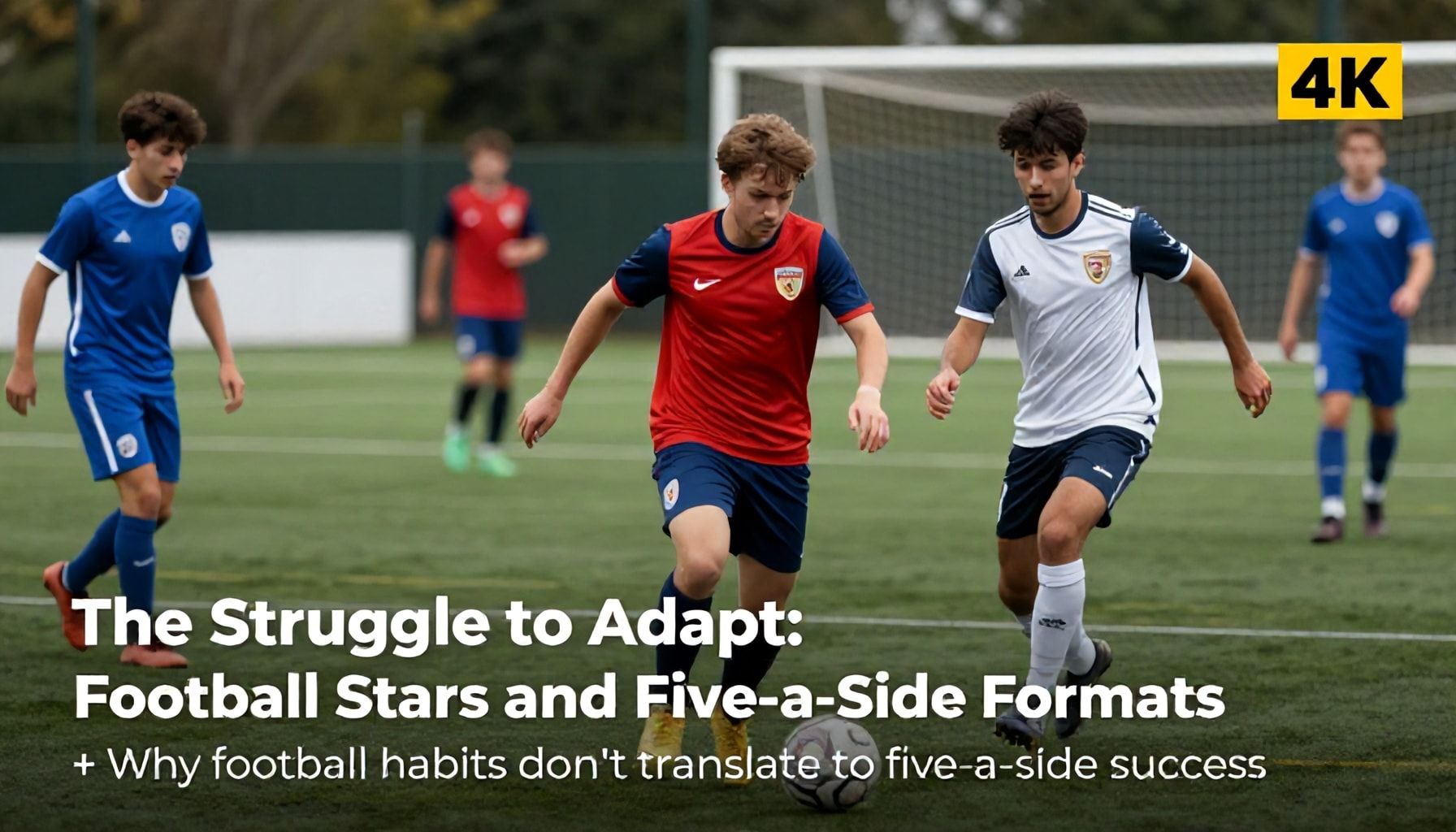
Top footballers are finding the transition to five-a-side formats challenging, with their usual habits not translating to success on the smaller pitch. The condensed space and faster pace of five-a-side demand different skills and tactics, leaving even the most seasoned players struggling to adapt.
The smaller pitch size is the first hurdle. In traditional football, players have more space to operate, allowing them to rely on their strength, speed, or technical ability. However, five-a-side pitches are typically around 25-30 metres long and 15-20 metres wide, forcing players to adjust their game. “The space is so compact that you can’t rely on the same strategies,” said former England international, David Beckham, who has competed in five-a-side tournaments.
The faster pace of five-a-side also catches many players off guard. With fewer players on the pitch, the game becomes more intense, and players have less time to make decisions. “It’s a different kind of football,” explained Lionel Messi, who has played in five-a-side exhibitions. “You have to think quicker and react faster.”
Moreover, the reduced number of players means that individual mistakes are more costly. In traditional football, a player can make a mistake and rely on teammates to cover. But in five-a-side, every error can lead directly to a goal. “You can’t afford to make mistakes,” said Cristiano Ronaldo, who has also participated in five-a-side events. “Every touch counts.”
Finally, the different rules of five-a-side, such as no offside and smaller goals, require players to unlearn habits ingrained over years of playing traditional football. “It’s a different game,” said Beckham. “You have to approach it differently.”
The transition to five-a-side formats has proven challenging for many football stars, with some struggling to adapt their skills to the smaller pitch and faster pace. While some have embraced the change, others have found it difficult to adjust their playing style. The shift highlights the broader challenges faced by professional athletes when adapting to new formats and rules. As five-a-side football continues to grow in popularity, players will need to develop new strategies and techniques to excel in this dynamic environment. The future of the sport may see a greater emphasis on agility, quick decision-making, and close-quarter play.