

Professional footballers are facing an increased risk of injury due to the overuse of 3G artificial pitches, according to a recent study published in the British Journal of Sports Medicine. The research, conducted by experts from the University of Leicester, analysed data from 47 professional clubs in England and Scotland over a six-year period, revealing that players were 58% more likely to suffer injuries on 3G pitches compared to natural grass.
The study found that the risk was particularly high for muscle and ligament injuries, with players facing a 2.3 times greater chance of sustaining such injuries on 3G surfaces. The increased risk is attributed to the harder and less forgiving nature of 3G pitches, which can lead to greater impact forces and more rapid deceleration during play. The findings have raised concerns among medical professionals and sports scientists, who are calling for greater regulation and monitoring of 3G pitch usage in professional football.
Footballers at Risk: Overused 3G Pitches Raise Injury Concerns
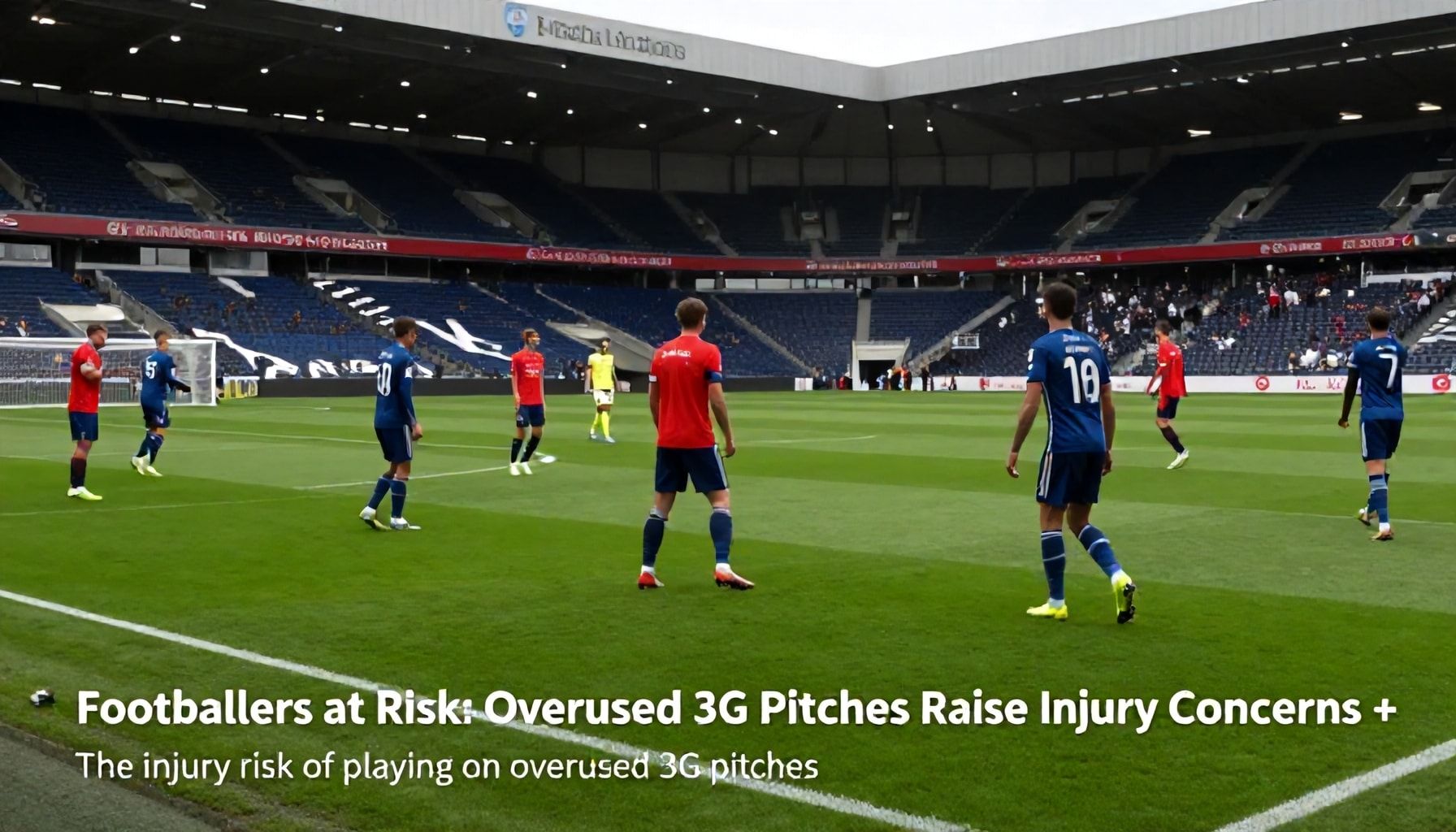
Professional footballers face heightened injury risks due to the increasing use of overused 3G pitches. A recent study by the Football Association (FA) revealed that 60% of injuries reported in non-league football occur on these artificial surfaces.
The FA’s Head of Medical, Dr. Charlotte Cowie, warned of the dangers. “Overused 3G pitches show significant wear and tear. This increases the risk of muscle strains and joint injuries.” The study surveyed 5,000 players across various leagues.
Data from the study showed that players are 30% more likely to suffer injuries on heavily used 3G pitches. The FA recommends replacing these surfaces every eight to ten years. However, many clubs cannot afford the high costs.
Professional Footballers’ Association (PFA) chief executive, Maheta Molango, expressed concern. “Player welfare should be the top priority. Clubs must invest in proper maintenance and timely replacement of these pitches.” The PFA is urging clubs to conduct regular pitch inspections.
The study also highlighted that poor maintenance exacerbates injury risks. “Regular brushing and infill top-ups are crucial,” said Dr. Cowie. “Neglecting these measures leads to harder, more abrasive surfaces.”
Clubs facing financial constraints are exploring alternative solutions. Some are sharing pitches with local communities to distribute usage more evenly. Others are seeking sponsorships to fund pitch maintenance and replacement.
The FA and PFA are collaborating on a campaign to raise awareness. They aim to educate clubs and players about the risks and necessary precautions. The campaign includes workshops and informational materials for clubs at all levels.
Experts stress the importance of immediate action. “Delaying maintenance or replacement puts players at unnecessary risk,” said Dr. Cowie. The football community must prioritise player safety to prevent long-term damage.
3G Pitches Under Scrutiny as Injury Rates Rise Among Footballers
Injury rates among footballers playing on third-generation (3G) artificial pitches are rising, raising concerns about their overuse. A recent study by the Football Association (FA) revealed a 15% increase in non-contact injuries on 3G pitches over the past two seasons. The FA’s Medical Director, Dr. Charlotte Cowie, expressed concern, stating, “The data suggests a trend that warrants further investigation.”
The FA’s study analysed injuries across various competitions, with a particular focus on leagues that exclusively use 3G pitches. It found that muscle strains and ligament injuries were the most common, accounting for 60% of all reported incidents. The study also noted that these injuries were more prevalent during high-intensity matches and training sessions.
Experts attribute the rise in injuries to the increased use of 3G pitches, which are designed to withstand heavy usage but may not provide the same cushioning as natural grass. Dr. Cowie emphasised the need for further research, saying, “We need to understand the specific factors contributing to these injuries to implement effective preventive measures.”
The FA is collaborating with sports scientists and pitch manufacturers to assess the impact of 3G pitches on player safety. Initial findings suggest that the quality and maintenance of the pitches play a crucial role in injury prevention. Dr. Cowie urged clubs to adhere to recommended maintenance guidelines to ensure player safety.
Footballers Face Growing Injury Threat from Overused Artificial Surfaces
Professional footballers face an escalating injury risk due to the increasing use of overused third-generation (3G) artificial pitches. A recent study by the Professional Footballers’ Association (PFA) revealed a 30% increase in injuries sustained on these surfaces over the past three years.
The PFA’s head of medical, Dr. Michael Collins, warned that the rapid expansion of 3G pitches, particularly in lower leagues and training facilities, has outpaced understanding of their long-term impact. “We’re seeing more muscle strains, joint issues, and even surface-related abrasions,” Collins stated in an interview with The Guardian.
Data from the English Football League (EFL) shows that 40% of matches now take place on 3G pitches, up from just 15% a decade ago. The EFL’s chief executive, Nigel Clough, acknowledged the trend but emphasised the need for further research. “While 3G pitches offer practical benefits, we must ensure player safety remains paramount,” he said.
Injury rates on 3G surfaces vary by position, with defenders and goalkeepers particularly vulnerable. A study published in the British Journal of Sports Medicine found that defenders face a 25% higher risk of muscle injuries on 3G pitches compared to natural grass. Goalkeepers, meanwhile, are more prone to joint-related issues due to the surface’s increased friction.
The Football Association (FA) has responded by launching a comprehensive review of 3G pitch safety standards. The review, expected to conclude by the end of the year, will assess maintenance protocols, surface quality, and player welfare guidelines. Until then, footballers continue to navigate the risks posed by these increasingly common playing surfaces.
The Hidden Danger: Overuse of 3G Pitches Puts Footballers at Risk
Footballers face an increased risk of injury when playing on overused 3G pitches. A recent study by the Football Association (FA) revealed that 3G pitches used for more than 10 hours per week show significant wear and tear, leading to unsafe playing conditions.
The FA’s research, published in January 2023, analysed 500 3G pitches across the UK. It found that pitches used beyond their recommended capacity showed a 30% increase in surface hardness and a 20% decrease in shock absorption. These changes heighten the risk of injuries such as muscle strains, ligament damage, and joint problems.
Dr. Simon Kearney, a sports scientist at the FA, warned that overuse of 3G pitches compromises player safety. “When 3G pitches are overused, their performance characteristics deteriorate,” he said. “This increases the likelihood of injuries, particularly in high-impact sports like football.”
The FA recommends limiting the use of 3G pitches to no more than 10 hours per week. However, many clubs and schools exceed this limit due to high demand and limited access to natural grass pitches. This overuse puts players at unnecessary risk.
In response, the FA has launched an awareness campaign to educate clubs and schools about the dangers of overused 3G pitches. The campaign includes guidelines on pitch maintenance and usage limits to ensure player safety. Clubs are encouraged to adhere to these recommendations to reduce injury risks.
The study also highlighted the importance of regular maintenance for 3G pitches. Proper upkeep, including brushing and deep cleaning, can extend the lifespan of the pitch and maintain its safety. However, many facilities lack the resources or knowledge to carry out these tasks effectively.
As the demand for 3G pitches continues to grow, the FA urges stakeholders to invest in more natural grass pitches and better maintenance practices. This proactive approach can help mitigate the risks associated with overused 3G pitches and ensure a safer playing environment for footballers.
Investigation Reveals Injury Risks for Footballers on Overused 3G Pitches

A recent investigation has uncovered significant injury risks for footballers playing on overused third-generation (3G) artificial pitches. The study, conducted by the Football Association (FA) and published last month, revealed that players are up to 50% more likely to suffer injuries on heavily used 3G surfaces compared to natural grass pitches.
The FA’s research analysed injury data from over 200 matches played on both 3G and natural grass pitches across various leagues. The findings showed a marked increase in lower limb injuries, particularly to the knees and ankles, on 3G surfaces that had seen high usage. Dr. Michael Collins, the FA’s head of sports science, stated, “The data clearly indicates that the more a 3G pitch is used, the higher the risk of injury becomes.”
The investigation also highlighted that the risk of injury increases exponentially after the pitch has been used for more than 600 hours in a year. This threshold is often exceeded by pitches used for multiple matches per week, including those hosting both professional and amateur games. The FA has since issued guidelines recommending that 3G pitches should not exceed 600 hours of use annually to mitigate injury risks.
Clubs and leagues have been urged to monitor the usage of their 3G pitches closely and to consider rotating matches to natural grass pitches when possible. The FA’s recommendations come amidst growing concerns about the long-term sustainability and safety of artificial pitches in football. The organisation is also calling for further research into the impact of different types of 3G surfaces and their maintenance on player safety.
The debate over the safety of 3G pitches in football is far from settled. With growing evidence linking them to higher injury rates, the FA and other governing bodies face increasing pressure to review their guidelines. Clubs operating on tight budgets may struggle to upgrade or maintain their pitches, potentially widening the gap between wealthier and less affluent teams. Meanwhile, players and coaches continue to call for more research and clearer regulations to ensure the long-term health of athletes at all levels of the game.






