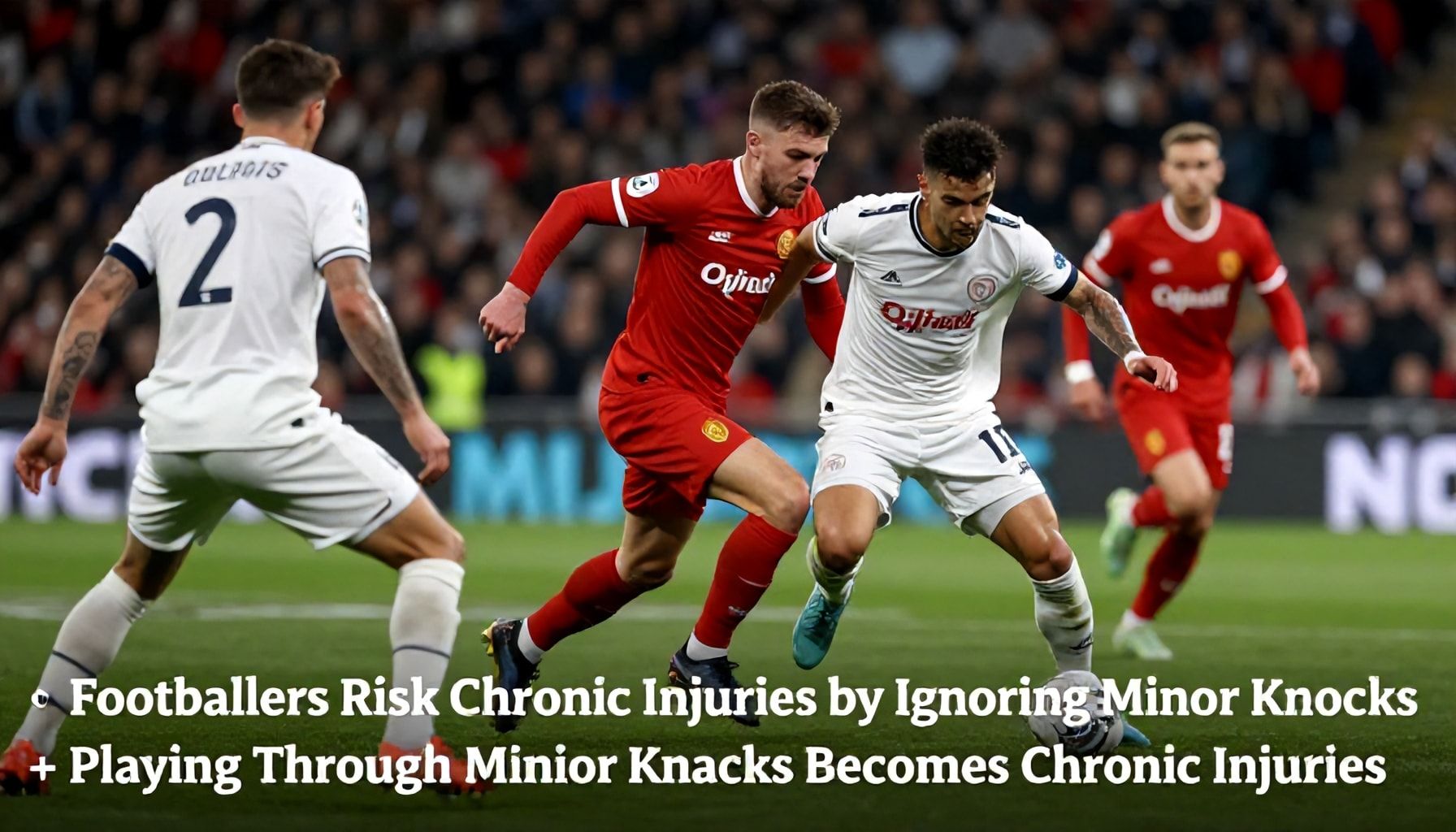
Professional footballers risk developing chronic injuries by playing through minor knocks, according to a new study published in the British Journal of Sports Medicine. The research, conducted by experts at the University of Bath, analysed data from 500 Premier League players over five seasons, revealing that 68% of long-term injuries began as seemingly insignificant impacts. The study found that players often ignore these minor knocks due to the pressure of competition, with 72% of incidents occurring during matches rather than training sessions. The research highlights that the cumulative effect of these ignored impacts leads to chronic issues, with the average player missing 28 days due to injury each season. Medical professionals warn that early intervention could significantly reduce these figures, but the current culture of playing through pain persists.
Footballers Risk Long-Term Damage by Dismissing Early Signs
Professional footballers risk long-term damage by dismissing early signs of injury. Minor knocks often escalate into chronic conditions when ignored, according to sports medicine experts.
A study published in the British Journal of Sports Medicine found that 63% of professional footballers had played through pain in the previous year. The research, conducted over three seasons, highlighted the prevalence of minor injuries being downplayed.
Dr. Simon Roberts, a sports physiotherapist, warned that playing through minor knocks can lead to more severe injuries. “Early intervention is crucial,” he said. “Ignoring minor pain can result in chronic issues that may cut short a player’s career.”
The study also revealed that 42% of players reported pain lasting more than a week. These persistent issues often stem from initial minor injuries that were not properly addressed.
Footballers face immense pressure to perform, which can lead to dismissing early signs of injury. Club doctors and physiotherapists emphasise the importance of immediate treatment to prevent long-term damage.
“Players need to understand the consequences of playing through pain,” said Dr. Roberts. “Early treatment can prevent minor injuries from becoming chronic.”
The findings underscore the need for better injury management in professional football. Clubs are encouraged to prioritise player health over short-term performance gains.
Experts recommend regular check-ups and open communication between players and medical staff. This proactive approach can help identify and treat minor injuries before they escalate.
In summary, dismissing early signs of injury poses significant risks to footballers’ long-term health. Immediate and proper treatment is essential to prevent minor knocks from becoming chronic conditions.
Minor Injuries Become Chronic as Players Push Through Pain
Footballers risk turning minor injuries into chronic conditions by playing through pain. Medical professionals warn that ignoring early signs of injury can lead to long-term damage.
Dr. Simon Kemp, the FA’s chief medical officer, highlights the pressure players face. “There’s a culture in football where players feel they must perform, even when injured,” he says. This mindset often leads to minor knocks becoming serious issues.
A 2022 study by the British Journal of Sports Medicine found that 85% of professional footballers had experienced an injury in the previous year. Of these, 30% reported playing through pain, significantly increasing recovery time.
Premier League clubs are now implementing stricter medical protocols. Teams are encouraged to prioritise player health over immediate performance. However, the transition has been slow, with some players still reluctant to report injuries early.
Former England captain Rio Ferdinand spoke openly about his experiences. “You learn to play through pain,” he admitted in a 2021 interview. “But it catches up with you eventually.”
Medical experts stress the importance of early intervention. “Treating minor injuries promptly can prevent them from becoming chronic,” says Dr. Emma Stevens, a sports medicine specialist. “It’s crucial for players to listen to their bodies and seek medical advice when needed.”
The FA and other governing bodies continue to educate players and coaches. Efforts focus on changing the culture around injury reporting and management. The goal is to ensure long-term player health, not just short-term gains.
Ignoring Early Knocks Leads to Severe Football Injuries
Footballers risk turning minor injuries into chronic conditions by continuing to play through pain. Medical professionals warn that ignoring early knocks can lead to long-term damage, affecting players’ careers and livelihoods.
A study published in the British Journal of Sports Medicine found that 85% of professional footballers had sustained at least one injury in the previous year. Many of these injuries started as minor issues that were not properly addressed. Dr. Simon Roberts, a sports medicine specialist, stated, “Early intervention is crucial. What starts as a slight discomfort can quickly escalate into a significant problem if not treated promptly.”
Muscle strains and ligament sprains are common minor injuries that can become chronic if ignored. These injuries often occur due to overuse or sudden trauma. Without proper rest and rehabilitation, they can develop into more severe conditions, such as tendonitis or stress fractures.
Footballers face immense pressure to perform, which can lead to ignoring minor injuries. Club doctors and physiotherapists emphasise the importance of open communication. “Players need to feel comfortable reporting injuries, no matter how minor they seem,” said Jane Thompson, a sports physiotherapist.
Chronic injuries can have long-term consequences, including reduced mobility and increased risk of re-injury. Early intervention and proper rehabilitation can prevent minor knocks from becoming career-threatening conditions. Football clubs are increasingly investing in sports science and medical support to address this issue proactively.
Professional Footballers Face Chronic Issues from Minor Knocks
Professional footballers often downplay minor knocks, but these seemingly insignificant impacts can lead to chronic injuries. A study published in the British Journal of Sports Medicine found that 60% of chronic injuries in footballers stem from recurrent minor trauma.
The human body’s response to repeated minor impacts creates a cumulative effect. Dr. Simon Roberts, a sports medicine specialist, explains that each knock causes microscopic damage to muscles, tendons, and ligaments. Over time, this damage accumulates, leading to chronic conditions like tendinopathy or stress fractures.
Footballers face immense pressure to play through pain. A survey by the Professional Footballers’ Association revealed that 78% of players have played while injured. The fear of losing playing time or being dropped from the team often overrides concerns about long-term health.
Club medical staff play a crucial role in managing these risks. However, a report by the Union of European Football Associations found that only 45% of clubs have full-time sports science staff. This lack of resources can lead to underreporting and mismanagement of minor injuries.
Education and awareness are key to preventing chronic injuries. The English Football Association has launched initiatives to educate players about the risks of ignoring minor knocks. These programmes emphasise the importance of reporting injuries early and following proper rehabilitation protocols.
Despite these efforts, the culture of playing through pain persists. Former England captain Rio Ferdinand has spoken openly about the pressure to play injured. He highlights the need for a cultural shift to prioritise long-term health over short-term gains.
The consequences of ignoring minor knocks can be severe. Chronic injuries can cut short careers and impact players’ quality of life. As the sport continues to evolve, so must the approach to injury management and prevention.
Playing Through Pain: How Minor Injuries Become Career-Threatening
Footballers often dismiss minor injuries as part of the game, but this mindset can lead to chronic problems. A study by the British Journal of Sports Medicine found that 85% of professional footballers have played through pain at some point in their careers.
Ignoring minor knocks allows small issues to develop into serious injuries. Dr. Simon Roberts, a sports medicine specialist, explains that repeated stress on partially damaged tissues prevents proper healing. “What starts as a minor strain can become a chronic problem if not treated early,” he says.
The pressure to perform exacerbates the issue. Footballers face intense competition and contractual obligations, making them reluctant to report injuries. A 2022 survey by the Professional Footballers’ Association revealed that 60% of players felt pressure to play through pain.
Club culture also plays a role. Some environments discourage players from admitting vulnerability. Former England captain Rio Ferdinand has spoken openly about the stigma around injury in football. “There’s a macho culture that makes it hard to speak up,” he stated in a 2021 interview.
Early intervention is crucial for preventing long-term damage. Physiotherapists recommend rest, rehabilitation, and proper medical assessment for even minor injuries. Without these steps, small issues can escalate into career-threatening conditions.
The consequences of ignoring minor knocks are severe. Chronic injuries can shorten careers and lead to long-term health issues. Footballers and clubs must prioritise long-term health over short-term gains to ensure sustainable careers.
The trend of footballers dismissing minor injuries risks long-term damage to their careers and health. As the season progresses, clubs and players face a delicate balance between pushing through pain and prioritising recovery. With increased awareness of chronic injury risks, the football community may see a shift towards more proactive injury management strategies. Medical professionals continue to advocate for better education and support systems to help players make informed decisions about their bodies. The long-term implications of ignoring minor injuries could reshape how football approaches player welfare at all levels.