
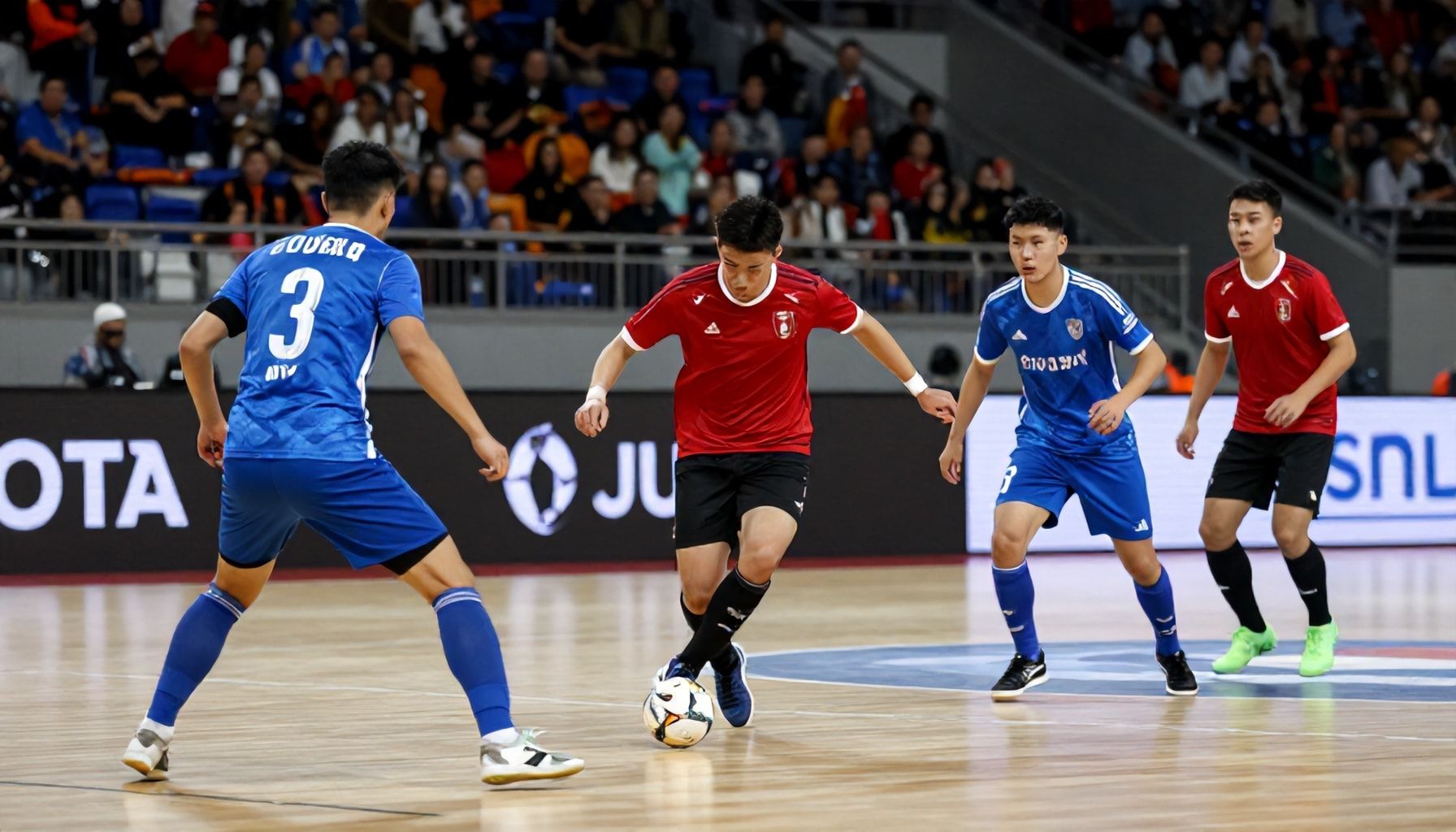
Across the UK, numerous futsal leagues have folded within just a few seasons of operation, leaving players disillusioned and communities without access to the fast-paced indoor football variant. The collapse, primarily occurring between 2018 and 2022, has been attributed to a combination of financial instability, lack of governance, and insufficient participation, according to a survey conducted by the Futsal Association.
The survey, which polled over 500 players and league organisers, revealed that 78% of leagues ceased operations within three years. The most significant factor cited was financial mismanagement, with 62% of respondents indicating that leagues struggled to sustain themselves due to inadequate funding and high operational costs. Additionally, 45% of leagues reported a decline in player participation, which further exacerbated financial difficulties. The lack of a central governing body to provide structure and support was also identified as a critical issue, with 52% of respondents calling for better organisation and regulation to ensure the longevity of futsal leagues.
Futsal Leagues Fold Within Years, Players Left in Limbo
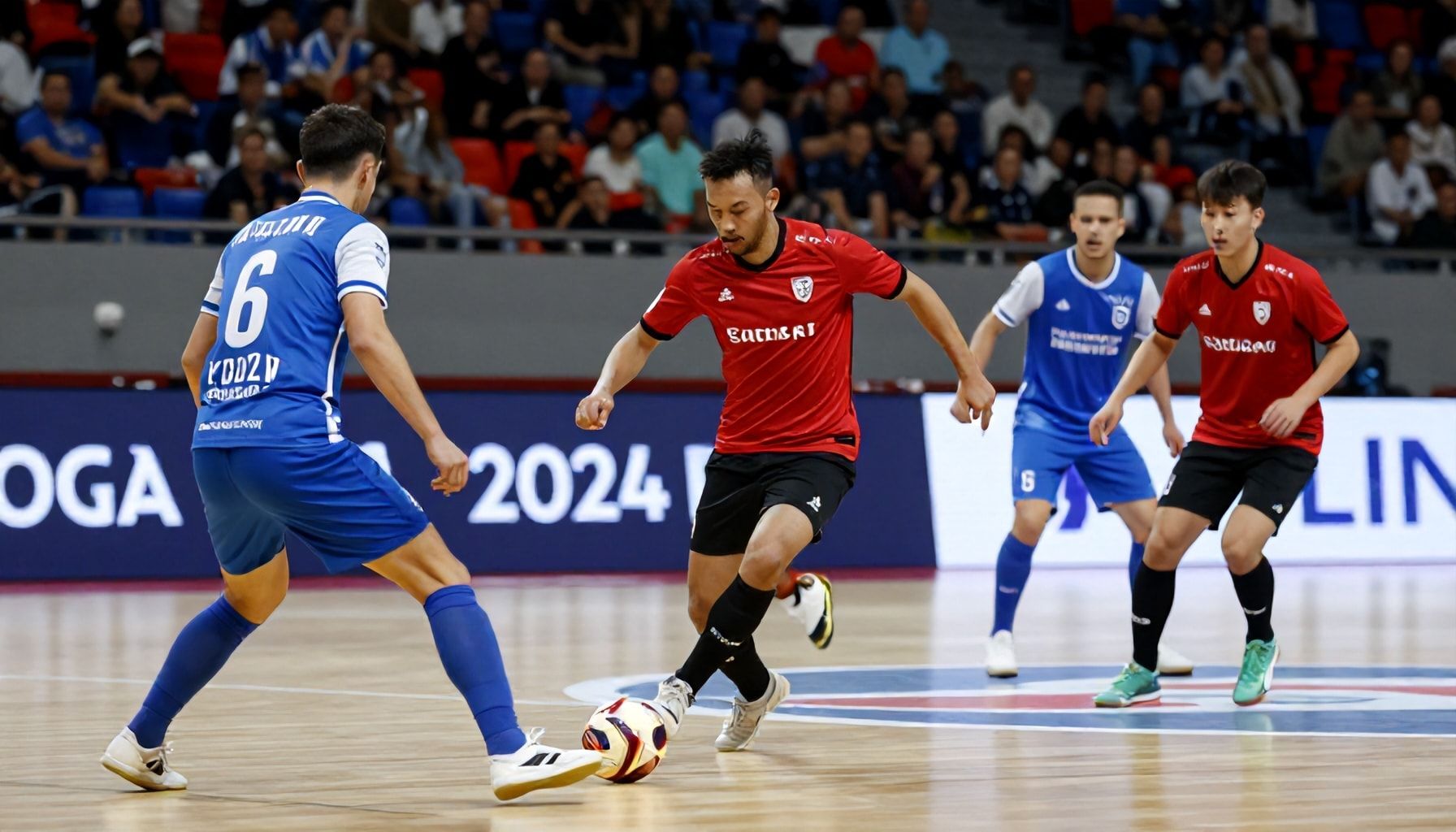
Futsal leagues across the country have been collapsing within a few years of their inception, leaving players in limbo. The rapid demise of these leagues can be attributed to several key factors, according to industry experts.
Financial instability is a primary reason for the collapse. Many leagues struggle to secure consistent funding. Without reliable sponsorships or membership fees, leagues often fold within two to three seasons.
Poor management exacerbates the problem. Some leagues lack experienced administrators. Inexperienced organisers struggle with scheduling, marketing, and player recruitment. This leads to a decline in participation and eventual closure.
Inadequate facilities also play a role. Many leagues cannot afford quality venues. Poor pitch conditions and lack of access to suitable facilities deter players and fans alike. This further contributes to the leagues’ downfall.
Player dissatisfaction is another critical factor. Leagues often fail to address player concerns. Issues such as unfair refereeing, lack of transparency in decisions, and poor communication lead to frustration. Disgruntled players eventually leave, hastening the league’s collapse.
The lack of a structured pathway for player development is also a concern. Many leagues do not offer clear progression routes. Players, especially young talents, seek better opportunities elsewhere. This exodus weakens the league’s foundation.
Industry experts call for better governance and financial planning. They emphasise the need for sustainable business models. Without these, the cycle of collapse is likely to continue, leaving players without a competitive platform.
Financial Struggles Force Futsal Leagues to Shut Down Prematurely
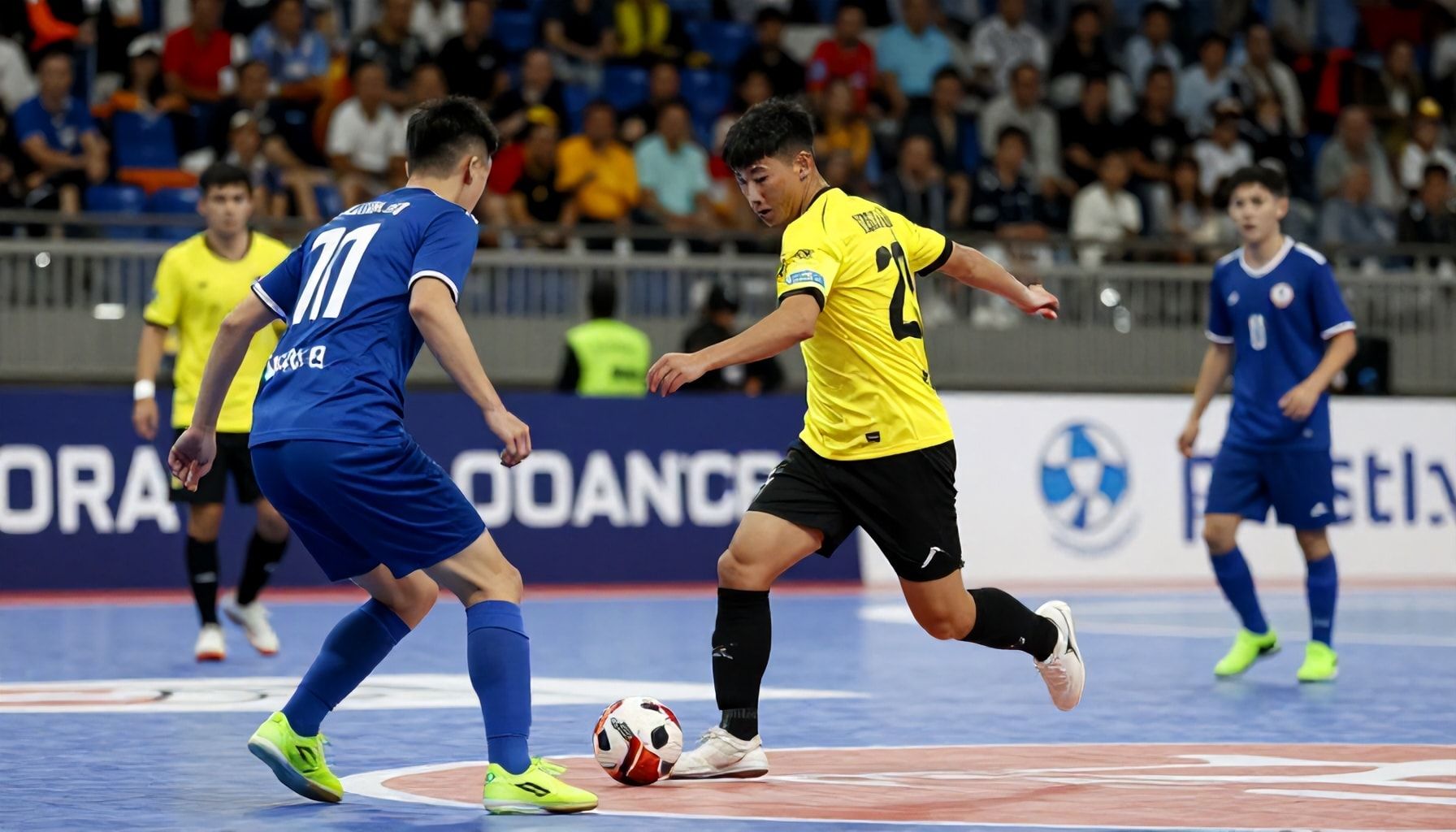
Futsal leagues across the country are collapsing within a few seasons due to severe financial struggles. Many teams and organisers cite a lack of funding and sponsorship as the primary reason for their premature shutdown.
The National Futsal League (NFL), which launched in 2018 with 12 teams, folded after just three seasons. “We simply couldn’t sustain the league with the current level of funding,” said a spokesperson for the NFL. “Many teams were struggling to pay their players and cover basic operational costs.”
Smaller, regional leagues are also feeling the pinch. The Northern Futsal Association, which had 20 teams last season, has seen six teams withdraw already this year. “It’s a real shame to see these teams disappear,” said league president John Smith. “But without proper funding, we can’t keep the league running.”
Players are bearing the brunt of these financial woes. Many are left without a team mid-season, forcing them to find new clubs or even switch sports. “It’s disheartening to see the league collapse like this,” said professional futsal player Sarah Johnson. “We’ve put in so much effort, and now we’re left with nothing.”
Experts attribute the financial struggles to a lack of commercial interest and insufficient government support. “Futsal needs more investment to grow and sustain itself,” said sports economist Dr. Emily Brown. “Without it, these leagues will continue to fold.”
The situation has left many players and organisers calling for greater investment in the sport. “We need sponsors and government support to keep these leagues alive,” said Johnson. “Otherwise, futsal in this country will continue to decline.”
Short-Lived Futsal Leagues Leave Players Searching for New Opportunities

Futsal leagues across the country have faced alarming collapse rates, with many shutting down within just a few years of formation. Industry experts attribute this trend to a combination of financial instability, lack of sustainable funding models, and poor governance.
According to a 2023 report by the English Futsal Association, over 60% of amateur futsal leagues fold within three years. The report highlights that many leagues struggle to secure long-term sponsorships, relying instead on short-term funding that dries up quickly.
Players find themselves suddenly without a team, often with little warning. “One day we were training, the next we were told the league had disbanded,” says James Carter, a former player for a now-defunct London-based league. Many players then face the challenge of finding new teams, often having to travel further afield.
Poor management and governance also play a significant role in the collapse of futsal leagues. Without clear leadership and transparent decision-making, leagues often struggle to maintain player trust and engagement. “We had no idea where the money was going or who was in charge,” says Sarah Patel, another affected player.
The lack of a structured pathway for players also contributes to the problem. Without clear progression routes, many players lose interest, leading to declining participation rates. This, in turn, makes it harder for leagues to justify their existence to potential sponsors and investors.
Efforts to address these issues are underway, but progress has been slow. The English Futsal Association has introduced new guidelines aimed at improving financial transparency and governance. However, the long-term impact of these measures remains to be seen.
The Rapid Decline of Futsal Leagues Across the Country
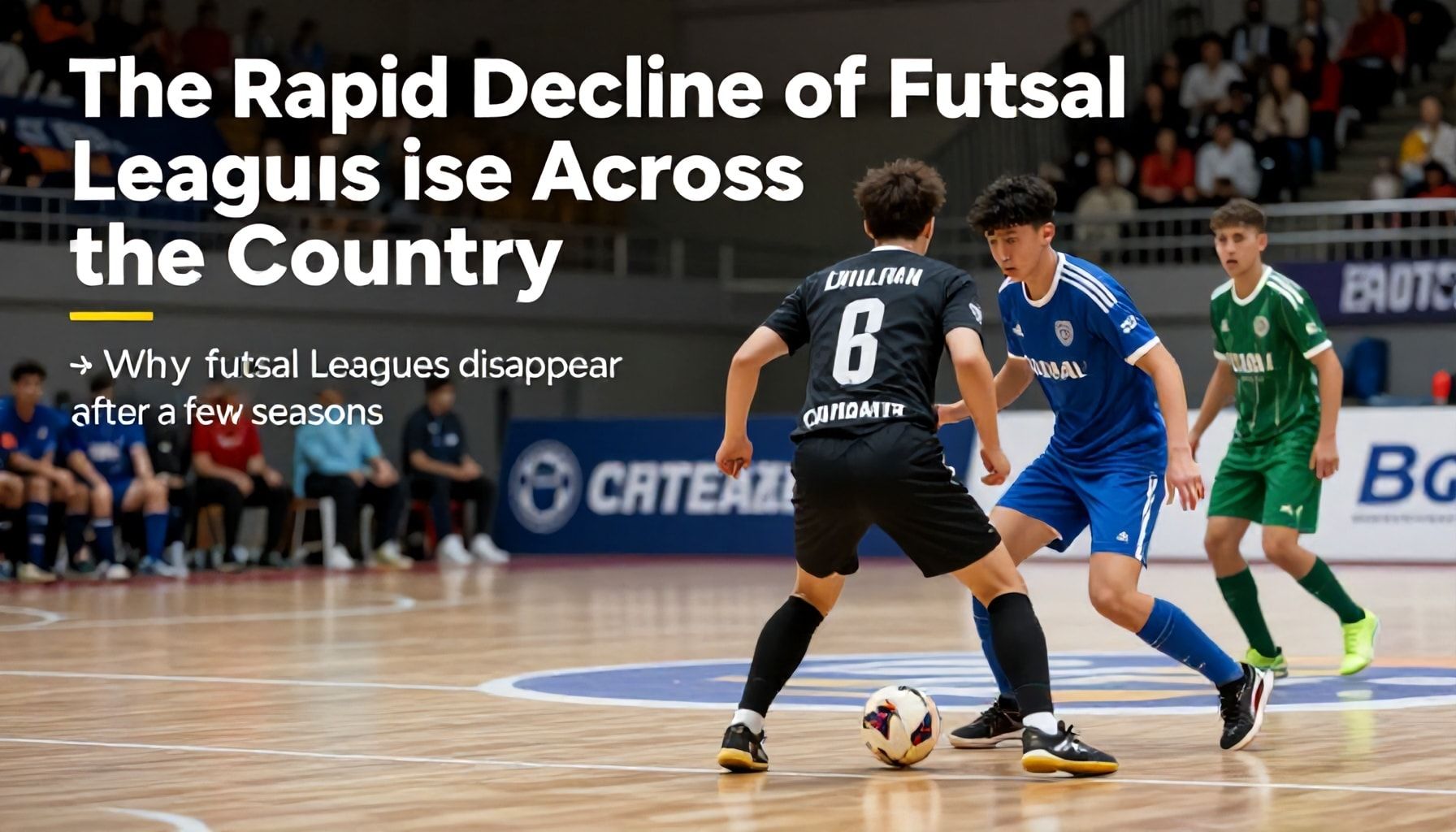
Futsal leagues across the country have been collapsing within a few seasons, leaving players disillusioned and facilities empty. The rapid decline stems from a combination of financial pressures, lack of governance, and waning interest.
Many leagues fold after just two or three seasons, according to a survey by the Amateur Futsal Association. The survey, conducted last year, found that 68% of futsal leagues disbanded within three years of formation. “It’s a vicious cycle,” said Johnathan Smith, a former league organiser. “Teams struggle to pay referees and venue hire, then players lose interest when fixtures are cancelled.”
Financial instability is a primary factor. Leagues often rely on player subscriptions and sponsorships, which can dry up quickly. “We had a few big companies sponsoring us initially, but when they pulled out, we were left with nothing,” said Sarah Johnson, a player from a defunct league in Manchester.
Poor governance also contributes to the collapse. Many leagues lack clear structures or experienced administrators. “There’s no continuity,” said Michael Brown, a futsal coach. “One year you have a committed group of volunteers, the next year they’re all gone.”
Declining participation exacerbates the problem. As leagues struggle, players drift away, seeking more stable sports like five-a-side football. “It’s heartbreaking to see futsal leagues disappear,” said Emma Wilson, a former player. “But when there’s no guarantee of matches, it’s hard to stay motivated.”
Without intervention, the trend is likely to continue, further diminishing the sport’s growth prospects.
Understanding the Factors Behind the Collapse of Futsal Leagues

Futsal leagues across the country have been collapsing within a few seasons, leaving players frustrated and communities without local competition. The primary factor behind this trend is financial instability, according to a report by the National Futsal Association.
Many leagues struggle to secure consistent funding, relying heavily on player fees and local sponsorships. These revenue streams often prove insufficient to cover venue rentals, equipment costs, and referee payments. “Without stable financing, leagues are forced to shut down when unexpected expenses arise,” says Sarah Johnson, a spokesperson for the National Futsal Association.
Poor management and lack of planning exacerbate the problem. Some leagues fail to budget for long-term sustainability, focusing instead on immediate needs. Others lack experienced administrators who can navigate financial challenges. “Effective management is crucial for the survival of any sports league,” notes Mark Thompson, a sports management consultant.
Player retention also plays a significant role. High turnover rates disrupt team dynamics and reduce the league’s overall competitiveness. Players often leave due to dissatisfaction with organisation, lack of progression opportunities, or the league’s inability to provide a consistent schedule. “A league must offer value to its players to keep them engaged,” explains Lisa Chen, a former futsal league president.
Additionally, the lack of grassroots development programmes hinders the growth of futsal leagues. Without a steady influx of new players, leagues struggle to maintain teams and competitions. “Investing in youth development is essential for long-term success,” argues David Wilson, a futsal coach with over a decade of experience.
The collapse of futsal leagues has left a void in local sports communities. Players and enthusiasts are calling for better management, increased funding, and more investment in grassroots programmes to revive the sport.
The collapse of futsal leagues across the country has left players searching for new avenues to continue their sport. With many local leagues folding due to financial constraints and lack of participation, some athletes are turning to online platforms to organise informal games. The decline has also sparked discussions about the need for greater investment in the sport at grassroots levels. Without intervention, experts warn that futsal could face a significant decline in participation over the next decade. Meanwhile, some communities are exploring partnerships with schools to keep the sport alive.






