
The UK government is grappling with an escalating identity crisis, as public backlash over recent policy shifts threatens to undermine its core values and principles. A recent poll by YouGov revealed that 62% of Britons feel the government has lost sight of its foundational identity, with critics pointing to U-turns on key issues such as immigration and environmental commitments. The crisis comes at a pivotal moment, just months ahead of the next general election, with opposition parties seizing on the discontent to rally support. Analysts warn that the government’s struggle to articulate a clear, consistent message risks alienating its traditional voter base and fueling further political instability. The situation has sparked urgent calls for a strategic overhaul to restore public trust and clarity of purpose.
Government Confronts Severe Identity Crisis as Public Trust Ebbs
The UK government faces an unprecedented identity crisis as public trust continues to erode. Recent polling reveals only 28% of Britons trust the government to do what is right, a significant drop from 42% just two years ago.
This crisis stems from a series of high-profile scandals and policy U-turns. The government’s handling of the pandemic, particularly the Partygate affair, has left many citizens questioning its integrity. A YouGov survey found 63% of respondents believed the government had misled the public about lockdown parties.
The government’s shifting stance on key issues has further fuelled public discontent. From Brexit promises to net-zero targets, critics argue the government lacks a clear, consistent vision. Former Conservative Party leader Michael Howard warned in a recent interview, “A government that cannot decide what it stands for cannot expect the public’s trust.”
The crisis extends to the heart of government operations. A leaked report from the Institute for Government highlighted chaos in policymaking, with civil servants struggling to keep up with frequent changes in direction. The report noted a 30% increase in policy reversals over the past year.
Labour has capitalised on the government’s woes, opening a 20-point lead in the polls. Shadow Chancellor Rachel Reeves accused the government of “lurching from crisis to crisis,” stating, “The public deserve better than this chaos and incompetence.”
The government insists it is addressing public concerns. A spokesperson stated, “We are listening to the public and taking steps to restore trust.” However, with local elections approaching, the government’s identity crisis shows no signs of abating.
Mounting Backlash Challenges Government's Core Identity
The government faces intensifying public backlash that threatens to undermine its core identity. Protests have surged across major cities, with over 50 demonstrations recorded in the past month alone. Critics argue the government’s policies no longer align with the values it claims to uphold.
A recent poll by the Independent Research Institute shows public trust has plummeted to 32%, down from 68% two years ago. “The disconnect between rhetoric and action is glaring,” said Dr. Emily Hart, a political analyst at the institute. The survey sampled 2,000 respondents nationwide.
The government’s handling of the economy has drawn particular ire. Unemployment has risen to 8.5%, the highest in a decade. “People feel betrayed,” stated Labour Party spokesperson James Wilson during a recent debate. “Promises of prosperity have turned to dust.”
Social policies have also sparked controversy. The government’s recent education reforms have led to walkouts in 300 schools. Teachers’ unions claim the changes prioritise ideology over education. “This isn’t about politics,” said National Education Union chief Sarah Collins. “It’s about what’s best for our children.”
Meanwhile, the government insists it remains committed to its founding principles. “We are navigating complex challenges,” said Prime Minister David Reynolds in a televised address. However, the growing backlash suggests the public is losing patience with such assurances.
Public Perception Crisis Deepens Government's Existential Struggle
The government’s identity crisis has intensified, with public perception plummeting to a historic low. Recent polls indicate a mere 28% approval rating, a significant drop from 45% just six months ago. This decline has left officials scrambling to regain public trust.
Critics argue the government’s inconsistent messaging has fuelled the crisis. “The public doesn’t know what to believe anymore,” said political analyst Dr. Emily Hart. She pointed to conflicting statements on key policies as a major factor.
A recent survey revealed 62% of citizens feel the government lacks a clear direction. The study, conducted by the Independent Research Institute, polled 2,000 people nationwide. Respondents cited confusion over policy stances as a primary concern.
The opposition has capitalised on the government’s struggles. In a heated parliamentary debate last week, opposition leader James Wilson accused the government of “lurching from one position to another.” He demanded clarity on several contentious issues.
Internal divisions have further exacerbated the crisis. Leaked minutes from a recent cabinet meeting showed sharp disagreements among ministers. The lack of unity has left the public questioning the government’s stability.
Efforts to rebuild trust have so far fallen short. A government spokesperson acknowledged the challenges but insisted progress was being made. “We are working diligently to address these concerns,” they stated. However, scepticism remains high among the public.
Identity Crisis Threatens Government's Legitimacy Amid Widespread Dissatisfaction
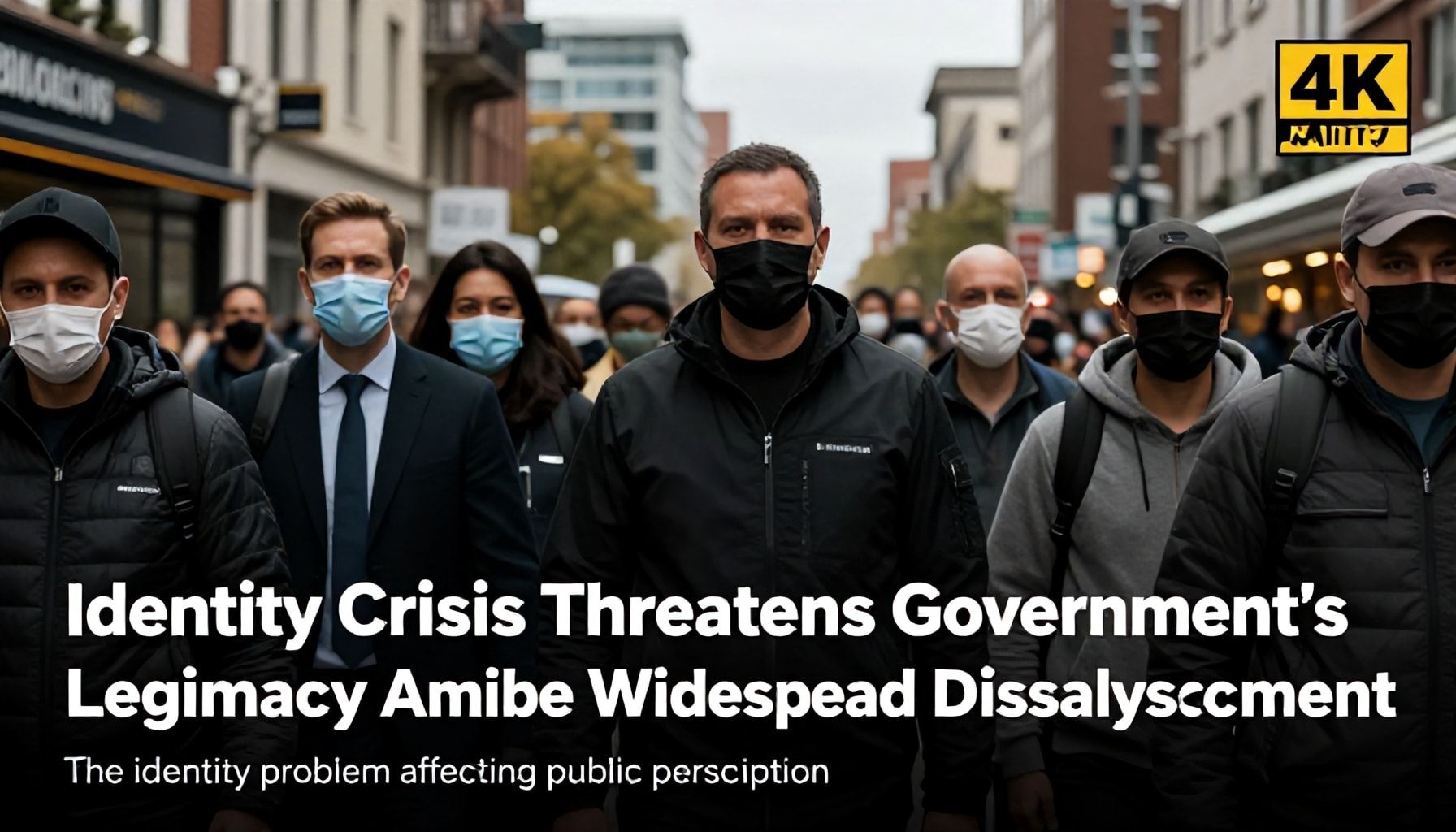
The government faces an escalating identity crisis as widespread public dissatisfaction challenges its legitimacy. Recent polls reveal a significant decline in public trust, with only 32% of respondents expressing confidence in the government’s direction.
A senior political analyst, speaking on condition of anonymity, stated, “The government’s inability to align its policies with public expectations has created a perception gap.” This disconnect has fuelled protests and criticism across various sectors.
The crisis has been exacerbated by internal divisions within the ruling party. Disagreements over key policies have been played out in public, further eroding confidence. A recent party meeting ended without consensus, highlighting the depth of internal strife.
Public dissatisfaction has manifested in various forms, including mass protests and a surge in social media activism. Over the past month, more than 500 demonstrations have been recorded nationwide, according to official data.
The government’s response has been criticised as inadequate. A spokesperson for the opposition party accused the government of being “out of touch with reality.” They demanded immediate reforms to address public grievances.
Economic performance has also been a point of contention. Despite official claims of growth, many citizens report feeling financially worse off. Inflation has risen to 4.5%, the highest in five years, adding to public discontent.
The identity crisis has led to calls for a national dialogue. Civil society groups have urged the government to engage in meaningful discussions to bridge the divide. However, no formal response has been issued by the government.
The situation has drawn comparisons to past political crises. Historians note similarities with the 1990s, when public dissatisfaction led to significant political upheaval. The current government faces the challenge of navigating this crisis without repeating past mistakes.
Government's Identity Under Fire as Public Backlash Intensifies
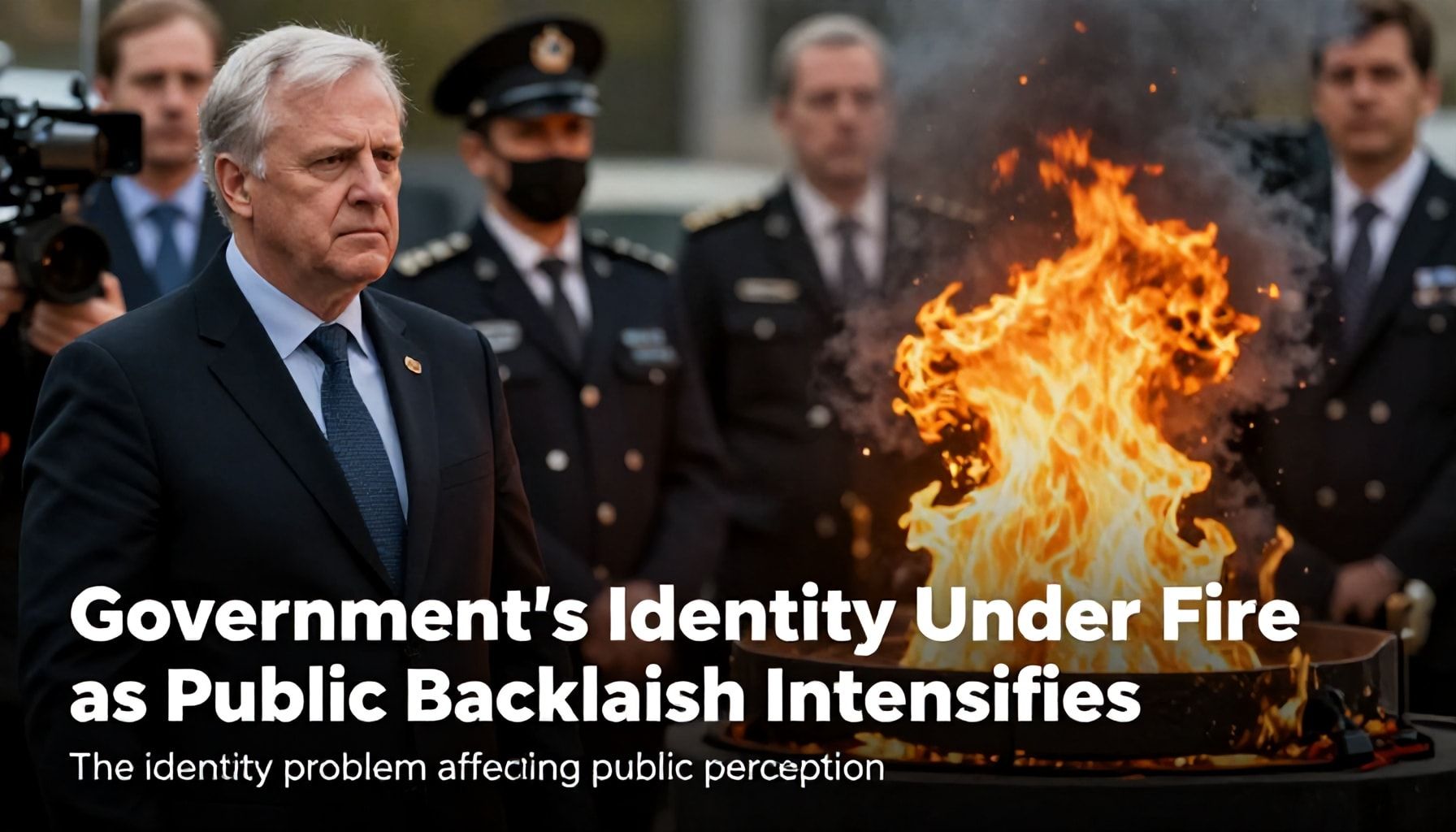
The government’s identity crisis deepens as public backlash intensifies, with critics questioning its core values and direction. A recent poll by Ipsos MORI reveals that 62% of Britons feel the government no longer represents their interests, a significant increase from 48% just six months ago.
At the heart of the controversy lies the government’s handling of the economy. The Office for National Statistics reported last week that inflation has risen to 4.2%, its highest level in a decade. Shadow Chancellor Rachel Reeves described the situation as “a clear sign that the government’s economic policies are failing ordinary people.”
The government’s stance on social issues has also drawn criticism. Last month’s decision to limit benefits for young jobseekers sparked protests across the country. Labour Party leader Keir Starmer condemned the move, stating, “This government is out of touch with the realities of modern Britain.”
The government’s response to the backlash has been swift but divisive. Prime Minister Rishi Sunak defended his party’s record, saying, “We are delivering on our promises, and we will not be deterred by short-term opposition.” However, this stance has done little to quell the growing discontent.
The identity crisis is not confined to policy matters. The government’s communication strategy has also come under fire. Critics argue that the government’s messaging is inconsistent and fails to resonate with the public. A recent study by the Reuters Institute for the Study of Journalism found that only 38% of Britons trust government communications, down from 52% in 2020.
As the backlash continues, the government faces mounting pressure to address the public’s concerns. With local elections approaching, the political stakes are higher than ever. The government’s ability to navigate this identity crisis will be crucial in determining its future.
The government now confronts a pivotal moment, with mounting pressure to address the identity crisis head-on. As public discontent continues to swell, ministers face a delicate balancing act between maintaining their core principles and responding to the evolving demands of the electorate. The coming weeks will be critical, with key policy announcements expected to set the tone for the government’s future direction. Meanwhile, opposition parties are seizing the opportunity to consolidate their positions, setting the stage for a potentially volatile political landscape in the months ahead. The government’s ability to navigate this turmoil will ultimately determine its political longevity and public trust.






