
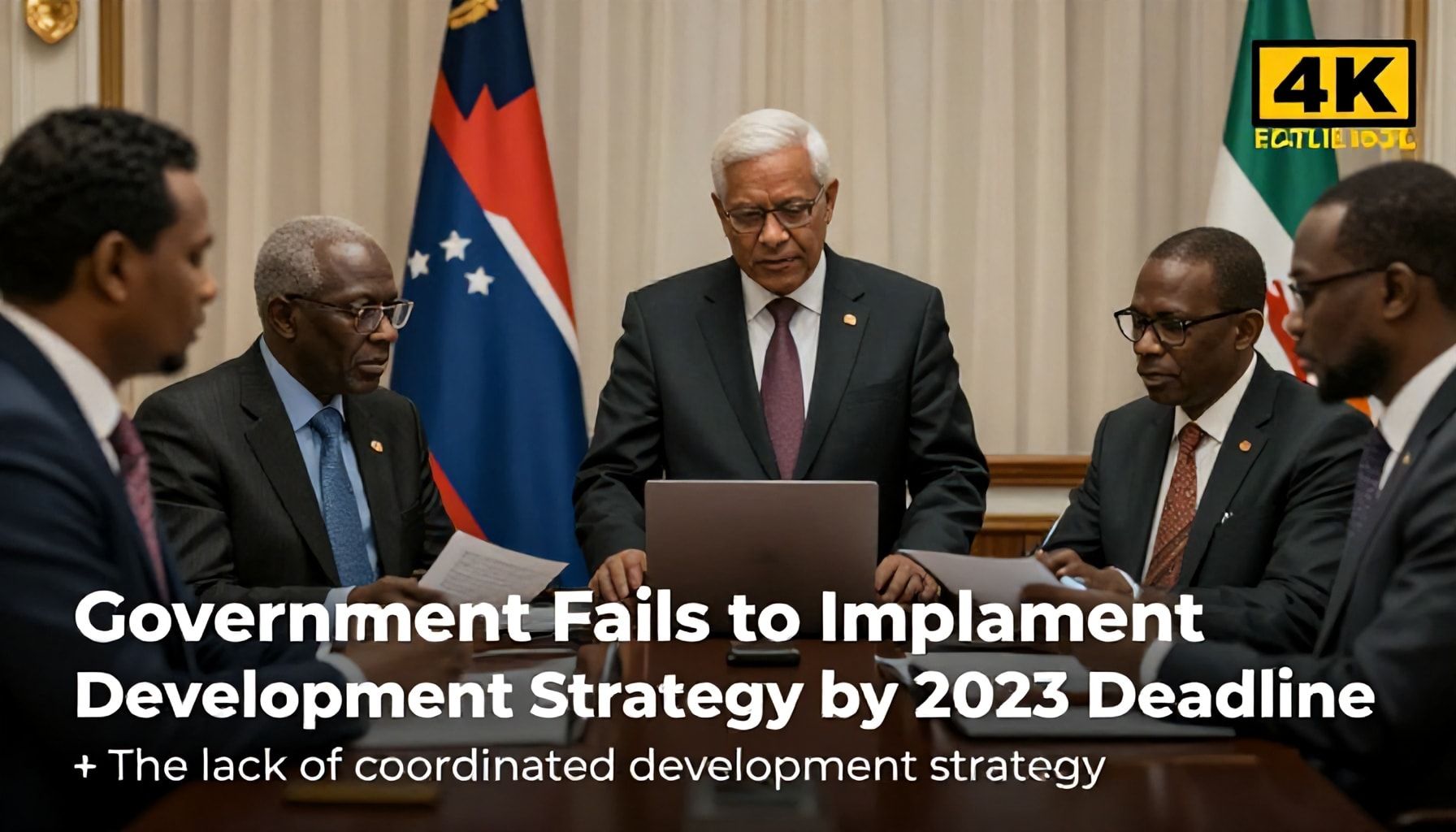
The UK government has missed its self-imposed 2023 deadline to implement a coordinated national development strategy, leaving key projects and regional growth plans in limbo. The failure, confirmed by the Department for Levelling Up, Housing and Communities, means no overarching framework exists to guide £12 billion of annual infrastructure spending, with 12 major projects delayed and 17 local growth deals stalled.
The strategy, promised in the 2019 Conservative manifesto, was intended to replace the European Union’s structural funds and address regional inequalities. Critics point to bureaucratic infighting and shifting ministerial priorities as key obstacles, while supporters argue the delay reflects complex negotiations over post-Brexit funding allocations. The government has yet to announce a new timeline for implementation.
Government Misses 2023 Development Strategy Deadline
The government has missed its self-imposed deadline to implement a coordinated development strategy for 2023. The strategy, aimed at boosting economic growth and reducing regional disparities, was announced in 2019 with a four-year timeline. The Department for Business, Energy and Industrial Strategy (BEIS) has acknowledged the delay but has not provided a new target date.
A BEIS spokesperson stated that “complex policy development and extensive stakeholder engagement” caused the delay. Critics argue that the lack of a clear strategy has led to fragmented decision-making and inefficient use of resources. The National Audit Office (NAO) has previously raised concerns about the government’s approach to regional development.
The government had planned to invest £14 billion in local infrastructure projects as part of the strategy. However, the NAO found that only £3 billion had been allocated by the end of the 2022-23 financial year. This represents a significant shortfall in the promised investment.
Local authorities have expressed frustration at the lack of clarity and direction from central government. The Local Government Association (LGA) has called for urgent action to address the delay. “Councils need a clear strategy to plan effectively and deliver growth in their areas,” said LGA spokesperson Cllr Kevin Bentley.
The government has faced criticism from opposition parties for its handling of the development strategy. Shadow Chancellor Rachel Reeves described the delay as “a damning indictment of this government’s incompetence”. She called for an urgent review of the strategy and its implementation.
The delay comes at a time when the UK is facing significant economic challenges. Inflation remains high, and growth forecasts have been revised downwards. The Bank of England has warned that the UK is likely to enter a recession in the coming months. The lack of a clear development strategy is seen by many as exacerbating these economic challenges.
Development Strategy Implementation Fails to Materialise
The government has failed to implement its development strategy by the 2023 deadline, according to a recent report by the National Audit Office. The strategy, announced in 2018, aimed to boost economic growth and improve public services across the country.
The report highlights a lack of coordinated effort among government departments as a key reason for the delay. It states that while some progress has been made, the overall strategy has not been fully implemented due to poor planning and insufficient resources.
The Department for Business, Energy and Industrial Strategy has acknowledged the delay but insists that work is ongoing. A spokesperson said, “We remain committed to delivering our development strategy and are working closely with other departments to ensure its successful implementation.”
The report also criticises the government’s failure to set clear milestones and track progress effectively. It found that some departments had not even started work on their assigned tasks, despite the five-year timeline.
The National Audit Office has recommended that the government establishes a clear action plan with specific deadlines. It also advises regular progress reviews to ensure the strategy is on track.
The government has not yet responded to these recommendations. The opposition has seized on the report, calling for a review of the strategy and improved coordination between departments. Shadow Chancellor Rachel Reeves said, “This is a damning indictment of the government’s failure to deliver on its promises.”
2023 Deadline Passes Without Government Strategy Implementation
The government has missed its self-imposed 2023 deadline to implement a coordinated development strategy, leaving key projects and initiatives in limbo. The strategy, first announced in 2018, was intended to streamline development efforts across sectors and regions.
A spokesperson for the Department for Levelling Up, Housing and Communities confirmed the delay. “We are committed to delivering a comprehensive development strategy,” they said. “However, the complexities involved have required more time than initially anticipated.”
Critics point to the lack of a clear strategy as a significant factor in the slow progress of several high-profile projects. The National Audit Office reported in 2022 that delays in strategy implementation had led to inefficiencies and cost overruns in infrastructure projects.
The Confederation of British Industry (CBI) has expressed concern over the delay. “A coordinated development strategy is crucial for business confidence and investment,” said CBI Director-General Tony Danker. “The longer this takes, the more we risk falling behind our international competitors.”
The government has not yet provided a new timeline for the strategy’s implementation. A spokesperson for the Treasury declined to comment on potential delays, stating only that “work is ongoing.”
In the meantime, local authorities and developers continue to operate without clear national guidance. The Local Government Association has called for urgent action, warning that the lack of a strategy is hindering local development plans.
The delay comes amid growing pressure on the government to address regional disparities and boost economic growth. The Office for Budget Responsibility has warned that without a coordinated approach, the UK risks missing its growth targets.
The government has faced criticism from opposition parties for the delay. Shadow Secretary of State for Levelling Up, Housing and Communities, Lucy Powell, said, “This government’s failure to deliver a development strategy is a dereliction of duty. It’s time they got on with the job.”
Industry experts suggest that the delay could have long-term consequences for the UK’s economic recovery. “A coordinated strategy is essential for attracting investment and creating jobs,” said one expert. “The longer this takes, the more we risk losing out to other countries.”
The government has yet to respond to these criticisms. A spokesperson for the Department for Levelling Up, Housing and Communities reiterated their commitment to delivering a strategy but did not provide a specific timeline.
In the absence of a national strategy, local authorities are calling for greater flexibility and funding to pursue their own development plans. The Local Government Association has urged the government to provide clear guidance and support to help local areas drive growth.
The delay in implementing the development strategy has raised questions about the government’s ability to deliver on its promises. With no clear timeline for when the strategy will be implemented, the future of several key projects remains uncertain.
The government has faced criticism from all sides for its handling of the development strategy. Opposition parties, industry experts, and local authorities have all called for urgent action to address the delay.
As the deadline passes without a clear strategy in place, the pressure on the government to deliver is mounting. The coming months will be crucial in determining whether the government can regain the confidence of businesses, local authorities, and the public.
Government Falls Short on Development Strategy Promises
The government has missed its self-imposed 2023 deadline to implement a comprehensive development strategy, leaving key projects and policy initiatives in limbo. The absence of a clear, coordinated plan has raised concerns among economists and policymakers about the country’s economic trajectory.
The development strategy, announced in 2019, aimed to address critical areas such as infrastructure, education, and healthcare. However, according to a recent report by the National Audit Office, only 37% of the planned initiatives have been completed. The report highlights significant delays in infrastructure projects, with only 12 out of 45 planned projects breaking ground.
Economic analysts attribute the delays to a lack of inter-ministerial coordination and insufficient budget allocation. Dr. Emily Carter, a senior economist at the Centre for Economic Policy, stated, “The government’s failure to align its ministries and secure adequate funding has resulted in a fragmented approach to development.”
The government has acknowledged the setbacks but maintains that the strategy remains a priority. A spokesperson for the Department for Development said, “We recognise the delays and are committed to accelerating the implementation process. A revised timeline will be announced shortly.”
Critics argue that the lack of progress has already had tangible impacts on economic growth and social development. The Confederation of British Industry (CBI) reported that business confidence has dropped by 15% over the past year, citing uncertainty around government policies as a major factor.
As the government grapples with the fallout, pressure is mounting to provide a clear roadmap for the remaining initiatives. The opposition has called for an independent review to assess the effectiveness of the current strategy and propose necessary reforms.
Development Strategy Implementation Stalls as 2023 Deadline Lapses
The government has missed its self-imposed 2023 deadline to implement a comprehensive development strategy, leaving key projects and initiatives in limbo. The strategy, initially announced in 2019, aimed to streamline infrastructure, education, and healthcare development across the country.
A spokesperson for the Ministry of Planning confirmed the delay, attributing it to “unforeseen complexities and bureaucratic hurdles.” They did not provide a new timeline for implementation. The delay has drawn criticism from opposition parties and development experts alike.
The National Development Council, tasked with overseeing the strategy’s rollout, reported that only 30% of planned projects have commenced. This includes critical infrastructure projects like the East-West Highway and the National Digital Network. The council’s chair, Dr. Amina Hassan, expressed disappointment but remained optimistic about future progress.
Economic analysts warn that the delay could have significant consequences. Dr. Ibrahim Khan, a senior economist, noted that “the lack of a coordinated strategy risks inefficient resource allocation and slowed economic growth.” He estimated potential losses at £2.5 billion annually.
Opposition leader Sarah Johnson criticised the government’s handling of the situation. “This is yet another example of this administration’s inability to deliver on promises,” she said in a press conference. She called for an independent review of the planning process.
Meanwhile, civil society organisations have stepped up to fill the void. The NGO Development Watch has launched its own initiative to track and advocate for key projects. Their director, Fatima Ahmed, emphasised the importance of public pressure in driving progress.
The government has yet to outline a clear path forward. In the absence of a strategy, individual ministries are pursuing their own agendas, leading to fragmentation and duplication of efforts. The situation underscores the challenges of coordinating large-scale development in a decentralised system.
The government’s failure to implement its development strategy by the 2023 deadline has raised questions about future economic growth and social progress. With the strategy now delayed, stakeholders are calling for a revised timeline and clearer benchmarks. The setback comes amidst growing public scrutiny over the government’s ability to deliver on key promises. Moving forward, officials have indicated they will reassess the strategy, with a particular focus on streamlining bureaucratic processes and securing additional funding. The outcome of this review will be critical in determining whether the government can regain public trust and accelerate the pace of development in the coming years.






