
The UK government has called on schools to address disparities in physical education (PE) access by 2025, following reports that nearly a quarter of pupils receive less than the recommended two hours of PE per week. The Department for Education (DfE) issued the directive after a survey of 1,000 schools revealed significant variations in PE provision, with state schools offering an average of 135 minutes per week compared to 160 minutes in independent institutions. The campaign aims to tackle the issue by providing additional funding for teacher training and resources, with the ultimate goal of ensuring all pupils, regardless of background, have equal opportunities to participate in physical activities. The DfE has also encouraged schools to collaborate with local sports clubs and organisations to enhance PE programmes and promote lifelong healthy habits.
Government sets 2025 deadline for schools to address PE access disparities
The government has set a 2025 deadline for schools to address disparities in physical education (PE) access. The announcement came as part of a broader initiative to improve physical activity levels among young people.
A recent report by the Department for Education revealed that 30% of secondary schools and 20% of primary schools have inadequate PE facilities. The figures highlight significant regional variations, with inner-city schools disproportionately affected.
Education Secretary Gillian Keegan stated, “Every child deserves equal access to PE, regardless of their location or background.” She made the comments during a speech at the Association of School and College Leaders conference.
The deadline is part of a £320 million investment aimed at improving school sports facilities. The funds will target schools in disadvantaged areas, with a focus on upgrading outdated equipment and creating safe, inclusive spaces.
Critics argue that the deadline may be too ambitious. Mary Bousted, joint general secretary of the National Education Union, said, “While we welcome the investment, 2025 is a tight deadline. Schools need more support to meet these targets.”
The government has pledged to work closely with schools and local authorities to ensure the targets are met. Regular progress reports will be published to monitor the initiative’s impact.
In the meantime, schools are encouraged to apply for grants to improve their PE facilities. Applications are open until the end of the academic year.
Urgent call to action: Government targets PE programme inequality by 2025
The UK government has issued an urgent call to action for schools to address inequalities in physical education (PE) provision by 2025. The Department for Education (DfE) has highlighted significant disparities in PE access, with some pupils receiving as little as one hour of structured physical activity per week, far below recommended guidelines.
A recent report from the Youth Sport Trust revealed that 20% of state schools in England do not meet the minimum requirement of two hours of PE per week. This figure rises to 30% in the most deprived areas, exacerbating existing inequalities in physical health and academic performance.
Education Secretary Gillian Keegan has urged schools to prioritise PE provision, stating, “Every child deserves equal access to high-quality physical education. We must tackle these disparities to ensure all pupils can benefit from the physical, mental, and social advantages of regular exercise.”
The DfE has pledged £320 million to support schools in improving PE facilities and teacher training. This funding forms part of the government’s wider School Sport and Activity Plan, launched in 2019 to increase participation in physical activity among young people.
However, critics argue that more needs to be done to address the root causes of PE inequality. Dr. Sue Campbell, Chair of the Youth Sport Trust, emphasised the need for systemic change, saying, “Funding is crucial, but we must also address the wider issues of teacher workload, curriculum time, and school accountability measures that impact PE provision.”
The government’s target of 2025 has been set to coincide with the next comprehensive spending review, ensuring that progress can be monitored and additional resources allocated if necessary. Schools have been advised to conduct audits of their current PE provision and develop action plans to meet the new targets.
Schools urged to eliminate PE access barriers within three years
The UK government has called on schools to eliminate barriers to physical education (PE) access within the next three years. The Department for Education (DfE) issued guidance urging schools to review and update their PE policies by 2025.
Currently, one in five children in England do not meet the Chief Medical Officer’s recommended activity levels. The DfE attributes this partly to inconsistent access to PE programmes. Schools Minister Nick Gibb highlighted the importance of PE in promoting healthy lifestyles.
The guidance emphasises the need for inclusive PE programmes that cater to all pupils, regardless of ability or background. It also encourages schools to utilise the £320 million Primary PE and Sport Premium funding effectively. This funding aims to improve the quality of PE provision in primary schools.
A recent survey by the Youth Sport Trust revealed that 40% of state schools face challenges in delivering PE. These include lack of facilities, insufficient staff training, and budget constraints. The DfE acknowledged these challenges but stressed the importance of finding solutions.
The government’s call to action follows a report by the All-Party Parliamentary Group on a Fit and Healthy Childhood. The report found that PE provision varies significantly across the country. Some schools offer comprehensive programmes, while others struggle to meet basic requirements.
Schools have been advised to conduct audits of their current PE provision and identify areas for improvement. The DfE has pledged to provide support and resources to help schools meet the 2025 target. This includes access to expert advice and best practice examples from successful schools.
Government intervention aims to standardise PE provision nationwide
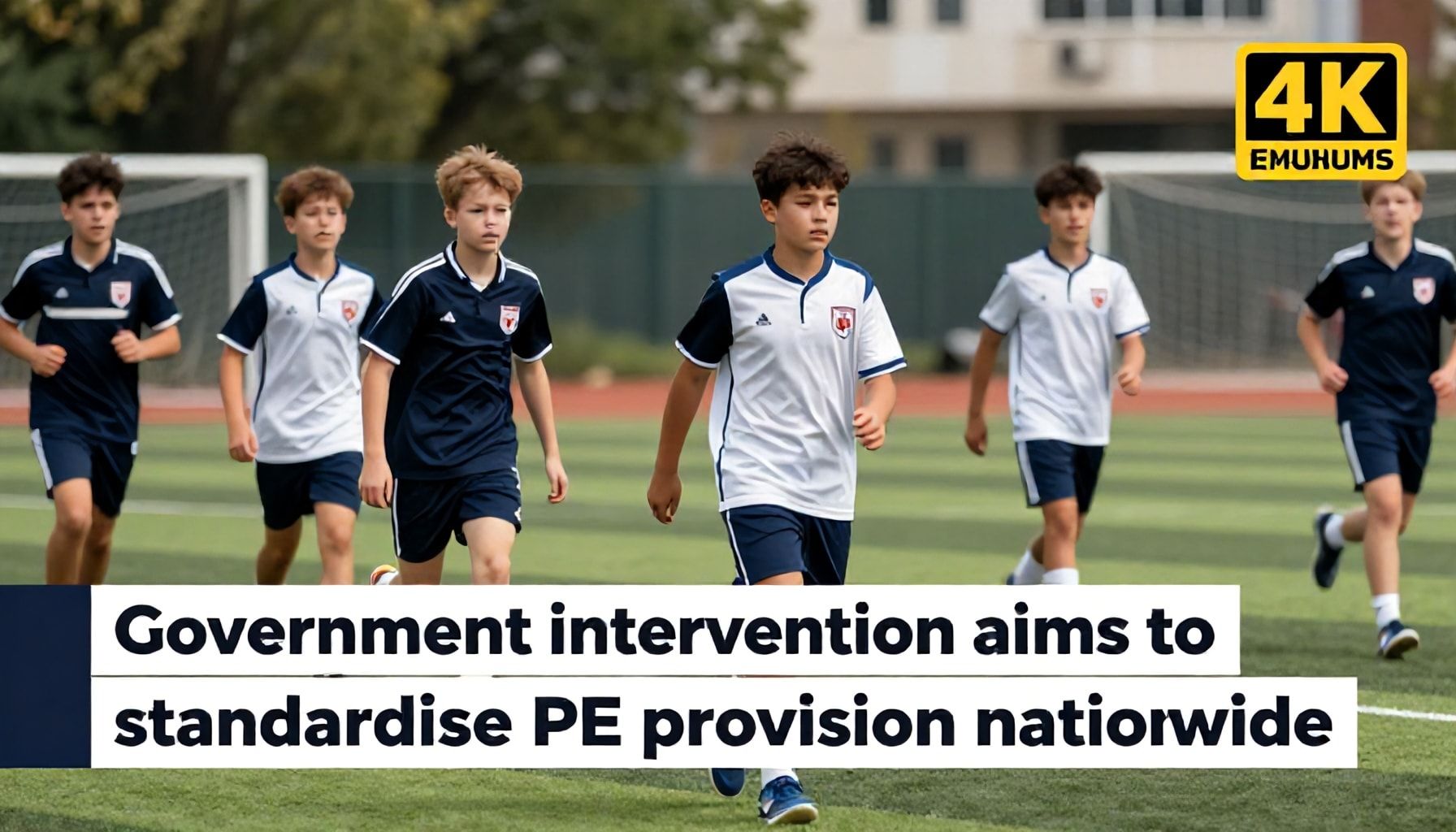
The Department for Education has announced a new initiative to address disparities in physical education (PE) provision across England’s schools. By 2025, all state-funded schools must meet new national standards for PE access and quality.
Currently, a significant gap exists between schools. A 2023 report by the Youth Sport Trust found that 38% of state schools reduced PE time over the past five years, while 28% of pupils receive less than two hours of PE per week.
The government’s intervention follows growing concerns about declining youth fitness levels. Chief Medical Officer Professor Chris Whitty warned in 2022 that “physical inactivity is one of the greatest public health challenges of our time.”
Under the new guidelines, primary schools must provide at least two hours of PE per week, while secondary schools must offer at least three. Schools will also be required to employ qualified PE teachers and provide facilities that meet safety standards.
The Department for Education has allocated £320 million to support schools in meeting these requirements. This funding will go towards facility upgrades, teacher training, and equipment purchases.
Education Secretary Gillian Keegan stated, “Every child deserves equal access to high-quality physical education. These standards will ensure consistency and help tackle the growing issue of youth inactivity.”
Critics argue the timeline is too ambitious. National Association of Head Teachers general secretary Paul Whiteman noted, “While we support the goal, schools face significant challenges in recruiting specialist PE staff and securing funding for facility improvements.”
The government maintains that the 2025 deadline is achievable. A progress report will be published annually, with the first due in spring 2024.
2025 deadline set for schools to resolve physical education access issues
The UK government has set a 2025 deadline for schools to resolve access issues in physical education programmes. This directive follows a report revealing that nearly 1 in 5 schools struggle to provide adequate PE facilities.
The Department for Education (DfE) announced the deadline last week, urging schools to address infrastructure and resource gaps. “Every child deserves equal access to quality physical education,” said a DfE spokesperson.
The report, compiled by the Youth Sport Trust, identified swimming pools, sports halls, and outdoor pitches as the most commonly lacking facilities. Secondary schools reported the highest access issues, with 22% citing insufficient facilities.
Schools face a range of challenges, from funding constraints to space limitations. Some rural schools struggle with transport to off-site facilities, while urban schools grapple with high land costs.
The government has pledged £320 million to support school sport infrastructure. However, critics argue this falls short of the estimated £1.5 billion needed to address the backlog of repairs and new builds.
The 2025 deadline has sparked debate among education professionals. Some welcome the urgency, while others express concerns about feasibility. “We need clear guidance and sufficient funding to meet this target,” said one headteacher.
The DfE has promised further details on funding allocations and support mechanisms in the coming months. Schools are expected to submit improvement plans by the end of the academic year.
The Department for Education has set a clear deadline for schools to address physical education access disparities by 2025. This initiative aims to ensure all students, regardless of background, receive equal opportunities for physical activity. Schools will need to review their current PE provisions and implement necessary changes to meet the new standards. The government has pledged additional funding to support these efforts, with further details expected in the coming months. This move underscores the government’s commitment to promoting healthier lifestyles among young people and narrowing the activity gap between different socio-economic groups.






