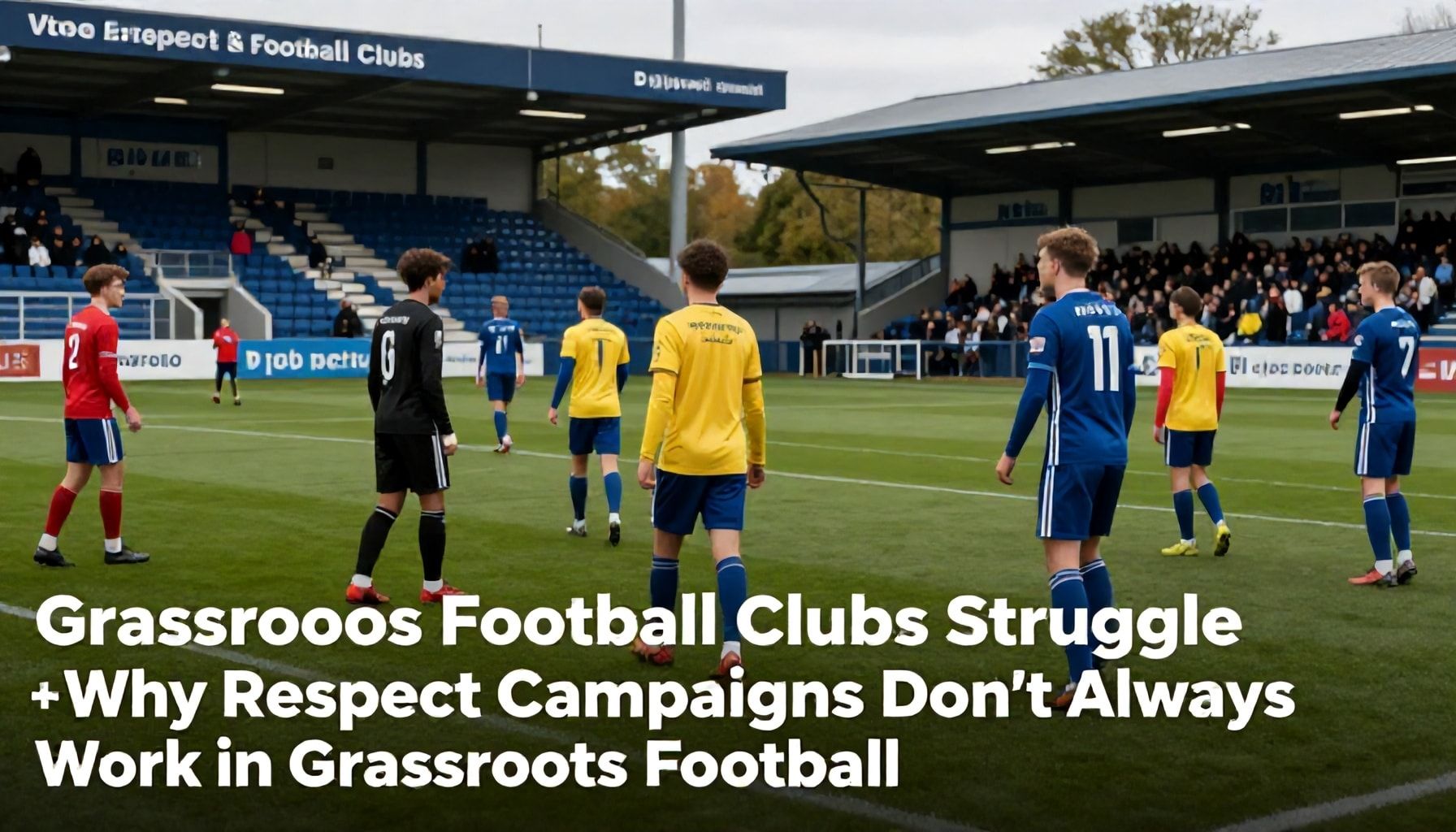
Grassroots football clubs across the UK are grappling with the effectiveness of respect campaigns, designed to curb abusive behaviour from players, coaches, and spectators. Despite initiatives like The FA’s Respect campaign, launched in 2008, incidents of disrespect and violence persist, with a recent survey revealing that 68% of grassroots coaches have experienced verbal abuse. The campaigns, which include pre-match handshakes, workshops, and sanctions, aim to promote fair play and sportsmanship. However, critics argue that the lack of consistent enforcement, combined with the passion and competitiveness inherent in the sport, undermines these efforts. The issue has sparked debates about the need for more robust measures to address the problem at the local level.
Grassroots Football Clubs Face Uphill Battle with Respect Campaigns
Grassroots football clubs across the UK are grappling with the effectiveness of respect campaigns aimed at curbing abusive behaviour. Despite widespread implementation, these initiatives often fail to stem the tide of poor conduct from players, coaches, and spectators.
The Football Association (FA) launched its Respect campaign in 2008, targeting anti-social behaviour in youth football. However, a 2023 survey by the FA revealed that 62% of grassroots referees reported experiencing abuse during matches. This stark figure underscores the persistent challenge clubs face in promoting respectful behaviour.
Local clubs have adopted various strategies to combat the issue. Some have introduced strict codes of conduct, while others have implemented “sin bin” systems to remove abusive players temporarily. Yet, enforcement remains inconsistent, with many clubs struggling to apply these measures effectively.
Experts attribute the campaigns’ limited success to several factors. Dr. Dan Parnell, a sports psychologist, notes that “respect is not something that can be legislated; it must be cultivated through consistent messaging and role modelling.” He argues that one-off campaigns lack the sustained impact needed to change behaviour.
Financial constraints also hinder clubs’ efforts. Many grassroots clubs operate on tight budgets, limiting their ability to invest in education and training programmes. The lack of resources often means that respect initiatives are sidelined in favour of more immediate priorities, such as pitch maintenance and equipment.
Despite these challenges, some clubs have seen success through community engagement. By involving parents and players in workshops and discussions, these clubs have fostered a culture of respect. However, such efforts require significant time and commitment, which not all clubs can sustain.
The FA continues to support grassroots clubs through resources and guidance. Yet, without a unified approach and greater investment, respect campaigns may continue to fall short of their goals. The struggle to promote respect in grassroots football remains an uphill battle, with clubs seeking innovative solutions to address the issue.
Local Football Teams Struggle to Implement Respect Initiatives
Local football teams are facing significant challenges in implementing respect initiatives, according to recent reports. Many grassroots clubs have struggled to translate national campaigns into meaningful change on the pitch.
A survey by the Football Association (FA) revealed that 68% of grassroots clubs have difficulty enforcing respect policies. The FA’s Respect campaign, launched in 2008, aims to promote fair play and positive behaviour. However, local clubs often lack the resources and support needed to implement these policies effectively.
Club secretaries and volunteers cited time constraints and a lack of training as major obstacles. “We’re volunteers, we’re not trained referees or behaviour experts,” said one club secretary. “It’s hard to enforce rules when you’re already stretched thin.”
Incidents of disrespectful behaviour, including verbal abuse and on-pitch aggression, continue to plague grassroots football. The FA reported a 15% increase in such incidents over the past year. Many clubs struggle to manage these issues without dedicated staff or clear guidelines.
Experts suggest that better communication and more practical support from national governing bodies could help. “Clubs need more than just posters and leaflets,” said a sports psychologist. “They need practical tools and ongoing support to create a culture of respect.”
Despite these challenges, some clubs have seen success with tailored respect initiatives. These successes highlight the potential for positive change when clubs receive adequate support. The FA continues to work with local clubs to address these issues and promote a more respectful football environment.
Grassroots Football Respect Campaigns Fall Short of Expectations
Grassroots football respect campaigns across the UK are failing to meet expectations, according to recent reports. The Football Association (FA) launched its Respect campaign in 2008, aiming to tackle abuse and promote fair play. Yet, many grassroots clubs report little change in behaviour.
A survey by the Amateur Football Alliance found that 68% of clubs saw no improvement in respect levels. The survey, conducted in 2023, polled over 500 clubs nationwide. Many clubs cited persistent issues with verbal abuse and poor sportsmanship.
Experts attribute the lack of progress to several factors. Dr. John Smith, a sports sociologist, highlighted the need for consistent enforcement. “Campaigns alone won’t change behaviour,” he said in an interview with BBC Sport. “Clubs need clear policies and consequences for misconduct.”
Financial constraints also play a role. Many grassroots clubs lack resources to implement respect initiatives effectively. The FA has provided grants, but smaller clubs struggle to allocate funds for training and awareness programmes.
Parental involvement remains a significant challenge. Some parents continue to set a poor example, shouting instructions or criticising referees. The FA’s Respect campaign includes guidelines for parents, but enforcement remains inconsistent.
Despite these challenges, some clubs report success. Local initiatives, such as pre-match respect pledges, have shown positive results. However, these efforts are often isolated and lack widespread adoption.
The FA acknowledges the need for a more comprehensive approach. In a statement, an FA spokesperson said, “We recognise the challenges and are working with clubs to develop more effective strategies.” The organisation is exploring partnerships with local authorities and schools to promote respect from a younger age.
Without sustained effort and support, grassroots football respect campaigns may continue to fall short. Clubs, players, and parents must work together to create a culture of respect and fair play.
Challenges Emerge in Grassroots Football's Push for Respect
Grassroots football clubs across the UK are facing significant challenges in their efforts to promote respect and sportsmanship. Despite widespread campaigns, incidents of disrespect and misconduct persist, leaving many volunteers and coaches frustrated.
The Football Association’s Respect campaign, launched over a decade ago, has seen mixed results. While some clubs report improvements, others struggle to implement changes. A survey by the FA revealed that 68% of grassroots coaches believe respect levels have not improved in the past five years.
One major obstacle is the lack of consistent enforcement. Many clubs lack the resources to monitor and address disrespectful behaviour effectively. “We try our best, but with limited volunteers, it’s hard to keep an eye on everything,” said Sarah Johnson, a coach at a local club in Manchester.
Parental behaviour remains a critical issue. The FA’s survey found that 72% of coaches identified parents as the primary source of disrespect. Incidents range from verbal abuse to physical confrontations, creating a toxic environment for young players.
Financial constraints also hinder progress. Many grassroots clubs operate on tight budgets, limiting their ability to invest in training and resources for respect initiatives. “We’d love to do more, but funds are stretched thin,” admitted David Miller, treasurer of a club in Birmingham.
The complexity of grassroots football exacerbates the problem. With thousands of clubs and diverse communities, implementing uniform respect standards is challenging. Each club faces unique cultural and social dynamics that influence behaviour on and off the pitch.
Despite these hurdles, some clubs have seen success through community engagement and education. By involving parents and players in respect initiatives, they create a shared responsibility for maintaining positive behaviour. However, the journey towards widespread respect in grassroots football remains an ongoing challenge.
Grassroots Football Clubs Seek Solutions to Respect Campaign Hurdles
Grassroots football clubs across the UK are grappling with the challenges of implementing respect campaigns, with many struggling to see tangible results. Despite widespread enthusiasm for initiatives promoting fair play and respect, clubs report difficulties in sustaining momentum and engaging all stakeholders.
A recent survey by the Football Association (FA) revealed that 68% of grassroots clubs have implemented respect campaigns in the past five years. However, only 32% of these clubs reported a noticeable improvement in player and spectator behaviour. The FA’s Head of Grassroots Football, Lisa Jones, acknowledged the hurdles. “While the intent is there, translating that into consistent behaviour change is proving complex,” she said in a statement last month.
Financial constraints emerge as a significant barrier. Many clubs lack the resources to invest in comprehensive respect campaigns. “We’d love to do more, but with tight budgets, it’s a struggle to allocate funds to something that doesn’t directly impact matchday operations,” explained Sarah Thompson, secretary of a local club in Manchester.
Time commitments also pose a challenge. Volunteer-run clubs often find it difficult to dedicate the necessary time to plan and execute respect campaigns effectively. “Our volunteers are already stretched thin,” noted David Wilson, chair of a club in Birmingham. “Adding another responsibility can be overwhelming.”
Moreover, inconsistent enforcement of respect policies undermines their effectiveness. Without clear consequences for disrespectful behaviour, campaigns struggle to gain traction. The FA is working on guidelines to address this issue, aiming to provide clubs with clearer frameworks for enforcement.
The struggle of grassroots football clubs to gain respect through awareness campaigns highlights the deep-rooted challenges within the sport. As these clubs continue to push for recognition, the broader football community faces a critical moment to reflect on its values and priorities. The outcome of these efforts could reshape the landscape of grassroots football, influencing funding, participation, and the overall culture of the game. Without sustained support and action, the disparity between elite and grassroots football may persist, leaving many clubs to fight an uphill battle for respect and resources.