
Alright, let’s dive into the wild chess game that is modern football substitutions. It’s not just about swapping tired legs for fresh ones anymore — managers have turned this into an art form, a tactical weapon that can flip a match on its head. Imagine the pitch as a battlefield and subs as surprise reinforcements arriving just when the enemy least expects it. Clever managers exploit every little opening, whether it’s to shift momentum, exploit an opponent’s weakness, or simply to outsmart the other coach’s game plan.
Now, you might wonder, is it always a smart move to throw in a new player early on? That’s the million-dollar question. Early substitutions can be like a double-edged sword — sometimes they spark a revival, other times they just mess up the flow and leave the team scrambling. It’s a gamble, really. But when it works, oh boy, it’s like lighting a fire under the team’s boots.
- Early subs can unsettle opponents who were just getting comfortable.
- They can also backfire if the fresh player isn’t ready or the team loses shape.
- Managers often use early changes to fix tactical blunders or respond to unexpected events.
Speaking of game-changers, let’s talk about the beloved “super-subs”. These are players who seem to have a sixth sense for turning games around. They come on with fresh legs, a chip on their shoulder, and a burning desire to prove they belong. Think of them as the secret sauce — sometimes a single substitution can be the difference between a draw and a last-minute victory.
| Player | Famous Super-Sub Moment | Impact |
|---|---|---|
| Ole Gunnar Solskjær | 1999 Champions League Final | Scored the winning goal in injury time |
| Javier Hernández | Multiple Premier League games | Consistently scored crucial goals off the bench |
| Divock Origi | 2019 Champions League Semi-final | Scored twice to overturn deficit |
Of course, substitutions aren’t always about tactics. Sometimes injuries force a hand, and managers have to juggle between replacing a player and maintaining a strategy. It’s a tightrope walk — a delicate balance between reacting to the unexpected and sticking to the game plan.
And here’s a nugget for you: substitutions also control the tempo of the game. Want to slow things down? Bring on a player who’s good at holding the ball and killing the clock. Need to speed it up? Fresh legs and pace can put the opposition under pressure. It’s like being a conductor, orchestrating the rhythm of the match through your bench.
- Slowing down helps protect a lead and frustrate opponents.
- Speeding up can catch tired defenders off guard.
- Fatigue management is crucial in the last 20 minutes.
Lastly, don’t overlook the modern edge — data analytics. Managers now have mountains of stats and heat maps guiding their choices. It’s not just gut feeling anymore; it’s about who covers the most ground, who’s most effective in certain zones, and when exactly to unleash them. The game is evolving, and substitutions are a key piece of that puzzle.
So yeah, substitutions in football today are far from a simple player swap. They’re tactical masterstrokes, psychological gambits, and sometimes just plain lucky breaks. Next time you see a manager pacing nervously on the touchline, remember: every sub button pressed is a move in a high-stakes game of strategy.
Early Substitutions: Risky or Rewarding?
When it comes to early substitutions in football, opinions are all over the shop. Some managers swear by shaking things up quickly to jolt their team or disrupt the opponent’s flow, while others think it’s a gamble that can blow up spectacularly in your face. So, is making a change before halftime a bold masterstroke or just a panic button? Let’s unpack this messy debate.
First off, tossing a player off the pitch too soon can send the wrong message. Imagine being subbed off in the 20th minute — it’s like a public firing, right? Confidence? Shattered. The player might feel like they’re on thin ice, and the rest of the squad might get a bit jittery, wondering if they’re next. On the flip side, sometimes a quick change is exactly what the doctor ordered. Maybe the original plan isn’t working, or a key player is limping and can’t keep up. In those moments, an early substitution can breathe fresh life into the team.
| Pros of Early Substitutions | Cons of Early Substitutions |
|---|---|
|
|
Now, let’s be honest — the context is everything. If your team is getting steamrolled early, you might have no choice but to act fast. But if you’re just reacting to a minor blip, pulling a player out too soon might backfire. And don’t forget, managers only get a limited number of substitutions, so burning one early can leave you exposed later when fatigue or injuries kick in.
Here’s a little insider nugget: some coaches use early subs as a psychological tactic. By making a bold change, they signal to their players, “Hey, we’re not settling for this,” or they try to rattle the opponent’s game plan. It’s a chess match, really, and sometimes sacrificing a pawn early can pay off big.
Practical Tips for Managers Considering Early Substitutions:- Assess if the player is physically or mentally struggling.- Evaluate the game flow: is the team losing momentum or control?- Consider the remaining substitution quota.- Think about the message it sends to the squad.- Have a clear tactical plan for the substitute’s role.
At the end of the day, early substitutions are a double-edged sword. They can either spark a game-changing moment or leave a team scrambling. It’s a high-stakes gamble that requires guts, intuition, and sometimes, just a pinch of luck.
So next time you see a manager yank a player off before halftime, don’t jump to conclusions. It might be a stroke of genius… or a sign that things are about to get messy.
Impact Substitutes: The Super-Subs
There’s something undeniably thrilling about watching a player sprint onto the pitch with fire in their eyes, ready to flip the script. These are the super-subs, the game-changers who thrive on coming off the bench, bringing fresh energy and a desperate hunger to prove their worth. It’s like they’ve been waiting in the wings, sharpening their claws, just waiting for their moment to pounce. And when it comes, boy, do they make it count.
Managers love these players for a reason: they’re a secret weapon. When the starters are running on fumes, these substitutes inject pace and creativity that can unravel tired defenses. It’s not just about physical freshness though — there’s a psychological edge too. The super-sub mentality is often “nothing to lose,” which can lead to bold, unpredictable moves that catch opponents off guard. You’ve seen it countless times: a late equalizer, a last-minute winner, or a crucial assist that turns the tide. It’s almost poetic how some players seem to perform better with the clock ticking down.
- Fresh Legs, Fresh Ideas: Coming into a game late means these players often exploit spaces left by opponents who are worn out.
- Hunger to Impress: Substitutes know this could be their only shot to grab attention, so they play with an edge that starters sometimes lack.
- Changing the Game’s Rhythm: Their arrival can disrupt the opponent’s flow and force tactical reshuffles.
| Player | Known For | Memorable Impact |
|---|---|---|
| Ole Gunnar Solskjær | Clinical finishing | 1999 Champions League Final winner |
| Javier Hernández (Chicharito) | Poacher instincts | Numerous late goals for Manchester United |
| Divock Origi | Big-game temperament | 2019 Champions League semi-final heroics |
But here’s the rub — not every player can handle the super-sub role. It demands mental toughness to stay ready while sitting on the bench, and the ability to quickly adapt to the game’s pace and pressure. Some players get frustrated, feeling like they’re just “benchwarmers,” which can backfire on team morale. Coaches have to balance keeping these guys motivated without disrupting the harmony of the starting XI.
And let’s not forget the tactical chess match. Substitutions aren’t just about fresh legs; they’re about exploiting weaknesses. Maybe the opposition’s left-back is tired or vulnerable to pace, so in comes the speedy winger. Or perhaps a physical striker is needed to bully defenders late on. These decisions can be a gamble — sometimes the sub is a hero, sometimes an invisible ghost — but when they work, it’s pure magic.
In the end, the super-sub is a reminder that football isn’t just about the 90 minutes or the starting eleven. It’s about the unexpected moments, the twists that make us jump out of our seats. So next time you see a player jogging on with that spark in their eye, pay attention — you might just be witnessing a legend in the making.
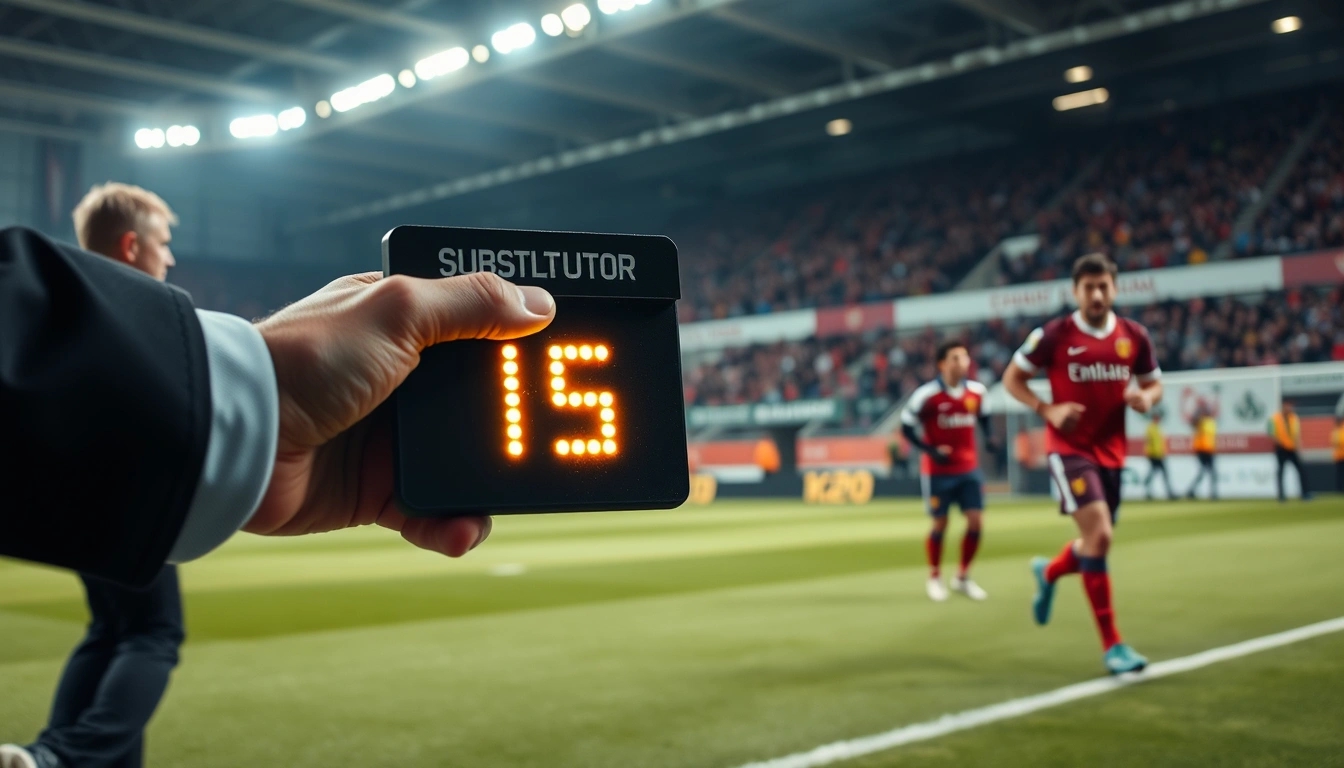
Injury vs Tactical Changes: Knowing the Difference
When it comes to substitutions in football, not all changes are created equal. Managers have this tricky balancing act to perform — juggling between forced substitutions due to injuries and those clever, strategic swaps designed to outwit the opposition. It’s like walking a tightrope while juggling flaming torches; one wrong move and the whole plan can go up in smoke.
First off, injury substitutions are the kind that no coach wants to make but sometimes has no choice. These are the unplanned, emergency changes that disrupt the flow of the game and often force a manager to rethink tactics on the fly. Imagine a key midfielder limping off at the 30th minute — suddenly, the whole midfield balance is thrown out of whack. The replacement might not be a perfect fit for the role, but hey, it’s better than playing with ten men, right? Injury subs can feel like a punch to the gut, especially if the injured player is a star performer. But sometimes, these forced changes open up unexpected opportunities. A fresh player might bring new energy or even spark a surprise comeback.
| Type of Substitution | Reason | Typical Impact |
|---|---|---|
| Injury | Player unable to continue due to physical harm | Disruptive, forces tactical readjustment, potential loss of key player |
| Tactical | Planned change to exploit weaknesses or shift momentum | Can energize team, change game dynamics, confuse opponents |
On the flip side, tactical substitutions are the bread and butter of modern football management. These are the calculated moves, the chess-like plays where managers swap players not because they have to, but because they want to. Maybe the opponent’s defense looks shaky on the left flank, so the coach brings on a speedy winger to exploit that. Or perhaps the game needs a bit of a shake-up — a fresh striker to chase that elusive equalizer.
- Strategic timing: Tactical subs are often timed to catch opponents off guard or to inject fresh legs when fatigue sets in.
- Psychological edge: Bringing on a “super-sub” can intimidate defenders who suddenly face a new threat.
- Formation tweaks: Sometimes the change isn’t just about the player but about shifting the entire team shape.
But here’s the kicker — sometimes it’s not so easy to tell if a substitution is injury-related or tactical, especially when managers try to mask their intentions. A player might hobble off, but was it a genuine injury or a clever ruse to buy time or disrupt the opponent’s rhythm? It’s football’s little game within the game.
In the end, the best managers are those who can seamlessly blend forced changes with strategic swaps. They keep their cool, adapt quickly, and always have a plan B (and C) ready. It’s a fine art — one that can make the difference between a crushing defeat and a memorable comeback.
So next time you see a substitution, don’t just think “Oh, injured player off.” Look deeper. Is it a forced change or a masterstroke? Because in the fast-paced world of football, every change tells a story.
Substitutions and Game Tempo Control
In the chaotic chessboard of modern football, substitutions are more than just a way to replace tired legs—they’re tactical tools that can literally change the rhythm of the entire match. Coaches have become masters of this subtle art, using subs not just to freshen up the squad but to speed up or slow down the game, throwing the opponent’s flow completely off balance. It’s like they’re playing mind games on the pitch, with the stopwatch and player energy as their secret weapons.
Think about it: when a team is chasing a goal, a manager might bring on a lightning-fast winger or a creative midfielder who can inject pace and urgency. Suddenly, the game picks up speed, the ball zips around quicker, and the opposition struggles to keep up. On the flip side, if the team is protecting a lead, the coach might sub in a defensive midfielder or a tough tackler who’s good at holding the ball and slowing the tempo down. The clock becomes an ally, and the other team’s frustration grows as they can’t find their rhythm.
- Speeding Up the Game: Fresh legs, quick passes, and high pressing. Substitutions here are all about energy and intensity.
- Slowing Down the Game: Ball retention, strategic fouls, and safe passing. Subs help maintain possession and run down the clock.
But it’s not just about messing with the opponent’s rhythm. Fatigue plays a huge role too. Players get tired, and their decision-making slows. A well-timed substitution can inject vitality into the midfield or defense, preventing mistakes and keeping the team’s shape intact.
| Substitution Purpose | Effect on Game Tempo | Typical Player Roles |
|---|---|---|
| Chasing a Goal | Speeds up the game, increases attacking threat | Wingers, strikers, creative midfielders |
| Protecting a Lead | Slows down the game, controls possession | Defensive midfielders, center-backs, experienced veterans |
| Managing Fatigue | Maintains team structure and intensity | Versatile midfielders, box-to-box players |
Now, here’s where it gets interesting—sometimes, coaches use substitutions to break the momentum of the opposition. Imagine the other team is on a roll, stringing passes and building pressure. A quick sub can disrupt their flow, cause a brief pause, and give your team a breather. It’s like hitting the pause button on their highlight reel.
Of course, it’s not always foolproof. Sometimes the timing is off, or the substitute doesn’t quite fit the tactical need, and instead of calming the storm, it fans the flames. But when it works, oh boy, it’s a beautiful thing to watch.
So next time you see a coach sprinting to the sideline with a substitution card, remember: it’s not just about swapping players. It’s a calculated move to control the heartbeat of the game, a subtle war of tempo that can make all the difference.
Data-Driven Decisions: The Analytics Behind Subs
Alright, let’s get real about how modern football managers are no longer just guessing when to make substitutions. Gone are the days of the old “let’s see what happens” approach. Today, it’s all about crunching numbers, analyzing heat maps, and diving deep into player metrics to decide who comes on and when. The game’s evolved so much that a manager’s gut feeling now often tags along with a hefty dose of cold, hard data.
Imagine sitting in the dugout with a tablet buzzing away, showing real-time stats on player fatigue, sprint frequency, and even pass accuracy. Managers use this goldmine of info to pinpoint the exact moment when a player’s legs start to betray them or when an opponent’s defense is showing cracks. It’s like having a crystal ball, but instead of magic, it’s just smart tech and stats doing their thing.
| Key Metrics Used for Substitution Decisions | What They Indicate |
|---|---|
| Distance Covered | Player’s stamina and fatigue level |
| High-Intensity Sprints | Ability to perform explosive runs |
| Pass Completion Rate | Effectiveness in ball distribution |
| Heat Maps | Positioning and movement patterns |
But hey, it’s not just about numbers on a screen. The best managers blend analytics with their own experience and intuition. Sometimes the data says one thing, but the vibe on the pitch tells a different story. Ever seen a player who looks knackered but suddenly pulls off a game-changing moment? Yeah, stats can’t always predict heart and grit.
Another fun aspect is how these data-driven decisions are shaking up traditional substitution timings. Managers are no longer waiting for the 70th minute to make a move. Some are bold enough to throw in fresh legs as early as the 55th minute, especially when the data screams that a key player is fading or when the opponent’s defense is ripe for exploitation.
- Real-time monitoring: GPS trackers and wearable tech provide live feedback on player performance.
- Predictive analytics: Algorithms forecast when a player’s performance will drop, allowing preemptive subs.
- Opponent analysis: Data on the rival team helps identify weaknesses to target with specific substitutes.
Of course, this tech-heavy approach isn’t without its critics. Some argue it makes the game too mechanical or that it puts too much pressure on players to perform according to numbers. Plus, there’s always the unpredictability factor—football isn’t chess, after all. A single moment of brilliance or disaster can flip everything on its head, no matter what the data says.
Still, the trend is clear: analytics are becoming an indispensable tool in the tactical toolbox. For managers, it’s about gaining every possible edge, and in a sport where margins are razor-thin, that edge can be the difference between glory and heartbreak.
So next time you see a substitution that seems a bit odd or early, remember there’s probably a mountain of data backing that decision—even if it doesn’t always pan out as planned. Because in modern football, the perfect sub is less about luck and more about science.

Psychological Effects on Players
In the heat of a high-stakes football match, substitutions aren’t just about fresh legs or tactical tweaks—they’re a psychological rollercoaster for the players involved. Imagine sitting on the bench, heart pounding, waiting for that moment when the manager calls your name. When that moment comes, it can either skyrocket your confidence or send your nerves into overdrive. On the flip side, being subbed off can feel like a punch to the gut, shaking your self-belief and messing with your mental game.
Confidence Boost or Crushing Blow?
- Subbed On: For many, coming off the bench is a golden opportunity. It’s a chance to prove doubters wrong, to inject energy, and maybe even steal the spotlight. Players often talk about the adrenaline rush, the hunger to make an immediate impact. But hey, not everyone thrives under that pressure. Some can freeze, overwhelmed by the expectation to change the game instantly.
- Subbed Off: Getting taken off can be brutal. It might feel like a public demotion, especially if you believe you were still performing well. This can dent a player’s confidence, triggering doubts about their form or fitness. But seasoned pros know how to shake it off, seeing it as a tactical decision rather than a personal failure.
| Situation | Psychological Impact | Typical Player Reaction |
|---|---|---|
| Subbed On Early | High pressure to perform quickly | Mixed – excitement or anxiety |
| Subbed On Late | Less time, more urgency | Focus on immediate impact |
| Subbed Off Early | Potential blow to confidence | Frustration or acceptance |
| Subbed Off Late | Less impact on mindset | Usually acceptance |
Team Dynamics: The Invisible Tug-of-War
Beyond the individual, substitutions ripple through the whole squad. When a player is subbed on, teammates often rally around them, boosting morale and creating fresh chemistry on the pitch. But if a popular player is taken off, it can create tension or uncertainty. Coaches walk a tightrope here—making the right call without upsetting the delicate balance in the locker room.
And let’s not forget the fans. Players are acutely aware of the crowd’s reaction—cheers can lift spirits, boos can crush them. The psychological weight of substitutions is a silent battle that unfolds alongside the physical one.
- Practical Insight: Managers who communicate openly with their players about substitution decisions tend to maintain better morale. Transparency helps players understand the bigger picture, reducing feelings of rejection.
- Fun Fact: Some coaches even use substitutes strategically to send a message—like bringing on a fiery forward to ignite the team’s fighting spirit or resting a star player to keep them fresh and confident for the final push.
So, next time you see a player jog off or sprint on, remember—it’s not just a physical change. It’s a complex psychological chess move that can alter the entire flow of the game, shaking up confidence, mindset, and team spirit all at once. Football’s mental game is just as intense as the physical, and substitutions are where it all comes to a head.
Substitution Patterns Across Leagues
Alright, let’s dive into the wild world of substitutions across the globe — because, believe it or not, not every league treats the bench the same way. It’s like each football culture has its own secret recipe for when and how to shuffle players around. Some managers see subs as a last-ditch effort, while others treat them like chess moves, plotting several steps ahead.
Take the English Premier League (EPL) for example. It’s fast, furious, and substitutions often come with a sense of urgency. Managers don’t hesitate to throw in fresh legs around the 60-70 minute mark, trying to inject pace or shore up a shaky defense. But what’s fascinating is how the EPL’s physical intensity means subs are often used to combat fatigue more than tactical shifts. It’s like a marathon sprint, so keeping players fresh is key.
| League | Common Substitution Timing | Primary Purpose | Notable Trend |
|---|---|---|---|
| English Premier League | 60-75 minutes | Fresh legs, pace injection | Early subs for tactical tweaks gaining ground |
| La Liga (Spain) | 70-85 minutes | Technical finesse, ball control | Subbing for creativity & possession control |
| Serie A (Italy) | 65-80 minutes | Defensive solidity, tactical adjustments | Late defensive subs common |
| Bundesliga (Germany) | 60-75 minutes | Energy boost, pressing intensity | High pressing subs to maintain tempo |
Meanwhile, in La Liga, substitutions tend to be a bit more patient. Spanish teams often emphasize technical skill and ball retention, so managers usually wait until the latter stages to bring on a creative spark or to slow the game down. It’s less about running wild and more about finesse — almost like a painter adding final touches rather than a sprinter swapping runners mid-race.
Now, Italy’s Serie A is a whole different beast. Known for its tactical depth and defensive discipline, substitutions here often revolve around shoring up the backline or tweaking formations. You’ll see managers making those late-game defensive changes to protect a lead or switch to a more conservative setup. It’s almost like a game of cat and mouse, with substitutions serving as subtle moves to outwit the opponent.
- Bundesliga managers love their high pressing game, so subs are often used to keep the energy levels sky-high.
- In contrast, MLS (Major League Soccer) in the US has embraced the increased substitution limits enthusiastically, with coaches frequently rotating players to manage fitness and experiment tactically.
- South American leagues, like Brazil’s Serie A, sometimes show a more flamboyant approach — throwing in fresh attackers late on to chase goals or entertain the fans.
But here’s a kicker — with the recent increase in substitution allowances (hello, 5 subs rule!), we’re seeing a blending of styles. Managers across leagues are getting bolder, experimenting with earlier and more frequent changes. Some are even using subs as psychological tools, to shake up the opponent’s rhythm or to send a message to their own squad.
So, what’s the takeaway? There’s no one-size-fits-all approach. Substitution patterns are a fascinating mirror reflecting each league’s culture, pace, and philosophy. And as the game evolves, expect these trends to keep shifting — sometimes subtly, sometimes with a bang.
Rule Changes and Their Impact on Substitutions
Alright, let’s get real about how recent rule tweaks, especially the bump-up in substitution limits, have flipped the tactical script in football. Gone are the days when managers were stuck with just three subs and had to sweat bullets over when and who to bring on. Now with five subs (and sometimes even more in special tournaments), the game’s become this wild chess match where fresh legs and quick switches are the name of the game.
First off, the obvious: more subs mean managers can micromanage the pitch like never before. Want to crank up the pace in the last 20 minutes? Boom, bring on the speedy winger. Need to shore up the defense after conceding a goal? Swap in a no-nonsense center-back. The tactical toolbox just got a serious upgrade.
| Old Rule | New Rule | Impact on Tactics |
|---|---|---|
| 3 substitutions per match | 5 substitutions per match | More flexibility to adjust strategies mid-game; less risk in making early changes |
| Limited substitution windows | More substitution windows allowed | Allows for more frequent tactical tweaks without disrupting flow |
| Subs mostly reactive (injury or fatigue) | Subs also proactive and strategic | Managers can now plan subs to exploit weaknesses or change tempo |
But here’s the kicker — not everyone’s loving it. Some purists argue that the flow of the game gets chopped up too much, turning football into a stop-start slog. And yeah, sometimes it feels like managers are just playing “musical chairs” on the sidelines. But hey, if it helps your team snatch a crucial win, who’s complaining?
Another quirky effect? The rise of the “super-sub” has become even more pronounced. Players who might not start regularly are now game-changers off the bench. Fresh energy, less pressure, and an almost unfair advantage over tired defenders. You know the type — the guy who strolls on at 70 minutes and suddenly turns the game on its head.
- More subs more tactical gambles: Coaches can afford to take risks earlier without fearing they’ll run out of options.
- Fatigue management: With congested fixtures, especially in post-pandemic schedules, subs help keep players fresher.
- Psychological warfare: A well-timed substitution can rattle opponents or boost your own squad’s morale.
Of course, these changes haven’t just affected the pitch. They’ve also sparked debates about fairness and the essence of football. Is the game becoming too engineered? Will we see even more radical changes soon? Some leagues are experimenting with rolling subs or even unlimited changes in youth competitions — talk about a glimpse into the future.
To wrap it up, the substitution rule changes have undeniably added layers of complexity and excitement. They’ve empowered managers with new tactical ammunition but also stirred up controversy and unpredictability. Whether you love it or loathe it, one thing’s for sure: substitutions are no longer just about replacing tired legs — they’re a strategic weapon in the modern football arsenal.
Key Takeaways:- Increased substitution limits enhanced tactical flexibility- Substitutions now serve multiple roles: energy boost, tactical shift, psychological impact- Debate ongoing about game flow vs. tactical depth- Future might see even more radical substitution rules

Future Trends: What’s Next for Substitutions?
Alright, let’s talk about the crystal ball of football substitutions — where this whole thing is headed. The beautiful game keeps evolving, and substitutions aren’t just about swapping tired legs anymore. Nope, they’re becoming a chess match, a science experiment, and sometimes a bit of a gamble all rolled into one. The future? Well, it’s looking pretty wild.
First off, technology is about to take substitutions to a whole new level. Think beyond just the fourth official holding up a board. We’re talking real-time biometric data streaming straight to the manager’s tablet. Heart rates, sprint speeds, fatigue levels — all that juicy info will help coaches decide who’s coming off and who’s getting the nod. Imagine a manager benching a player mid-run because the data screams “he’s cooked!” or subbing someone in because their stats show they’re primed to exploit a tired defense.
| Technology | Potential Impact | Challenges |
|---|---|---|
| Wearable Biometric Sensors | Real-time fitness and fatigue monitoring | Privacy concerns, data overload for coaching staff |
| AI-Powered Analytics | Predicting optimal substitution timing and player matchups | Reliability of AI decisions, over-dependence on tech |
| Virtual Reality Training | Prepping substitutes mentally and tactically before entering | Cost and integration into existing routines |
But hey, not everything’s about cold data. The psychological game is set to get more complex. Managers might use substitutions to send messages — a nod to a struggling player, or a shake-up to jolt the team’s spirit. With more subs allowed nowadays, the bench is almost a second team ready to rewrite the script at any moment. This could mean more dynamic, unpredictable matches where momentum swings happen quicker than you can say “VAR review.”
- More flexible substitution rules: We might see leagues experimenting with rolling substitutions, like in basketball, letting players come on and off multiple times.
- Specialist substitutes: Players brought on for very specific situations — think a defensive wall expert for a last-minute free kick or an ultra-aggressive forward when chasing a goal.
- Environmental substitutions: Subs made based on weather or pitch conditions, with players better suited for heat, rain, or altitude entering at key moments.
Of course, the tactical philosophies will keep shifting too. Coaches are always hunting for that edge, so expect substitutions to become even more nuanced. Maybe we’ll see “substitution patterns” becoming a studied art — like a secret code between managers and analysts. And with the rise of eSports-style coaching and simulation, some teams might train their bench players in virtual scenarios to be ready for any curveball thrown their way.
To sum it up, substitutions are on the brink of becoming a high-tech, high-stakes tool that blends data, psychology, and pure gut instinct. It’s a thrilling time for football fans — who knows, soon we might be watching managers debate substitutions like generals planning their next move on the battlefield. Or maybe, just maybe, it’ll all backfire spectacularly. But hey, that’s football for you.
So, buckle up — the substitution revolution is just warming up.
Frequently Asked Questions (The title must be written in English.)
- Why do managers make early substitutions, and are they always a good idea?
Early substitutions can be a double-edged sword. Sometimes, they’re a bold move to change the game’s momentum or fix a tactical flaw. Other times, they can disrupt team chemistry or leave a coach short on options later. Think of it like changing gears too soon in a race—it might speed you up or stall you completely. Managers weigh risks and rewards carefully before pulling the trigger early.
- What makes a player a great ‘super-sub’?
Super-subs are those magic spark plugs who come off the bench with fresh energy and a burning desire to turn the game around. They often have the pace, creativity, or goal-scoring instinct that can exploit tired defenders. It’s like having a secret weapon in your pocket—ready to surprise and explode onto the pitch when the moment calls for it.
- How do coaches balance injury substitutions with tactical changes?
Injuries force substitutions, but tactical changes are strategic chess moves. Coaches must adapt on the fly, deciding whether to patch up a hole or seize an opportunity. It’s a delicate dance—sometimes a forced change sparks a tactical masterstroke, other times it’s a scramble to keep the team steady and competitive.
- Can substitutions really control the tempo of a football match?
Absolutely! Substitutions are like tempo knobs on a stereo. Bringing in a speedy winger can ramp up the pace and pressure, while a defensive midfielder might slow things down to protect a lead. Smart coaches use subs to disrupt opponents’ rhythm and manage their own players’ stamina, keeping the team sharp until the final whistle.
- How has technology influenced substitution decisions?
Data analytics and wearable tech have revolutionized substitutions. Coaches now have real-time stats on player fatigue, positioning, and performance, helping them pick the perfect moment to switch players. It’s like having a crystal ball that reveals when fresh legs or a tactical tweak can make all the difference.
- What psychological impact do substitutions have on players?
Being subbed on can boost a player’s confidence, making them feel trusted and ready to shine. Conversely, being taken off might dent morale or shake a player’s focus. Coaches must manage these emotions carefully to maintain team harmony and keep everyone motivated throughout the match.
- Do substitution strategies differ across football leagues?
Yes! Different leagues have unique styles and cultures that shape how substitutions are used. For example, some leagues favor high-intensity pressing and quick changes, while others rely on patient, tactical swaps. These patterns reflect the football philosophy and pace typical to each competition.
- How have recent rule changes affected substitution tactics?
With increased substitution limits, managers have more flexibility to rotate players and adjust tactics mid-game. This has led to more dynamic matches and creative strategies, as coaches can now respond faster to developments on the pitch without worrying about running out of changes.
- What future trends might we see in football substitutions?
Expect substitutions to become even smarter with AI-driven insights and possibly in-game biometric monitoring. We might also see more specialized roles coming off the bench, designed to exploit specific game moments. The future is all about precision, surprise, and keeping opponents guessing until the very end.