
Okay, let’s get real about this: the offside rule in soccer is one of those things that can make or break a game, and honestly, it’s a bit of a headache for everyone involved — players, referees, coaches, and fans alike. But you know what? It’s also a brilliant piece of the tactical puzzle that shapes how the beautiful game is played today.
First off, the offside rule forces teams to be clever with their positioning. Defenders are no longer just guarding the ball; they’re constantly watching the line, ready to spring the infamous “offside trap.” This trap, when executed well, can completely kill an opponent’s attack in its tracks by catching forwards a step too far ahead. It’s like a game of cat and mouse, where timing is everything. And if you think that’s easy, think again — one slip-up and boom, you’re gifting the opposition a free kick or a goal-scoring chance.
| Aspect | Impact of Offside Rule |
|---|---|
| Defensive Strategy | Use of offside trap to compress space and force attackers into mistakes |
| Attacking Play | Forwards time runs to beat the last defender, midfielders deliver precision passes |
| Game Pace | Quick transitions and split-second decisions become critical |
Now, on the flip side, attackers have turned the offside rule into a puzzle to solve. It’s all about timing — those perfectly timed runs that thread the needle between being onside and getting caught out. Midfielders, too, have upped their game, delivering razor-sharp passes that slice through the defense but don’t cross the offside line. It’s a constant mental and physical chess match.
Of course, referees have the toughest gig. Making split-second calls on whether a player is offside or not? It’s no wonder VAR (Video Assistant Referee) was introduced. While VAR has helped clear up some controversies, it’s also added a new layer of drama — with fans groaning at those agonizing replays and sometimes questionable decisions. The rule’s interpretation can still feel like a guessing game, even with technology.
- Defenders rely heavily on coordination to pull off offside traps.
- Attackers focus on exploiting tiny gaps and timing their runs.
- Coaches tweak formations to either tighten the defensive line or stretch the opposition.
And here’s a fun nugget: statistics show that teams who master the offside trap tend to concede fewer goals but sometimes struggle in attack because the risk of being caught offside kills momentum. It’s a balancing act.
In the end, the offside rule is like this invisible referee in every player’s mind. It affects not just physical positioning but the entire psychology of the game — timing, trust, and split-second decisions. Without it, soccer would be a chaotic free-for-all, but with it? Well, it’s a tactical masterpiece, messy and unpredictable as it is.
So next time you watch a game and see a flag raised, don’t just grumble — appreciate the subtle dance of tactics and split-second genius that the offside rule demands.
Origins and Evolution of the Offside Rule
The offside rule, that ever-persistent thorn in the side of forwards and a blessing for defenders, wasn’t always the headache it is today. Believe it or not, its roots stretch way back to the 19th century, when football was still finding its feet—literally and figuratively. Initially, the offside law was a lot stricter, almost suffocating attacking play. Imagine a time when a player had to have at least three opponents between them and the goal line to be onside. Yeah, that’s right, three! It made scoring a real challenge and, frankly, the game a bit dull at times.
- Early Days: The original offside rule was borrowed from rugby, which explains the rigidity. Teams were more focused on defense, and forwards had to be cautious about positioning.
- Rule Tweaks: Over time, the rule was relaxed. By 1925, it shifted to the now-familiar “two opponents” requirement. This tweak sparked a revolution in attacking football, opening the floodgates for goal-scoring opportunities.
| Year | Offside Rule Change | Impact on Play |
|---|---|---|
| 1863 | Original Rule: Offside if ahead of the ball and fewer than 3 opponents between player and goal | Very defensive, low-scoring games |
| 1925 | Reduced to 2 opponents for offside | More attacking freedom, increased goals |
| 1990s | Interpretation of “active play” introduced | Greater referee discretion, more controversies |
Now, don’t get me wrong, the offside rule isn’t just some dusty relic. It’s a living, breathing part of the game that’s constantly evolving. The introduction of technology, like VAR, has thrown a whole new spin on things. Decisions that once took a split second now get dissected frame-by-frame, much to the frustration of players and fans alike. But the core principle remains: to prevent goal-hanging and encourage skillful, strategic play.
One of the most fascinating aspects is how this rule has shaped team tactics. Coaches have built entire defensive systems around the offside trap, timing their lines perfectly to catch attackers off-guard. On the flip side, attackers have become masters of timing their runs, learning to dance on that razor’s edge between onside and offside. It’s a cat-and-mouse game that adds a layer of chess-like complexity to what might otherwise seem like a straightforward sport.
So, next time you see a goal disallowed for offside or a perfectly timed offside trap, remember it’s not just luck or bad luck—it’s centuries of football history, strategy, and evolution playing out in real time. The offside rule might be a pain, sure, but it’s also what keeps the beautiful game… well, beautiful.
Offside Rule Basics and Referee Challenges
The offside rule in soccer — oh boy, it’s one of those things that can make or break a match, and often leaves referees sweating bullets on the pitch. At its core, the rule is pretty straightforward: a player is offside if they’re nearer to the opponent’s goal line than both the ball and the second-last defender the moment their teammate plays the ball to them. Simple, right? Well, not quite. This rule exists to prevent attackers from just camping out near the goal, waiting for a perfect pass, but the devil’s in the details.
Why referees get headaches is no secret. The game moves at lightning speed, and by the time the pass is made, the players’ positions have shifted in a blink. Referees have to keep their eyes glued to multiple moving targets simultaneously — the ball, the attackers, the defenders — and decide in a split second if someone’s sneaking offside. And don’t even get me started on those borderline calls where a player’s toe or arm might be just a centimeter ahead. The human eye isn’t perfect, and that’s where controversy sneaks in.
| Key Offside Elements | Explanation |
|---|---|
| Position of Attacker | Must be behind the second-last defender when the ball is played. |
| Moment of Pass | Player’s position checked at the exact moment the ball leaves the teammate’s foot. |
| Involvement in Play | Player must be actively involved (receiving ball or interfering with opponents). |
Now, add to this mix the fact that sometimes players are “onside” but interfering with play in subtle ways, or they’re “offside” but not impacting the game — and referees have to make judgment calls that can swing the momentum. It’s no wonder that fans explode on social media about “wrong offside calls” every weekend.
- Split-second timing: The pass and player positions happen in milliseconds.
- Multiple players: Referees track several players at once, increasing complexity.
- Angles and perspectives: A call from one angle may look offside, from another, not so much.
Technology has tried to ease the burden, with Video Assistant Referees (VAR) stepping in to review these tricky moments. But even VAR isn’t foolproof — it sometimes magnifies the problem by zooming in so closely that the tiniest fractions of a toe offside get flagged, which can feel a bit like splitting hairs.
In the end, the offside rule’s core principle is about fairness and keeping the game flowing, but its application is a juggling act. Referees are human, the game is fast, and the rule itself demands precision that’s sometimes just out of reach. So next time you see a controversial offside call, maybe cut the ref some slack — they’re trying their best in a game that’s anything but simple.

Impact on Defensive Strategies
In the chaotic dance of soccer, defenders aren’t just standing around waiting to get run over—they’ve got tricks up their sleeves, and the offside trap is one of their sharpest weapons. At its core, the offside trap is a clever ploy, a strategic gamble where defenders push upfield just in time to catch attackers offside, halting dangerous attacks before they even start. Sounds simple, right? Well, not quite. Pulling this off requires razor-sharp timing, unbreakable communication, and nerves of steel—because one slip-up and you’re handing the opposition a golden chance to score.
- Timing is Everything: The defensive line must move up as one unit. If even one defender lags behind, the trap snaps shut on the entire team, leaving a gaping hole.
- Communication is Key: Shouting, gestures, and eye contact become lifelines. Defenders have to be in sync, almost telepathic, to spring the trap at the perfect moment.
- Risk vs Reward: The offside trap is a double-edged sword. When it works, it’s pure magic—cutting off attacks and frustrating forwards. When it fails, it’s a disaster waiting to happen, often leading to breakaways and goals.
Now, let’s not kid ourselves: while the offside trap is sexy and flashy, it’s not foolproof. Teams with speedy forwards or crafty playmakers can exploit the slightest hesitation. Plus, with VAR lurking, the margin for error has shrunk. That said, the trap remains a staple, especially for teams that want to control space and dictate the pace.
| Pros of the Offside Trap | Cons of the Offside Trap |
|---|---|
| Disrupts opponent’s rhythm | High risk if mistimed |
| Forces attackers to hesitate | Requires perfect coordination |
| Can lead to quick turnovers | Vulnerable to fast breaks |
It’s fascinating how the offside trap has evolved from a mere defensive tactic to a psychological weapon. Attackers start second-guessing their runs, wondering if they’ll be caught out. Defenders feed on that uncertainty, pressing higher and tighter. It’s a game of cat and mouse, and the offside trap is the cat’s sly paw.
So next time you see a defense suddenly surge forward, don’t just think “they’re offside!”—realize you’re witnessing a carefully choreographed moment of tactical brilliance. It’s a gamble, a mind game, and sometimes, a downright beautiful mess. And that’s what makes soccer so thrilling.
Influence on Attacking Playstyles
When it comes to modern football, the offside rule isn’t just some boring regulation—it’s a game-changer that forces forwards and midfielders to be downright crafty. Forget just running around wildly; these players have to think two steps ahead, constantly adjusting their runs and passes to slip past that pesky offside line and create those golden scoring chances.
First off, let’s talk about the forwards. They’re not just sprinting towards the goal hoping for a miracle pass. No way. They time their runs perfectly, often hanging back just enough to stay onside, then darting forward at the exact moment the ball is played. It’s almost like a high-stakes dance with the defenders and the referee’s flag. And midfielders? They’re the masterminds behind the scenes, threading passes with surgical precision. They have to be super aware of their teammates’ positions and the defenders’ line, often playing cheeky through balls that slice through the defense like a hot knife through butter.
| Player Role | Adaptation | Effect on Play |
|---|---|---|
| Forwards | Timed runs, dropping deep before sprinting | Creates space, confuses defenders |
| Midfielders | Precision through passes, quick decision-making | Breaks defensive lines, opens scoring chances |
But it’s not always sunshine and rainbows. Sometimes, players get caught offside, and the whole attack falls apart. It’s a risky business, especially when the defense is sharp and the offside trap is on point. That’s why communication between midfielders and forwards is crucial. A missed cue or a split-second hesitation can mean the difference between a goal and a wasted opportunity.
- Timing: Attacking players must sync their movements perfectly with the ball’s trajectory.
- Awareness: Constantly scanning defenders’ positions to avoid the offside line.
- Creativity: Using feints, decoys, and sudden changes in pace to unsettle defenders.
Interestingly, some teams have started experimenting with “false nine” roles—where the forward drops deep into midfield, dragging defenders out of position and creating pockets of space for midfield runners. This tactic plays directly into beating the offside trap because it disrupts the defensive line’s rhythm and makes it harder to hold a consistent offside line.
Let’s not forget the role of quick one-two passes or “give-and-go” moves. These lightning-fast exchanges between midfielders and forwards can slice through defenses before they even realize what’s happening. It’s like a well-rehearsed magic trick that leaves defenders grasping at thin air.
Example: Midfielder A spots Forward B lurking just onside.Midfielder A plays a quick pass.Forward B sprints into space, beats the last defender, and scores.
In the end, the offside rule forces attackers to be smarter, not just faster. It’s a mental chess game as much as it is a physical battle. And that’s what makes watching these tactical battles so thrilling—every run and pass is a calculated gamble, with the offside line acting as the invisible referee of creativity and timing.
Technology’s Role: VAR and Offside Calls
Okay, let’s talk VAR — the Video Assistant Referee — and how it’s shook up the whole offside decision drama in football. Remember those days when a linesman’s flag was the final word? Yeah, those times were… well, chaotic, to say the least. Offside calls used to be a mix of guesswork, eyeballing, and sometimes pure luck. Now? VAR has stepped in like the ultimate replay guru, trying to bring some much-needed clarity to one of football’s trickiest rules. But has it really fixed everything? Spoiler alert: Not quite.
First off, it’s undeniable that VAR has boosted accuracy when it comes to offside calls. No more “did he or didn’t he” moments that leave fans and players in a frenzy. The technology uses multiple camera angles and slow-motion replays to pinpoint the exact moment the ball is played and the precise position of the attacker’s body parts relative to the last defender. Sounds foolproof, right? Well, here’s the catch — it’s often down to millimeters. Literally. Sometimes decisions come down to the tiniest toe or the slightest fingertip being ahead of the defender. And that’s where the controversy creeps back in.
| Aspect | Before VAR | After VAR |
|---|---|---|
| Decision Speed | Instant, but prone to errors | Slower, with video review delays |
| Accuracy | Subjective and error-prone | High precision but sometimes overly strict |
| Fan Reaction | Immediate, emotional, often confused | Mixed: appreciation for fairness but frustration over delays |
Now, here’s the kicker: VAR’s obsession with pixel-perfect offside calls has sparked a whole new wave of debates. Critics argue that it kills the flow of the game — those 30-second pauses for a VAR check can suck the energy out of a stadium quicker than you can say “goal disallowed.” Plus, fans and pundits alike gripe about the “spirit of the game” being lost. Football’s meant to be fast, passionate, and sometimes a bit messy. But with VAR, it’s like every move is under a microscope.
- Pros of VAR in Offside Decisions: Increased fairness, fewer blatant errors, and more confidence in final calls.
- Cons: Game interruptions, borderline calls causing confusion, and the “millimeter rule” frustration.
And don’t get me started on how VAR has influenced player behavior. You can almost see attackers tiptoeing around the offside line, second-guessing their runs, knowing that any tiny misstep might get them flagged offside after a painstaking video review. Defenders, meanwhile, have a new weapon in their arsenal — the offside trap has become even more effective because VAR’s eyes are always watching.
In the end, VAR has undeniably changed the offside landscape — for better and for worse. It’s like having a super-strict referee who never blinks but sometimes misses the bigger picture. The game’s fairness has improved, sure, but the debates and controversies? They’re far from over. Football fans, it seems, will always find something to argue about, no matter how high-tech the tools get.
Quick Summary:
- VAR More precise offside calls- Millimeter margins new headaches- Game flow often disrupted- Player tactics more cautious, defensive- Fan emotions mixed bag of love and hate
So, whether you’re a VAR fan or a skeptic, one thing’s clear: technology isn’t just a referee’s assistant anymore — it’s a game-changer, for better or worse. And as football keeps evolving, we’ll be watching (and debating) every offside call with bated breath.
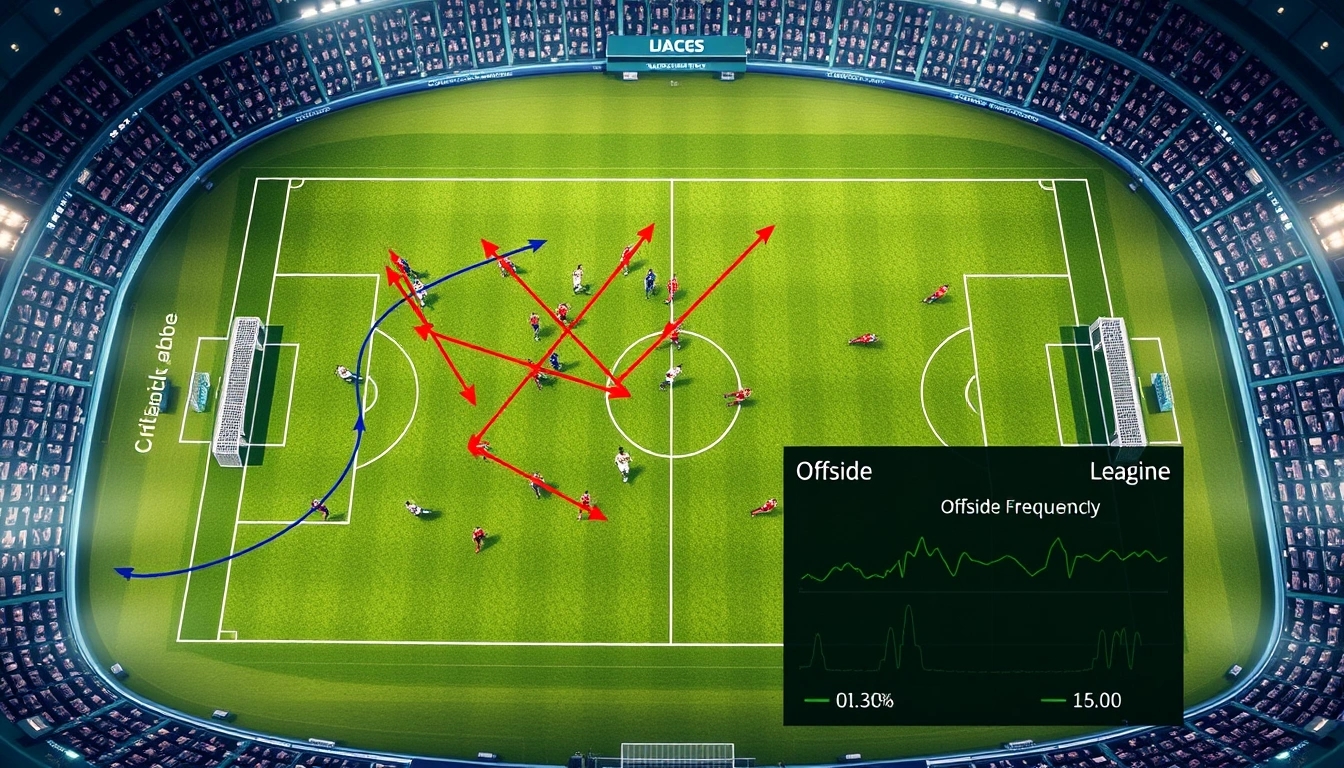
Statistical Insights: Offside Trends in Top Leagues
Offside calls — love ’em or hate ’em, they’re a staple in football’s tactical chess game. But have you ever stopped to wonder just how often offsides happen in the big leagues and what those numbers really tell us? Spoiler alert: it’s not just about catching a sneaky striker offside. The stats reveal some juicy insights into how teams play, defend, and sometimes, well, get a bit too eager.
Let’s kick off with some raw numbers. In the English Premier League, for instance, the average offsides per match hover around 2.5 to 3. Meanwhile, La Liga tends to see slightly fewer offsides, averaging closer to 1.8 per game. Serie A? It’s somewhere in between, roughly 2.2 offsides per match. Now, why the differences? Partly it’s styles — the Premier League’s frantic pace and end-to-end action mean attackers are constantly pushing the line, while Spain’s possession-heavy approach sees fewer risky forward runs.
| League | Average Offsides per Game | Style Influence |
|---|---|---|
| English Premier League | 2.5 – 3 | High tempo, direct attacking |
| La Liga | 1.8 | Possession-based, patient buildup |
| Serie A | 2.2 | Balanced, tactical defenses |
| Bundesliga | 2.0 | Fast transitions, pressing |
Now here’s where things get interesting: teams known for aggressive pressing and high defensive lines tend to rack up more offsides. Why? Because defenders push up to catch attackers offside — the classic offside trap. Take Liverpool or Manchester City; their defensive lines are so high they practically dare forwards to time their runs perfectly. The result? More offsides, but also more control over the opponent’s attacking rhythm.
- High offside frequency often correlates with teams employing a high line and pressing aggressively.
- Lower offside counts usually indicate teams that sit deeper and rely on counterattacks.
- Interestingly, some teams deliberately accept a higher offside count as a trade-off for maintaining pressure.
But don’t get it twisted — offsides aren’t just a defensive weapon. Forwards and creative midfielders study these stats too. They spot patterns in when and how defenders push up, timing runs to perfection, and sometimes even provoking offsides to disrupt defensive concentration.
Technology like VAR has also stirred the pot. With video review, offsides are called with razor-sharp precision — sometimes too precise, if you ask fans who’ve seen goals chalked off by millimeters. This has pushed teams to become even more meticulous in their timing, leading to an uptick in offsides in some competitions since VAR’s introduction.
Key takeaways:- Offside frequency varies widely by league and playing style.- High pressing teams tend to have more offsides.- VAR has increased offside call accuracy but also controversies.- Offside stats give clues about team tactics beyond just rule infractions.
So next time you see the flag raised, remember there’s a whole tactical saga behind that moment. Offside stats are more than just numbers — they’re a window into the mindsets, strategies, and even the nerves of teams battling it out on the pitch. And honestly? That’s what makes football endlessly fascinating.
Psychological Effects on Players and Teams
The offside rule, often viewed as just a technicality on the pitch, actually plays a massive role in shaping the mental game of players and the overall team dynamics. When the whistle blows to signal an offside, it’s more than just a lost opportunity—it’s a mental jab that can rattle even the most composed athletes. Imagine being a striker, timing your run perfectly, only to be flagged offside by the tiniest margin. That frustration can linger, messing with your confidence and decision-making in subsequent plays. It’s like walking a tightrope where one false move means starting over mentally.
- Timing is everything: Players must develop an almost sixth sense for when to break the defensive line. This means training not just physical speed but also sharp mental acuity.
- Split-second decisions: The need to avoid offside forces attackers to make lightning-fast judgments, often under immense pressure from defenders and the clock.
Teams, on the other hand, have to synchronize their efforts like a well-oiled machine. The offside rule demands perfect coordination—defenders pushing up together, midfielders tracking back, and forwards reading the defense’s line. One player slipping up can throw the whole strategy into chaos, leading to dangerous gaps or unnecessary stoppages. This constant mental juggling can be exhausting, especially in high-stakes matches where every second counts.
| Aspect | Psychological Impact | Example |
|---|---|---|
| Player Mindset | Heightened alertness and anxiety over timing runs | Striker hesitates to sprint, missing scoring chance |
| Team Coordination | Necessity for unified defensive line and communication | Defenders execute offside trap flawlessly, catching opponent |
| Pressure Moments | Increased stress, risk of mistakes rises | Late-game offside call disrupts momentum |
It’s also worth noting that the offside rule can become a psychological weapon. Defenders might deliberately push the line higher to provoke attackers into premature runs, triggering offside calls and breaking their rhythm. This cat-and-mouse game adds a layer of mind games to football that casual fans might overlook.
And let’s not forget the referees—those poor souls have to process all this chaos in real time, making calls that can make or break careers. Players sometimes feel the sting of a questionable offside call, which can lead to frustration or even aggression on the pitch. Coaches, meanwhile, have to keep their cool and adjust tactics on the fly, knowing that a single offside decision might change the entire complexion of the game.
In short, the offside rule is far more than a simple regulation. It’s a psychological chess match that tests the nerves, timing, and unity of players and teams alike. Next time you see a player caught offside, remember it’s not just a foul—it’s a mental battle lost or won in the blink of an eye.
Coaches’ Tactical Adjustments and Innovations
In the ever-evolving chess match that is modern football, managers are constantly tinkering with formations and game plans to get the upper hand on that pesky offside rule. It’s not just about telling players to “stay onside” anymore—coaches now dive deep into the nuances of offside dynamics to either exploit or neutralize opponents’ strategies. You might think it’s just a simple rule, but oh, it’s a tactical goldmine when wielded correctly.
First off, the classic offside trap remains a beloved tool in the defensive arsenal. But here’s the kicker: it’s not just about pushing the defensive line up anymore. Nowadays, managers mix it up, sometimes playing with staggered lines or using midfielders to step up and catch attackers off guard. The goal? Force forwards into making premature runs or hesitating just enough to lose their edge. It’s like psychological warfare on the pitch.
- High Defensive Lines: Teams like Liverpool and Manchester City often push their lines high, squeezing space and nudging attackers into offside positions.
- Midfield Press Coordination: Midfielders don’t just press—they also track runs, making sure attackers can’t sneak behind unnoticed.
- Flexible Formations: Switching between 4-3-3, 3-5-2, or even 5-2-3 mid-game to confuse the opponent’s timing and positioning.
But it’s not just about defense. Attackers and their coaches have gotten smarter, too. Forward lines are choreographed to perfection, with timing drills that would make a Swiss watchmaker proud. The idea is to break the offside line at just the right moment—too early, and the flag goes up; too late, and the chance vanishes.
| Coach | Known For | Offside Tactic Highlight |
|---|---|---|
| Jürgen Klopp | High pressing & quick transitions | Aggressive high line with synchronized pressing |
| Pep Guardiola | Positional play & fluid formations | Midfielders stepping up to catch attackers offside |
| Diego Simeone | Defensive solidity & counter-attacks | Deep defensive block with sudden offside traps |
Now, here’s a cheeky little insight: some managers actually use offside awareness to mess with the opponent’s rhythm. By varying the pace of the game and the positioning of attackers, they create uncertainty in defenders’ minds. It’s like a cat-and-mouse game where timing is everything. This unpredictability often leads to defensive errors or hesitations, opening up precious scoring opportunities.
Practical Tips for Coaches:
- Train forwards to read defenders’ body language for better timing.
- Use video analysis to spot when opponents are vulnerable to offside traps.
- Incorporate drills that simulate different offside scenarios under pressure.
In short, the offside rule isn’t just a nuisance or a referee’s headache—it’s a tactical playground. Managers who master these subtle adjustments and innovations don’t just avoid offside calls; they turn the rule into a weapon, shaping how games are won and lost in the blink of an eye.
So next time you see a perfectly timed run or a defense springing an offside trap, remember: it’s not luck. It’s the result of meticulous planning, a bit of cunning, and a whole lot of practice.

Future of the Offside Rule: Possible Changes and Debates
Alright, let’s dive into the murky waters of the offside rule’s future. It’s been a hot topic for years, and honestly, it’s not going away anytime soon. Fans, pundits, and even players often grumble about how the rule sometimes kills the flow of the game or sparks endless VAR controversies. So, what’s cooking behind the scenes? What tweaks might be on the horizon, and how could these changes flip football tactics on their head once again?
First off, there’s a growing chorus pushing for a bit more leniency in the offside interpretation. Some argue that the current strictness—especially with VAR’s pixel-perfect precision—kills spontaneity. Imagine a striker’s toe just a millimeter ahead, and boom, goal disallowed. Frustrating, right? So, one idea bouncing around is to allow a “margin of error,” maybe a few centimeters, to give attackers a fairer shot and keep the game flowing. But then, defenders and coaches are sweating bullets, wondering if this might open the floodgates for sneaky runs.
| Proposed Change | Potential Impact | Supporters | Critics |
|---|---|---|---|
| Introducing a tolerance margin (e.g., 10 cm) | More attacking freedom, fewer disallowed goals | Forwards, fans craving excitement | Defenders, purists worried about fairness |
| Eliminating offside in the final third | Ultra-attacking games, higher scoring | Offensive-minded coaches, broadcasters | Traditionalists, defensive tacticians |
| Faster VAR reviews with AI assistance | Reduced delays, more accurate calls | Referees, viewers tired of stoppages | Those fearing over-reliance on tech |
Another spicy proposal? Scrapping the offside rule entirely in the final third of the pitch. Yes, you read that right. The idea is to encourage more attacking flair and goals, which, let’s be honest, most fans love. But defenders would have to rethink their entire approach, possibly ditching the offside trap and focusing more on man-marking or zonal defense. Could this lead to more end-to-end action or just chaos? Time will tell.
Of course, no discussion about the offside rule’s future is complete without mentioning technology. VAR has been both a blessing and a curse. The hope is that with AI stepping in, decisions will be faster and more accurate, cutting down on those awkward pauses that kill momentum. But can we trust AI to understand the nuances of the game? Some skeptics believe that human error—though frustrating—is part of football’s charm.
- Key Debate Points:
- How much should technology influence refereeing?
- Is the offside rule too rigid or too lenient?
- Will changes favor attackers unfairly?
- Can defenders adapt quickly to new tactics?
At the end of the day, whatever tweaks come next will ripple through every level of football—from grassroots to the Champions League. Coaches will need to rethink formations, players will adjust their timing, and fans… well, they’ll keep arguing in the stands and online. But that’s the beauty of football, isn’t it? It’s always evolving, never perfect, and endlessly fascinating.
So buckle up, because the offside rule’s future is shaping up to be just as controversial and game-changing as its past.
Frequently Asked Questions
- What exactly is the offside rule in soccer?
Simply put, the offside rule prevents players from lurking near the opponent’s goal waiting for a pass. A player is offside if they are closer to the opponent’s goal line than both the ball and the second-last defender when the ball is played to them. This keeps the game fair and encourages teamwork and strategy.
- How has the offside rule evolved over time?
The offside rule has seen several tweaks since soccer’s early days. Originally, even a player ahead of the ball was offside, but the rule relaxed to allow two defenders between the attacker and goal. These changes have shaped how teams attack and defend, making the game faster and more tactical.
- Why do referees struggle with offside decisions?
Offside calls are lightning-fast and often hinge on a player’s exact position at the moment a pass is made. With players darting and defenders moving, it’s a tough call to make in real-time. That’s why technology like VAR has become essential to reduce errors and controversies.
- What is an offside trap and how do defenders use it?
Think of the offside trap as a clever chess move. Defenders step up just before a pass, catching attackers offside and halting dangerous runs. It’s a risky but rewarding tactic that requires perfect timing and teamwork.
- How do attackers beat the offside rule?
Attackers master the art of timing their runs and reading defenders’ movements to avoid being caught offside. Quick passes, clever positioning, and split-second decisions help forwards sneak behind defenses and create goal-scoring opportunities.
- What role does VAR play in offside decisions?
VAR acts like a super-powered replay tool, reviewing tight offside calls with frame-by-frame precision. While it improves accuracy, it has also sparked debates on game flow and the spirit of the sport.
- Are there any interesting stats about offsides in top leagues?
Absolutely! Some leagues see more offsides due to aggressive attacking styles or defensive tactics. Teams that master offside traps often have fewer goals conceded, showing how stats reveal deeper tactical battles on the pitch.
- How does the offside rule affect player psychology?
Being caught offside repeatedly can frustrate attackers and disrupt their rhythm. Conversely, defenders gain confidence when successfully executing traps. This mental tug-of-war adds an exciting layer to the game’s drama.
- How do coaches adjust tactics based on the offside rule?
Coaches constantly tweak formations and instruct players on when to push the defensive line or time attacking runs. The offside rule is a tactical playground, and smart managers exploit it to gain an edge over opponents.
- Could the offside rule change in the future?
There’s ongoing debate about tweaking the rule to speed up the game or reduce stoppages. Ideas like adjusting the offside line or using more technology are floated regularly. Whatever happens, it will surely shake up how soccer is played yet again.