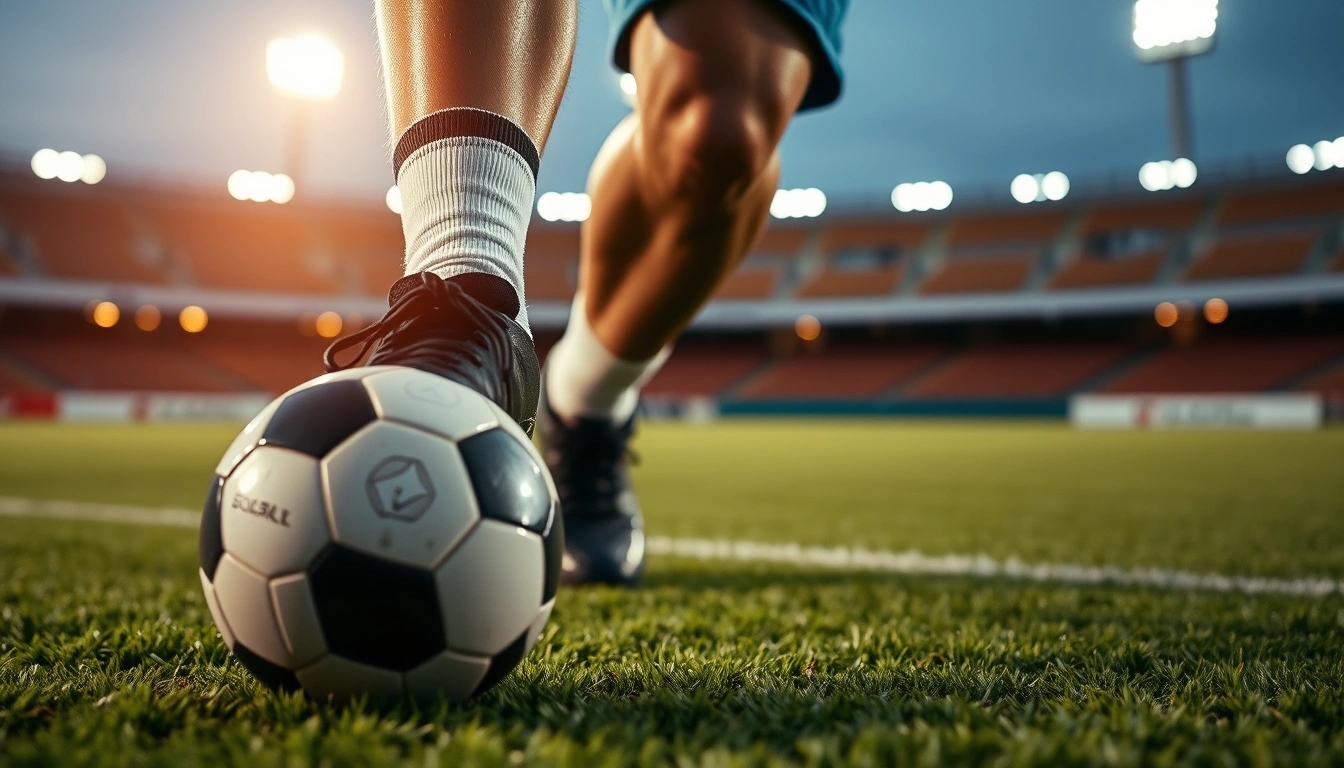
Mastering one-touch finishing? Oh, it’s a game-changer – literally! Imagine standing right in front of the goal, ball coming at you like a missile, and with just one swift touch, you slot it home. Sounds simple, right? Well, not quite. This skill isn’t just about quick feet; it’s a cocktail of timing, precision, and a sprinkle of sheer instinct. Let’s dive into why this skill can turn you into a scoring machine and how you can actually get there without banging your head against the wall.
Understanding the Basics of One-Touch Finishing
Before you go full throttle practicing, pause and think about the basics. One-touch finishing is not just about hitting the ball hard. It’s about timing your touch perfectly, positioning your body just right, and controlling your balance so you don’t end up flailing like a fish out of water. The moment the ball arrives, your brain and body need to act in perfect harmony — no time for second guesses here!
| Key Elements | Why They Matter |
|---|---|
| Timing | Ensures your shot is taken before defenders close in or the ball bounces awkwardly. |
| Positioning | Places you in the optimal spot to receive and strike the ball cleanly. |
| Body Control | Helps maintain balance and accuracy under pressure. |
Footwork and Body Positioning Essentials
Your feet aren’t just there to look pretty. The way you plant, pivot, and shift weight can make or break your finish. Ever notice how pros barely move their feet before a shot? There’s a reason. Subtle shifts, like angling your foot or leaning slightly forward, can change the ball’s trajectory entirely. Don’t be afraid to experiment during training. It’s not all about power; finesse counts big time.
- Keep your non-kicking foot close to the ball – it stabilizes your shot.
- Lean into the ball to keep your finish low and on target.
- Relax your ankle for better control instead of a stiff strike.
The Role of Vision and Anticipation
Here’s where many players stumble – they wait for the ball instead of reading the game. The best finishers have this almost psychic ability to predict where the pass will come from and prepare their touch in advance. It’s like playing chess while everyone else is stuck on checkers. So, keep your head on a swivel. Watch the play unfold, spot gaps, and get ready to pounce. Anticipation isn’t just a fancy word; it’s your secret weapon.
Training Drills to Sharpen Your Touch
Alright, enough theory. Time to get those boots dirty! Drills are your best friends here. Here’s a quick rundown:
| Drill | Purpose | How to Do It |
|---|---|---|
| Wall Pass Drills | Improves quick control and accuracy | Pass the ball against a wall and finish with one touch on return. |
| Rapid Fire Shooting | Builds speed and composure under pressure | Have a partner feed multiple balls quickly; finish each one with a single touch. |
Common Mistakes and How to Avoid Them
Look, even the best mess up. The usual suspects? Overhitting the ball like you’re trying to launch it into orbit, bad positioning that leaves you off-balance, or hesitating just a split second too long. The fix? Practice, yes, but also watch your own game or get feedback. Sometimes you’re the last person to notice you’re doing something wrong.
Psychological Factors: Confidence and Composure
One-touch finishing is as much about nerves as skill. It’s easy to choke when all eyes are on you. The trick? Build confidence through repetition and learn to breathe. Think of it as a mini meditation before the shot. Stay cool, stay sharp, and remember – even legends miss sometimes.
Equipment and Environment Considerations
Believe it or not, your boots and pitch conditions can mess with your finish. Slippery turf? Heavy boots? They all affect your touch. So, choose your gear wisely and adapt to the environment. Sometimes a change in boots or practicing on different surfaces can make a surprising difference.
Analyzing Professional One-Touch Finishers
Want inspiration? Watch players like Thierry Henry or Sergio Agüero. Notice how they barely break a sweat, their touches are razor-sharp, and they seem to know where the goal is without looking. Steal their moves, study their body language, and practice relentlessly. You won’t be them overnight, but hey, every legend started somewhere.
In the end, one-touch finishing isn’t some mystical talent reserved for the chosen few. It’s a skill that can be honed with patience, practice, and a bit of street-smart savvy. So next time you’re on the pitch, don’t just wait for the perfect moment – create it with that deadly first touch.
Understanding the Basics of One-Touch Finishing
Alright, before you jump headfirst into practicing one-touch finishing like it’s the last slice of pizza at a party, hold up a second! This skill isn’t just about slapping the ball into the net the moment it hits your foot. Nope, it’s a bit more nuanced than that. You gotta get a grip on the fundamentals first — think of it as laying down a rock-solid foundation before building that fancy skyscraper. We’re talking about timing, positioning, and body control. Miss any of these and your shot’s gonna be as off as a bad karaoke night.
- Timing: This is the heartbeat of one-touch finishing. Strike too early, and you’ll fluff the shot; too late, and the defense or keeper will have a field day. It’s about syncing your movement perfectly with the ball’s arrival. Easier said than done, right?
- Positioning: Where you stand when the ball comes to you can make or break your chance. Too close, and you might not have room to maneuver; too far, and you’ll mis-hit the ball. Plus, your angle to the goal needs to be just right — not too square, not too sideways.
- Body Control: This one’s sneaky important. Your body’s balance, your foot placement, and even the subtle lean of your torso all influence the shot’s power and accuracy. If you’re off-balance, the ball’s gonna go wherever it pleases, and that’s rarely where you want it.
| Fundamental | Why It Matters | Common Mistake |
|---|---|---|
| Timing | Ensures you strike the ball at the perfect moment for maximum control | Hitting the ball too early or too late, leading to weak or off-target shots |
| Positioning | Sets you up in the right spot to execute a clean and effective finish | Standing too close or too far, resulting in poor contact |
| Body Control | Maintains balance and directs power towards the target | Losing balance or improper foot placement causing wild shots |
Now, here’s a little nugget that many overlook — anticipation. Yeah, it’s not just about reacting like a robot; you gotta read the play, feel the rhythm, and predict where the ball’s gonna land. Think of it like catching a wild frisbee: if you wait till it’s right in front of you, you’re screwed. You gotta move before the ball even arrives.
And let’s not forget the mental game — one-touch finishing is as much about your head as your feet. Confidence can make you shoot like a pro, but doubt? Well, it’ll have you fluffing easier than a rookie on their first day.
So, before you lace up and start smashing shots, spend some time mastering these basics. It might not be flashy or glamorous, but trust me, it’s the secret sauce to becoming a deadly finisher. Practice with patience, focus on these fundamentals, and soon enough, you’ll be banging in goals with one touch like it’s second nature.
Quick Tips to Remember:
- Watch the ball’s trajectory closely, and time your touch accordingly.
- Adjust your body angle to open up the goal.
- Keep your core engaged for better balance.
- Practice with both feet to become unpredictable.
Master these basics, and you’ll be well on your way to turning those half-chances into highlight-reel goals. Now, go on — get out there and make those defenders sweat!
Footwork and Body Positioning Essentials
When it comes to one-touch finishing, you might think it’s all about the power behind the shot or the timing of the pass. Well, hold your horses — the real game-changer is how your feet and body line up before you even swing that leg. Seriously, your foot placement and body alignment can turn a “meh” finish into a jaw-dropping goal or a complete miss that makes you wanna bury your head in the sand.
Think about it: in those split seconds when the ball is coming at you, your body is basically the launchpad. If your feet are off balance or your hips twisted the wrong way, you’re fighting an uphill battle. The key is subtlety — tiny tweaks in your stance can make or break the shot. For example, planting your non-kicking foot just the right distance from the ball and pointing it toward your target sets you up for a cleaner, more accurate strike.
- Non-kicking foot placement: Should be about 6-12 inches from the ball, pointing in the direction you want the ball to go.
- Body lean: Slightly forward to keep the shot low and controlled; leaning back? Expect a sky-high rocket.
- Hip rotation: Open hips help with power and accuracy; closed hips can block your shot’s path.
Now, don’t get me wrong — it’s not just about standing still like a statue. Your feet need to be ready to move in a flash. Quick adjustments, tiny shifts, and even the way you distribute your weight on the balls of your feet versus your heels all contribute to how well you finish.
| Aspect | What to Do | Common Mistake |
|---|---|---|
| Foot Placement | Place non-kicking foot beside the ball, pointing at target | Too far or too close, causing poor balance |
| Body Lean | Lean slightly forward for controlled shots | Leaning back, causing shots to fly over |
| Hip Alignment | Open hips toward goal for better accuracy | Closed hips restricting shot direction |
Here’s a little secret: pros spend hours just refining these micro-movements. It’s not flashy, but it’s the bread and butter of clinical finishing. You might feel silly focusing on something as “boring” as foot angles, but trust me, that’s where the magic happens.
Also, consider the pressure cooker moments — a defender closing in, the clock ticking down. Your body positioning must be second nature so you don’t freeze or misfire. Practice drills that force you to adjust your feet and body quickly, like receiving passes at different angles or shooting on the run.
Quick Tips for Footwork & Positioning:- Always keep your knees slightly bent for agility.- Stay on the balls of your feet, ready to pivot.- Practice shooting from awkward body positions to build adaptability.- Visualize your target and align your feet accordingly before the ball arrives.
In conclusion, nailing your footwork and body positioning isn’t just some technical mumbo jumbo — it’s the foundation of every successful one-touch finish. So next time you’re on the pitch, don’t just stare at the ball like a deer in headlights. Move those feet, align that body, and watch your finishing go from “meh” to “wow!”

The Role of Vision and Anticipation
When it comes to one-touch finishing, being quick on the trigger isn’t just about lightning-fast feet or impeccable technique—it’s about seeing the game before it unfolds. Yeah, you heard that right. Great finishers aren’t merely reacting to what’s happening; they’re predicting the next move, almost like having a crystal ball tucked in their boots. It’s that sixth sense that separates the average Joe from the clinical striker who consistently buries chances with surgical precision.
Let’s be honest: the pitch is chaotic. Defenders swarm, passes zip around, and the ball can bounce in any direction. If you’re just reacting, you’re always a step behind. Instead, the real magic happens when you start reading the game—spotting the subtle shifts in the opposition’s formation, noticing where your teammates are glancing, and anticipating where the ball will land before it even leaves the passer’s foot. This anticipation is what allows you to execute crisp one-touch finishes without breaking a sweat.
| Key Elements of Vision and Anticipation | Why They Matter |
|---|---|
| Scanning the Field | Constantly checking surroundings to identify passing lanes and defensive weaknesses. |
| Predicting Passes | Reading the passer’s body language and positioning to guess where the ball will go. |
| Spatial Awareness | Understanding your position relative to defenders and goal to optimize shot angles. |
Now, don’t get me wrong, this isn’t some mystical talent only a chosen few possess. It’s a skill you can develop with practice. Start by training your eyes to scan the field more frequently—yes, even when you don’t have the ball. Watch how players move, who’s open, and where the danger zones are. The more you do this, the more natural it becomes, and soon enough, your brain will start connecting dots faster than a speeding bullet.
- Practice drills that simulate game scenarios: For example, have a teammate pass the ball unpredictably while you keep your head up, forcing you to anticipate rather than react.
- Watch match footage: Analyze how top finishers position themselves and predict passes. It’s like a free masterclass.
- Play small-sided games: These tighten the space and time you have to make decisions, sharpening your anticipation skills.
And here’s a little nugget for you: sometimes, overthinking can kill your instinct. Vision and anticipation are about balance—trust your gut but back it up with sharp observation. The best finishers blend instinct with intelligence. They’re not just machines firing shots; they’re chess players, always thinking three moves ahead.
So next time you’re on the pitch, don’t just wait for the ball to come to you—start seeing where it’s going before it even gets there. That’s the secret sauce to turning those one-touch chances into goals that make the crowd go wild.
Training Drills to Sharpen Your Touch
Alright, let’s cut to the chase — if you want to nail one-touch finishing, there’s no magic pill, no secret sauce, just drills, drills, and more drills. Sounds boring? Maybe. Effective? Absolutely. The kind of stuff that separates the “meh” finishers from the “wow, did you see that?!” finishers. So buckle up, because we’re diving into some practical exercises that’ll crank up your precision and speed when the pressure’s on.
First off, you gotta understand why drills matter. It’s not just about kicking a ball around; it’s about training your brain and body to sync up perfectly. Think of it as muscle memory on steroids. When that ball comes flying at you, you want to react instantly, no second guessing, no overthinking.
| Drill Name | Purpose | How to Do It | Key Focus |
|---|---|---|---|
| Wall Pass Drills | Improve quick control and shooting accuracy | Pass the ball against a wall and one-touch shoot or control it as it rebounds | Timing, precision, quick feet |
| Rapid Fire Shooting | Simulate game pressure with multiple shots | Receive balls rapidly from a partner or machine and shoot immediately | Speed, composure, accuracy |
| Small-Sided Games | Apply one-touch finishing in game-like scenarios | Play 3v3 or 4v4 focusing on quick passes and finishes | Decision-making, anticipation, positioning |
Now, the Wall Pass Drills — these are a classic for a reason. You don’t need fancy equipment, just a sturdy wall and a ball. The idea is to pass the ball against the wall and as it bounces back, you either one-touch shoot or control it instantly. It’s brutal at first because the ball comes at you fast and you have to be sharp with your feet and body positioning. But stick with it. Over time, you’ll notice your reaction time dropping and your shots becoming more precise. Plus, it’s a killer way to improve your balance and coordination.
Then there’s the Rapid Fire Shooting. This drill will make your heart race and your legs burn. You get a partner or a ball machine to feed you balls in quick succession. The catch? You have to shoot each ball immediately — no fancy touches, no pausing to line up your shot. It’s all about speed and composure. You’ll probably miss a bunch at first (don’t worry, everyone does), but that’s part of the process. The drill forces you to trust your instincts and develop that killer instinct every striker craves.
- Pro Tip: Mix up your shooting angles and distances during these drills. Variety keeps your brain guessing and prepares you for real-game chaos.
- Don’t forget: Footwork is king. Quick, subtle adjustments before the shot can make all the difference.
Finally, small-sided games are a sneaky way to sharpen your one-touch finishing. They mimic real match pressure but with fewer players and more touches per player. You’ll be forced to think fast, position smartly, and finish clinically. Plus, it’s way more fun than just shooting at a static goal all day.
Remember:- Consistency beats intensity. Better to do 15 mins of focused drills daily than 2 hours once a week.- Record yourself occasionally to spot bad habits.- Stay patient. One-touch finishing is an art that takes time to master.
So yeah, drills might sound dull, but they’re the secret weapon in your finishing arsenal. Get out there, mess up a lot, learn fast, and watch your one-touch finishes go from “meh” to “magnificent.”
Wall Pass Drills
When it comes to sharpening your one-touch finishing, are an absolute game-changer. Seriously, if you’re not using a wall or a partner for these, you’re missing out on one of the simplest yet most effective ways to boost your quick control and shooting accuracy, especially in those maddeningly tight spaces where every millisecond counts.
Think about it: in a real match, you rarely get the luxury of time or space. Defenders are breathing down your neck, and the ball’s coming at you faster than you can blink. That’s where these drills come in. By practicing with a wall, you’re essentially simulating a teammate’s pass but with the added bonus of repetition and control over the pace. Plus, no one’s judging when you mess up—except maybe your dog or the neighbor peeking through the window.
- Start simple: Stand about 3-5 meters from the wall and pass the ball against it. The goal here is to control it quickly with one touch and then shoot immediately. Don’t overthink it; the key is to get your body aligned and your footwork sharp.
- Mix it up: Vary the height and speed of your passes. Sometimes let the ball bounce once before you strike, other times hit it straight off the wall. This randomness mimics real-game unpredictability.
- Use both feet: Yes, I know, your dominant foot feels like the star of the show, but trust me, getting your weaker foot involved will make you a nightmare for defenders.
| Drill Variation | Focus Area | Benefits |
|---|---|---|
| One-Touch Wall Pass & Shoot | Quick Control & Accuracy | Improves reaction time and sharpens shooting precision |
| Wall Pass with First Touch Control | Ball Control & Positioning | Enhances ability to settle the ball quickly before shooting |
| Alternating Feet Wall Pass | Footwork & Coordination | Builds confidence with weaker foot and body balance |
Now, if you’re rolling solo and don’t have a partner handy, the wall is your best mate. But if you do have a buddy, you can spice things up by having them pass the ball at different speeds and angles. This unpredictability forces you to adapt on the fly, much like a real game scenario. And don’t be shy—shout some encouragement or a bit of cheeky banter; it keeps the energy up and the nerves down.
One little nugget of wisdom: don’t just blast the ball mindlessly. Focus on body positioning and foot placement. Your hips should be open, eyes on the ball, and your supporting foot planted firmly next to it. If your posture’s off, your shot’s gonna be all over the place, no matter how quick your touch is.
Pro Tip:- Keep your head steady and eyes locked on the ball.- Use the inside of your foot for better control.- Follow through with your shot for added power and accuracy.
At the end of the day, wall pass drills might seem basic, but they’re the bread and butter of clinical one-touch finishing. So, grab that ball, find a wall, and start pounding away. Your future self, scoring that goal in the dying minutes, will thank you. Or maybe curse you for all the sweat, but hey, that’s part of the journey, right?
Rapid Fire Shooting
Alright, so you wanna sharpen that deadly one-touch finish, huh? Well, buckle up because rapid fire shooting drills are where the magic happens. Imagine this: balls flying at you one after another, no time to breathe, no second chances. It’s chaos, it’s intense, and honestly, it’s the closest you’ll get to real game pressure in training. This drill isn’t just about kicking balls—it’s about training your brain and body to react faster than your opponent’s shadow.
First off, why bother with rapid fire shooting? Simple. In a game, chances don’t wait around. You get a split second to control, aim, and shoot. If you hesitate, that golden opportunity’s gone—kissed goodbye. This drill forces you to think on your feet and execute instantly. Plus, it builds muscle memory so when the real deal comes, your foot just knows what to do without your brain getting in the way.
- Setup: Have a partner or coach feed you balls at quick intervals, or use a ball machine if you’re fancy enough. The key is to keep the rhythm fast and consistent.
- Focus Areas: Eye on the ball, body balanced, and footwork sharp. You can’t afford to plant your feet like a statue; you gotta be light and ready to pivot.
- Variations: Mix it up with balls coming from different angles and heights. Sometimes low, sometimes bouncing, sometimes curling—keep your brain guessing.
| Drill Component | Purpose | Tips |
|---|---|---|
| Quick Ball Reception | Improve control under pressure | Use the inside of your foot to trap quickly |
| Immediate Shooting | Boost reaction time and accuracy | Focus on clean contact, don’t overthink power |
| Varied Ball Delivery | Adaptability to different pass types | Stay light on your toes, anticipate trajectory |
Now, don’t get cocky thinking this is just a fancy kicking contest. Rapid fire shooting drills expose your weaknesses—maybe your first touch is sloppy, or your shots fly wide when rushed. That’s good! Knowing what sucks means you can fix it. Also, be ready to get tired—fast. This drill is a stamina killer because it demands constant focus and explosive movement.
Here’s a little nugget from the pros: they don’t just blast every ball. Sometimes, a quick glance, a tiny adjustment, and a calm finish beats a wild shot any day. So, while practicing rapid fire shooting, try to keep your cool. It’s tempting to go all Hulk smash, but finesse wins games.
Quick Tips for Rapid Fire Shooting Success:- Stay relaxed; tension kills precision.- Use both feet; versatility is a game changer.- Keep your head up; don’t just stare at the ball.- Breathe between shots to avoid burnout.- Review footage if possible; seeing your mistakes helps.
In the end, rapid fire shooting is about embracing the chaos and thriving in it. It’s messy, sweaty, and sometimes frustrating, but it’s also one of the best ways to get that killer instinct in front of goal. So next time you’re on the training pitch, ask your mate to ping balls at you like there’s no tomorrow. Your future self (and your scoreboard stats) will thank you.
Common Mistakes and How to Avoid Them
When it comes to one-touch finishing, many players think it’s all about raw talent or lightning-fast reflexes. But, oh boy, if only it were that simple! The truth is, even the best strikers trip up on some pretty basic blunders that can cost them goals — and sometimes games. Let’s dive into some of the most frequent pitfalls and, more importantly, how to dodge them like a pro.
1. Overhitting Shots
You know that moment when you absolutely belt the ball, hoping it rockets into the net, but instead, it flies over the bar or crashes into the stands? Yeah, that’s the classic “overhit” scenario. It’s a common rookie mistake, especially when nerves kick in or you’re trying to impress. The problem? You lose control and accuracy. Instead, focus on controlled power. It’s better to place the ball with precision than to blast it with reckless abandon.
Quick Tip Table: Managing Shot Power
| Shot Type | When to Use | Common Mistake | Correction |
|---|---|---|---|
| Soft Placement | Close range, crowded goal area | Too gentle, easy for keeper | Firm but controlled touch |
| Driven Shot | Medium distance, open goal | Overhitting, loss of accuracy | Focus on foot placement, follow through |
| Chip Shot | Goalkeeper off the line | Too high or weak chip | Balance and timing are key |
2. Poor Positioning
Positioning isn’t just about standing in the right spot; it’s about anticipating where the ball will be and your body’s readiness to react instantly. Far too many times, players find themselves either too static or out of sync with the play. This leads to awkward touches, missed chances, or worse, getting caught offside.
- Stay on your toes: Always be ready to move, adjust your stance, and keep your weight balanced.
- Read the game: Watch the ball and players closely to predict the next pass or cross.
- Communicate: Shout, gesture, or nod to teammates to stay in sync.
3. Rushing the Shot
Look, we get it — the pressure’s on, the crowd’s roaring, and you just want to smash that ball immediately. But rushing often leads to sloppy finishes. Taking a split second longer to set your body and eye the goal can make a massive difference.
Common Consequences of Rushing:- Poor contact with the ball- Misjudged angles and timing- Increased chance of injury (hello, twisted ankles!)
4. Neglecting the Non-Dominant Foot
If you’re guilty of always shooting with your favorite foot, you’re limiting your options and making it easier for defenders to predict you. Training your weaker foot can be a game-changer, giving you more flexibility and surprise factor.
Practice Drill Suggestion:
- Set up cones and practice one-touch finishes alternating feet.
- Focus on body positioning to open up your weaker side.
- Use wall passes to improve quick touches with both feet.
5. Ignoring Mental Composure
Finishing isn’t just physical; it’s a mental battle. Panicking or doubting yourself in front of goal is a sure way to mess up. Stay calm, breathe, and trust your training. Remember, even the pros miss sometimes — it’s part of the game.
| Mental Mistake | Effect | How to Fix |
|---|---|---|
| Overthinking | Slows reaction, hesitates | Practice under pressure, simulate match conditions |
| Lack of Confidence | Weak shots, poor decisions | Visualize success, positive self-talk |
| Frustration after misses | Loss of focus | Reset mentally, short breathing exercises |
In the end, mastering one-touch finishing is about blending technique, awareness, and mindset. Avoid these common mistakes, and you’ll find yourself not just scoring more, but doing it with style and consistency. So next time you’re in front of goal, remember: less is often more, and a calm mind beats a frantic foot any day.

Psychological Factors: Confidence and Composure
Alright, let’s get real for a second — one-touch finishing isn’t just about having a killer right foot or lightning-fast reflexes. Nope, it’s a mental game as much as a physical one. You can be the most technically gifted player on the pitch, but if your brain’s doing somersaults every time the ball comes your way, well, good luck nailing that finish.
Confidence — that elusive beast — is the secret sauce. When you’re standing there, ball flying towards you at 70 mph, with the goalie breathing down your neck, hesitation is your worst enemy. You gotta trust yourself. Sounds easier than it is, right? Most players choke because they doubt their ability in that split second. Confidence isn’t something you wake up with; it’s built through repetition, experience, and yes, sometimes failing spectacularly.
- Visualize Success: Before the game, imagine yourself scoring that perfect one-touch finish. Sounds cheesy? Maybe. But it primes your brain to expect success.
- Positive Self-Talk: No, yelling “You got this!” out loud might look silly, but mentally telling yourself you’re the boss can flip your mindset.
- Focus on Process, Not Outcome: Instead of obsessing about scoring, concentrate on your technique and positioning. The goals will follow.
Now, on to composure. Staying calm under pressure is like trying to sip tea in a hurricane. Easier said than done. But it’s critical — panic makes your body tense, your timing off, and your shot a wild missile sailing over the bar.
| Technique | Why It Helps | How to Practice |
|---|---|---|
| Controlled Breathing | Slows heartbeat, reduces anxiety | Inhale deeply through nose, exhale slowly through mouth before receiving the ball |
| Routine Development | Creates familiarity, reduces nerves | Develop a pre-shot ritual, like a quick glance or foot adjustment |
| Mindfulness | Keeps focus on present moment | Practice meditation or focus drills off-field |
Imagine this: you’re in the box, ball zipping to your feet, and your heart’s doing the samba. If you’ve trained your mind to stay chill, you’ll take that one touch like it’s just another Tuesday afternoon kickabout. If not, well… you might end up flubbing it or overthinking and missing the chance.
And here’s a little nugget for you — even the pros have off days mentally. Messi, Ronaldo, or whoever you fancy, they all battle nerves. The trick? They’ve got mental habits that keep them in the zone. So, don’t beat yourself up if you mess up. Learn, laugh it off, and get back in the game.
Practical Tips to Boost Confidence and Composure:
- Record yourself during practice to spot nervous habits.
- Simulate pressure situations by practicing with teammates shouting or a ticking clock.
- Celebrate small wins — nailed a tricky pass? Perfect one-touch? Give yourself credit.
To wrap it up, confidence and composure aren’t magic spells but skills you sharpen over time. Train your mind like your body, and soon enough, one-touch finishing won’t just be a skill you have — it’ll be your secret weapon.
Equipment and Environment Considerations
Believe it or not, the gear on your feet and the conditions underfoot can seriously mess with your one-touch finishing mojo. You might be the Messi of your local pitch, but if your boots are slipping or the turf is acting like a slip’n’slide, your chances of a neat finish drop faster than a lead balloon. So yeah, it’s not just about skill — the environment and your equipment play a sneaky but massive role.
Let’s start with the boots. Not all boots are created equal, and picking the right pair is like choosing your weapon of choice. If you’re rocking boots that don’t fit well or have worn-out studs, you’re basically asking for trouble. Imagine trying to plant your foot firmly for that sharp one-touch shot, only to have your studs spin out on wet grass. Nightmare! Firm ground (FG) boots are your go-to for dry, natural pitches, while soft ground (SG) boots with longer, replaceable studs are lifesavers when the pitch turns muddy or slippery.
| Boot Type | Best For | Why It Matters |
|---|---|---|
| Firm Ground (FG) | Dry natural grass | Provides grip and stability on firm surfaces |
| Soft Ground (SG) | Muddy, wet pitches | Longer studs prevent slipping in soft soil |
| Artificial Ground (AG) | Synthetic turf | Even stud distribution for shock absorption |
| Turf (TF) | Hard, artificial surfaces | Smaller rubber studs for better traction |
Now, pitch conditions — oh boy, this is a biggie. A slick, rain-soaked pitch can turn your one-touch finish into a comedy of errors. The ball skids faster, your footing’s uncertain, and timing? Forget it. You have to adjust your approach and maybe even your shot power. Dry and firm pitches? They’re your best friends for crisp, clean strikes. But when the pitch is bumpy or uneven, the ball’s bounce becomes unpredictable, making it tough to nail that perfect one-touch.
- Wet Conditions: Use boots with longer studs, and focus on planting your foot firmly before striking.
- Dry Conditions: FG boots work wonders; expect more predictable ball behavior.
- Artificial Turf: AG boots help avoid injuries and improve traction.
Don’t even get me started on weather. Wind can be a sneaky opponent, pushing your shot off course just when you think you’ve got it lined up. Cold weather can stiffen your muscles, making quick reactions tougher, while heat can sap your energy, causing sloppy touches. So, yeah, it’s not just you versus the keeper; it’s you versus Mother Nature too.
Tips for mastering finishing despite equipment and environment:- Always check the pitch before the game; adjust boots accordingly.- Warm up properly in cold weather to keep muscles loose.- Practice finishing under different weather conditions to build adaptability.- Keep your boots in good shape; worn studs lost grip.
In the end, it’s a mix of preparation and adaptability. The best finishers don’t just master technique—they know how to tweak their game based on what’s on their feet and under them. So next time you’re lining up for that one-touch finish, remember: your boots and the pitch are playing alongside you. Treat them right, and they might just help you score that beauty.
Analyzing Professional One-Touch Finishers
Alright, let’s dive headfirst into the wild world of one-touch finishers — those magicians who make scoring goals look like a stroll in the park. You know the type: the players who barely need to slow down, who catch the ball and *bam*—it’s in the net before defenders even blink. So, what’s their secret sauce? Spoiler alert: it’s not just raw talent, but a cocktail of technique, timing, and a sprinkle of madness. Let’s break down some killer techniques you can steal from their playbook.
- First touch precision: Top finishers have this almost creepy ability to control the ball instantly. Think of it like a cat catching a laser pointer — quick, smooth, and controlled. They don’t waste a millisecond adjusting or flailing around. Instead, their first touch sets up the entire shot. You want your foot to meet the ball like it’s a handshake, firm but polite.
- Body positioning: You might think it’s all about footwork, but nah, the body tells the story. Players like Harry Kane or Karim Benzema angle their hips and shoulders just right to open up shooting lanes. This little tweak means they can shoot with power or finesse without breaking stride. Slouchy or stiff? Forget it.
- Eye on the prize: One-touch finishers have eyes everywhere — not just on the ball but on the goalkeeper’s position, defenders’ movements, and even the tiniest gaps in the net. It’s like playing chess in fast forward. If you’re staring at the ball the whole time, you’re missing half the picture.
Now, I’m not gonna sugarcoat it — copying these pros isn’t an overnight thing. But here’s a quick table to help you dissect their moves and maybe, just maybe, sneak some of their magic into your game:
| Player | Signature One-Touch Trait | What You Can Steal |
|---|---|---|
| Lionel Messi | Incredible ball control & quick release | Practice tight-space control and shooting without hesitation |
| Robert Lewandowski | Perfect timing and lethal accuracy | Focus on timing your runs and picking your spots |
| Raheem Sterling | Explosive acceleration into the shot | Work on your first step speed and body lean for quick shots |
Here’s a little nugget that often slips under the radar: mental sharpness. These guys don’t just react; they predict. They know where the ball’s gonna be before the pass is even made. You can train this by watching games obsessively (yes, that means more Netflix, but football edition). Try to anticipate passes, predict defenders’ moves, and always think one step ahead.
And before you get all high-and-mighty, remember even the best mess up sometimes. One-touch finishing is a dance with chaos — a split-second decision that can go either way. So, don’t beat yourself up if your shot sails over or gets blocked. Keep at it, learn from every miss, and soon you’ll be the one defenders dread.
- Pro tip: Mix in drills that mimic game pressure — rapid-fire shooting or tight-space passing. The more you simulate real-game chaos, the better your instincts become.
- Another tip: Record yourself. Sounds nerdy, but watching your attempts can reveal tiny flaws in your touch or positioning you never noticed.
In the end, the best one-touch finishers are part artist, part athlete, and part psychic. So, study their moves, practice relentlessly, and don’t forget to add your own flair. Because if you’re just a copycat, defenders will sniff you out in no time. But if you evolve their techniques with your own style? Now, that’s when the magic really happens.
Keep your eyes sharp, feet quicker, and mind sharper — the net’s waiting.
Frequently Asked Questions
- What exactly is one-touch finishing in soccer?
One-touch finishing is the art of scoring a goal by striking the ball immediately upon receiving it, without taking an extra touch to control it first. It’s like catching lightning in a bottle—swift, precise, and often surprising defenders and goalkeepers alike.
- Why is timing so crucial in one-touch finishing?
Timing is everything! If you strike too early or too late, you miss the perfect moment when the ball’s trajectory and your body alignment are in sync. Think of it as hitting a moving target—you need to be spot-on to score.
- How can I improve my footwork and body positioning?
Small adjustments make a huge difference. Focus on keeping your body balanced and your feet ready to pivot quickly. Imagine your feet as the gears of a finely tuned machine—if one slips, the whole shot falters.
- What role does anticipation play in one-touch finishing?
Anticipation lets you predict where the ball will be before it arrives, giving you a split-second advantage. It’s like reading a book before the words are spoken—once you master it, you’re always one step ahead.
- Are there specific drills to get better at this skill?
Absolutely! Wall pass drills and rapid-fire shooting exercises are fantastic for sharpening quick reactions and accuracy. Practicing under pressure trains your brain and body to sync seamlessly during real matches.
- What common mistakes should I avoid?
Overhitting the ball, poor positioning, and hesitating are the biggest culprits. Remember, one-touch finishing demands confidence and decisiveness—don’t second-guess yourself!
- How important is mental strength for one-touch finishing?
It’s a game-changer! Staying calm and confident keeps your mind clear, allowing your body to perform naturally. Think of it as the calm before the storm—your mental state can make or break your finish.
- Do equipment and weather really affect finishing?
Surprisingly, yes! Your boots’ grip, pitch conditions, and even wind can influence your shot’s precision. Always adapt your technique slightly to the environment, like a sailor adjusting sails to the wind.
- Can I learn from professional one-touch finishers?
Definitely! Watching how pros position themselves, time their shots, and maintain composure offers invaluable insights. It’s like having a masterclass in your living room—study their moves and incorporate what fits your style.