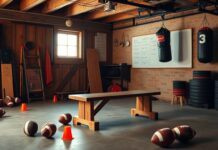
Alright, so you wanna sharpen your goal-scoring skills but don’t have a team or fancy pitch to practice on? No sweat. Mastering finishing drills solo at home might sound like a lonely grind, but with the right approach, it can be surprisingly effective—and even kinda fun. The trick is focusing on smart, practical drills that don’t require expensive gear or tons of space. Let’s dive into how you can turn your living room, backyard, or even a hallway into your personal scoring lab.
Setting Up Your Solo Finishing Practice Space
First off, you gotta carve out a spot that’s all yours. It doesn’t have to be huge, just somewhere you won’t be tripping over the cat or the coffee table every two seconds. Think about using a wall or a doorway as your “goal.” If space is tight, no worries—practice close control and quick shots in smaller zones. Bonus points if you can mark a target on the wall with tape or a chalk mark to simulate that sweet spot in the net.
| Space | Tips |
|---|---|
| Living Room | Clear furniture, use soft ball, mark target on wall |
| Backyard | Use cones or buckets as goals, practice long shots |
| Hallway | Focus on accuracy, quick touches, and rebounds |
Essential Equipment for Home Finishing Drills
Forget about needing a pro stadium setup. All you really need is a ball—any football or even a smaller ball that suits your space—and something to aim at. A cardboard box, an empty laundry basket, or a taped square on the wall works wonders. Creativity is your best mate here. You can even improvise with household items to recreate defenders or goalposts. No fancy nets? No problem.
- Ball: Size 3 or 4 recommended for indoors.
- Target: Wall marks, boxes, buckets.
- Obstacles: Chairs, cones, or shoes to mimic defenders.
Basic Finishing Techniques to Focus On
Here’s the deal—before you start blasting shots like Ronaldo, nail the fundamentals. Work on striking the ball with different parts of your foot: inside, laces, and even the toe (yeah, it’s frowned upon but sometimes it works). Body positioning is key too—lean over the ball to keep shots low and on target. Don’t just kick hard; aim smart.
Try this quick drill:
1. Place ball on the ground.2. Strike with the inside of your foot aiming at your target.3. Repeat with laces for power shots.4. Focus on follow-through and balance.
Drills to Improve Accuracy and Power
Balancing power and precision is like trying to pat your head and rub your belly at the same time—tricky but doable. Set up targets at different heights and distances. Challenge yourself to hit the corners or the “top bins” (that’s soccer slang for the upper corners of the goal). Mix up your shots: volleys, half-volleys, and grounders.
| Drill | Focus | Tips |
|---|---|---|
| Corner Shots | Accuracy | Slow down, aim carefully |
| Power Shots | Strength | Use laces, lean over ball |
| Rebounds | Reaction | Use wall, control first touch |
Using Walls and Rebounds for Solo Practice
Walls are your secret weapon. Kick the ball against the wall and work on controlling the rebound with your first touch before shooting again. This mimics real-game passes and helps improve your reaction time. Plus, it keeps the ball moving, so you’re not just standing around waiting for it to come back.
Tracking Your Progress Without a Coach
No coach? No problem. Keep a practice journal or use your phone to record sessions. Note how many shots hit the target, how your accuracy improves, or how your power changes. Celebrate small wins—trust me, it keeps you motivated.
In short, finishing drills at home might sound dull, but with a bit of grit and creativity, you can seriously up your scoring game. No excuses, just goals.
Setting Up Your Solo Finishing Practice Space
Alright, so you want to sharpen your finishing skills at home but your place isn’t exactly a sprawling football pitch? No worries, mate. Setting up a dedicated spot for your finishing drills doesn’t have to mean emptying your wallet or turning your living room into a stadium. In fact, with a little creativity and elbow grease, even the tightest spaces can become your personal goal-scoring laboratory.
First things first, location is everything. Look around for a spot where you won’t be constantly bumping into furniture or annoying your family. A corner of the garage, a hallway, or even a backyard patch can work wonders. The key is to have enough room to take a few controlled touches and a shot. You don’t need a full field, just enough space to simulate real finishing movements.
- Measure your space: Grab a tape measure or just eyeball it. Ideally, you want at least 6-8 feet in length for shooting and a few feet wide so you’re not hitting the walls every two seconds.
- Clear the clutter: Move anything breakable or annoying out of the way. Shoes, vases, and your dog’s favorite chew toy don’t belong here.
- Floor matters: If you have hardwood or tiles, consider a small rug or mat to prevent slipping. Safety first!
| Space Type | Pros | Cons |
|---|---|---|
| Garage | Usually spacious, easy to clear out | Hard floor, might be cold or dusty |
| Backyard | Fresh air, natural grass or turf | Weather dependent, neighbors might stare |
| Hallway | Indoor, protected from weather | Narrow, limited shooting angles |
Now, don’t go spending a fortune on fancy gear or expensive turf. A simple target—could be a taped box on the wall, a laundry basket, or even a stack of pillows—works just fine. The goal is to give yourself a clear mark to aim for, so you can track progress and keep things interesting. Plus, making your own target adds a bit of DIY charm to your training. Who said finishing drills can’t be a bit fun?
- Lighting: Make sure the area is well-lit. Nothing kills motivation faster than fumbling in the dark or squinting at your target.
- Mark shooting spots: Use tape or chalk to mark where you’ll take your shots from. Switching spots helps mimic game situations.
- Rebound surface: If possible, set up a wall or board that can help bounce the ball back to you. This little hack makes solo drills way more dynamic.
Quick Setup Checklist:- Find a clear, safe spot with 6-8 feet length- Clear the area of obstacles and valuables- Add a target (DIY or store-bought)- Mark shooting positions with tape/chalk- Ensure good lighting- Use a rebound wall or surface if possible
Honestly, the biggest hurdle is just getting started. Once you’ve carved out your space, it’s all about showing up and putting in the reps. And remember, it doesn’t have to be perfect or fancy—consistency beats flashiness every time. So, grab that ball, lace up your shoes, and make your little corner of the world a finishing drill fortress. Your future self (and your goal tally) will thank you.
Essential Equipment for Home Finishing Drills
Look, if you’re under the impression that you need some fancy stadium-grade gear to sharpen your finishing skills at home, think again. Seriously, the truth is way simpler — all you really need is a ball, a target, and a pinch of creativity to get those goal-scoring muscles firing. No, I’m not kidding. Forget the high-tech nets, sensors, or anything that screams “pro setup.” Let’s break down what’s actually essential and how to make the most of it.
| Equipment | Purpose | DIY Alternatives |
|---|---|---|
| Ball | The core of any drill — you can’t shoot without one! | Standard soccer ball, or even a smaller indoor ball if space is tight |
| Target | Helps you focus on accuracy by aiming at a specific spot | Use cones, buckets, a cardboard box with a hole, or even tape a target on a wall |
| Open Space | Allows for movement, shot execution, and ball control | Backyard, hallway, or even a cleared living room corner |
Now, before you roll your eyes and say, “Yeah, but that’s too basic,” let me remind you that simplicity often breeds the best results. You don’t need a pro stadium setup—just a ball, a target, and some creativity to simulate real-game scoring situations. Seriously, get inventive. For example, tape a small square on your garage door or a wall to serve as your “goal.” Or set up a bucket to replicate a net’s opening. The trick is to challenge yourself to hit that mark consistently.
- Ball control: Even a basic ball can help you get those touches right.
- Target practice: A small, focused target forces precision, which is the bread and butter of finishing.
- Rebound surfaces: Walls or fences bounce the ball back, letting you practice quick reactions and second-touch finishes.
And hey, don’t underestimate the power of a wall. It’s your best friend in solo drills. Kick the ball against it and practice controlling the rebound or shooting again quickly. This mimics real-game passes and shots, adding a dynamic edge to your practice. Plus, it’s free and always available—no booking required.
If you want to spice things up, consider adding a stopwatch or timer app on your phone to track how fast you can shoot a set number of balls into your target. Or use household objects like chairs or shoes to create defenders you have to “beat” before shooting. It’s all about making the drill feel real, even when you’re flying solo.
Remember: - No fancy gear needed.- Creativity is your secret weapon.- Consistency beats complexity every time.
So, next time you’re tempted to wait for the perfect setup or fancy equipment, just grab what you have, set your target, and get shooting. The goal is to build habits that stick, not to build a mini stadium in your garage. Trust me, the ball and your grit will do all the heavy lifting.

Basic Finishing Techniques to Focus On
Alright, so you wanna score more goals, huh? Well, it all boils down to mastering the basics first—no magic shortcuts here. When it comes to finishing, the way you strike the ball and how you position your body can make or break your chances. Sounds simple? Believe me, it’s not as easy as it looks on highlight reels.
First off, let’s talk about the different parts of the foot you can use to finish. There’s the classic instep (that’s the laces part), which gives you power and accuracy if you hit it right. Then you have the inside of the foot, perfect for placing the ball with finesse, especially when you’re aiming for those tight corners. Don’t forget the outside of the foot—a sneaky little trick to catch the keeper off guard. And yeah, sometimes, the toe poke is a lifesaver when you’re in a tight spot, even if it looks a bit ugly.
But here’s the kicker: striking isn’t just about the foot. Your body positioning is crucial. Leaning too far back? Say goodbye to power, hello to sky-high shots. Leaning forward? You’ll keep the ball low and on target. And your plant foot—where you put your non-kicking foot—needs to be right next to the ball, pointing where you want the shot to go. Sounds like a lot? Yeah, it kinda is.
| Technique | Foot Part | Best Use | Common Mistake |
|---|---|---|---|
| Power Shot | Instep (laces) | Long-range shots, blasting past keepers | Leaning back too much, losing accuracy |
| Placement Shot | Inside of the foot | Precision shots, corners | Not following through, weak finish |
| Outside Curl | Outside of the foot | Surprise shots, curling around defenders | Poor contact, ball goes wide |
| Toe Poke | Toe | Quick shots in tight spaces | Messy technique, weak power |
Now, don’t get me started on the timing. You can have the perfect strike technique, but if you shoot a second too early or too late, the keeper will laugh at you. Practice controlling your run-up speed and hitting the ball at the exact moment your foot meets it squarely.
- Tip 1: Always keep your eyes on the ball until the moment of contact. No distractions!
- Tip 2: Use your arms for balance. They’re not just for show.
- Tip 3: Experiment with different angles by adjusting your plant foot direction.
Remember, the finishing game is as much mental as physical. Confidence plays a huge role. Miss a shot? Shake it off. Score? Don’t get cocky. Keep grinding those basics and soon you’ll notice your shots becoming sharper and more consistent. And hey, if you mess up, just laugh it off—because even the pros have days when the ball just doesn’t want to go in.
So, in a nutshell: nail your striking technique by practicing with different parts of your foot, get your body position spot-on, and fine-tune your timing. It’s not glamorous, but it’s the foundation of every goal you’ll ever score.
Practice makes perfect, or at least less awful.
Drills to Improve Accuracy and Power
Alright, let’s be honest—getting that perfect blend of precision and power in your shots isn’t exactly a walk in the park. It’s like trying to pat your head and rub your belly at the same time; tricky, frustrating, but oh-so-satisfying when you nail it. The good news? You don’t need a fancy pitch or a squad of teammates to start sharpening these skills. Your living room, backyard, or even a narrow hallway can become your personal training ground. Here’s how to find that elusive sweet spot between blasting the ball with force and placing it exactly where you want.
First off, let’s talk about accuracy. You want to hit those corners, not the goalie’s chest. One simple drill is setting up targets—think cones, buckets, or even shoes—at different spots in your makeshift goal area. Try shooting from various distances and angles, aiming to hit these targets consistently. Don’t just kick the ball like you’re swatting a fly; focus on your foot placement and follow-through. It’s all about control, baby.
| Equipment | Purpose | Tips |
|---|---|---|
| Cones or small objects | Mark target zones | Place at corners and mid-goal areas |
| Ball | Practice shots | Use a size and weight comfortable for control |
| Flat, safe surface | Consistent ball roll | Indoor floors or backyard turf works well |
Now, onto power. Smashing the ball is fun, but without control, it’s just noisy. A great way to build power is through progressive shooting drills. Start by gently rolling the ball and striking it with the laces, then gradually increase your force while maintaining form. Pay attention to your body mechanics—plant your non-kicking foot firmly beside the ball, swing your kicking leg like a pendulum, and snap your ankle on impact. If you’re just flailing, you’re wasting energy and probably scaring your neighbors.
- Wall Rebound Drill: Kick the ball hard against a wall and control the rebound. This helps develop power and reaction time.
- Distance Shots: Mark a spot further away and try to shoot powerfully but accurately towards your target.
- One-Touch Finish: Have the ball rolled to you and strike it immediately to simulate game-like pressure.
Here’s a quick cheat sheet for balancing power and accuracy:
1. Warm-up: Always loosen up your legs before going full throttle.2. Foot placement: Non-kicking foot should be beside the ball, pointing to your target.3. Strike zone: Use the laces for power, inside of the foot for accuracy.4. Follow-through: Keep your kicking leg moving towards the target.5. Repetition: Practice consistently but avoid overdoing it to prevent injury.
Remember, it’s a marathon, not a sprint. You’ll probably mess up more than you score at first—and that’s totally okay. Mix these drills into your routine, stay patient, and eventually, you’ll be blasting those shots into the net like you own the place. And hey, if your dog or houseplant ends up as collateral damage, well… that’s just part of the journey.
Using Walls and Rebounds for Solo Practice
Alright, so you’re flying solo with your finishing drills and wondering how to make it less of a snooze fest and more like a real game scenario? Well, walls are about to become your new best buddies. Seriously, those bland, boring walls aren’t just there to stare at—use them! The trick is to turn them into your personal teammate, passing back the ball just like a real player would. It’s like having a ghost teammate who never complains or hogs the ball.
Imagine this: you strike the ball at the wall, and it rebounds right back to you at a tricky angle. This rebound forces you to react quickly, control the ball, and then finish with a shot or a pass. It’s like juggling with one hand tied behind your back, but way more fun and productive. Plus, it trains your reflexes and sharpens your finishing skills because the ball doesn’t always come back perfectly straight—sometimes it’s a wild bounce, and you gotta adapt.
- Tip 1: Use different parts of your foot to strike the ball—inside, outside, laces—and watch how the rebound changes.
- Tip 2: Vary the distance from the wall to simulate short passes or long balls.
- Tip 3: Add in some movement before you strike—like a quick feint or a step-over—to mimic real game situations.
| Drill | Purpose | How to Execute |
|---|---|---|
| Wall Pass & Control | Improve first touch and control on rebounds | Pass ball to wall, control rebound with one touch, then pass again |
| Rebound Shooting | Practice quick shots after receiving ball | Shoot ball at wall, control rebound, shoot again quickly |
| Angle Variation | Adapt to unpredictable ball returns | Shoot ball at different wall angles, control and finish |
Now, don’t get all lazy and just blast the ball straight at the wall over and over. That’s like eating the same bland sandwich every day—boring and not very effective. Mix it up! Try different angles, speeds, and types of touches. If the ball bounces off wildly, don’t curse the wall; embrace it. That’s exactly what happens in a match when a defender deflects the ball unexpectedly. Your reaction time and control will thank you.
Also, here’s a little secret: if you have a corner where two walls meet, use it! The ball will rebound in unpredictable ways, forcing you to think on your feet. It’s like a mini puzzle every time you play. And if you’re feeling fancy, mark a target spot on the wall with tape or chalk to aim for. This adds a precision element to your drills, making you focus on accuracy, not just power.
Bottom line? Walls aren’t just for decoration. They’re your silent training partner that can turn a dull solo session into a dynamic, challenging workout. So next time you’re practicing alone, give that wall some love, and watch your finishing skills get sharper, quicker, and way more impressive.
Remember: It’s all about creativity and making the most of what you’ve got. No fancy equipment? No problem. Just you, a ball, and a wall ready to throw some rebounds your way.

Tracking Your Progress Without a Coach
So, you’re flying solo in your finishing drills? No coach barking orders or correcting your every move? Don’t sweat it. It might feel like you’re in the wilderness without a guide, but self-assessment can actually be your secret weapon if you play it right. The key is to track your progress consistently and stay motivated by seeing those little improvements pile up over time. Here’s the lowdown on how to do it without losing your mind.
First off, get yourself a simple logbook or journal. Yep, pen and paper still work wonders. Write down what drills you did, how many shots you took, and how many actually hit the target or found the back of the net. Don’t just eyeball it — be honest with yourself. If you miss 7 out of 10 shots, note it. This way, you’ll have cold, hard data to look back on instead of vague memories like “I think I did better today.”
| What to Track | Why It Matters |
|---|---|
| Number of shots attempted | Measures your volume and effort |
| Shots on target | Shows your accuracy improvement |
| Goals scored | Ultimate proof of finishing skill |
| Drill duration | Tracks stamina and consistency |
| Notes on technique or feelings | Helps identify what’s working or not |
Next, video yourself. Yes, it sounds a bit awkward, but trust me, watching your own attempts is like having a coach in your pocket. You’ll catch sloppy footwork, bad positioning, or even moments of brilliance that you didn’t realize you had. Plus, it’s motivating to see yourself improve over weeks or months. Just use your phone, no fancy camera needed.
- Tip: Record from different angles to get a full picture.
- Tip: Slow down the footage to analyze your technique.
- Tip: Compare videos over time to spot progress or recurring mistakes.
Now, motivation can be a tricky beast when you’re your own coach. No one’s there to hype you up or call you out for slacking. That’s why setting small, achievable goals is crucial. For example, aim to increase your shots on target by 10% each week or add 5 extra minutes to your drill sessions. Celebrate those tiny wins because they add up.
Also, consider using apps or simple spreadsheets to chart your numbers. Visual progress can be a huge morale booster. Seeing a graph line inching upwards is way more satisfying than just guessing if you’re getting better.
Example Weekly Tracking Sheet:| Day | Shots Attempted | Shots on Target | Goals Scored | Duration (min) | Notes ||-----------|-----------------|-----------------|--------------|----------------|------------------------------|| Monday | 30 | 15 | 5 | 20 | Felt rushed, focus on calm || Wednesday | 35 | 20 | 7 | 25 | Better foot placement today || Friday | 40 | 25 | 10 | 30 | Great accuracy, keep it up |
Finally, don’t be afraid to shake things up if you hit a plateau. Change drills, try new targets, or add some fitness elements to keep things fresh. Self-assessment isn’t just about numbers; it’s about staying curious and honest with yourself. So, no coach? No problem. You’ve got everything you need to become your own toughest critic and biggest fan all rolled into one.
Keep grinding, keep tracking, and watch your finishing skills blossom right before your eyes.
Incorporating Fitness and Agility into Finishing Drills
Alright, let’s get real for a second—finishing a shot isn’t just about sweet footwork or that laser-precise strike. Sure, nailing the technique is vital, but if your body’s not up to snuff, good luck beating that keeper. Fitness and agility? They’re the unsung heroes of scoring goals. And if you’re practicing finishing drills alone at home, blending conditioning with your shooting practice isn’t just smart—it’s essential.
First off, don’t treat fitness like some boring, separate chore. Think of it as the fuel that powers your finishing. Without stamina and quick feet, you’re just a rusty robot kicking a ball. Your muscles need to be ready to explode into action, shift direction on a dime, and recover fast enough to take another shot. So, how do you do that in your living room without turning it into a gym? Here’s a quick rundown:
- Dynamic Warm-Ups: Before you even touch the ball, get your blood pumping with high knees, butt kicks, and lateral shuffles. These moves wake up your muscles and improve your range of motion.
- Agility Ladder Drills (or tape tricks): No ladder? No problem. Use tape or chalk to mark squares on the floor. Bounce through them like you’re dodging defenders. Fast feet mean better positioning for that killer finish.
- Short Sprints and Plyometrics: Quick bursts of speed and explosive jumps train your body to react like a striker in the box. Try sprinting to your target, then immediately shooting—simulate the pressure of a fast break.
Example Drill Schedule:- 5 mins dynamic warm-up- 10 mins agility ladder/tape drills- 5 x 10-meter sprints with shot attempts- 3 sets of jump squats (10 reps each)- 10 mins finishing drills focusing on placement and power
Now, here’s a little secret—mixing fitness drills with your finishing practice isn’t just about physical gains. It’s about training your brain to handle fatigue. Ever noticed how your shots go haywire when you’re tired in a game? Practicing under fatigue conditions helps you keep your cool and precision when it counts.
| Fitness Component | Benefit for Finishing | Home Drill Example |
|---|---|---|
| Agility | Quick changes of direction to create shooting space | Ladder drills, cone zig-zags |
| Explosive Power | Stronger, faster shots and jumps | Jump squats, plyometric push-offs |
| Endurance | Maintain sharpness late in the game | Interval sprints combined with shooting |
But hey, don’t go overboard and burn yourself out. The goal is to blend—not blast—fitness into your finishing. Too much conditioning without technique can leave you tired and sloppy, and nobody wants that. Start slow, listen to your body, and gradually up the intensity.
To sum it up: finishing isn’t just about fancy footwork or perfect strikes. It’s a full-body hustle. Your fitness and agility are the secret sauce that turns a decent finisher into a goal-scoring machine. So lace up, get moving, and make every shot count—even if it’s just you and the wall at home.
Keep pushing, keep sweating, and those goals will come.
Common Mistakes to Avoid When Practicing Alone
Practicing finishing drills solo might seem like a golden opportunity to sharpen your skills without distractions, but beware — it’s a slippery slope riddled with pitfalls that can stunt your progress faster than you can say “goal!” When you’re flying solo, it’s all too easy to fall into bad habits that sneak in unnoticed, turning your precious practice time into a frustrating exercise in futility. So, let’s get real about what to watch out for and how to dodge these traps.
1. Skipping Warm-Ups and Cool-Downs
Sounds obvious, right? Yet so many players jump straight into shooting drills like they’re about to score the winning goal in the World Cup final. Your muscles aren’t robots; they need a proper warm-up to avoid injury and ensure your shots are sharp. Likewise, cooling down helps recovery and keeps you on the pitch longer. Don’t be lazy here — a few minutes of stretching and light jogging can save you weeks of downtime.
2. Ignoring Technique in Favor of Power
We get it, blasting the ball like a cannon feels awesome. But if your form’s off, you’re just training your body to shoot wildly. Focus on striking the ball cleanly with different parts of your foot — inside, laces, and even the toe (yes, toe pokes can be deadly). Body position matters too: leaning back too much or not planting your foot right can send the ball sailing over the crossbar every time.
| Common Mistakes | Why It’s a Problem | How to Fix It |
|---|---|---|
| Rushing shots without setup | Leads to poor accuracy and bad habits | Practice controlled, deliberate strikes |
| Not tracking progress | Hard to measure improvement or spot weaknesses | Keep a practice journal or video sessions |
| Neglecting fitness and agility | Reduces shooting effectiveness under pressure | Incorporate conditioning drills |
3. Practicing Only What’s Comfortable
This one’s a classic rookie mistake. It’s tempting to just repeat the shots you’re already good at because, hey, who doesn’t like feeling like a pro? But growth happens outside your comfort zone. Mix it up with tricky angles, weaker foot shots, and quick-release finishes. If you don’t challenge yourself, you’ll plateau faster than you can say “next drill.”
4. Forgetting to Simulate Game Scenarios
Shooting at a stationary target in your living room is fine, but it ain’t the same as scoring with a defender breathing down your neck or a keeper diving at your feet. Use walls for rebounds, set up cones to mimic defenders, or time your shots to mimic real-game pressure. The more realistic, the better.
- Tip: Record your sessions and watch them back. You’ll catch sloppy technique and see what really needs work.
- Tip: Set small goals for each session, like hitting a target 7 out of 10 times or improving shot speed.
5. Losing Motivation and Consistency
Let’s be honest — practicing alone can get dull. Without a coach yelling at you or teammates pushing you, it’s easy to slack off or half-ass your drills. Keep things fresh by varying your routines, rewarding yourself for hitting milestones, or even teaming up virtually with friends for some friendly competition.
In the end, solo finishing practice is a powerful tool — but only if you stay sharp, honest with yourself, and keep those bad habits at bay. Nail these basics and you’ll be banging in goals like a pro, even without a crowd cheering you on.
Summary Table of Mistakes and Fixes
| Mistake | Fix |
|---|---|
| Skipping warm-ups | Start with light jogging and stretching |
| Power over technique | Focus on clean strikes and body positioning |
| Repeating only easy shots | Practice weak foot and challenging angles |
| No game-like pressure | Use walls, cones, and timed drills |
| Inconsistent practice | Set goals and vary drills to stay motivated |

Motivation Tips to Keep Your Practice Consistent
Look, staying motivated when you’re grinding solo on finishing drills is easier said than done. No coach yelling at you, no teammates pushing you, just you and that ball bouncing off the wall (or maybe not bouncing at all if you’re having an off day). It’s a tough gig, but not impossible. Here’s the real deal on how to keep your fire burning without losing steam halfway through your session.
1. Set Mini Goals, Not Everest
Trying to become the next Messi overnight? Yeah, good luck with that. Instead, break your practice into bite-sized targets. For example:
- Hit 10 shots on target in a row.
- Master striking with the inside of your foot today.
- Complete 3 rounds of wall rebounds without losing focus.
These little wins add up and keep you feeling like a champ, rather than a frustrated amateur.
2. Mix It Up to Avoid the Dreaded Boredom
Doing the same drill 50 times? Snooze fest. Spice things up by changing angles, distances, or even switching to your weaker foot. Here’s a quick table to keep your drills fresh:
| Drill | Variation | Why It Helps |
|---|---|---|
| Wall Rebounds | Use different wall heights | Improves reaction and adaptability |
| Target Shots | Change target size/distance | Boosts accuracy under pressure |
| Power Shots | Alternate foot and body position | Builds overall finishing skill |
3. Keep a Practice Journal
Sounds old-school, but jotting down what you nailed and what sucked each day is a game-changer. It’s like having a coach in your pocket, reminding you where you’re improving and where you’re flopping. Plus, looking back at progress—even the tiniest—can seriously pump up your confidence.
4. Reward Yourself (Yes, Really)
If you smash your mini goals, give yourself a treat. Maybe a favorite snack, a quick break to binge that show you love, or some guilty pleasure gaming time. Rewards create positive vibes around practice, making it less of a chore and more of a “heck yeah” moment.
5. Visualize Success
Before you start, spend a minute imagining the perfect finish—ball hitting the back of the net, crowd roaring (even if it’s just your dog). Visualization tricks your brain into gearing up for success and can keep your motivation levels sky-high.
Quick Motivation Checklist:- Set small, clear goals- Change drills regularly- Keep a progress log- Reward your efforts- Visualize your success
6. Find Your “Why” and Hold Onto It
Maybe you want to impress your friends, make the school team, or just prove to yourself you can do it. Whatever it is, remind yourself often. When practice feels like a drag, that “why” is your lifeline.
So yeah, training alone is no picnic. It’s a test of patience, grit, and stubbornness. But with these little hacks, you’ll find yourself pushing through the dull moments and actually enjoying the grind. Keep your eyes on the prize, and remember: every pro was once a beginner who didn’t quit.
Frequently Asked Questions
- Do I need special equipment to practice finishing drills at home?
Not at all! You just need a ball and a target, which can be anything from a small goal to a marked spot on the wall. The key is creativity—using walls for rebounds or setting up makeshift goals can turn any space into your personal training ground.
- How much space do I need for effective solo finishing practice?
Even a small corner of your room or backyard works perfectly. It’s more about quality than quantity. A tight space challenges your control and precision, making your drills more intense and beneficial.
- What are the most important basic finishing techniques to focus on?
Start with mastering different striking parts of your foot—like the instep and the side—and pay attention to your body positioning. These fundamentals lay the groundwork for consistent and powerful shots.
- How can I improve both accuracy and power when shooting alone?
Try drills that combine controlled shots with bursts of power. For example, alternate between aiming at small targets and shooting with maximum force. This balance helps you find your “sweet spot” where precision meets strength.
- Can using walls really help simulate real-game situations?
Absolutely! Walls act like teammates, bouncing the ball back to you and allowing you to practice quick reactions and rebounds. This makes your solo drills dynamic, mimicking the unpredictability of live play.
- Without a coach, how can I track my progress effectively?
Keep a simple log of your drills—note how many shots hit the target or improve your timing. Recording videos can also provide visual feedback, helping you spot areas for improvement and celebrate your milestones.
- Why is fitness and agility important in finishing drills?
Finishing isn’t just about shooting; it’s about being quick, balanced, and explosive. Incorporating agility and fitness exercises into your routine ensures you can get into the right position and strike with confidence under pressure.
- What common mistakes should I avoid when practicing alone?
Watch out for developing bad habits like poor foot placement or rushing shots without control. Without a coach, it’s easy to repeat errors, so focus on quality reps and self-awareness to keep your technique sharp.
- How can I stay motivated to practice finishing drills solo?
Set small, achievable goals and mix up your drills to keep things fresh. Think of your practice as a personal challenge or game—this mindset turns drills from a chore into an exciting journey toward becoming a goal-scoring machine!