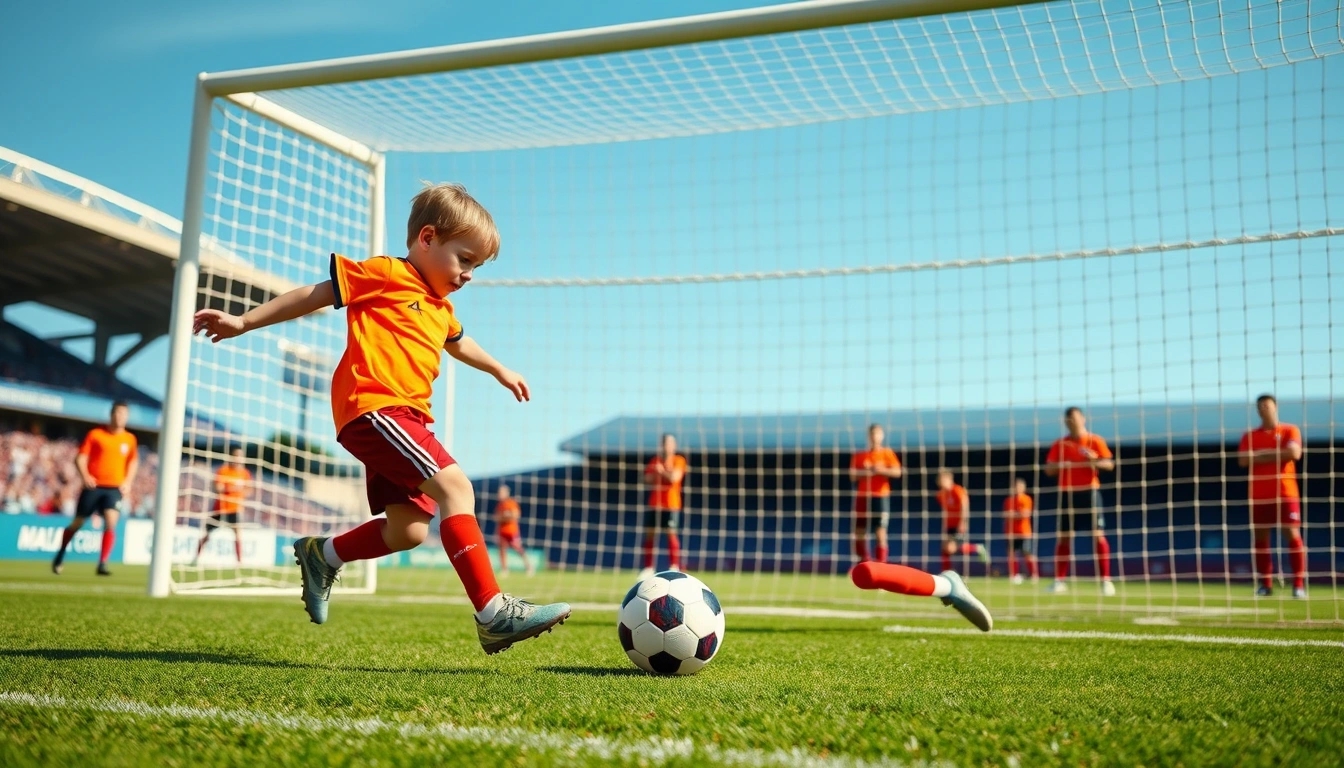
So, you want to be the kid lighting up the scoreboard, huh? Well, becoming a goal-scoring machine isn’t just about kicking the ball wildly and hoping for the best. Nah, it’s a mix of smarts, skills, and a bit of that cheeky striker’s instinct that separates the legends from the wannabes. Let’s dive into some no-nonsense tips and tricks to get those goals rolling in.
First things first — understand your role. A striker isn’t just a fancy title; it’s a job description. You’re the team’s main finisher, the one who has to sniff out chances like a bloodhound. That means knowing where to hang out on the pitch, when to make that deadly run, and how to outfox defenders with timing. Positioning is everything. If you’re caught flat-footed or out of place, you’re basically handing the ball back to the other team.
| Key Striker Attributes | Why They Matter |
|---|---|
| Positioning | Being in the right spot at the right time to capitalize on chances. |
| Timing | Knowing exactly when to strike or make a run. |
| Instinct | Reading the game and reacting swiftly to opportunities. |
Now, onto the all-important shooting technique. You can’t just boot the ball and hope it hits the net. Nah, you gotta strike the ball cleanly — that means using the right part of your foot, keeping your eyes on the target, and picking your moments. Sometimes a powerful shot is the way to go, other times a cheeky chip or a precise placement will do the trick better. Practice makes perfect here, so don’t be lazy about it.
- Practice drills: Shooting from different angles, volleys, and one-on-one situations.
- Focus on accuracy: Aim for corners, not just power.
- Control your shot: Keep your body balanced and follow through.
But hey, scoring isn’t just about your feet. Your first touch and ball control can make or break your chances. Imagine getting a perfect pass but then fluffing your touch and losing the ball — nightmare, right? So work on making that first touch slick and unpredictable. It keeps defenders guessing and opens up space for that killer shot.
And don’t forget your physical fitness. Speed, agility, and strength are your best mates. You want to outpace defenders, hold off challenges, and still have the energy to finish strong. Simple exercises like sprints, ladder drills, and core workouts can give you that edge.
Quick Fitness Routine for Young Strikers
- 5 x 20m sprints (rest 30 sec)- Ladder drills (3 sets)- Core planks (3 x 30 sec)- Jump squats (3 x 15)
Lastly, don’t underestimate the mental game. Missed shots happen — a lot. The trick is to shake it off, stay confident, and keep hungry. Visualize success, learn from mistakes, and never stop believing you’re the next big thing.
So yeah, becoming a top scorer isn’t easy, but with these tips, a bit of grit, and a lot of practice, you’ll be banging in goals before you know it.
Understanding the Role of a Striker
Alright, listen up young guns — if you’re dreaming of lighting up the scoreboard, first you gotta understand what being a striker really means. It’s not just about running around and hoping a ball magically bounces your way. Nope, there’s a whole lot more behind that goal-scoring magic. Positioning, timing, and instincts — these are the secret ingredients that separate the real finishers from those who are just… well, hopeful forwards.
Think of a striker like a shark in the water. You don’t just swim around aimlessly; you stalk, you wait, you pounce. And that pounce? It’s all about being in the right place at the right moment. Sounds simple, right? But trust me, it’s a skill you need to train hard. You gotta read the game like a book — anticipate where the ball’s going, spot the gaps in the defense, and move before anyone else even thinks about it.
| Key Traits of a Successful Striker | Why It Matters |
|---|---|
| Positioning | Being in the right spot increases your chances to score. It’s about smart movement, not just speed. |
| Timing | Knowing when to make your run or shoot can catch defenders off guard and goalkeepers frozen. |
| Instincts | Quick thinking and reacting to unpredictable situations separate the pros from amateurs. |
Now, don’t get me wrong — instincts aren’t just some magical gift you’re born with. They develop over time by watching games, practicing, and yes, by screwing up and learning from it. If you’re always second-guessing yourself, well, that hesitation can cost you goals. So, trust your gut — even if it’s wrong sometimes. Better to try and fail than freeze and miss the chance.
- Watch the pros: See how they position themselves before a cross or a through ball.
- Practice decision-making: Set up drills where you have to decide quickly whether to shoot, pass, or dribble.
- Work on your runs: Timing your sprint to beat defenders is an art, not just running fast.
Here’s a little nugget of truth — being a striker isn’t just about scoring goals, but about creating opportunities. Sometimes, your best contribution is a clever dummy run that pulls defenders out of position or a quick pass that sets up a teammate. So, yeah, don’t be selfish. The game’s bigger than just your tally.
Example Scenario:You see a cross coming in from the wing.- Position yourself between the last defender and the goalkeeper.- Time your jump or run perfectly to meet the ball.- Trust your instincts to decide if you head it, volley it, or control it first.
To wrap it up, the role of a striker demands a mix of brains and brawn. You gotta be smart about your movements, sharp with your timing, and fearless in your approach. So next time you’re out there chasing that ball, remember: it’s not just about banging it in — it’s about knowing exactly how, when, and where to strike. That’s what makes a true finisher.
Mastering Basic Shooting Techniques
Alright, let’s get real about shooting — the bread and butter of any striker’s toolkit. You might think it’s just about kicking the ball hard and hoping it hits the net, but nah, it’s way more nuanced than that. First off, striking the ball cleanly is a skill that separates the casual kickers from the goal scorers. If your foot doesn’t connect right, the ball’s gonna wobble, slice off target, or worse, do a sad little tap that the goalie just strolls over to pick up. You want that sweet spot — the part of your foot that delivers power and control, usually the instep (the laces area). Think of it like hitting the sweet spot on a baseball bat — miss it, and you’re just making noise.
Now, aiming with precision? That’s a whole other beast. Just blasting the ball anywhere won’t cut it. You gotta pick your spots — corners, just out of the keeper’s reach, or even low and hard to make it tricky. Here’s a quick cheat sheet on aiming zones:
| Target Area | Why Aim Here? | Tips |
|---|---|---|
| Bottom Corners | Goalkeepers struggle to dive low and fast | Keep your body over the ball to keep it low |
| Top Corners | Difficult to reach and block | Use the instep and follow through high |
| Near Post | Catch the keeper off guard | Quick, sharp shots with minimal backlift |
| Far Post | More open space, harder to intercept | Open your hips to direct the ball |
But here’s the kicker — timing your shot is just as crucial as how you shoot. You gotta know when to unleash that powerful strike. Sometimes you’re rushing, and the defender’s breathing down your neck, so a quick snap shot is your best bet. Other times, you’ve got a split second to line up a shot with more power and accuracy. It’s about reading the moment, trusting your instincts, and not overthinking. Overthinking’s the enemy of a good shot. Ever seen players freeze because they’re trying to be perfect? Don’t be that guy.
- Practice tip: Work on shooting with both feet. Defenders don’t care if you’re right or left-footed — they’ll close down whichever you use. Being versatile keeps them guessing.
- Drill idea: Set up cones in a zigzag and practice shooting quickly after dribbling through. Builds speed and accuracy under pressure.
Oh, and don’t forget about body positioning. Leaning too far back? The ball’s gonna fly over the bar like it’s got wings. Leaning too far forward? You might just tap it meekly at the keeper’s feet. The sweet spot is keeping your body over the ball, eyes on the target, and follow through with your kicking foot.
Common shooting mistakes: - Striking with the toe instead of the instep - Lifting the head too late, losing sight of the target - Overhitting the ball and sacrificing accuracy - Hesitating too long, allowing defenders to close in
In the end, shooting is a mix of technique, confidence, and a pinch of daring. You won’t score every time, and that’s okay. Keep practicing, mess up, learn, and shoot again. Because every goal scorer started by missing heaps of shots before they found their groove. So, go on — get out there and start banging those shots in!

Positioning: Where to Be When It Counts
Alright, let’s cut to the chase — scoring goals isn’t just about having a rocket of a shot or dazzling footwork. Yeah, those help, but more often than not, it’s about being in the right spot at the right moment. Sounds simple, right? But oh boy, it’s a skill that separates the casual kickers from the goal-hungry strikers who keep the crowd roaring. So, how do you find those magic zones inside the box where the ball almost seems magnetized to your feet? That’s exactly what we’re diving into.
First off, reading the game is your secret weapon. You gotta develop this sixth sense — like a cat stalking its prey — anticipating where the ball will land, where defenders might slip, and where your teammates are eyeing to send a killer pass. It’s not just about sprinting around wildly hoping for a lucky bounce. Nope, it’s chess on grass.
- Watch the ball’s trajectory: Always keep your eyes on the ball and the players around it. Where’s it likely to drop? Is the keeper out of position? Spotting these clues early gives you a head start.
- Study defenders’ habits: Are they slow to close down? Do they favor one side? Exploit these weaknesses by positioning yourself where they least expect.
- Use your body smartly: Shield the ball, create space, and make yourself a nuisance. Sometimes just being a pain in the defender’s backside opens up chances.
Now, let’s talk about those “sweet spots” inside the box. Think of the penalty spot, the near post, the far post, and the edge of the six-yard box as your playground. These are the golden zones where most goals happen. But here’s the catch — defenders know this too, so you gotta be sneaky.
| Zone | Why It’s Key | How to Use It |
|---|---|---|
| Near Post | Quick flicks and rebounds often catch keepers off guard. | Make sharp runs, time your movement to meet crosses early. |
| Far Post | Great for curling shots or tap-ins after a teammate’s cross. | Stay alert for knockdowns or pullbacks. |
| Penalty Spot | Central and prime for powerful shots or headers. | Position yourself for volleys or rebounds. |
| Edge of Six-Yard Box | Close enough for quick finishes, but with space to control. | Hold your ground, wait for loose balls. |
Quick tip: Don’t just stand still waiting for the ball — move unpredictably. Make defenders chase shadows, then suddenly dart into space. Timing is everything; arriving a split second too early or late can mean the difference between a goal and a missed chance.
Here’s a little drill you can try at practice:
1. Have a teammate or coach cross the ball into the box.2. Practice making runs to different zones — near post, far post, penalty spot.3. Work on timing your arrival and finishing quickly.4. Repeat, but switch sides and angles to keep it fresh.
So, remember, positioning isn’t just about standing in one spot waiting for magic. It’s about constant movement, smart reading, and exploiting tiny gaps in the defense. Nail this, and you’ll find yourself popping up in places defenders dread — and scoring goals like a pro.
Keep hustling, keep learning, and watch those goals pile up!
Improving First Touch and Ball Control
Alright, let’s get real for a moment: if you want to score goals, you *have* to get comfortable with the ball at your feet. No fancy flicks or rocket shots are gonna matter if your first touch is a disaster and you’re chasing the ball all over the pitch like a headless chicken. The first touch? It’s like the handshake of football — if it’s weak or sloppy, defenders will smell blood and pounce on you. So, how do you make that first touch slick enough to keep defenders guessing? Let’s dive in.
Why First Touch Matters
Think about it — when the ball comes flying at you, you have just a split second to decide what to do next. A good first touch sets you up for the next move, whether it’s a quick pass, a shot, or a dribble. A bad one? Well, you’re either losing possession or wasting precious time. It’s the difference between looking like a pro and looking like you’re still figuring out which end of the ball to kick.
- Control the ball, control the game: A sharp first touch lets you dictate the pace.
- Keep defenders guessing: If you can control the ball in tight spaces, defenders can’t predict your next move.
- Build confidence: Every clean touch adds a bit of swagger to your play.
Drills to Sharpen Your First Touch
No magic pill here — you gotta put in the work. Here are some drills that’ll get you feeling the ball better than your morning coffee:
| Drill | What It Does | How to Do It |
|---|---|---|
| Wall Pass & Control | Improves touch and reaction | Pass the ball against a wall, control the rebound with your foot, thigh, or chest, then pass back quickly. |
| Juggling | Enhances overall ball feel | Keep the ball in the air using feet, thighs, and head. Start slow, then speed up. |
| First Touch Turns | Combines control and agility | Receive the ball, control it, then spin or turn sharply to evade an imaginary defender. |
Pro Tips to Keep in Mind
- Stay relaxed: Tension makes your touch stiff and unpredictable.
- Use all parts of your body: Feet, thighs, chest — mix it up to be versatile.
- Watch the ball: Eyes on the prize, always.
- Practice under pressure: Have a mate or coach close you down while you control the ball.
Now, I won’t sugarcoat it — improving your first touch takes patience. You’ll fluff it, lose the ball, maybe even feel like giving up. But hey, every striker worth their salt has been there. The key? Keep grinding, keep practicing, and soon enough, defenders won’t know what hit ’em.
In the end, your first touch is your secret weapon. Nail it, and you’re halfway to scoring more goals already. So grab that ball, hit the drills, and turn those awkward moments into moments of magic.
Building Physical Fitness and Agility
Alright, listen up, young strikers! If you think just fancy footwork and sharp shooting will get you those goals, well, you’re only halfway there. Speed, strength, and quick feet? They’re not just buzzwords thrown around by coaches trying to sound smart. They’re your best mates on the pitch, the secret sauce that turns a decent player into a nightmare for defenders. So, let’s dive into some exercises and tips that’ll give you that extra edge.
First off, speed. You don’t need to be Usain Bolt, but you gotta be quick enough to beat defenders off the mark. Sprint drills are your friend here. Try interval sprints: sprint 20 meters as fast as you can, then jog back slowly, repeat 6-8 times. It’s brutal, but it builds explosive speed and stamina. Add some ladder drills to the mix — those rapid foot taps force your brain and feet to sync up, boosting agility and reaction time. You can’t fake quick feet; they have to be trained.
| Exercise | Focus | How to Do It |
|---|---|---|
| Interval Sprints | Speed & Stamina | Sprint 20m fast, jog back, repeat 6-8 times |
| Agility Ladder Drills | Footwork & Coordination | Perform quick feet patterns through ladder rungs |
| Squat Jumps | Leg Strength & Power | Squat down, explode upwards, land softly, repeat 10-15 times |
| Plank Holds | Core Stability | Hold plank position for 30-60 seconds, 3 sets |
Now, strength isn’t just about bulking up and looking like a tank. It’s about having that explosive power to hold off defenders, jump for headers, and shoot with force. Bodyweight exercises like squat jumps, lunges, and push-ups build functional strength without needing a gym membership. And don’t forget your core — a strong midsection means better balance and control when you’re twisting and turning in tight spaces.
- Squat Jumps: Great for leg power. Feel that burn? Good, you’re doing it right.
- Lunges: Helps with balance and strength. Try walking lunges with a ball at your side to mimic game moves.
- Push-ups: Upper body strength to fend off defenders.
- Planks: Core strength to keep you steady on your feet.
Don’t get me started on agility. It’s not just about being fast, it’s about being able to change direction in a flash without falling flat on your face. Cone drills are perfect here. Set up a few cones in a zigzag pattern and sprint through them, weaving in and out. It’s awkward at first — you’ll trip, stumble, maybe curse a bit — but that’s how you get better. Your body learns to react quicker, and defenders won’t know what hit ‘em.
Here’s a quick checklist for your weekly physical fitness routine:
- Monday: Interval sprints + ladder drills- Wednesday: Bodyweight strength exercises (squats, lunges, push-ups, planks)- Friday: Agility cone drills + light jogging for stamina- Sunday: Rest or light stretching (don’t be a hero every day)
Remember, building fitness isn’t about killing yourself every session. It’s about consistency and smart training. Mix it up, listen to your body, and keep pushing. The pitch is a battlefield, and if you want to score more goals, you better be ready to outpace, outmuscle, and outsmart your opponents. So lace up, get moving, and make those defenders regret ever stepping in your way.
Pro Tip: Always warm up before these drills. A few minutes of jogging and dynamic stretches can save you from nasty injuries. And hey, hydrate like your life depends on it — because on the pitch, it kinda does.
Now go on, get out there and show ‘em what you’re made of!

Developing Mental Toughness and Confidence
Alright, let’s get real for a sec — scoring goals isn’t just about fancy footwork or rocket shots. Nope, it’s a mental game as much as it’s physical. You could be the fastest, strongest striker on the pitch, but if your head’s not in the right place, chances are you’ll freeze when it counts or get rattled after a miss. So, how do you keep your cool, bounce back from those frustrating misses, and stay hungry like a lion eyeing its prey? Let’s dive in.
First off, shaking off misses is an absolute must. Everyone screws up sometimes — yep, even Messi or Haaland. The key is not to dwell on it like it’s the end of the world. Instead, treat each miss as a lesson, not a disaster. A quick mental reset trick is to take a deep breath, remind yourself that one miss doesn’t define your game, and visualize your next goal. Sounds cheesy? Maybe. But it works.
- Tip #1: After missing, don’t stare at the ball or the net like you’re trying to curse it. Move on physically and mentally.
- Tip #2: Talk to yourself positively — “I’ve got this,” “Next one’s mine,” or even a silly phrase that pumps you up.
- Tip #3: Focus on what you can control: your positioning, your timing, your effort.
Confidence is a slippery beast, especially for young strikers. One minute you’re on fire, the next you’re doubting every touch. Building that confidence isn’t about being perfect; it’s about embracing imperfection and learning from it. Think about it like this table below:
| Confidence Level | What It Feels Like | How to Boost It |
|---|---|---|
| High | Feeling unstoppable, ready to take risks | Celebrate small wins, keep practicing, stay positive |
| Medium | Some doubts creeping in, but still focused | Recall past successes, work on weak spots, talk to coaches or teammates |
| Low | Second-guessing, fear of failure | Use mental exercises, take breaks if needed, visualize success |
Now, keeping the hunger alive — that burning desire to score — is all about mindset and motivation. It’s easy to lose that spark when goals aren’t coming or when you’re stuck on the bench. Here’s a quick checklist to keep that fire stoked:
- Set personal goals beyond just scoring — like improving your first touch or sprint speed.
- Watch highlights of your favorite strikers and imagine yourself doing the same.
- Train with friends who push you to be better, not just cheerleaders.
- Remember why you started playing football in the first place — the fun, the thrill, the love of the game.
And hey, don’t forget that mental toughness isn’t built overnight. It’s a grind, a series of ups and downs. Some days you’ll feel like a legend, others like a total flop. Both are okay. The trick is to keep showing up, keep believing, and keep chasing that ball like your life depends on it.
Mental Toughness Building Routine:- Daily visualization: Spend 5 minutes imagining scoring your dream goal.- Positive self-talk: Replace “I can’t” with “I’m learning.”- Mindfulness practice: Stay present during games, don’t get lost in mistakes.- Reflect after matches: What went well? What can improve?
So next time you’re staring down the goal and the pressure’s on, remember: your mind is your secret weapon. Master that, and the goals will follow — sometimes when you least expect it, but always when you need them most.
Keep your head up, your feet moving, and your heart hungry.
Practicing Set Pieces and Penalties
Alright, let’s get real about set pieces — free kicks, corners, and penalties. These moments? They’re like the VIP passes to the goal party. You don’t wanna just show up; you wanna be the one who owns the dance floor. So, how do you turn these golden chances into goals on the board? Buckle up, because it’s not just about kicking the ball hard and hoping for the best.
First off, free kicks. Everyone thinks it’s all about power, right? Nah, it’s more about precision and placement. You gotta know your angles, the wall’s position, and where the keeper’s weakest spots are. Pro tip: practice curling the ball around the wall — that sweet bend can make goalies look silly. And yes, it takes a ton of tries, so don’t get frustrated when your shots hit the stands instead of the net.
| Free Kick Practice Tips | Why It Matters |
|---|---|
| Focus on foot placement and body angle | Controls ball trajectory and spin |
| Use both feet during practice | Increases unpredictability for defenders |
| Visualize the shot before kicking | Builds confidence and muscle memory |
Corners? They might seem like just a ball kicked into the box, but nah, there’s an art to it. You wanna whip in crosses that your teammates can actually reach — not just a random ball floating around. Timing your run and knowing where to expect the ball is half the battle. If you’re the one taking corners, practice different types: inswingers, outswingers, short corners — mix it up to keep defenders on their toes.
And penalties. Oh boy, the pressure cooker moment. Everyone’s got a horror story about missing one, right? The trick here is mental toughness. You can practice your shot a thousand times, but if your brain’s doing cartwheels when you step up, it’s game over. Find your routine — deep breaths, pick a spot, and trust your instincts. And hey, if you muck it up, shake it off and get ready for the next one.
- Penalty Practice Tips:
- Pick a spot and stick to it during practice
- Practice with a goalkeeper to simulate real pressure
- Work on disguising your shot direction
- Develop a pre-shot routine to calm nerves
Here’s a quick checklist to keep your set-piece practice on track:
- Warm-up thoroughly before practicing kicks- Focus on technique over power initially- Record yourself to spot flaws- Mix drills with teammates for real-game scenarios- Keep sessions fun to avoid burnout
In the end, set pieces and penalties are about confidence, repetition, and a little bit of swagger. Nail these, and you’re not just a striker — you’re the clutch player everyone looks for when the game’s on the line. So grab that ball, get practicing, and remember: those golden chances? They’re yours for the taking.
Analyzing Professional Strikers for Inspiration
Alright, so you wanna score like the big boys — Messi, Haaland, Mbappé — the kind of players who make defenders look like they’re chasing ghosts? Well, you’re in luck because diving into their habits and styles isn’t just for die-hard fans or coaches; it’s a treasure trove for any young striker eager to up their game. But hey, don’t expect some magic formula handed on a silver platter. You gotta pick, choose, and adapt what fits your style and body — no copy-pasting allowed!
Let’s start with Lionel Messi. The guy’s not just a wizard with the ball; his secret sauce is his low center of gravity, which makes his dribbling insanely tight and unpredictable. Ever noticed how he can twist and turn in a blink, leaving defenders flat-footed? That’s not just talent; it’s hours of honing that first touch and close control in tight spaces. So, what can you steal? Work on your ball control drills in cramped areas. Think of it like dancing — you don’t need a big stage, just smooth moves.
Then there’s Erling Haaland, a beast of a striker who’s all about power and precision. If Messi is the magician, Haaland is the wrecking ball. His explosive speed combined with brutal strength lets him bulldoze through defenses. But don’t get it twisted — he’s got a keen eye too, picking the perfect moment to strike. The takeaway? Build your physical fitness and agility, but don’t forget to sharpen your timing and composure in front of goal. Remember, raw power without brains is just noise.
- Messi’s Style: Tight dribbling, quick turns, creative playmaking
- Haaland’s Style: Power, speed, clinical finishing
- Mbappé’s Style: Explosive pace, smart positioning, flair
Speaking of Kylian Mbappé, this guy’s all about lightning speed and smart movement. He doesn’t just run fast; he knows exactly when to make that darting run behind defenders. His game screams intelligence and anticipation. So, if you’re stuck wondering how to get open for that killer pass, start thinking like Mbappé — always be a step ahead, read the defense, and use your speed wisely.
| Player | Key Strengths | What to Learn |
|---|---|---|
| Messi | Dribbling, ball control, creativity | Practice tight space control, improve first touch |
| Haaland | Physicality, speed, finishing | Build strength, work on shot accuracy |
| Mbappé | Speed, positioning, anticipation | Develop acceleration, study game reading |
Now, before you go full-on Messi or Haaland, keep in mind: every striker has their own quirks and flaws. Messi’s not the tallest, Haaland’s not the most skillful dribbler, and Mbappé’s sometimes a bit selfish on the ball. So, don’t get obsessed with copying every move. Instead, mix and match what works for you. Maybe you’re a bit slower but can master Haaland’s positioning? Or you’re small like Messi but can add Mbappé’s pace? That’s the real trick.
To wrap it up — watching these pros isn’t just about drooling over fancy goals. It’s about understanding their mindset, their work ethic, and how they adapt their game to different situations. So grab your boots, hit the pitch, and start experimenting. Who knows? Maybe the next big goal-scoring legend is watching this right now, stealing a bit from the greats and making it their own.
Practical Tip: Set up a weekly video session where you watch clips of these players, then try to replicate one move or habit in your next training. Keep a journal of what worked and what felt weird. Progress isn’t overnight, but every little steal counts!
Creating a Personal Training Plan
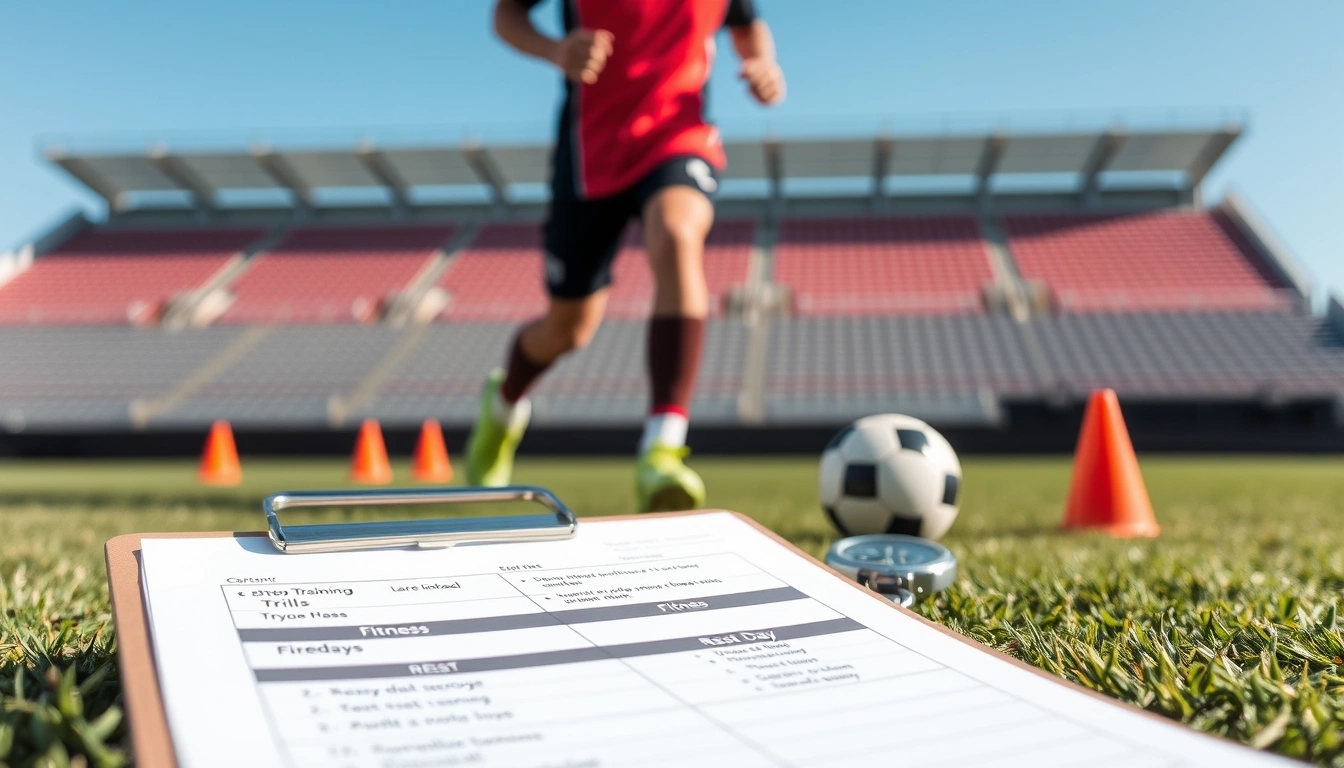
Alright, so you’ve soaked up all the juicy tips on becoming a killer striker. Now comes the tricky part — putting it all together into a training schedule that actually works for you. No point in grinding yourself into the ground or, worse, getting bored out of your mind. A smart plan balances drills, fitness, and rest so you keep improving without turning into a couch potato or a walking zombie.
First off, let’s talk consistency. It’s tempting to jump in full throttle, but trust me, slow and steady wins the race. You want a schedule that’s practical — something you can stick with week after week. Think of your training like a recipe: a little bit of shooting practice, some fitness work, and plenty of rest to let those muscles recover. Without rest, your body screams “enough!” and your progress stalls. Nobody wants that.
| Day | Focus | Details |
|---|---|---|
| Monday | Shooting Drills | 30 mins of target practice + 20 mins of first-touch control exercises |
| Tuesday | Fitness & Agility | Warm-up + sprint drills + ladder exercises + cool down stretching |
| Wednesday | Rest & Recovery | Light stretching, hydration, maybe some yoga or foam rolling |
| Thursday | Positioning & Game Awareness | Watching match clips + shadow play + positional drills |
| Friday | Set Pieces Practice | Penalties, free kicks, and corner routines |
| Saturday | Match or Scrimmage | Apply what you’ve learned in a real or practice game |
| Sunday | Rest | Chill out, catch up on sleep, and prep for next week |
Now, don’t get me wrong — this isn’t set in stone. Life happens. Sometimes you’ll miss a session or feel wiped out. That’s okay. The key is to listen to your body and adjust accordingly. If you’re dragging, swap a hard day for an easier one or throw in some extra rest. Overtraining is a sneaky enemy. It’s like trying to fill a leaky bucket — no matter how much you pour in, you lose progress.
- Tip 1: Keep a training journal. Write down what you did, how you felt, and any improvements or struggles.
- Tip 2: Mix up drills to keep boredom at bay — nobody likes doing the same boring stuff every day.
- Tip 3: Set mini-goals. Maybe it’s hitting the target 8 times out of 10 or shaving a second off your sprint time.
Remember, the goal isn’t to be perfect. It’s to get better, bit by bit, day by day. Celebrate small wins, learn from the misses, and keep that hunger alive. Your training plan is your personal playbook — tweak it, challenge it, and make it yours. Before you know it, you’ll be the striker everyone’s talking about.
So, lace up, plan smart, and get after it!
Frequently Asked Questions (The title must be written in English.)
- What is the most important skill for a young striker to develop?
Great question! While many skills matter, positioning and timing often make the biggest difference. Being in the right place at the right moment can turn a half-chance into a goal. Combine that with a sharp first touch and accurate shooting, and you’re well on your way to lighting up the scoreboard.
- How can I improve my shooting accuracy?
Think of shooting like painting a masterpiece — precision beats power every time. Focus on striking the ball cleanly and picking your target spots rather than blasting blindly. Practice shooting with both feet and aim for corners to surprise the keeper. Remember, consistency comes with repetition and patience!
- Why is mental toughness important for scoring goals?
Scoring isn’t just about physical skills; it’s a mental game too. Imagine missing a sitter — it stings, right? But the key is to bounce back quickly and keep your confidence sky-high. Staying mentally tough helps you stay hungry and focused, even when the pressure mounts.
- How do I know where to position myself during a game?
Think like a shark in the water — always circling where the prey is most vulnerable. Study the flow of the game, watch the ball, and anticipate defenders’ moves. Sweet spots are usually near the penalty area’s edge or right in front of the goal. The better you read the game, the easier it is to be in the perfect spot to score.
- What drills can help improve my first touch and ball control?
Simple drills like juggling, wall passes, and tight-space dribbling work wonders. Try to keep the ball glued to your feet while changing direction quickly. The goal is to make your first touch so slick that defenders are left guessing what you’ll do next.
- How important is physical fitness for a striker?
Think of fitness as the fuel for your goal-scoring engine. Speed, agility, and strength help you outpace defenders and maintain sharpness throughout the match. Incorporate sprint drills, plyometrics, and strength training into your routine to boost your physical edge.
- Should I study professional strikers to improve?
Absolutely! Watching pros like Messi or Haaland is like stealing secrets from the best. Notice their movement, decision-making, and composure under pressure. Try to adapt their habits and styles in your own game — but always add your unique flair!
- How can I create a balanced training plan?
Balance is key — mix skill drills, fitness workouts, and rest days to avoid burnout. A simple schedule might include shooting practice, agility exercises, and mental focus drills spread throughout the week. Don’t forget to listen to your body and give yourself time to recharge.
- What’s the best way to practice set pieces and penalties?
Repetition is your friend here. Practice free kicks, corners, and penalties regularly to build confidence and muscle memory. Experiment with different techniques and find what works best for you. The more you practice, the more natural these golden chances will feel during games.