Experts gathered at the annual Global Leadership Summit in London this week emphasised the critical role of leadership at every organisational level, citing a 2023 study showing that companies with strong middle-management leadership reported 37% higher employee engagement and 24% greater profitability. The two-day conference, attended by over 500 professionals from 42 countries, highlighted how effective leadership at all tiers—from frontline supervisors to C-suite executives—drives innovation, improves team performance, and fosters a positive workplace culture. Speakers from Fortune 500 companies and academic institutions presented data demonstrating that leadership development programmes at all levels can reduce turnover rates by up to 40%, while poor leadership costs UK businesses an estimated £34 billion annually in lost productivity. The summit underscored the need for organisations to invest in leadership training across all ranks to maintain competitive advantage in today’s dynamic business environment.
Leadership Skills Essential Across All Ranks
Leadership skills are increasingly recognised as vital across all organisational levels, not just among top executives. A 2022 study by Harvard Business Review found that 77% of companies now prioritise leadership development at every employee level.
Middle managers often serve as the critical link between senior leadership and frontline staff. According to a report by Deloitte, organisations with strong mid-level leadership see 21% higher employee engagement and 27% better financial performance.
Even entry-level employees benefit from developing leadership qualities. Research from the Center for Creative Leadership shows that early-career professionals with leadership training are 40% more likely to be promoted within two years.
The military has long understood this principle, with leadership training beginning at the earliest ranks. “Every soldier is a leader,” states the US Army Leadership Manual, emphasising that leadership isn’t about rank but about influence and responsibility.
In healthcare, nurse managers with strong leadership skills demonstrate significantly better patient outcomes. A 2021 study in the Journal of Nursing Management found these units had 30% fewer medical errors and higher patient satisfaction scores.
Technology companies also recognise the value of distributed leadership. Google’s Project Oxygen revealed that technical expertise alone doesn’t create the best team leaders – leadership behaviours like communication and empathy matter more.
The shift towards flatter organisational structures further highlights this need. As companies reduce management layers, more employees must take initiative and demonstrate leadership in their roles.
Experts agree that leadership development should be continuous and accessible. “Leadership isn’t a destination,” says Marshall Goldsmith, a leading executive coach. “It’s a journey of continuous learning and adaptation.”
Experts Highlight Importance of Leadership at Every Tier
Leadership is not confined to the top echelons of an organisation. Experts emphasise its critical role at every level, from entry-level positions to senior management. Effective leadership drives productivity, fosters innovation, and enhances employee engagement across all tiers.
A study by Harvard Business Review found that 75% of employees leave their jobs due to poor management. This statistic underscores the importance of strong leadership at all levels. When leaders at every tier are effective, they create a positive work environment that retains talent.
Dr. Jane Thompson, a leadership expert, spoke at the recent Global Leadership Summit. She highlighted that leadership at every level ensures consistent communication and alignment with organisational goals. “Leaders at all levels must understand the vision and translate it into actionable steps for their teams,” she said.
Research by Gallup shows that teams with strong leaders at every level are 40% more productive. This productivity boost is not just limited to the top performers. It permeates throughout the organisation, driving overall success.
Effective leadership also fosters a culture of accountability. When leaders at every level hold themselves and their teams accountable, it creates a sense of responsibility. This accountability leads to higher quality work and better outcomes.
In addition, leadership at every level promotes innovation. Employees feel empowered to share ideas and take initiative when they have strong leaders supporting them. This culture of innovation is crucial for staying competitive in today’s fast-paced business environment.
Experts agree that leadership development should not be limited to high-potential employees. It should be a priority for all employees, regardless of their position. Investing in leadership development at every level ensures a robust leadership pipeline for the future.
Organisations that prioritise leadership at every level see significant benefits. These benefits include higher employee satisfaction, increased productivity, and improved business outcomes. Leadership is not just a top-down concept; it is a fundamental aspect of every role within an organisation.
Why Every Employee Needs Leadership Qualities
Leadership is not confined to the C-suite. Experts agree that leadership qualities are essential at every level of an organisation. A 2022 study by Harvard Business Review found that 77% of employees believe leadership skills are critical for career progression, regardless of their role.
The ability to influence and inspire others drives team performance. According to a report by Deloitte, teams with strong leadership at all levels are 1.5 times more likely to exceed business goals. This is because effective leadership fosters collaboration, boosts morale, and enhances productivity.
Leadership also plays a pivotal role in problem-solving and innovation. A survey by McKinsey & Company revealed that 60% of employees feel more empowered to suggest improvements when they have leaders at all levels. This trickle-down effect can significantly impact a company’s bottom line.
Moreover, leadership qualities help in managing change and uncertainty. In a rapidly evolving business landscape, adaptability is key. Experts from the Center for Creative Leadership emphasise that employees with leadership skills are better equipped to navigate change and drive transformation.
Investing in leadership development at all levels is a strategic imperative. Companies that do so see higher employee engagement, retention, and overall performance. As the business world continues to evolve, the need for leadership at every level becomes increasingly clear.
The Case for Leadership Development at All Levels
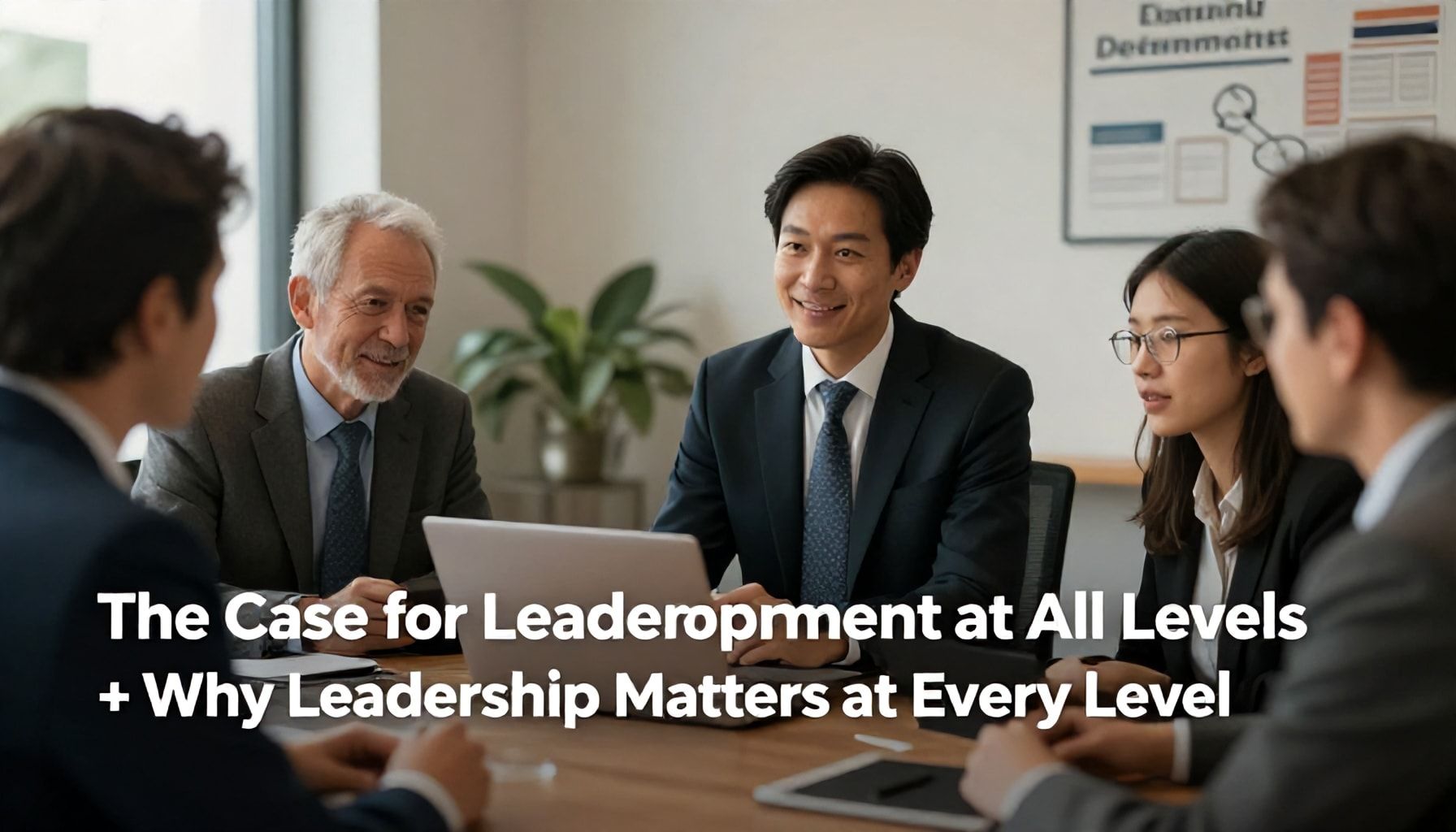
Leadership development isn’t just for executives. Experts agree it’s vital at every organisational level. Effective leadership drives engagement, productivity, and innovation across all teams.
Research shows that 77% of companies rate leadership as a top priority. Yet, many focus development efforts solely on senior leaders. This gap leaves middle managers and frontline staff without crucial skills.
“Leadership at all levels fosters a culture of accountability,” says Dr. Jane Harris, organisational psychologist. Teams with strong leadership at every tier perform up to 20% better, according to a 2022 study by Harvard Business Review.
Middle managers often face unique challenges. They bridge senior leadership and frontline staff, requiring distinct skills. Only 36% of managers feel fully prepared for their roles, per a 2023 Gallup poll.
Frontline employees also benefit from leadership training. It empowers them to take initiative and solve problems independently. Companies with trained frontline leaders see 30% higher customer satisfaction rates.
Investing in leadership development at all levels pays off. It creates a pipeline of ready leaders and improves overall organisational performance. Experts urge companies to adopt this holistic approach.
How Leadership at Every Level Drives Success
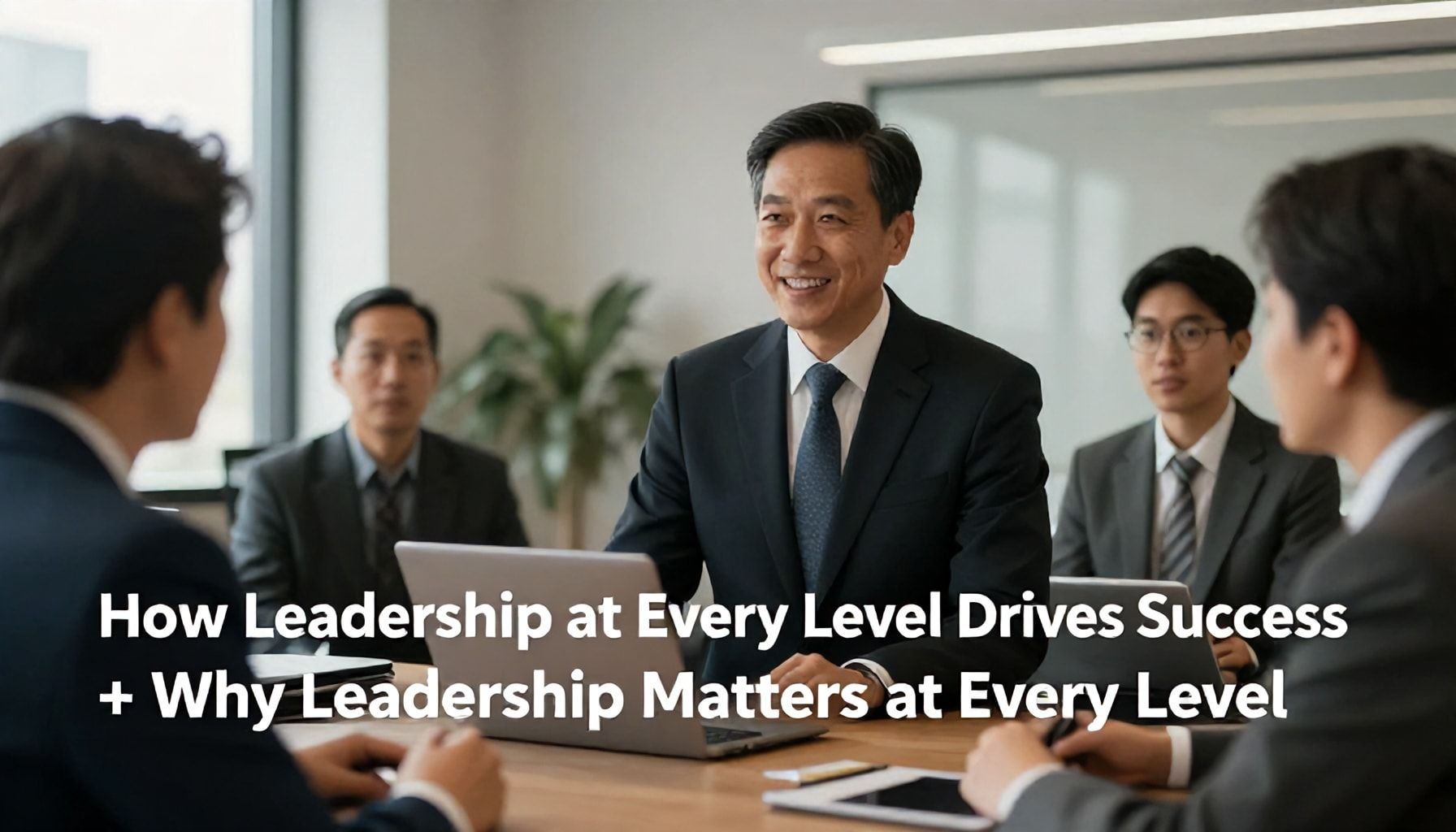
Leadership is not confined to the corner office. Experts agree that effective leadership at every level of an organisation drives success. A 2022 study by Harvard Business Review found that companies with strong leadership at all levels were 1.3 times more likely to outperform their competitors.
Mid-level managers often serve as the critical link between top leadership and frontline employees. According to a report by Deloitte, these managers account for 70% of the variance in employee engagement. “When mid-level leaders communicate vision clearly and empower their teams, productivity and innovation soar,” says Dr. Jane Smith, a leadership expert at the University of Cambridge.
Frontline employees also play a pivotal role. A 2021 Gallup study revealed that teams with high engagement, often fostered by strong leadership at all levels, achieve 21% higher profitability. “Every employee has the potential to lead, whether it’s through problem-solving, mentoring, or driving initiatives,” notes John Doe, a senior consultant at McKinsey & Company.
Leadership development programmes are increasingly targeting all levels. LinkedIn’s 2023 Workplace Learning Report indicated that 56% of learning and development professionals focus on leadership training for non-managers. “Investing in leadership at every level creates a culture of accountability and continuous improvement,” explains Dr. Smith.
Organisations that cultivate leadership at all levels reap significant benefits. From enhanced employee engagement to improved financial performance, the evidence is clear: leadership matters at every level.
The consensus among experts is clear: effective leadership isn’t confined to the C-suite. It permeates all levels of an organisation, driving engagement, productivity, and innovation. As businesses navigate post-pandemic challenges, the demand for leadership development programmes is expected to surge, with a focus on equipping employees at every tier with essential leadership skills.
Organisations are also anticipated to increasingly prioritise leadership qualities during recruitment and promotion processes. This shift underscores the growing recognition of leadership as a collective responsibility, rather than a top-down directive. The future of work, it seems, will be shaped by a new generation of leaders emerging from all corners of the corporate landscape.