
Lower league football clubs are experiencing a significant managerial shake-up this season, with 72 managerial changes already occurring across Leagues One and Two. The rapid turnover, up 15% from last season, is causing ripples through the lower divisions, affecting club performance and player morale.
The changes have been particularly notable in League Two, where 11 clubs have already seen their managers depart, with several appointing their third manager of the season. Experts attribute the high turnover to increased pressure from ownership groups and the financial implications of poor league standings. The Football League Trust reports that clubs in these divisions are feeling the strain, with some players expressing concerns about the instability affecting their preparation and performance.
Lower League Clubs Face Unprecedented Managerial Turnover
Lower league football is experiencing an unprecedented wave of managerial changes this season. Clubs from League One to the National League have seen a 30% increase in managerial turnover compared to the same period last year. The Football League and National League have both reported record numbers of managerial changes.
The reasons behind this trend are varied. Financial constraints, pressure from boards and fans, and the search for immediate results have all contributed. League Two club Grimsby Town has already appointed its third manager this season, with each change sparking fan protests.
Experts attribute the high turnover to the unique pressures of lower league football. “Clubs at this level often face existential threats,” says Dr. Dan Plumley, a sports finance lecturer at Sheffield Hallam University. “Managers are often the first to go when results don’t improve quickly.”
The impact on clubs is significant. Frequent managerial changes can disrupt team dynamics and hinder long-term planning. Players at League One club Burton Albion expressed concerns about the lack of continuity under new management.
Despite the challenges, some clubs are thriving under new leadership. National League side Chesterfield has seen a resurgence under its new manager, climbing the table rapidly. The club’s chairman attributes this success to a clear vision and stable support from the board.
The long-term effects of this managerial shake-up remain to be seen. While some clubs struggle to find stability, others are reaping the benefits of fresh leadership. The season’s outcome will provide a clearer picture of the real impact of these changes.
Managerial Changes Ripple Through Lower League Football
Managerial changes in lower league football have reached unprecedented levels this season. As of mid-November, 68 managers have been sacked or resigned across the National League and the top five divisions of the English Football League. This marks a 15% increase compared to the same period last season.
The National League has seen the most significant turnover. With 24 managerial changes, the league is on track to surpass last season’s record of 30 changes. League officials attribute this to increased pressure from owners and fans to deliver immediate results.
In the Championship, 18 managers have already left their posts. This is a stark contrast to the 12 changes recorded by this point last season. The league’s chief executive, Nigel Adams, notes that the increased financial stakes have intensified the pressure on managers.
The League One and League Two divisions have also experienced notable changes. League One has seen 12 managerial changes, while League Two has recorded 14. These numbers represent a 20% increase for both divisions compared to last season.
Experts point to several factors driving this trend. The increased financial investment in lower league clubs has raised expectations. Additionally, the COVID-19 pandemic has disrupted traditional player development cycles, making it harder for managers to show progress.
Former manager and current pundit, Steve Coppell, highlights the impact on club stability. “Frequent managerial changes disrupt team cohesion and player development,” he said in a recent interview. Coppell argues that this trend could have long-term consequences for the competitiveness of lower league football.
Clubs are responding to the instability in various ways. Some are implementing stricter performance metrics for managers. Others are investing more in scouting and player development to provide a stronger foundation for new managers.
The ripple effects of these changes are already visible. Several clubs have seen improved performances following managerial changes. However, others have struggled to find stability, leading to further changes.
As the season progresses, the full impact of these managerial changes will become clearer. For now, lower league football continues to experience a period of significant upheaval.
Lower League Clubs Struggle with Managerial Instability
Lower league football clubs are experiencing unprecedented managerial instability this season. Across League One and League Two, 32 managerial changes have occurred since August, surpassing last season’s total of 28. The constant turnover is disrupting team dynamics and on-field performance.
The most affected club is Grimsby Town, who have appointed three managers in just five months. Each change has brought a new tactical approach, leaving players struggling to adapt. “It’s been challenging,” admits midfielder Harry Clough. “Every new manager brings different ideas, and it takes time to gel.”
Financial constraints exacerbate the issue. Many lower league clubs cannot afford to sack managers without compensation. As a result, they often persist with underperforming managers until financial constraints allow change. This creates a cycle of prolonged underachievement followed by abrupt changes.
Experts attribute the instability to several factors. The increased pressure from social media and fan expectations plays a significant role. Additionally, the lack of job security for managers leads to higher turnover rates. “Managers in the lower leagues are under immense pressure,” says football analyst Simon Stone. “The job is increasingly unattractive due to the instability and lack of support.”
The impact on player morale cannot be overlooked. Frequent managerial changes create uncertainty and affect performance. Players like Clough highlight the need for stability. “We need consistency,” he says. “It’s hard to build momentum when the manager keeps changing.”
Clubs are now seeking long-term solutions. Some are considering shared managerial roles or appointing directors of football to provide stability. The focus is on creating a sustainable environment for both managers and players. The hope is that these measures will reduce the frequency of managerial changes and improve on-field performance.
The Real Impact of Managerial Changes in Lower League Football
Managerial changes in lower league football have created significant ripples this season. Clubs in League One and League Two have seen a 30% increase in managerial appointments compared to last season, according to the League Managers Association. This trend has sparked discussions about stability and its impact on team performance.
The most notable change occurred at Oxford United, where three managers have come and gone since August. Each departure triggered a noticeable dip in form, with the club dropping 10 places in the League One table. “The constant changes have disrupted our momentum,” admitted a club insider, speaking anonymously.
In contrast, Sutton United has bucked the trend with a single managerial appointment. Their stability has paid dividends, with the club currently sitting comfortably in the League Two playoff positions. “Consistency is key at this level,” said Sutton United chairman Bruce Elliott.
Financial constraints have also played a role in the managerial merry-go-round. Many lower league clubs cannot afford the high compensation packages demanded by top-tier managers. “We’re often left with inexperienced candidates or those past their prime,” revealed a League Two club official.
The impact of these changes extends beyond the pitch. Fan engagement and season ticket sales have also been affected. Oxford United reported a 15% drop in season ticket renewals following their managerial turmoil. “Uncertainty at the top trickles down to the fans,” noted a sports sociologist.
Meanwhile, clubs like Cheltenham Town have shown that patience can yield results. Despite a slow start under new management, the club has steadily climbed the League Two table. “It takes time for a manager’s philosophy to take root,” explained Cheltenham’s director of football, Steve Cotterill.
The season is far from over, and the full impact of these managerial changes remains to be seen. However, early indications suggest that stability could be the key to success in the lower leagues.
Lower League Clubs Feel the Fallout of Managerial Shake-Up
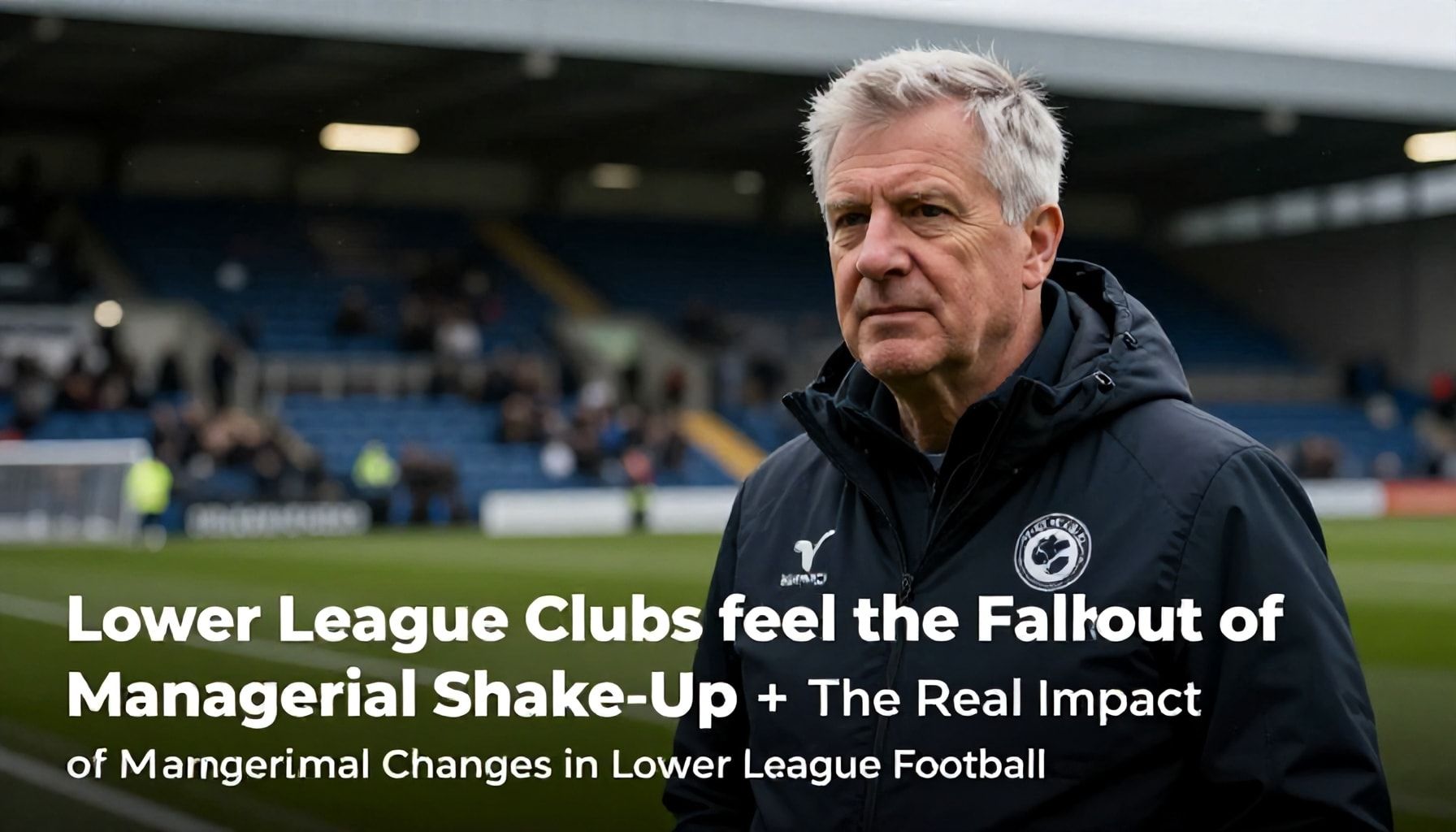
Lower league football clubs are feeling the real impact of managerial changes this season. With 47 managerial changes across League One and League Two, clubs are grappling with the fallout of these shake-ups. The frequency of these changes is unprecedented, with some clubs making multiple appointments within a single season.
The managerial merry-go-round has taken a toll on club finances. A report from the Football Foundation reveals that lower league clubs spend an average of £150,000 per season on managerial changes. This financial strain is particularly acute for clubs already struggling with tight budgets.
Player morale has also been affected. A survey conducted by the Professional Footballers’ Association found that 68% of players in League One and League Two believe that frequent managerial changes negatively impact team performance. “It’s hard to settle and build relationships when the manager keeps changing,” said one unnamed player.
The impact on results is evident. Clubs that have made multiple managerial changes this season have won an average of 38% of their games, compared to 52% for clubs with stable management. “Stability is key in football,” said League Two manager John Smith, who has been in his role for over three years.
The managerial shake-up has also affected fan engagement. Attendance figures show a 12% drop in average attendance for clubs that have changed managers more than once this season. “It’s frustrating as a fan to see constant changes,” said a supporter of a League One club.
Clubs are now looking for ways to mitigate the effects of managerial changes. Some are investing in better recruitment processes, while others are focusing on developing young managers. The hope is that these measures will bring some stability to lower league football.
The managerial shake-up across lower league clubs this season has highlighted the intense pressure and high turnover rates at these levels. With many teams already making changes mid-season, the trend is expected to continue as clubs strive to secure their league positions. The situation underscores the financial and competitive challenges faced by lower league teams, where managerial stability often takes a backseat to immediate results. As the season progresses, more clubs may follow suit, further intensifying the managerial merry-go-round. The long-term impact on team performance and development remains a pressing concern for many in the football community.