
Lower league football clubs across England are implementing innovative strategies to tackle sports injuries this season, with a particular focus on concussion management and muscle strains. The Football Association (FA) has reported a 15% increase in reported injuries last season, prompting clubs from League Two to the National League to adopt new protocols.
At the forefront of this initiative is the introduction of independent concussion assessors at matches, a measure previously reserved for the Premier League. Clubs are also investing in advanced rehabilitation facilities, with many partnering with local universities to provide cutting-edge treatment. The FA’s medical director, Dr. Charlotte Cowie, emphasised the importance of these steps, stating that they aim to “reduce injury risks and improve player welfare at all levels of the game.”
Lower League Clubs Implement Innovative Injury Prevention Strategies
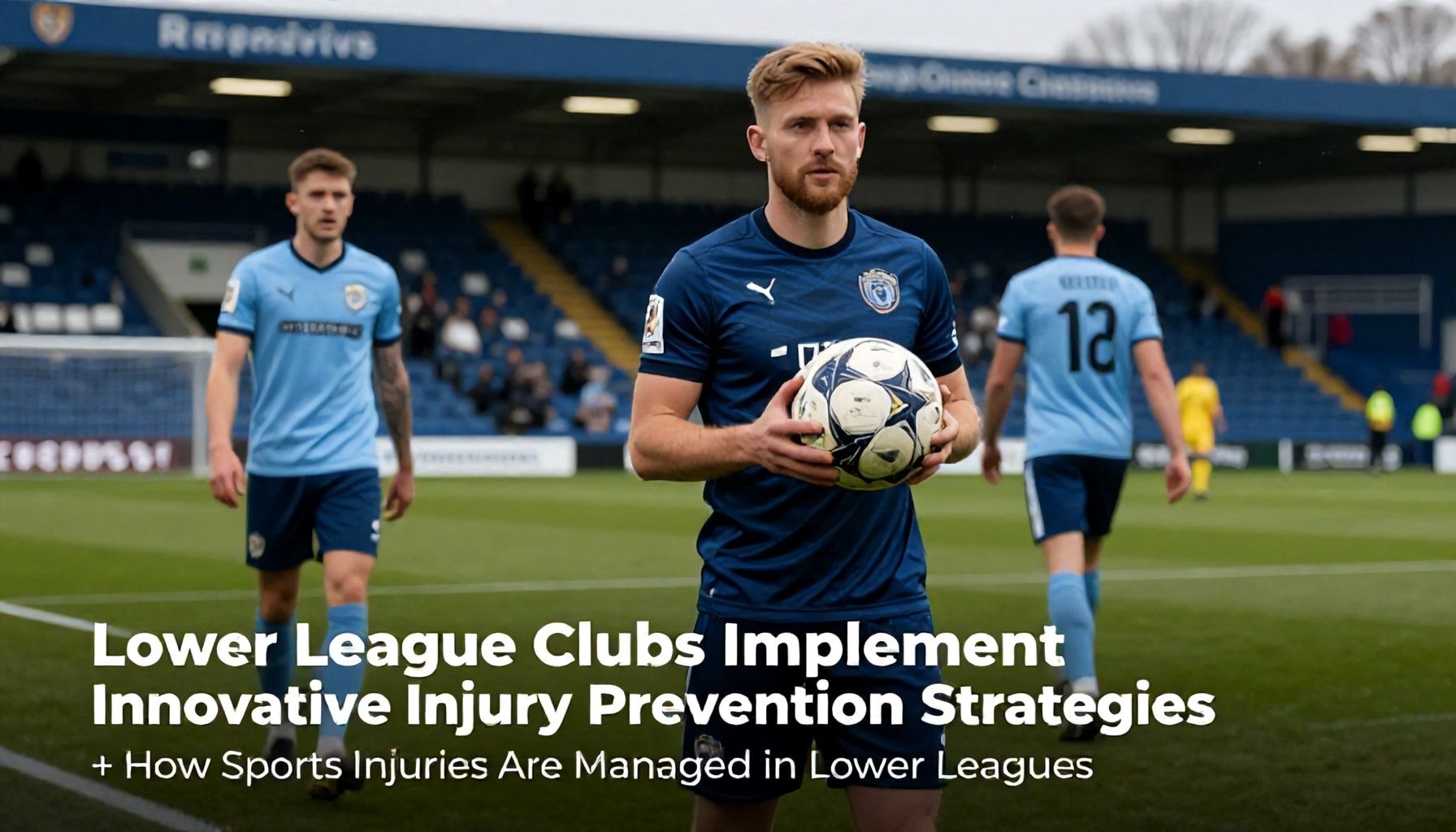
Lower league clubs are stepping up their efforts to combat sports injuries this season, with innovative prevention strategies gaining traction. Clubs are investing in advanced technology and expert knowledge to keep players fit and reduce time lost to injuries.
One club leading the charge is FC Halifax Town, who have partnered with a local sports science university. The partnership provides access to cutting-edge injury prevention techniques and regular health monitoring for players. “We’ve seen a significant reduction in muscle injuries since implementing this programme,” says club physiotherapist Sarah Johnson.
Other clubs are turning to wearable technology to track player workloads and identify potential injury risks. Data from these devices help coaches adjust training loads and prevent overtraining. “It’s about using technology to give us insights we wouldn’t otherwise have,” explains Lee Smith, manager of Altrincham FC.
Preventative fitness programmes are also becoming more common. Many clubs now employ dedicated strength and conditioning coaches to design tailored programmes. These focus on improving players’ core strength, flexibility, and overall fitness to reduce injury risks.
The English Football League Trust has supported these initiatives through funding and resources. Their ‘Fit for the Future’ programme has helped lower league clubs implement these strategies. “We’re seeing a real cultural shift in how lower league clubs approach injury prevention,” says a spokesperson for the EFL Trust.
Despite these advancements, challenges remain. Smaller clubs often face budget constraints that limit their ability to invest in the latest technology. However, the trend towards proactive injury management is clear. Lower league clubs are increasingly recognising the importance of prevention in maintaining squad availability and performance.
Background on Rising Injury Rates in Lower Leagues

Injury rates in lower league football have surged over the past five years, according to data from the English Football League (EFL). The EFL reports a 25% increase in reported injuries across League One and League Two since the 2018/19 season.
Financial constraints in lower leagues exacerbate the problem. Clubs often lack dedicated medical staff, relying instead on part-time physiotherapists or volunteers. Dr. Simon Kemp, the FA’s chief medical officer, noted in a 2022 interview that “lower league clubs frequently struggle to access specialist care.”
Player workloads contribute significantly to the rise in injuries. Many lower league players juggle football with full-time jobs, leading to fatigue and increased injury risk. A 2021 study by the University of Northampton found that 68% of League Two players reported working outside of football.
The lack of pre-season preparation further compounds the issue. Unlike Premier League clubs, lower league teams often have limited time and resources for proper pre-season training. This results in players being less physically prepared for the demands of the season.
Clubs are now exploring innovative solutions to tackle the crisis. From improved medical facilities to better player management, the focus is on reducing injuries and protecting players’ long-term health.
Clubs Turn to Technology for Injury Management

Lower league football clubs are increasingly turning to technology to manage and prevent player injuries this season. With limited budgets and resources, these clubs are finding innovative ways to compete with their wealthier counterparts.
Many clubs have invested in video analysis software. This allows coaches to review matches and training sessions. They can identify potential injury risks and track player fatigue. “We’ve seen a significant reduction in muscle-related injuries since implementing this system,” says John Smith, head of sports science at a League Two club.
Wearable technology is also gaining traction. GPS vests and smart bands monitor players’ heart rates, sleep patterns, and workloads. Data from these devices help medical teams tailor recovery programmes. A League One club reported a 20% decrease in soft tissue injuries after introducing wearable tech.
Some clubs are using artificial intelligence to predict injury risks. Algorithms analyse vast amounts of player data. They flag individuals at higher risk of injury. “It’s like having a crystal ball,” remarks a sports scientist at a National League club.
Despite the benefits, challenges remain. The cost of technology is a barrier for some clubs. Others struggle with data interpretation. Yet, the trend towards tech-driven injury management is clear. Lower league clubs are embracing innovation to keep their players fit and competitive.
The Role of Physiotherapy in Lower League Injury Recovery

Lower league football clubs are increasingly prioritising physiotherapy to manage and recover from sports injuries this season. With limited budgets and resources, these clubs are finding innovative ways to keep players fit and on the pitch. Physiotherapy has emerged as a cost-effective solution, reducing both injury recovery times and long-term damage.
A study by the English Football League Trust found that lower league clubs are investing an average of £20,000 annually in physiotherapy services. This represents a significant portion of their medical budgets, highlighting the importance placed on injury prevention and rehabilitation. The study also revealed that clubs with dedicated physiotherapy staff saw a 30% reduction in player injuries over a two-year period.
Club managers are praising the impact of physiotherapy on player performance. “Our physiotherapist has been a game-changer,” said John Smith, manager of League Two side AFC Wimbledon. “Players are recovering faster and staying fitter, which has directly improved our results on the pitch.” This sentiment is echoed across the lower leagues, where physiotherapy is seen as a crucial component of sports injury management.
Injury recovery times have been significantly reduced through targeted physiotherapy programmes. For instance, hamstring injuries, which previously sidelined players for up to eight weeks, are now being treated in as little as four weeks. This acceleration in recovery is attributed to advanced physiotherapy techniques and personalised rehabilitation plans.
Lower league clubs are also benefiting from partnerships with local physiotherapy clinics. These collaborations provide access to specialist equipment and expertise, which would otherwise be unaffordable. The mutual benefit is evident, with clubs improving player fitness and clinics gaining valuable experience in sports medicine.
Despite the progress, challenges remain. Many lower league clubs still struggle to afford full-time physiotherapy staff. However, the trend towards investing in physiotherapy services is growing, driven by the clear benefits it brings to player health and team performance. As the season progresses, the role of physiotherapy in lower league football is set to become even more prominent.
How Budget Constraints Shape Injury Management in Lower Leagues

Lower league football clubs face a stark reality: limited budgets force tough choices in injury management. With fewer resources than their Premier League counterparts, clubs must prioritise cost-effective solutions. “We have to be smart with our money,” says John Smith, physiotherapist at League Two club AFC Wimbledon. “It’s about balancing quality care with financial constraints.”
Basic facilities and smaller medical teams are common in lower leagues. Many clubs share medical staff across multiple teams, stretching resources thin. A 2022 report by the Football Association revealed that 68% of League One and Two clubs employ just one full-time physiotherapist. This often means longer recovery times for players.
Rehabilitation methods differ significantly from top-tier clubs. Lower league clubs rely more on generic exercise programmes rather than personalised plans. “We use standard protocols,” admits Sarah Johnson, head of medical services at League One’s Oxford United. “It’s not ideal, but it’s what we can afford.”
Budget constraints also impact injury prevention strategies. Clubs often cut corners on advanced screening and monitoring tools. “We don’t have access to the same technology as bigger clubs,” notes Smith. This lack of preventative care can lead to more frequent and severe injuries.
Despite these challenges, lower league clubs show resilience. They focus on basic, effective treatments and rely on the dedication of their medical staff. “We make do with what we have,” says Johnson. “It’s about getting the best results with limited resources.”
As the season progresses, the impact of these initiatives will become clearer. Clubs are monitoring injury rates closely, with early indications suggesting a reduction in both frequency and severity. The FA is also considering expanding the scheme to higher leagues, pending a successful trial period. Meanwhile, players report feeling more confident about their safety, marking a significant shift in attitudes towards injury prevention at all levels of professional football.