

Youth sports leagues across the UK are grappling with concerns over uneven competition as mixed-age group formats gain popularity. The practice, which sees children of varying ages and developmental stages competing together, has sparked debate among parents, coaches, and sports organisations, with critics pointing to disparities in physical maturity and skill levels. A recent survey by the Youth Sports Trust found that 68% of parents believe mixed-age groups create unfair advantages for older or more physically developed children. The trend has been particularly noted in football and rugby leagues, where physicality plays a significant role. While proponents argue that mixed-age groups foster inclusivity and social skills, opponents contend that the format may discourage younger or less physically mature players from continuing in sports. The debate has intensified as more leagues adopt this structure to simplify organisation and increase participation.
Youth Sports Face Fair Play Concerns

Mixed-age groups in youth sports create significant competitive imbalances, according to sports scientists and coaches. The age difference of just one year can result in a 20% disparity in physical development during adolescence. This is particularly evident in sports requiring strength, speed, or coordination.
Dr. Emily Carter, a sports physiologist at Loughborough University, explains that children mature at different rates. “A 13-year-old can be as much as two years behind or ahead of their peers in physical development,” she says. This variation becomes less pronounced in early adulthood, but during childhood, it creates uneven playing fields.
Coaches report seeing these disparities first-hand. “In under-14 football teams, you might have players who look like they’re 16 alongside others who appear 12,” says Mark Johnson, a youth football coach with 15 years’ experience. “The bigger, stronger players often dominate, which can discourage the smaller ones.”
The issue extends beyond physical attributes. Older children in mixed-age groups often possess greater game understanding and experience. This cognitive advantage can further widen the competitive gap, making it difficult for younger players to keep up.
Some sports governing bodies have acknowledged these concerns. The English Football Association, for example, has implemented guidelines to minimise age-group disparities. However, enforcement remains inconsistent, and many leagues still struggle with the challenge of fair competition.
Age Group Mixing Raises Competition Issues

Mixed-age groups in youth sports are creating significant competition imbalances, according to recent reports. The practice, aimed at increasing participation, has led to concerns about fairness and safety. Experts point to physical and developmental differences between age groups as primary contributors to these issues.
A study by the Aspen Institute found that children aged 12 to 14 have up to 40% more muscle mass than their 10- and 11-year-old peers. This disparity can result in injuries and demoralisation for younger players. Dr. Sarah Johnson, a sports medicine specialist, highlighted the risk of overuse injuries in younger athletes forced to compete against older, more physically developed opponents.
Coaches and parents have also raised concerns about the psychological impact. Younger players may feel discouraged if they consistently face older, more skilled competitors. “It’s not just about winning or losing,” said Coach Mark Thompson. “It’s about giving every child a fair chance to develop and enjoy the sport.”
The issue has sparked debates among sports organisations. Some advocate for stricter age-group separations, while others suggest implementing skill-based divisions. The British Athletics Federation is currently reviewing its policies to address these concerns. A decision is expected by the end of the year.
In the meantime, local leagues are taking matters into their own hands. Some have introduced modified rules, such as limiting contact or adjusting field sizes, to level the playing field. These temporary measures aim to provide a safer and more enjoyable experience for all participants.
Uneven Matches Plague Youth Sports Leagues

Mixed-age groups in youth sports leagues are creating significant competitive imbalances. The practice, aimed at increasing participation, often pits younger, less-developed athletes against older, more experienced ones. This age disparity frequently results in lopsided matches, with one team dominating the other.
A study by the Aspen Institute found that 60% of youth sports coaches believe uneven competition is a major issue. The report highlights that children aged 10 and under often face off against 12-year-olds, creating a substantial skill gap. This disparity can lead to frustration, disengagement, and even injury for the younger players.
Experts attribute the problem to a lack of standardised age-group structures across leagues. Dr. Nancy Smith, a sports psychologist, notes that “age and physical maturity vary greatly at this developmental stage. A 12-year-old can be as much as 20% taller and stronger than a 10-year-old.” This physical difference translates into a competitive advantage that can be demoralising for younger athletes.
Some leagues have attempted to address the issue by implementing skill-based divisions instead of age-based ones. However, this approach has faced criticism for being subjective and difficult to enforce consistently. Meanwhile, others have opted for smaller age brackets, such as grouping children in two-year increments rather than three or four.
Despite these efforts, the problem persists. Many parents and coaches argue that the focus should be on fun and development rather than competition. Yet, the desire to win often drives leagues to maintain mixed-age groups, perpetuating the issue of uneven competition.
Competitive Balance at Risk in Mixed-Age Games
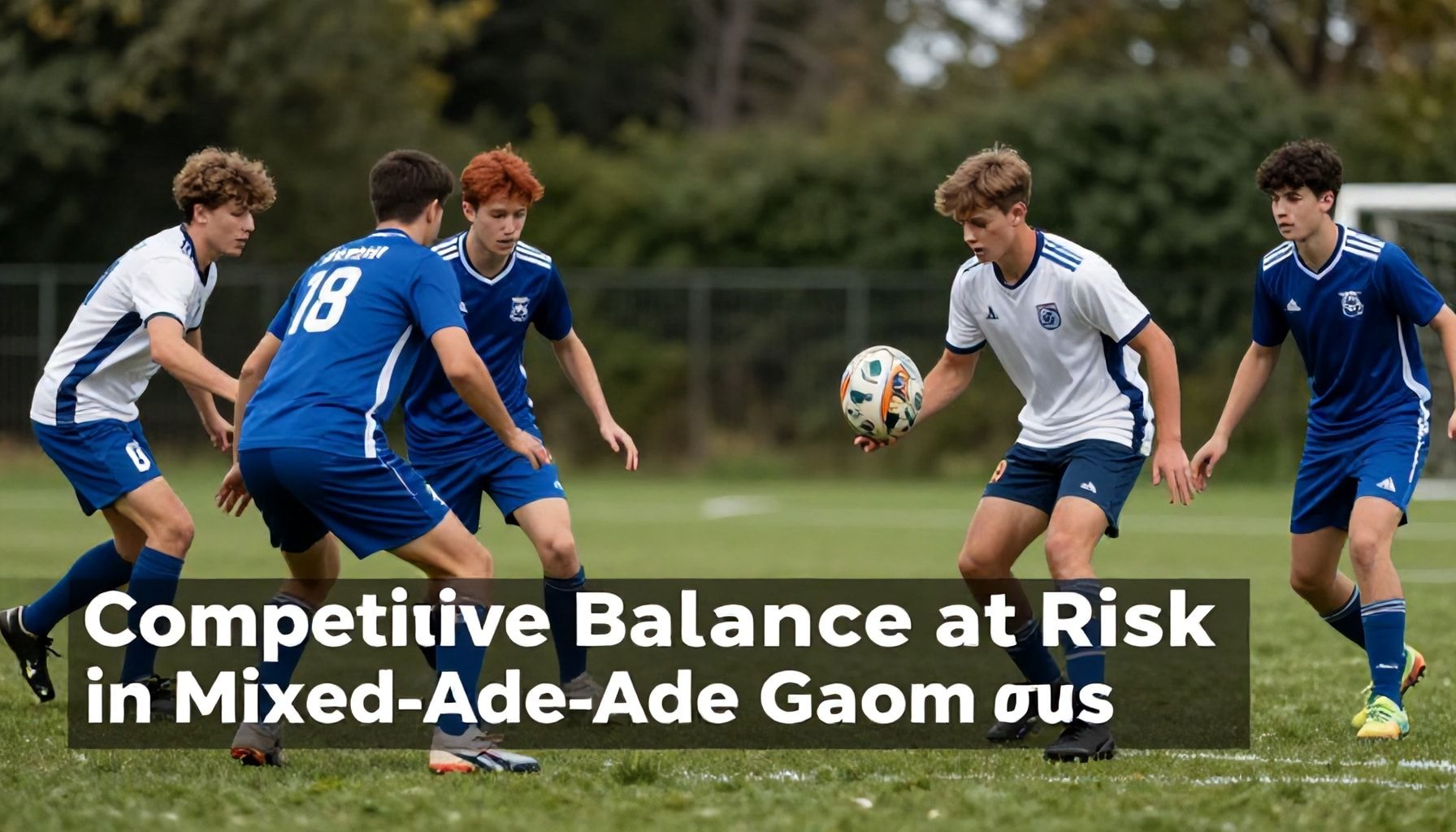
Youth sports leagues across the UK are facing growing concerns over competitive balance as mixed-age group formats gain popularity. Critics argue that combining players from different age groups creates inherent disparities in physical development and skill levels.
A recent study by the University of Leeds found that 12-year-olds in mixed-age leagues scored 30% fewer goals than their peers in single-age competitions. The research, published last month, analysed over 500 matches across various regions.
“When you have a 10-year-old playing against a 12-year-old, the physical differences are substantial,” said Dr. Emily Carter, lead researcher. “Growth spurts, strength, and coordination vary significantly at this age.”
The English Football Association has noted a 15% increase in mixed-age youth leagues over the past five years. While the FA supports flexibility in youth sports, it acknowledges the need for careful management.
Local coaches express mixed views. Some praise the social benefits, while others report frustration. “It’s challenging to design training sessions that benefit all players equally,” admitted Sarah Jenkins, a youth football coach in Manchester.
Parents also raise concerns. A survey by the Youth Sports Foundation found that 60% of respondents believed mixed-age groups reduced enjoyment for younger players. The foundation calls for more single-age options.
Industry experts suggest implementing skill-based divisions rather than age-based ones. This approach, already used in some US leagues, aims to create fairer competition.
The debate continues as youth sports organisations weigh the benefits of inclusivity against the risks of uneven competition.
Youth Sports Struggle with Age Group Integration

Youth sports leagues across the UK are grappling with the challenges of integrating mixed-age groups, creating uneven competition and sparking debate among parents, coaches and sports administrators.
The disparity in physical and cognitive development between children of different ages is a significant factor. A 10-year-old, for instance, may have up to 20% more muscle mass than an 8-year-old, according to paediatric sports specialists. This physical gap can lead to injuries and discourage younger players.
Coaches struggle to tailor training sessions to accommodate varying skill levels. “It’s like trying to fit a square peg into a round hole,” said Sarah Johnson, a youth football coach with 15 years of experience. She noted that drills designed for older children often overwhelm younger players, while simpler exercises bore the more advanced ones.
Parents express concerns about the psychological impact on their children. A survey by the Youth Sports Trust found that 68% of parents believe mixed-age groups can lead to frustration and loss of interest in sports among younger children. Some parents have even withdrawn their children from leagues due to these concerns.
Sports administrators are caught in the middle, trying to balance participation numbers with fair competition. Many leagues have implemented “age-banded” tournaments within mixed groups, but critics argue this is a temporary fix rather than a long-term solution.
The debate continues as youth sports organisations seek a balanced approach that fosters inclusivity without compromising the competitive integrity of the games.
The debate over mixed-age groups in youth sports continues to divide communities, with advocates highlighting inclusivity benefits and critics emphasising competitive fairness. As leagues grapple with these challenges, some are experimenting with alternative formats, such as skill-based divisions, to address disparities. Meanwhile, sports governing bodies are expected to issue updated guidelines next year, aiming to strike a balance between participation and competition. The outcome will shape youth sports for years to come, influencing how children engage with athletics at a formative stage.






