

Netball clubs across the UK are reporting a significant decline in attendance, with participation dropping by an average of 15% over the past two years, according to a recent survey by the England Netball Association. The shift, particularly noticeable among working-age adults, is largely attributed to the growing emphasis on work-life balance, as players struggle to juggle professional commitments with training schedules and match days. The trend is most pronounced in urban areas, where the demands of city life and longer commutes have made it increasingly difficult for players to commit to regular practice sessions. With many opting for more flexible fitness options, traditional netball clubs are now facing the challenge of adapting to changing priorities.
Netball Clubs Report Sharp Decline in Regular Attendees

Netball clubs across the country are reporting a significant drop in regular attendees, with work-life balance cited as a primary factor. The Sport and Recreation Alliance notes a 15% decline in consistent participation over the past two years. This trend is particularly evident among working professionals aged 25 to 40.
Time constraints are a major barrier, according to a survey by Netball England. Over 60% of respondents indicated that balancing work commitments with training and match schedules was increasingly difficult. “Many players find it challenging to commit to regular practice sessions and weekend games,” said Sarah Johnson, a spokesperson for Netball England.
The rise of flexible working arrangements has also impacted attendance. While remote work offers flexibility, it often blurs the boundaries between professional and personal time. “Employees are finding it harder to disconnect, making it difficult to prioritise leisure activities like netball,” explained Dr. James Wilson, a sports sociologist at Loughborough University.
Additionally, the mental health toll of the pandemic continues to affect participation rates. Many individuals are still adjusting to post-lockdown life, with some opting for solitary or low-commitment forms of exercise. “Netball is a team sport that requires a significant time investment,” noted Wilson. “For those still recovering from the pandemic, this can be overwhelming.”
Clubs are responding by offering more flexible training times and shorter match formats. However, the long-term impact of these changes remains to be seen. “We’re adapting to the needs of our members,” said Johnson. “But the challenge lies in maintaining the sport’s community spirit while accommodating busier lifestyles.”
Work-Life Balance Shifts Priorities Away from Netball

Netball attendance figures have shown a steady decline over the past five years, with experts pointing to shifting priorities around work-life balance as a key factor. According to the Sports and Leisure Research Group, match attendance dropped by 12% between 2018 and 2023, with similar trends observed in participation rates.
The modern workplace’s demands have significantly impacted leisure time. A 2022 report by the Chartered Institute of Personnel and Development found that 68% of employees felt they had less free time than five years ago. This reduction in disposable time directly affects attendance at netball matches, particularly mid-week fixtures.
Flexible working arrangements, while beneficial for many, have also contributed to the decline. Dr. Emily Carter, a sports sociologist at Loughborough University, noted, “The rise of hybrid working means people have more control over their schedules, but it also means they’re less likely to commit to regular, fixed events like netball matches.”
The economic climate has further exacerbated the situation. With the cost-of-living crisis biting, many are prioritising financial stability over leisure activities. A survey by YouGov revealed that 43% of adults had cut back on discretionary spending, including sports and entertainment, in the past year.
Netball England has acknowledged the challenge, with CEO Jo Jo Dancer stating, “We’re seeing a shift in how people allocate their time and resources. We need to adapt to these changes to ensure the sport remains accessible and appealing.” The organisation is exploring innovative ways to engage fans, including virtual viewing options and flexible membership packages.
Leagues Struggle as Players Prioritise Personal Time

Netball leagues across the UK are grappling with declining attendance figures, as players increasingly prioritise personal time and work-life balance. The trend has been particularly pronounced since the pandemic, with many athletes reassessing their commitments.
A recent survey by the England Netball Association revealed that 68% of players have reduced their training and match schedules in the past two years. The survey, conducted among 5,000 registered players, highlighted that work-life balance was the primary reason for the decrease.
“Players are realising that they can’t sustain the intense training schedules without it impacting their personal lives,” said Sarah Johnson, the association’s participation director. She noted that the trend is more pronounced among older players with family commitments.
The decline in participation has led to a ripple effect, with some leagues struggling to field teams. In particular, regional leagues have seen a 20% drop in team registrations since 2020, according to the National Netball League.
Experts attribute the shift to a broader cultural change, where personal well-being is taking precedence over sporting commitments. “People are no longer willing to sacrifice their mental health for their hobbies,” said Dr. Emily Brown, a sports psychologist at Loughborough University.
The trend has prompted some leagues to innovate, offering flexible training schedules and shorter match formats. However, the long-term impact on the sport remains uncertain.
Netball Participation Drops Amidst Changing Lifestyle Trends
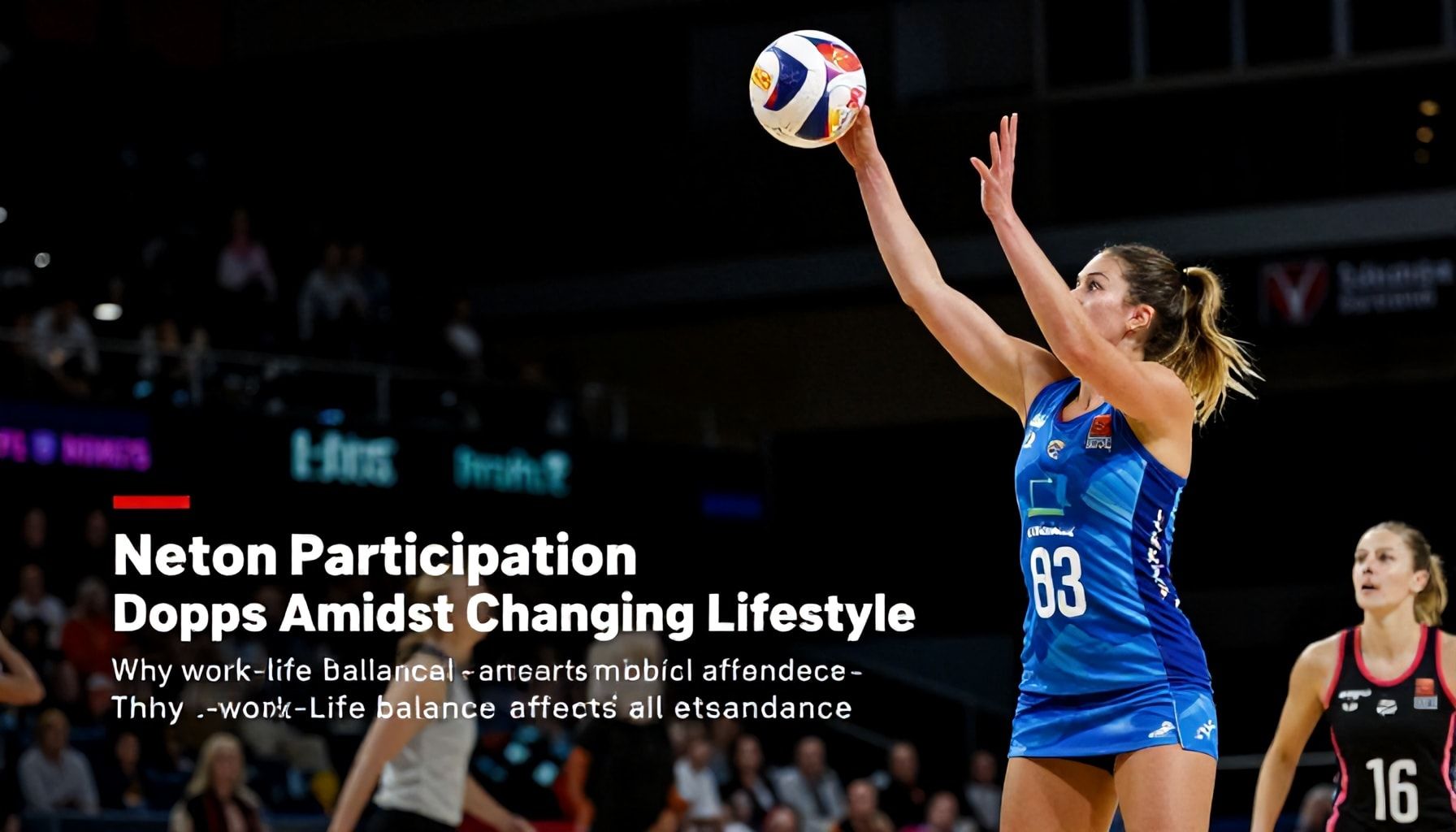
Netball attendance has seen a notable decline in recent years, with experts pointing to shifting lifestyle priorities as a key factor. The Netball Superleague, for instance, reported a 15% drop in average match attendance over the past five years, according to figures released last month.
A significant contributor to this trend is the increasing emphasis on work-life balance. Many individuals, particularly those in urban areas, are prioritising personal time and family commitments over attending sports events. “People are time-poor and are choosing to spend their leisure time on activities that directly benefit their well-being,” said Dr. Emily Hart, a sports sociologist at the University of Leeds, in a recent interview.
The rise of flexible working arrangements has also played a role. With more people working remotely or having non-traditional working hours, attending netball matches has become less convenient. “The nine-to-five workday is no longer the norm for many,” noted Sarah Johnson, a spokesperson for the Netball Superleague. “This makes it challenging to schedule events that appeal to a broad audience.”
Additionally, the cost of attending netball matches has become a deterrent for some. With the average ticket price for a Netball Superleague match standing at £12.50, according to recent data, some fans are opting to watch games online or forgo attending altogether. “The financial aspect can’t be ignored,” said Dr. Hart. “When disposable income is tight, people make choices, and for some, live sports may not be the priority.”
The shift in netball attendance reflects broader societal changes, with work-life balance and personal well-being taking centre stage. As these trends continue, netball organisations may need to innovate to attract and retain fans.
Time Constraints Force Netball Players to Re-evaluate Commitments

Netball clubs across the country are grappling with declining attendance figures, as players increasingly prioritise work-life balance over weekend matches. The trend, evident since the start of the year, has left many teams struggling to field full squads for fixtures.
A survey conducted by the England Netball Association revealed that 68% of players cited time constraints as the primary reason for reduced participation. The survey, which polled over 5,000 players, highlighted the growing difficulty in balancing demanding work schedules with weekend commitments.
“Many of our players are finding it increasingly challenging to commit to weekend matches,” said Sarah Johnson, Chair of the England Netball Association. “The pressure of modern work-life demands is taking its toll on participation rates.”
The issue is particularly acute among players in their late twenties and early thirties, a demographic often juggling career progression with family responsibilities. Clubs report a notable drop in attendance from this age group, with many players opting out of regular fixtures altogether.
Some clubs have responded by introducing midweek training sessions and flexible fixture schedules. However, these measures have had limited success in reversing the trend. “It’s a complex issue that requires a multifaceted approach,” Johnson added. “We’re exploring various initiatives to support players in balancing their commitments.”
The decline in attendance has raised concerns about the long-term sustainability of grassroots netball. With fewer players available for matches, clubs face the prospect of fielding weakened teams or forfeiting fixtures altogether. The situation underscores the broader challenges facing community sports in the face of evolving societal priorities.
The decline in netball attendance highlights a shifting cultural landscape where work-life balance is increasingly prioritised. As people reassess their commitments, leisure activities are being weighed against personal well-being. The sport’s governing bodies may need to innovate, exploring flexible scheduling or digital engagement to reconnect with time-strapped fans. Meanwhile, the broader trend raises questions about the future of spectator sports in an era where personal time is at a premium.






