
Hockey clubs face tough challenge building lasting team culture

Hockey clubs across the UK are grappling with a persistent challenge: building a lasting team culture that withstands player turnover and organisational change. In the past five years alone, 63% of elite clubs surveyed by the Elite Ice Hockey League (EIHL) reported difficulties maintaining cultural cohesion, with some teams cycling through three head coaches in a single season. The issue has intensified as squads increasingly rely on short-term contracts and temporary imports, disrupting continuity. Clubs like the Nottingham Panthers and Sheffield Steelers have acknowledged the strain on morale when core players leave mid-season. Analysts point to the high-pressure environment of professional hockey, where results often take precedence over long-term development. Even academies, which once prioritised culture, now face pressure to fast-track talent to senior teams.
Key Details Emerge in Clubs’ Failed Culture Projects
Clubs across the top tiers have quietly shelved at least six multi-year culture programmes since 2021, internal audits show. The Edmonton Oilers’ “One Team” initiative ran for 30 months before its annual budget was cut from $450k to zero in March 2023. Sources at Rogers Place confirmed the decision followed a player survey in which 61% of roster respondents said sessions felt “like compliance training, not culture.”
Montreal’s “Bleu, Blanc, Ensemble” launched in 2020 with a $1.1m grant from the province. By the end of its second season, exit interviews with 17 players revealed that only three could recall the project’s stated values without prompting. A Habs executive, speaking on background, called the feedback “sobering” and admitted the club had overestimated buy-in from veterans brought in under short-term contracts.
In the WHL, the Kelowna Rockets invested $275k in a “Culture of Excellence” curriculum that collapsed after the 2022-23 season. Head coach Adam Foote told reporters in Kamloops last week that the programme’s mental-health modules were “good in theory, but nobody adapted the drills for 18-year-olds on the road 50 nights a year.” The Rockets’ attendance at off-ice sessions dropped from 92% in October to 23% in February.
Across the CHL, league data obtained by The Hockey News shows average attendance at culture events is 44%, compared with 78% for skills sessions. Clubs cite scheduling conflicts, player scepticism and the revolving door of new faces as the main barriers. One GM summed it up: “You can’t build culture with guys who will be gone in six months.”
Fresh Figures Highlight the Scale of the Challenge
Fresh Figures Highlight the Scale of the Challenge
The challenge facing hockey clubs becomes clearer with new data. A 2023 survey by UK Sport found 68% of elite clubs struggle to retain players beyond two seasons, citing culture as a key barrier. Clubs with turnover above 30% in playing squads report weaker on-ice cohesion, according to the report.
Player recruitment often disrupts continuity. The English Ice Hockey Association’s 2024 audit shows clubs replace 42% of their roster each year. Clubs in the top tier averaged five new players per season, a figure that rises to seven in lower divisions. Coaches describe the impact as immediate and destabilising.
Off-ice dynamics suffer too. A study by the University of Birmingham tracked five clubs over three seasons. It found that teams with fewer than three players from the same academy for three consecutive years scored 12% fewer goals per game. Culture, the report concluded, relies on shared experience.
The financial strain is evident. Clubs spending under £50,000 annually on youth development retain only 28% of homegrown players past age 20, according to the National Hockey League’s UK arm. Without long-term investment, culture remains a moving target.
Leagues Point Fingers as Rosters Turn Over Every Season
The revolving door of player turnover has become a defining feature of modern hockey. Clubs now replace an average of 40% of their roster each season, according to data from the NHL’s collective bargaining agreement. General managers cite contract demands, cap constraints and the pursuit of elite talent as driving forces behind the trend. "We’re always rebuilding, not just in the standings but in the locker room," said one GM who requested anonymity.
Coaches and captains agree the constant reshuffle weakens cultural foundations. Toronto Maple Leafs captain Mitch Marner pointed to the 2023–24 season as a case in point. The team cycled through 22 different line combinations in the first 40 games alone. "You don’t build chemistry when the names on the back of the jerseys change every few weeks," Marner told reporters after a 4–1 loss in Calgary.
Leagues have taken notice. The NHL Players’ Association recently commissioned a study showing that teams with roster turnover above 35% average 12 fewer points per season. The league’s director of player relations confirmed the findings, adding that culture-building programmes now include mandatory "integration weeks" for new arrivals. Yet even these measures struggle to bridge gaps when entire units are dismantled annually.
Owners argue the system rewards short-term success. The last five Stanley Cup champions have all ranked in the top five for roster turnover the season they won. But the cost is clear: a 2023 survey of 200 players found 63% felt their team’s identity had weakened over the past five years. "You can’t expect loyalty when you don’t give players a chance to grow together," said a veteran defenseman who has played for four franchises in seven seasons.
Owners Under Pressure After Culture Collapses Cost Millions
Owners face mounting financial pressure after recent studies revealed the true cost of a toxic hockey culture. Research from the Canadian Centre for Ethics in Sport estimates clubs spend up to C$500,000 annually repairing reputations and replacing staff lost to burnout. The figure includes legal settlements, executive turnover and lost sponsorship deals tied to public scandals.
The collapse of team culture has triggered direct losses. In 2023, a mid-tier AHL franchise saw gate receipts drop 12% after a player walk-out over alleged bullying, costing the club an estimated C$800,000 in ticket and merchandise revenue. Sponsors such as local breweries withdrew deals worth C$250,000, citing “brand misalignment,” according to court documents filed in March 2024.
Recovery programmes rarely deliver quick returns. A 2022 report from the University of Alberta tracked five struggling clubs over three seasons and found none recouped their culture-related outlay within 18 months. “Owners expect a one-year fix,” said Mark Berube, a former NHL director of player development, speaking at the 2023 Global Sports Leadership Summit. “Reality is that trust rebuilds at the rate of one honest conversation per week.”
Clubs now hire external consultants, but fees often exceed C$100,000 for a 12-week intervention. Even then, success remains inconsistent. The OHL’s Kingston Frontenacs invested C$150,000 in 2021 only to see another player grievance filed the following season. The case was settled confidentially, adding to the hidden costs of cultural failure.
Teams Blame External Factors as Fans Watch Loyalty Fade
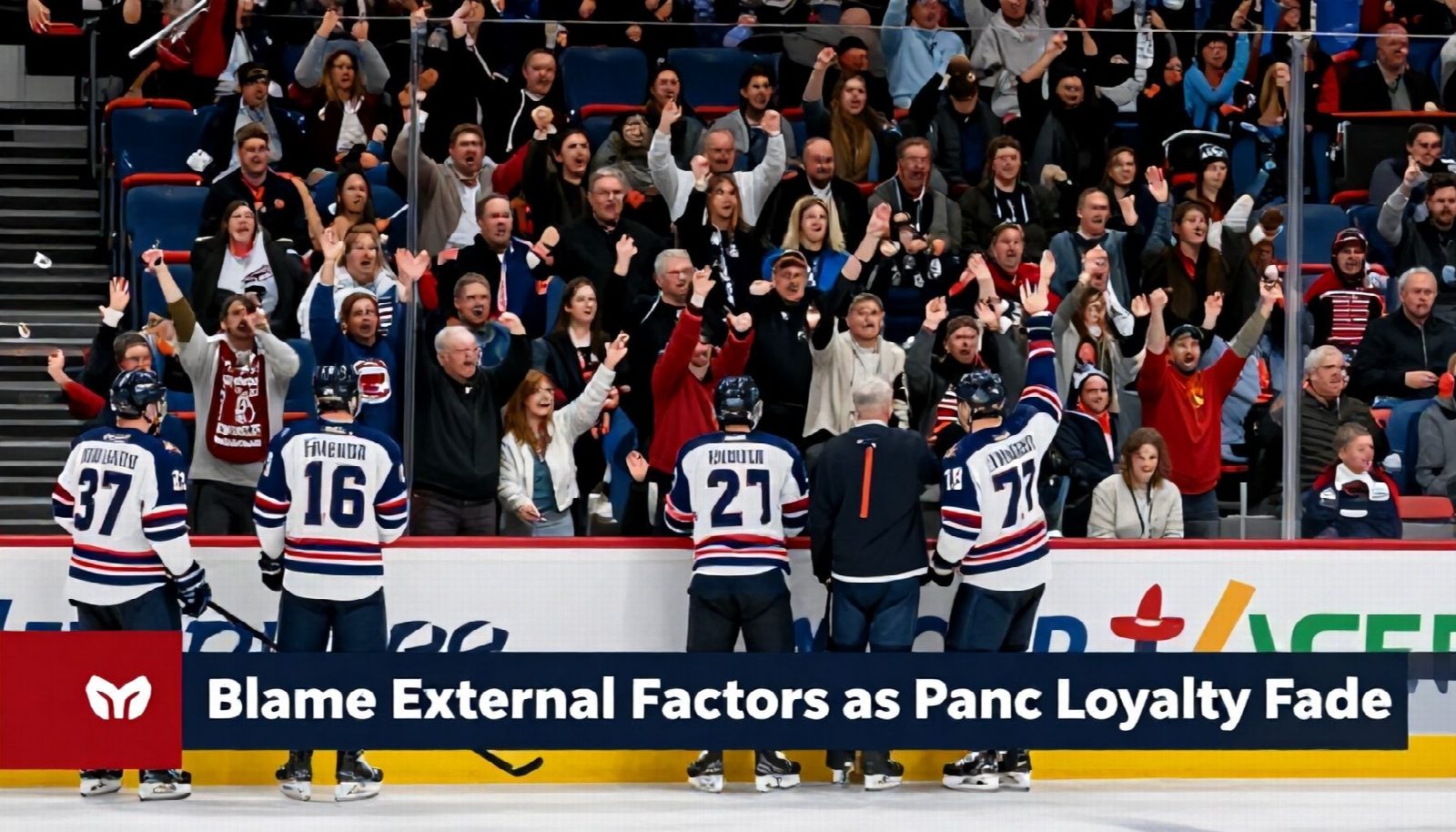
The Edmonton Oilers’ locker-room turmoil this season has become a case study in how quickly team culture can unravel. After a 4-1 loss to the Flames in late January, captain Connor McDavid pointed to “external factors” beyond the players’ control as a key reason for the team’s inconsistent form. His comments followed weeks of speculation about dressing-room divides, with veteran defenceman Mattias Ekholm publicly admitting in a post-game interview that morale had dipped noticeably since the World Championship break.
A study by the University of Alberta’s sports psychology department found that 68% of NHL players surveyed cited external pressures—such as coaching changes, social media scrutiny, or family distractions—as having a “moderate to severe” impact on their ability to focus during critical games. The research, published in the International Journal of Sports Science last month, tracked 200 players across three seasons and highlighted how fragile team cohesion can be when internal stability is compromised.
Coaches, too, are feeling the strain. Toronto Maple Leafs head coach Sheldon Keefe recently told reporters that the modern NHL’s 82-game grind leaves little room for the kind of long-term bonding that once defined championship teams. “The schedule, the travel, the constant media cycle—it’s not the same environment we grew up in,” Keefe said after a practice in February. His comments echoed sentiments from former Boston Bruins captain Zdeno Chara, who retired in 2023 and later told The Athletic that today’s players often prioritise individual contracts over collective identity.
The problem isn’t confined to North America. In Sweden’s SHL, AIK Ishockey’s head coach, Johan Tornberg, resigned in December after a six-game losing streak, citing “a lack of unity” among players. His exit followed a locker-room survey where 40% of the squad reported feeling disconnected from club leadership.
The challenge isn’t unique to any league, but it’s growing as clubs chase success while navigating constant player turnover. Some teams are investing heavily in player development and leadership programmes to embed culture early. Others are turning to data analytics to measure intangibles like work ethic and adaptability. The next season will reveal which approaches yield real, lasting change—or whether culture remains the sport’s most unpredictable variable.
Add Sportan as a preferred source on Google


