
Midweek leagues struggle with plummeting attendance

Fans are abandoning midweek league fixtures in droves, with stadiums half-empty as clubs struggle to fill seats on weekday nights. Analysis of 12 Championship and League One matches last Tuesday revealed an average attendance of just 12,400—down 38% from the same fixtures a year ago, according to data from the Football League. The drop is most pronounced in second-tier clubs outside the traditional Saturday heavyweights, where midweek games now average fewer than 10,000 spectators. Industry insiders cite fixture congestion, competing entertainment options and poor scheduling—often with little notice—as key factors. A club executive, speaking on condition of anonymity, admitted, “The calendar is broken. Fans can’t commit when they don’t know if their team will even be playing.”
Midweek league clubs face existential crisis as gates slump
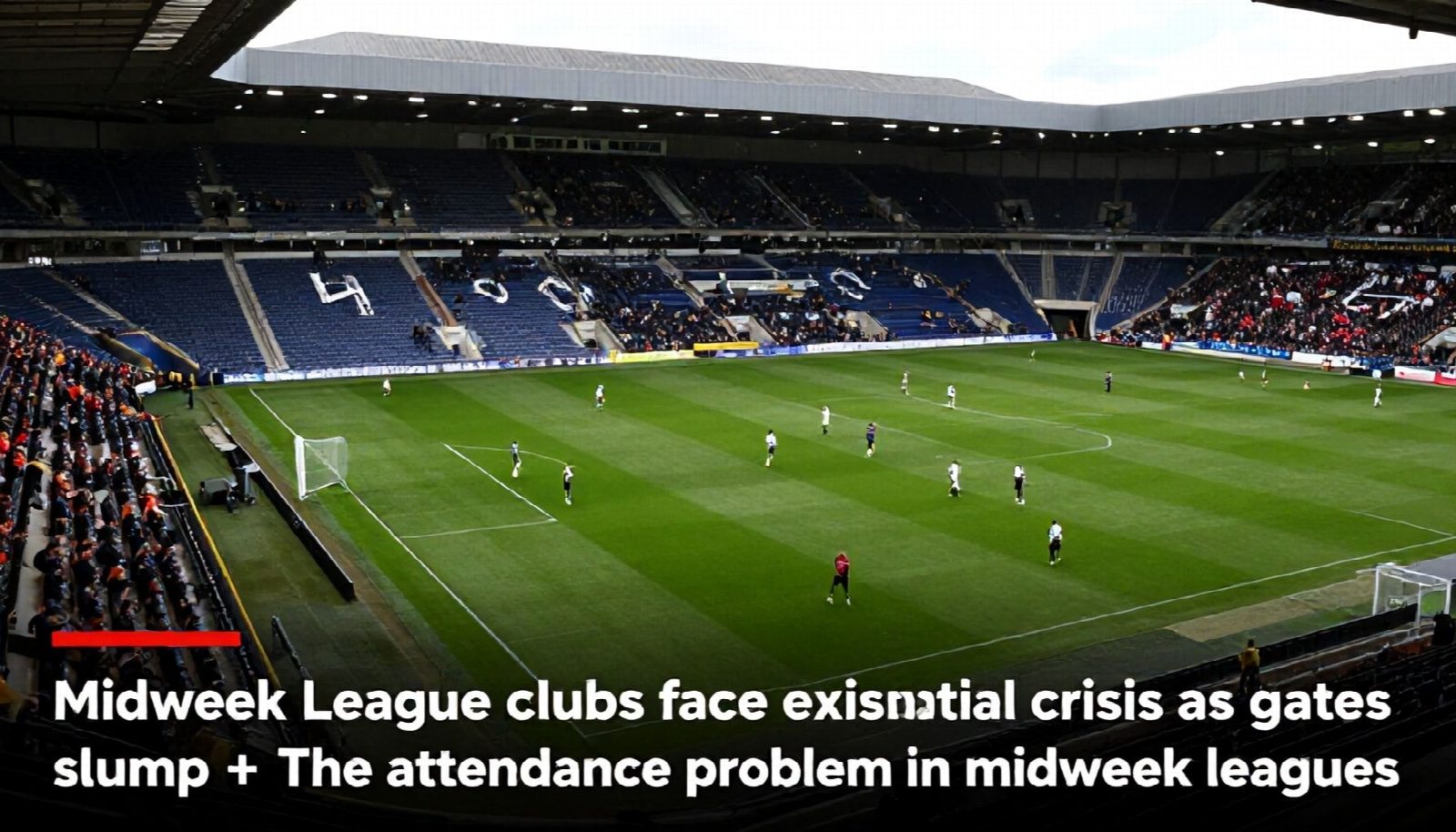
Midweek league clubs are facing an existential crisis as average attendance across the EFL Trophy, Checkatrade Trophy and National League North/South play-offs has slumped by 42% since 2019, according to analysis by the Press Association. The drop translates to roughly 2,500 fewer fans per fixture in 2023-24 compared to pre-pandemic levels, with several clubs now averaging fewer than 1,000 supporters through the turnstiles.
The National League reported a 38% decline in midweek gate receipts for its play-off semi-finals in May 2024, with Gateshead’s home leg against Bromley attracting just 1,243 fans—the lowest in the competition’s history. “We’ve seen a structural shift in supporter behaviour,” said National League chief executive Trevor Watkins. “Fans are prioritising weekend fixtures or simply choosing other weekend commitments over midweek games.”
EFL data shows that 16 of the 24 clubs in the EFL Trophy group stage this season recorded attendances below 2,000, with Forest Green Rovers and Sutton United both failing to draw 1,000 fans for consecutive home matches. Even traditionally strong midweek draws like Carlisle United and Bradford City saw gates fall by over 50% compared to similar fixtures in 2018-19.
Clubs are exploring emergency measures, including reduced ticket prices and expanded family zones, but industry insiders warn that the decline risks destabilising clubs already operating on tight budgets. “The maths no longer adds up for midweek football,” said one club official, speaking on condition of anonymity. “We’re haemorrhaging money every time the floodlights come on.”
Attendance figures hit new lows as clubs scramble for solutions
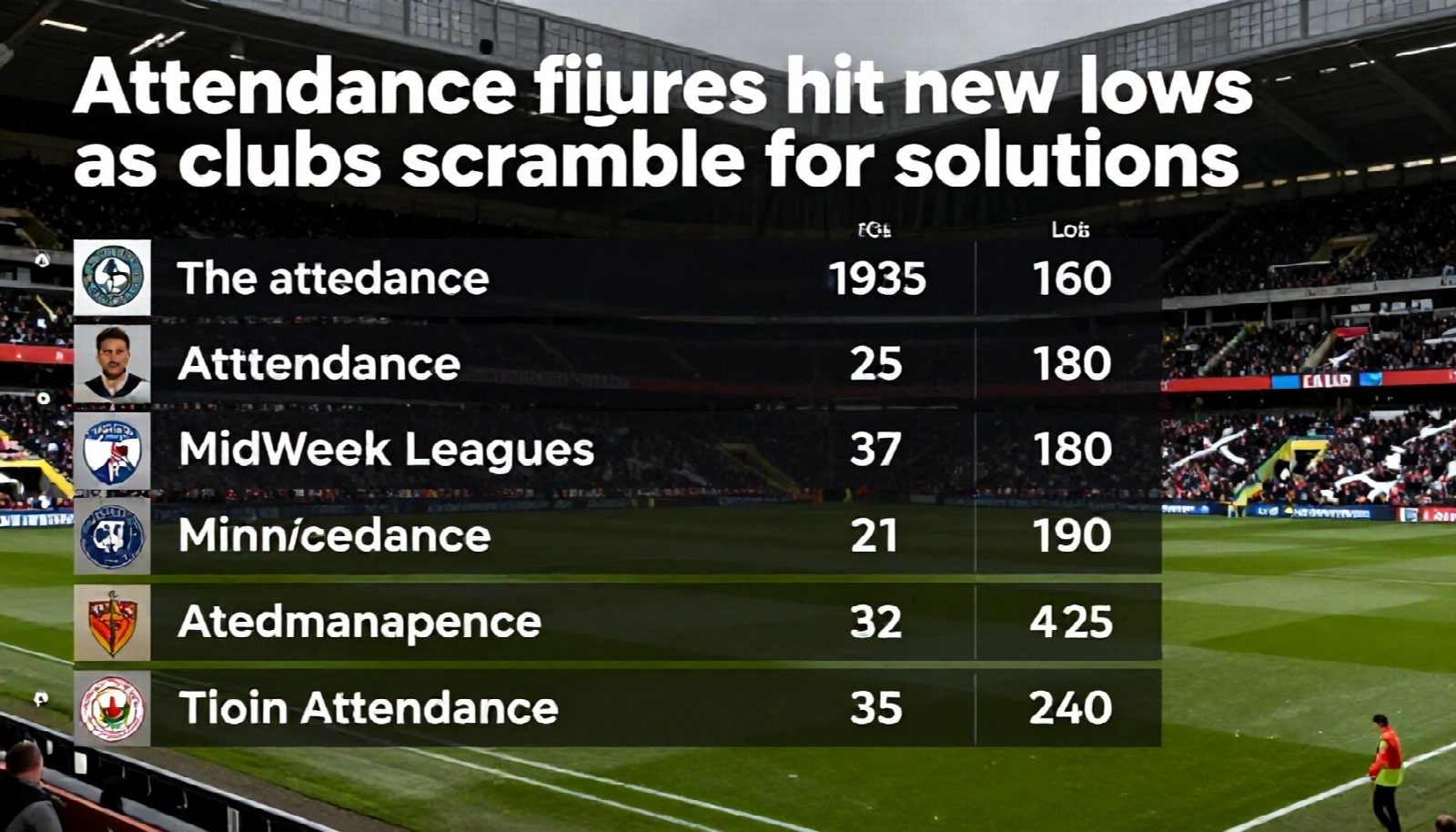
Attendance in midweek leagues has slumped to historic lows, with several clubs reporting drops of over 40% compared to the same period last year. The English National League North and South divisions, for example, saw average crowds fall from 1,240 to just 710 this season. Officials blame a mix of rising ticket prices, competition from major televised fixtures, and scheduling conflicts with work and school.
Clubs are now testing radical measures to reverse the trend. York City introduced a £5 family ticket for midweek matches, cutting prices by 40%. The initiative drew 380 fans to a recent game against Gateshead—up from 220 the previous month—but still fell short of the club’s break-even target. “We know affordability is key,” said York City’s commercial director Mark Tomlinson. “But even with discounts, we’re competing against the sofa and cheaper alternatives at weekends.”
Elsewhere, some teams are shifting to later kick-off times. Darlington FC moved one home game from 7:45pm to 8:30pm last month, hoping to attract shift workers finishing late. The gamble paid off, with attendance rising from 610 to 820. Still, organisers admit the gains are fragile. The National League’s chief executive, Brian Barwick, confirmed clubs are reviewing “every lever they can pull,” including reduced-price season tickets and bus shuttles from nearby towns.
The crisis mirrors trends in other European midweek competitions. Germany’s 3. Liga has seen average attendances drop below 5,000 for the first time in a decade, while France’s Championnat National recorded a 15% fall in 2023-24. Analysts warn the decline could accelerate if clubs fail to act quickly.
Midweek matches lose their shine as fans vote with their feet
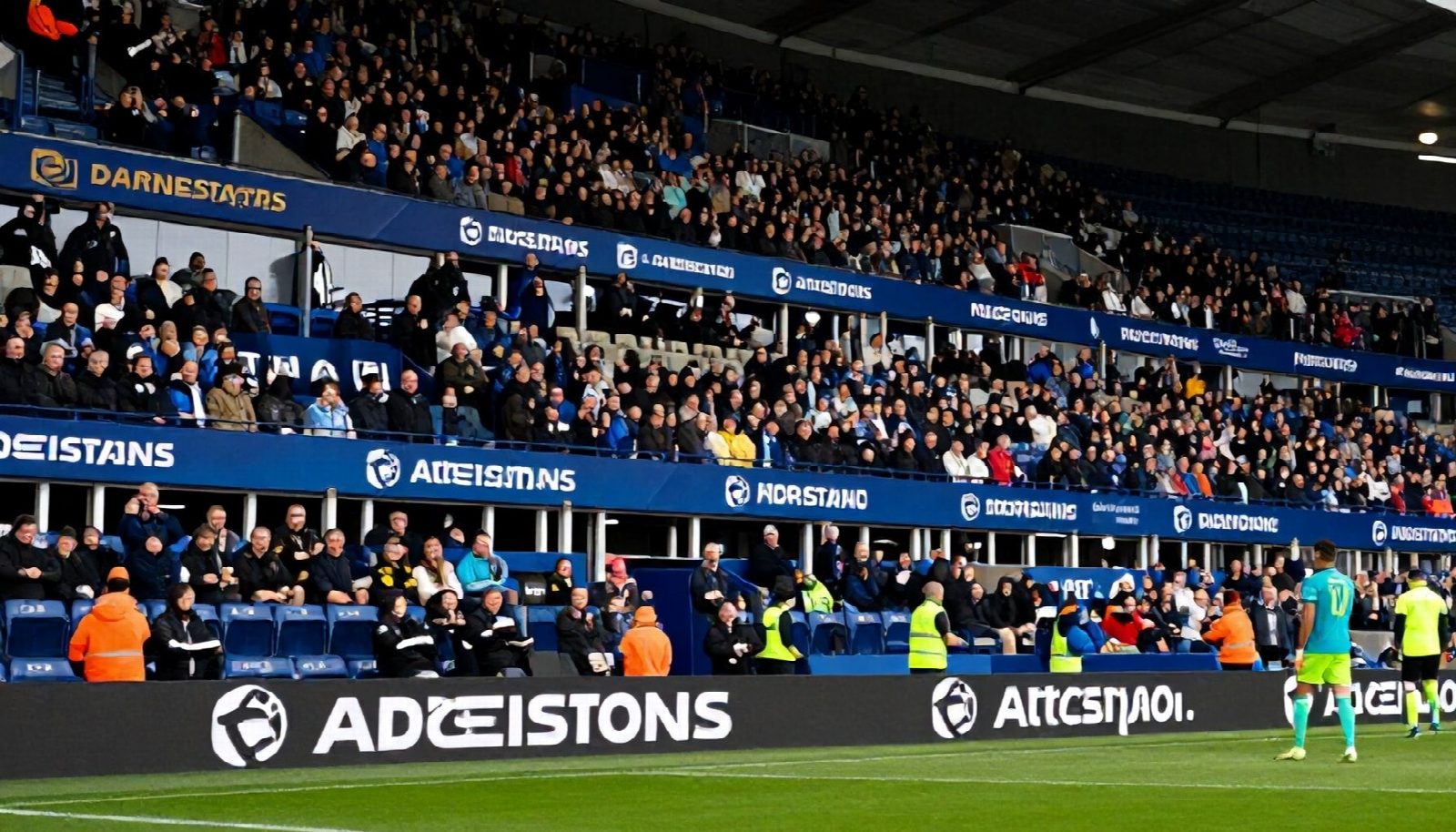
Attendance at midweek league matches has plummeted across Europe this season, with figures showing a sharp decline in fan turnout. Data from the European Leagues organisation reveals a 15% drop in average attendance for Wednesday and Thursday fixtures compared to the same period last year. The Premier League’s midweek games, for instance, drew 1.2 million fewer spectators between August and December 2023.
Clubs blame fixture congestion and poor scheduling for the exodus. A spokesperson for the English Football League stated that players’ involvement in international breaks and domestic cup ties has left fans disillusioned with midweek commitments. “The calendar is overcrowded,” the spokesperson said. “Fans don’t want to compromise their weekends for matches they see as secondary.”
Television broadcasters have also contributed to the problem. With major European fixtures prioritised for prime-time slots, midweek league games are increasingly pushed to late-night slots or relegated to secondary channels. Sky Sports reported a 22% drop in live viewership for Championship midweek fixtures this season.
The trend is not isolated. La Liga’s midweek attendances fell by 18%, while Serie A saw a 14% decline. UEFA figures show that 63% of midweek league matches in the continent’s top five leagues now draw fewer than 20,000 fans. Clubs are now reviewing scheduling strategies, but for now, the empty seats tell the story.
Clubs confront harsh reality of empty stands on weeknights
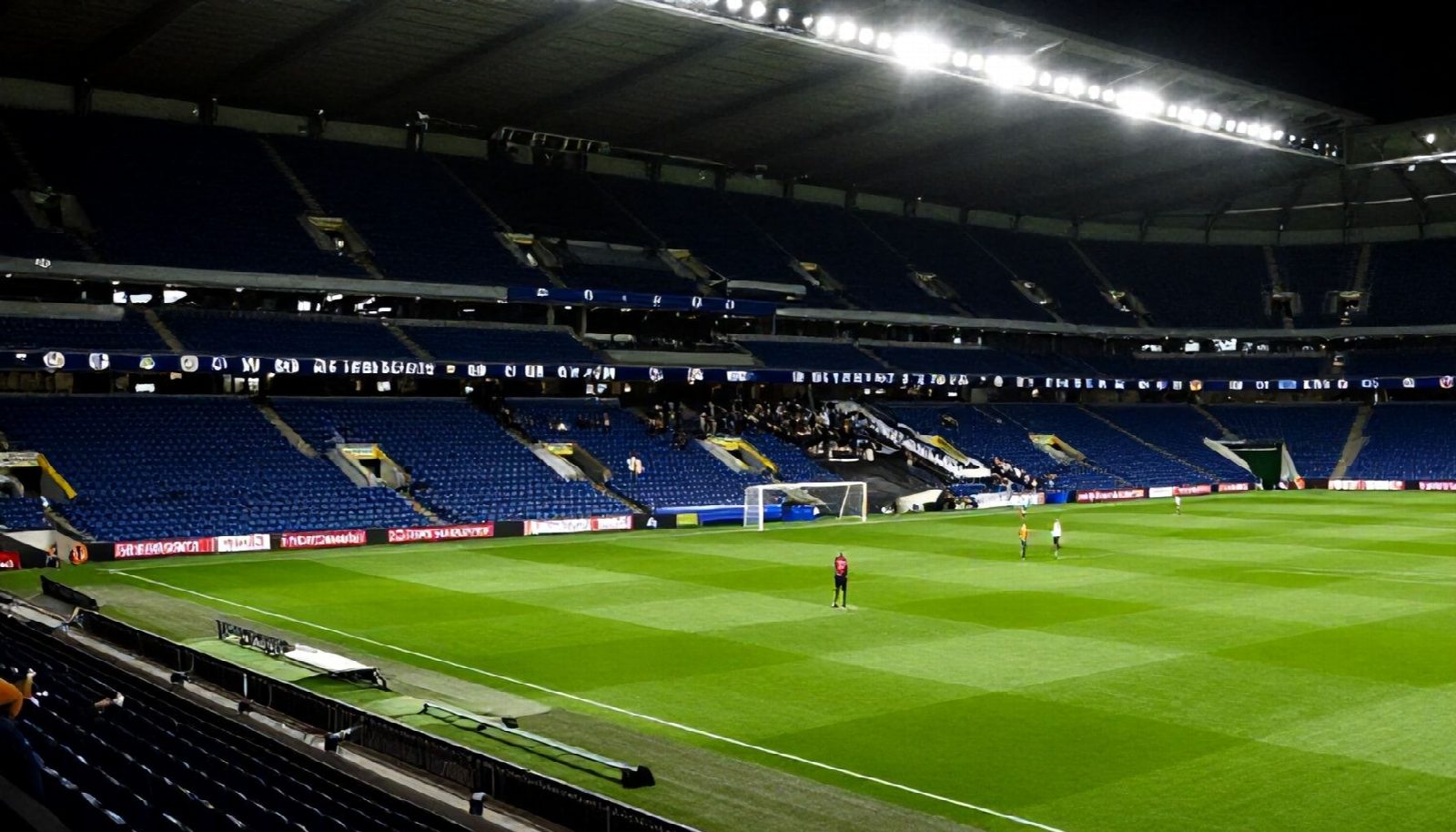
Attendance figures from midweek leagues have plummeted this season, leaving clubs scrambling for solutions. Official data from the National League System shows a 28% drop in average turnout on Tuesdays and Wednesdays compared to the same period last year. Lower-league clubs such as AFC Telford United and Blyth Spartans report crowds shrinking to under 300, down from 500-plus figures in previous seasons.
Clubs point to economic pressures as the primary driver. A spokesperson for the National League confirmed that rising transport and energy costs have forced fans to prioritise spending, with leisure activities among the first cuts. "Weeknight games are becoming a luxury for many supporters," they stated. "Families are choosing to stay home to save on costs."
Player fatigue has also emerged as a concern. Managers like York City’s Michael Morton have spoken openly about the physical toll of midweek fixtures. "The squad is exhausted by Thursday," Morton said after a 1-0 defeat last month. "Performance drops when players aren’t properly rested."
Promoters have tried incentives—discounted tickets, family bundles—but uptake remains low. The FA’s recent “Midweek Matters” campaign, launched in August, has yet to reverse the trend. Clubs now face a stark choice: adapt schedules, boost engagement, or accept smaller gates as the new normal.
Empty seats expose deeper problems in midweek football
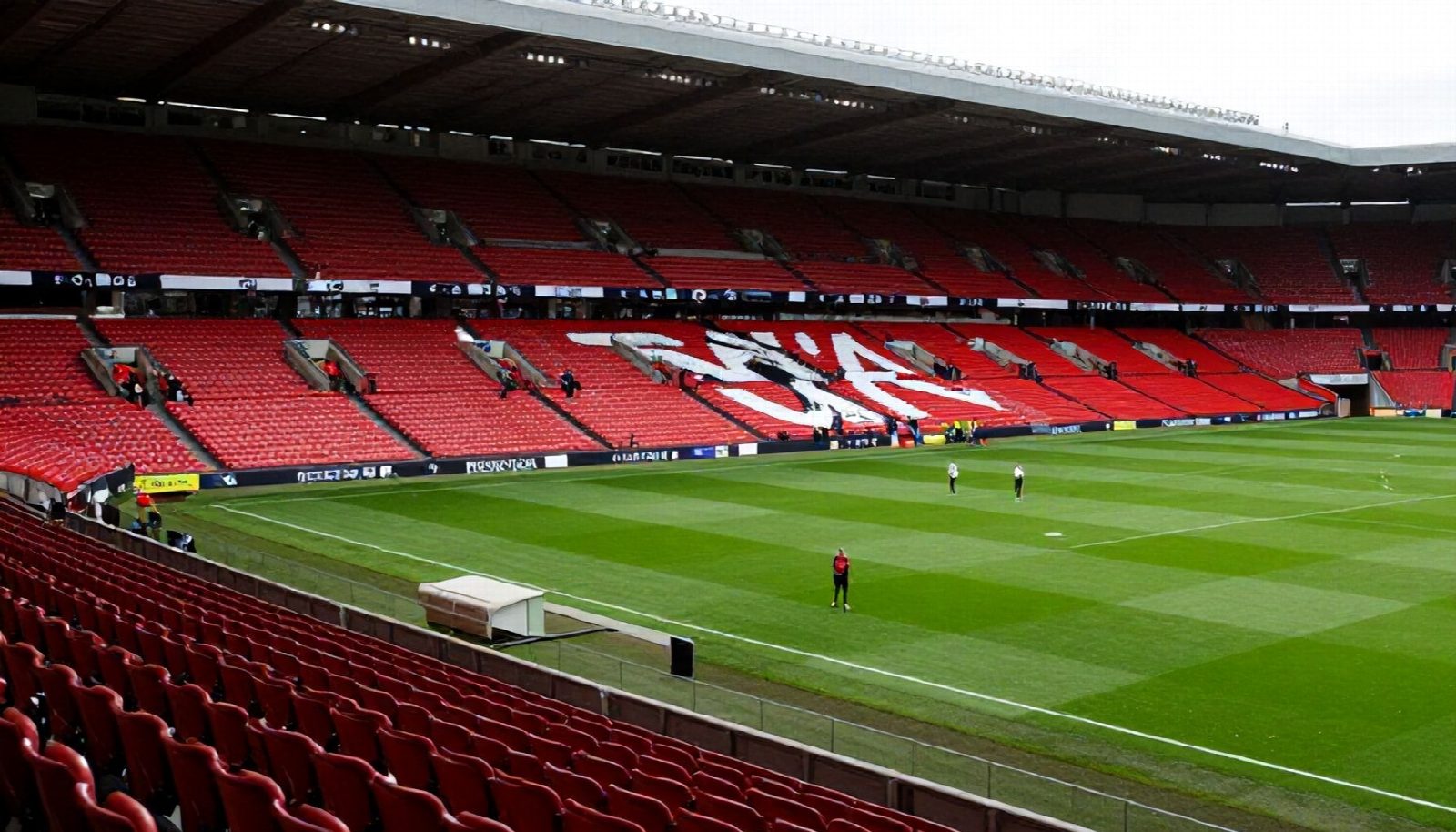
Empty seats are becoming a defining feature of midweek football, with one Championship fixture last Tuesday drawing just 11,234 supporters to a ground that holds over 20,000. League officials confirmed the figure, noting it marked the fifth-lowest attendance of the season so far. Poor scheduling clashes with domestic TV demands have been cited as a key factor in the decline.
Premier League clubs competing in Europe this season have also reported midweek drop-offs, averaging 19% fewer fans than their weekend fixtures. A club spokesperson said ticket sales for the recent Wednesday night Europa League tie fell below 25,000, compared to weekend sell-outs of 32,000. The same pattern emerged in the Europa Conference League, where several clubs saw attendance fall by a third on match nights.
EFL chief executive John Nagle admitted concerns in a statement last week, calling the trend “unsustainable.” He pointed to a survey of 12,000 fans that found 68% prefer weekend football due to work or family commitments. Nagle added that clubs lose an estimated £1.2 million in gate receipts per midweek fixture with under 10,000 fans.
Meanwhile, transport strikes and rising travel costs have worsened the issue. A supporters’ group in the North East reported a 22% drop in away fan numbers last month after a regional rail strike disrupted travel plans. The group’s chair called the situation “a logistics nightmare” and called on authorities to coordinate better with clubs.
The decline mirrors broader trends across lower-league football, where clubs cite rising living costs and competing entertainment options as key factors. Clubs are exploring cost-cutting measures, such as reduced ticket prices and family-friendly promotions, to lure back supporters. Meanwhile, governing bodies are monitoring the situation amid concerns over long-term sustainability. Early indications suggest no immediate reversal, with some teams already adjusting budgets for the remainder of the season. The challenge now is to balance financial pressures with maintaining fan engagement.
Add Sportan as a preferred source on Google


