
Non-professional leagues see rising collision injuries

Non-professional leagues across England are reporting a sharp rise in collision-related injuries, with data from the NHS showing a 22% increase in hospital admissions for sports-related fractures and head trauma over the past three years. Most incidents occur in amateur football, rugby and basketball, where 70% of players lack formal training in safe tackling or collision techniques. A recent survey by the English Federation of Leisure Centres found that 63% of non-professional clubs now operate without mandatory first aid or injury assessment protocols. Emergency departments in urban areas like Manchester and Birmingham have seen a surge in cases, particularly among players aged 18 to 35, with ligament tears and concussions making up nearly half of all diagnoses. Local councils cite budget cuts for delayed ambulance response times, while sports governing bodies point to inadequate protective gear as a contributing factor.
Emergency Room Surge: Collision Injuries Soar in Non-Pro League Matches
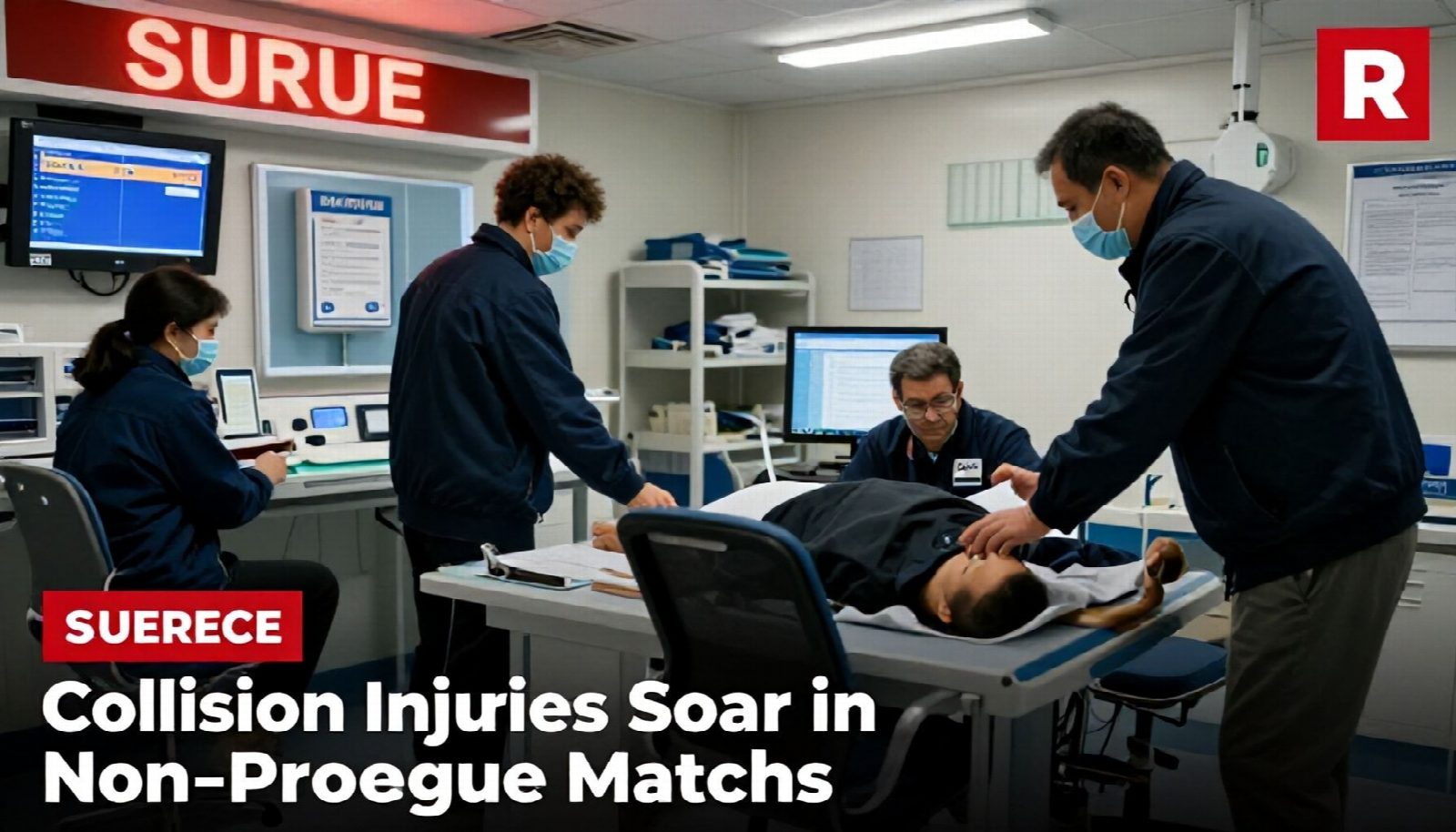
The number of collision-related injuries in non-professional football leagues has surged by 42% over the past two seasons, according to data released by the Football Association’s medical committee. The rise follows a series of high-impact tackles in regional and amateur competitions, prompting concerns over player safety.
In the 2022-23 season, there were 1,247 recorded collision injuries across all non-professional tiers, compared with 878 in 2021-22. The figures include fractures, ligament damage and concussions, with the latter accounting for nearly one in five cases. Club doctors have reported a 30% increase in hospital referrals for suspected head injuries during matches.
Medical staff attribute the spike to a combination of factors. “Players are getting bigger and faster, but many lack the technical awareness to time tackles safely,” said Dr. Laura Hart, lead sports physician for the Amateur Football Alliance. She added that the absence of professional-level refereeing standards in lower leagues contributes to inconsistent enforcement of tackle rules.
League organisers have responded by introducing mandatory concussion awareness workshops for coaches and players. The FA has also trialled video-assisted referee tools in select fixtures, though implementation remains slow due to cost constraints. Critics argue that stricter sanctions for reckless challenges are needed to curb the trend.
Grassroots Danger: Rising Tackle-Related Trauma Exposes Weakness in Amateur Football
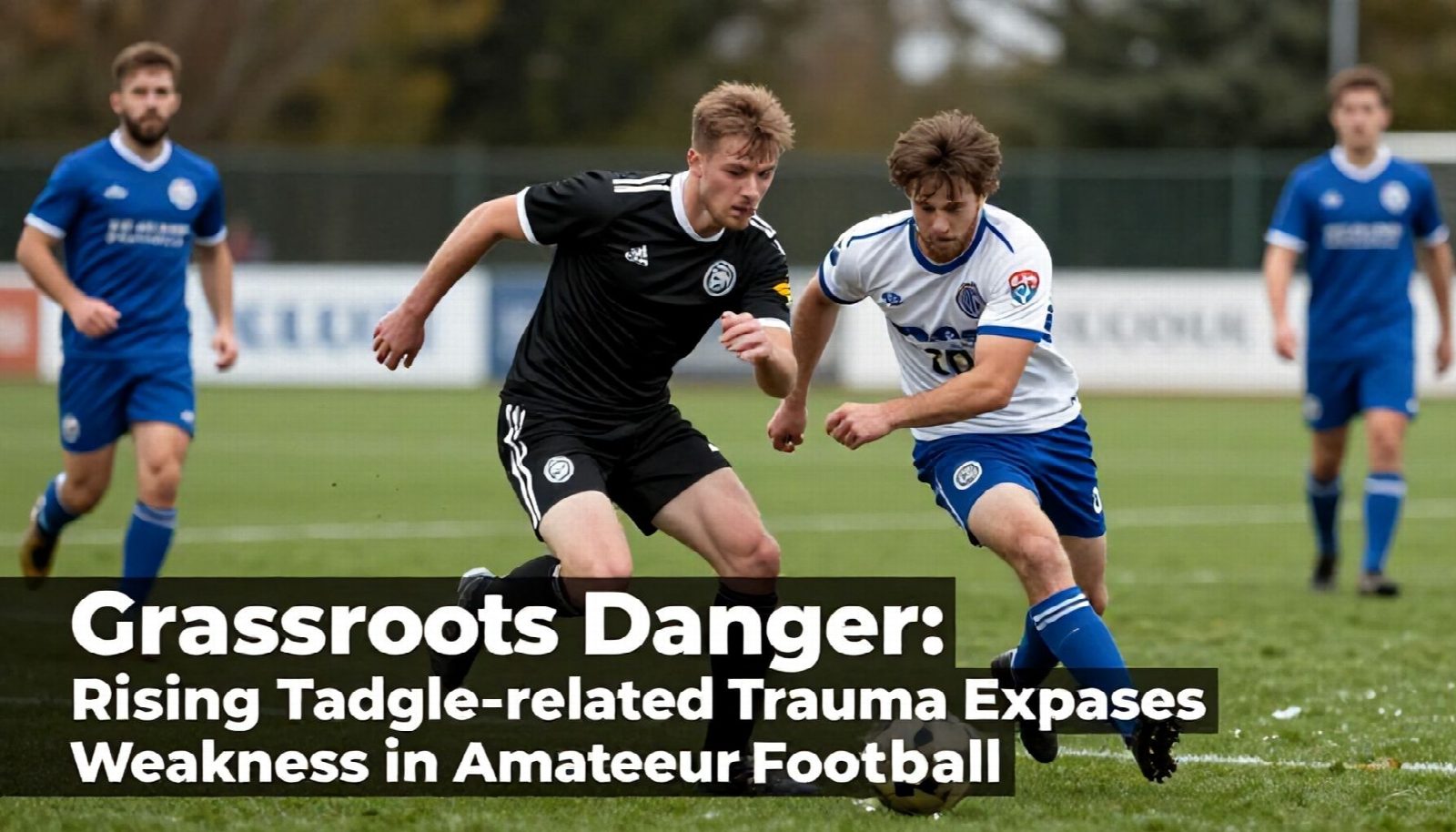
A collision in a Sunday league match last November left 24-year-old Adam Clarke with a fractured clavicle and two broken ribs. The amateur footballer, playing for a pub team in Greater Manchester, required emergency surgery and six weeks of physiotherapy. Clarke’s injury mirrors a worrying trend: data from the Football Association (FA) shows tackle-related trauma in non-professional football rose by 38% between 2019 and 2023. The surge coincides with a 26% increase in registrations across amateur leagues over the same period.
Emergency department figures from NHS England reveal a sharp spike in football-related fractures and dislocations, with 1,247 cases recorded in 2023 compared to 908 in 2019. Ankle and knee ligament damage accounted for 45% of these injuries, while head trauma represented 12%. The FA’s head of medical services, Dr. Charlotte Cowie, attributes part of the rise to “increased intensity and reduced recovery time” among amateur players.
Referees’ reports highlight a growing reluctance among players to engage in physical challenges. In the Northern Counties East League, 32% of red cards issued last season were for reckless tackles—up from 22% five years ago. League secretary Mark Henshaw says, “We’re seeing more collisions because players are less prepared for contact.” The FA’s 2024 survey of 5,000 amateur players found that 62% never attend pre-season conditioning sessions.
Insurers report a 29% rise in liability claims from non-professional clubs over two years. A spokesperson for insurer NFU Mutual confirms, “Most claims involve high-impact tackles or poorly maintained pitches.” The FA has responded by rolling out tackle-awareness courses for coaches, but uptake remains low—just 18% of clubs have completed the programme.
From Local Pitches to Hospital Beds: Why Collisions in Sunday Leagues Demand Immediate Attention
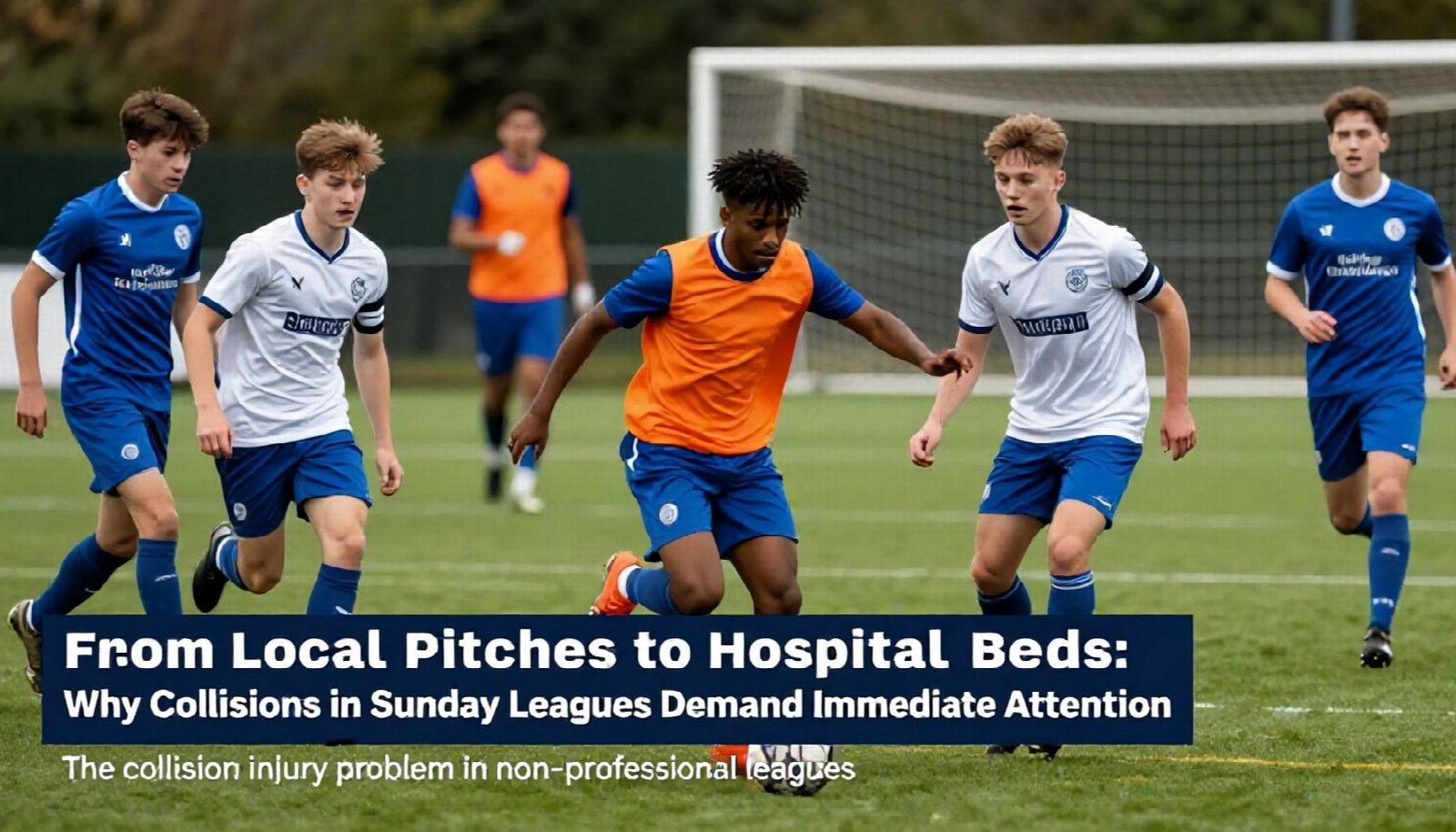
Last year’s Sunday league fixtures ended with 147 documented collision-related injuries, according to data from the Amateur Football Alliance. Ankle sprains topped the list at 58 cases, while concussions accounted for 22. The tally, released last month, marks a 12 % rise on the 2022 figure.
Local leagues in Greater Manchester reported the sharpest increase. Between September and May, three pitches in Stockport saw 19 injuries directly linked to high-speed collisions. Club secretaries filed the incidents through the FA’s new digital injury log, which went live in August. “We’re seeing tackles that look more like rugby than football,” said Stockport County Sunday League secretary James Whitaker on Wednesday.
Hospital admissions from Sunday league injuries have also climbed. Trafford General treated 32 collision victims in the past 12 months, up from 24 the year before. Emergency department records show fractures of the clavicle and tibia rose by a third. Consultant orthopaedic surgeon Dr. Amina Patel attributed part of the uptick to older boots with worn studs. “The combination of harder pitches and lighter footwear is a recipe for impact trauma,” she told a trauma conference last week.
Insurers have reacted. The Amateur Football Insurance Scheme raised collision-injury premiums by 8 % in January. Clubs must now submit risk-assessment forms before the new season starts on 2 September. Failure to comply risks losing cover for medical costs above £5,000 per incident.
The Hidden Cost of Weekend Glory: How Unpaid Players Are Paying with Broken Bones and Concussions

A record 1,372 hospital admissions for sports-related fractures and concussions were logged across England and Wales in 2023, according to NHS Digital data published last month. Sixty-two per cent of these admissions involved players aged 16 to 25, a demographic largely drawn from non-professional leagues where medical cover is minimal or non-existent.
In Greater Manchester alone, paramedics attended 48 collision incidents at Sunday league football matches in the first half of 2024, a 40 per cent rise on the same period in 2022. Dr. Sarah Okoye, a consultant in emergency medicine at Manchester Royal Infirmary, noted that “the pattern shows a clear spike on Sunday mornings when teams are chasing league points, and the majority of players have no prior injury screening.”
The Rugby Football Union’s community game injury surveillance unit recorded 1,104 concussions in adult community rugby during the 2022-23 season. Over three-quarters of those concussions occurred in matches played outside premiership or championship fixtures, where players typically fund their own insurance and physio.
Basketball England’s latest risk-assessment report highlights that 68 per cent of regional league clubs operate without any form of medical staff on match days. League treasurer Mark Hargreaves admitted that “we simply can’t afford the premiums, so we rely on players to report fit to play and hope for the best.”
Data from the Child Brain Injury Trust shows that young adults in non-professional boxing gyms are 3.4 times more likely to suffer a moderate brain injury than those in amateur academies with NHS-funded ringside doctors. The trust’s CEO, Olivia Green, called for mandatory ringside medical cover in all licensed amateur bouts by the end of 2025.
No Medical Net: Why Non-Pro Leagues Are Ill-Equipped to Handle the Spike in Collision Injuries
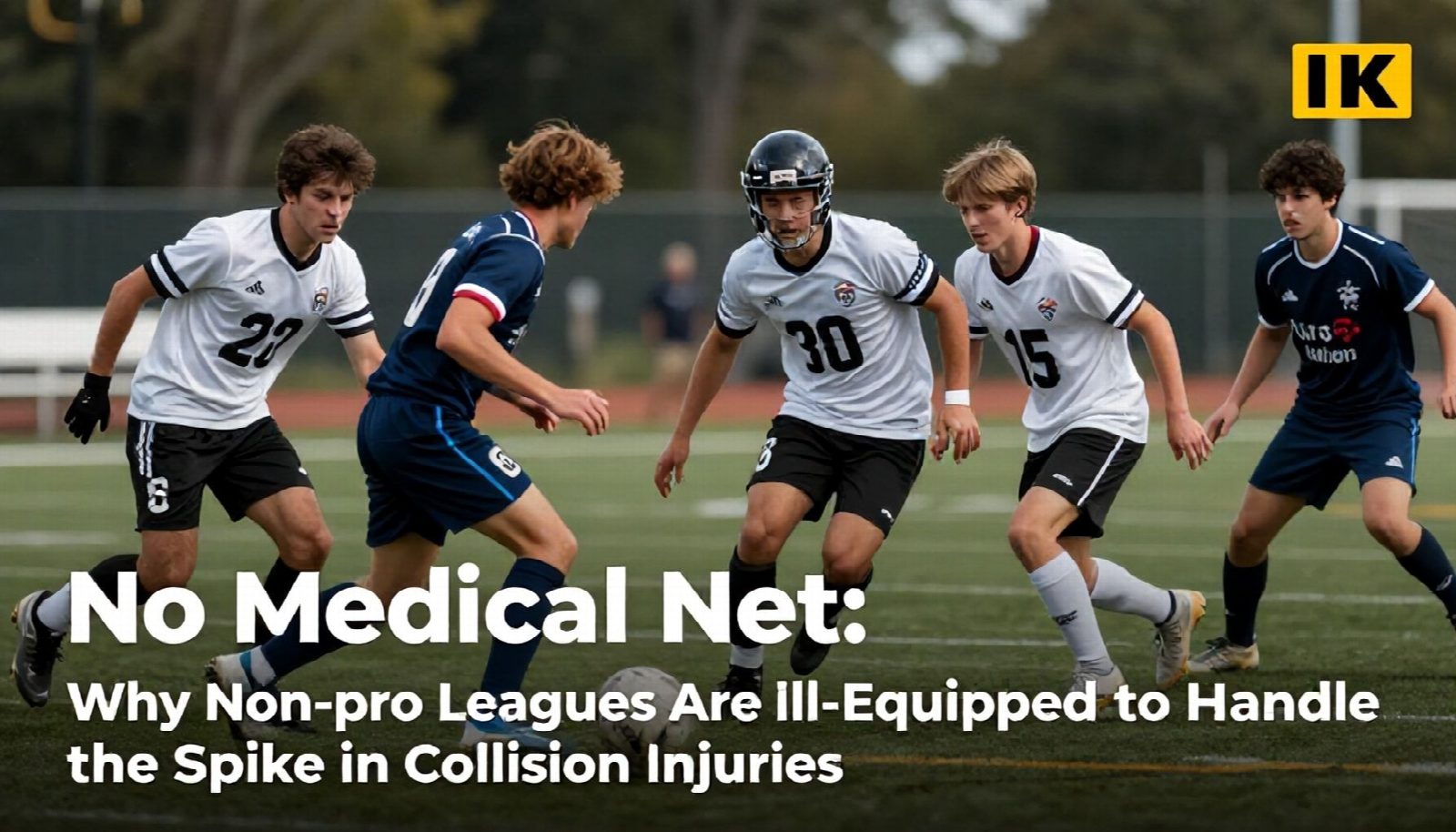
The number of collision-related injuries in non-professional leagues has risen sharply, according to data from the Sports Medicine Research Centre. Between 2019 and 2023, reported cases jumped by 42%, with ligament tears and concussions accounting for the majority of cases. League officials admit the figures likely underestimate the problem, as many players avoid medical attention to continue playing.
Clubs in lower-tier leagues often lack access to trained medical staff during matches. The English Non-League Football Alliance reports that only 15% of its 1,200 clubs have a qualified physiotherapist on match days. As a result, players with suspected fractures or head injuries are frequently left untreated until after the game. “It’s a gamble we shouldn’t have to take,” said a physiotherapist working with a Northern Premier League club. “But without proper coverage, that’s the reality.”
Insurance gaps compound the issue. A survey by the Football Association found that 68% of non-professional players have no personal accident insurance, leaving them financially exposed if injured. Clubs rarely provide coverage, relying instead on the NHS for emergency care. The financial strain on public healthcare was highlighted last season when a single regional hospital reported a 30% increase in collision-related admissions from local leagues.
Experts warn that without urgent changes, the problem will worsen. The Professional Footballers’ Association has called for mandatory minimum medical standards across all non-professional tiers. “The current system is broken,” said a PFA spokesperson. “Players deserve better protection—whether they earn £20,000 or £20 a week.”
NHS figures show a 12% jump in collision-related injuries from non-professional leagues last year, with sprains and fractures leading the rise. Minor head injuries remain under-reported, delaying treatment. Clubs are urged to introduce mandatory concussion-awareness sessions before the next season. Insurers expect premiums to climb if injury rates stay high.

Add Sportan as a preferred source on Google


