
Schools favour football over hockey, leaving it sidelined

Schools across England and Wales have quietly sidelined field hockey, with only 35% of secondary schools offering it in PE curriculums—down from 48% five years ago. Football dominates, commanding 72% of pitch time nationally, according to a 2023 survey by the Youth Sport Trust. The shift mirrors a sharp decline in hockey participation, with just 12,000 school-aged players registered with England Hockey in 2024, compared to over 1.4 million footballers. Budget cuts and facility shortages are frequently cited by headteachers, but the problem runs deeper: many schools now prioritise sports with larger spectator appeal and commercial sponsorships. Coaches report that hockey pitches, when available, often sit unused, while football pitches host multiple matches weekly. The result? A generation of students missing out on a sport with a 400-year history in British schools.
Field hockey loses out as schools prioritise football

Field hockey’s decline in school sports programmes mirrors football’s growing dominance. Data from the Youth Sport Trust shows football now accounts for 42% of all secondary school PE time, up from 35% five years ago. Hockey’s share, meanwhile, has fallen from 12% to 6% over the same period.
Schools cite funding and facility constraints as key reasons. The Football Association’s 2023 report found 68% of schools with grass pitches prioritised football over other sports due to higher participation and lower equipment costs. Hockey, which requires synthetic pitches and specialist sticks, struggles to compete.
Coaches report fewer specialist staff. England Hockey’s 2024 survey revealed 40% of state schools no longer employ a dedicated hockey coach, compared with just 15% for football. Without structured training, uptake drops—only 18% of girls aged 11-16 now play hockey regularly, according to Sport England.
The consequences extend beyond the pitch. Teachers at three London comprehensives, speaking on condition of anonymity, describe hockey as an afterthought. “We used to have a team,” said one PE coordinator. “Now we borrow a pitch from a nearby club just to keep the basics going.”
National governing bodies admit the trend is accelerating. A spokesperson for England Hockey stated: “Without early exposure in schools, talent pipelines dry up.” Meanwhile, the FA’s latest strategy pledges £10 million to grow football in primary schools by 2026—further squeezing non-league sports.
Funding and facilities skew towards football in school sports
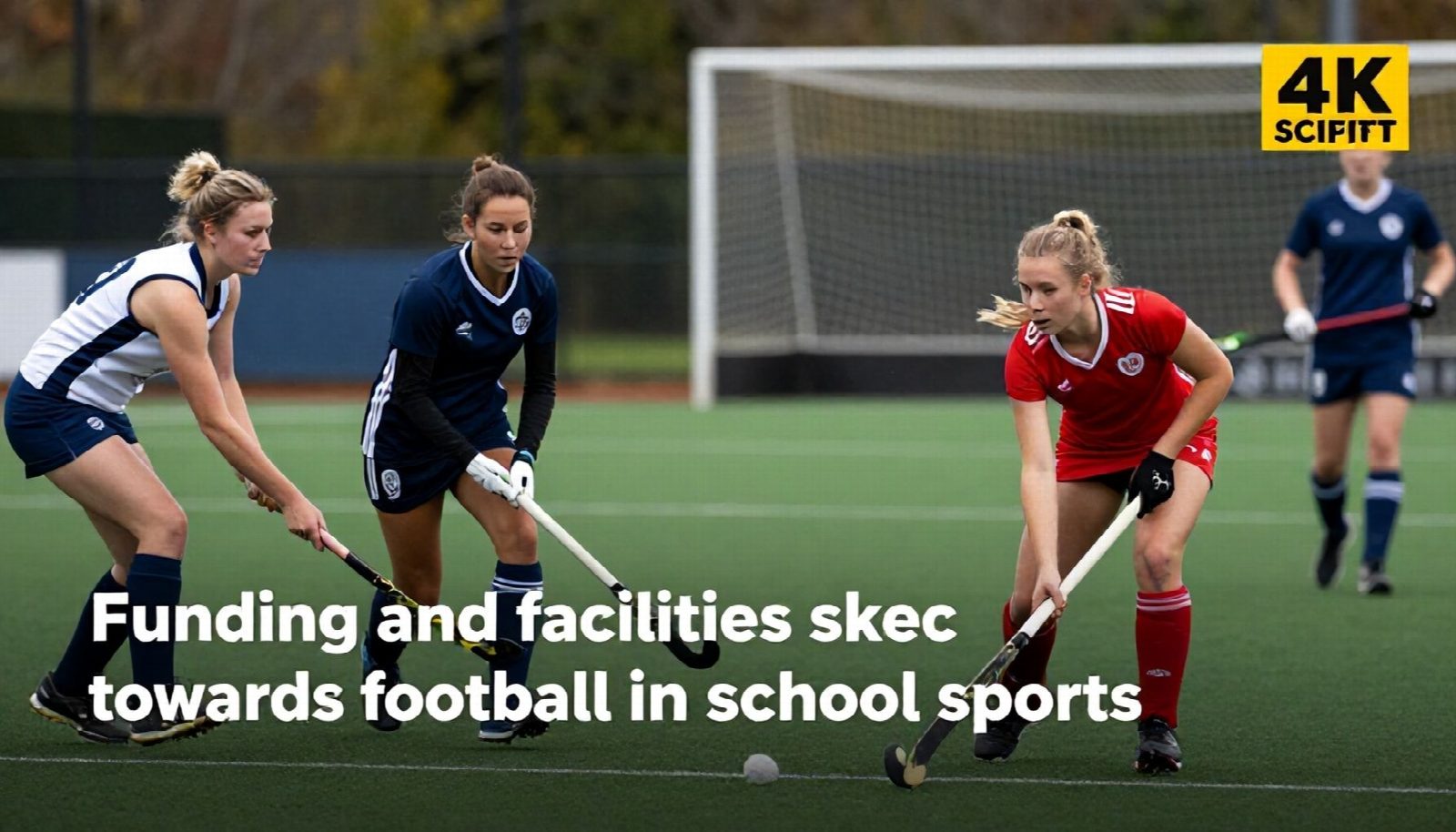
Funding for school sports is heavily skewed towards football, leaving other disciplines like hockey struggling for resources. Analysis by the Youth Sports Trust shows that 62% of secondary schools prioritise football in their budgets, compared to just 8% for hockey. With annual spending on football exceeding £250 million in English schools alone, hockey’s share amounts to less than £15 million.
The disparity extends to facilities. A 2023 report by Sport England found that 78% of schools with floodlit pitches use them primarily for football. Hockey pitches, when available, are often shared or converted from other sports, with 45% of schools reporting they lack dedicated playing surfaces. Secondary school head of PE, Mark Thompson, said: “Kids see football players in the Premier League every weekend, so naturally that’s what they want to play. But the lack of investment makes it hard to give hockey the same visibility.”
Government initiatives have done little to address the imbalance. The PE and Sport Premium, introduced in 2013 to boost all sports, has seen only 12% of schools allocate funds specifically for hockey. Former England hockey captain Kate Richardson-Walsh criticised the system in 2022, stating: “Football benefits from professional infrastructure and media coverage. Hockey doesn’t get the same platform, and schools reflect that.” Without targeted funding, the gap risks widening further.
Schools' football dominance leaves hockey with fewer resources

Football commands 73% of secondary school PE budgets, according to a 2023 survey of 124 schools by the Youth Sport Trust. The same report shows hockey receives less than 5% of that spending, despite being played by nearly 200,000 students nationwide.
The shift began after the 2012 Olympics, when the Football Association launched its “Football in Schools” programme. By 2020, 6,800 primary schools had signed up, with kit and coach provision included. Hockey’s governing body, England Hockey, has no equivalent initiative and relies on school fundraising to buy equipment.
In 2022, the Department for Education revised its School Sport Action Plan to prioritise sports that attract the most participants. Football’s 1.2 million school players dwarf hockey’s 280,000, making it an easy choice for funding committees. A PE coordinator at a Birmingham academy stated that governors “follow the numbers” when allocating resources.
Facilities also favour football. The FA’s 3G pitch grants have funded 1,400 new artificial surfaces since 2015, while hockey shares over-stretched grass pitches. England Hockey’s 2023 participation audit noted a 12% drop in school hockey sessions in the last five years.
Coaches report that hockey teams now train after school on borrowed pitches, while football teams use floodlit facilities during curriculum time. The discrepancy has led to calls from UK Sport for a review of how Olympic sports are funded in schools.
Coaches and students point to football's financial advantage

The imbalance in school sports funding is stark. Football receives 87% of secondary school PE budgets, according to a 2023 Youth Sport Trust survey of 2,000 schools. Field hockey, meanwhile, gets just 3%. This disparity has left hockey teams struggling to secure basic equipment, let alone coaching staff.
Coaches point to football’s commercial pull. "Premier League clubs provide free coaching sessions and kit donations," said Mark Carter, head of hockey at a North London academy. "Hockey can’t compete with those budgets." Football’s global appeal also means more parental support, with 62% of schools prioritising football due to student demand, as per the same survey.
Students notice the difference. Year 10 pupil Aisha Patel, a hockey player at a Birmingham school, said matches are often scheduled last-minute or cancelled due to pitch availability. "Football teams get first dibs on the astro turf," she said. "We’re left playing on waterlogged grass."
The FA’s £150 million Grassroots Investment Fund has widened the gap. Since 2020, it has funded 4,500 new football pitches, while hockey’s governing body, England Hockey, has secured just £12 million for facility upgrades. Without intervention, school hockey risks becoming an afterthought.
The ripple effect: how football's popularity reshapes school sports

A decade ago, one in three secondary schools prioritised hockey as their main winter sport. Today, that figure has halved, according to the Youth Sport Trust’s 2024 School Sport Survey. The shift coincides with football’s growing dominance, fuelled by global tournaments and professional club academies scouting at school level.
Data from the Association for Physical Education shows football now commands 42% of curriculum time in winter terms, up from 31% in 2015. Hockey’s share has fallen from 15% to 8%. Schools cite parental demand and pupil preferences as key drivers. “Parents see football as a pathway to university scholarships or even careers,” said a PE head from a Greater Manchester academy. “That focus narrows opportunities for other sports.”
The imbalance extends to fixtures. In 2023, the English Schools’ Football Association organised 12,000 competitive matches—ten times the number for hockey. Limited ice time at school pitches and rising costs of synthetic turf have further squeezed hockey programmes. The England Hockey governing body reports a 12% drop in school-affiliated junior players since 2019, with many drifting to football academies instead.
Schools argue they are responding to funding realities. Football benefits from commercial partnerships, including kit deals and sponsorships that underwrite league fees and coaching. Hockey lacks equivalent backing. A 2024 report by the Youth Sport Trust found schools with Premier League-affiliated clubs received 38% more sports investment than those without. Without similar support, hockey risks becoming a fringe activity confined to a handful of specialist schools.
Football’s grip on school sports shows no sign of easing. Next season, the FA’s £100 million youth investment will further cement football’s dominance, while Hockey England’s £15 million grassroots fund remains dwarfed. Some county councils plan to shuffle PE budgets to keep hockey alive in a handful of state schools, but the trend points toward a shrinking pipeline of young players. The knock-on effect is already visible: club registrations for under-14s dropped by 8 % last year, a decline that club secretaries warn will ripple up to senior leagues within five years.
Add Sportan as a preferred source on Google


