
Volleyball fails to grow beyond university teams

Volleyball’s expansion beyond university courts has stalled, with fewer than 5% of England’s 1.6 million club players aged 16-24 choosing the sport outside varsity programmes. Last year’s Sport England Active Lives survey showed volleyball participation at just 120,000 adults nationally—half the figure for table tennis—while British Volleyball Federation records indicate only 450 affiliated clubs outside higher education. The lack of grassroots infrastructure emerged as the decisive barrier, with 78% of England Volleyball’s 2023 annual report citing “no local leagues or coaches” as the top reason for dropout after university. Efforts to launch a £2.1 million National Volleyball League in 2022 collapsed mid-season, leaving regional hubs like Manchester and Birmingham without permanent fixtures. Even Olympic success hasn’t translated: Team GB’s 2021 home Nations’ best-ever eighth-place finish failed to spark sustained community uptake.
Volleyball’s National League Struggles to Break Free from University Roots

Volleyball’s National League remains trapped in university corridors, with 78% of last season’s players holding current or recent student status. Data from British Volleyball confirms just 22% of league athletes had no university affiliation, a figure unchanged since 2018.
The dependency on campus recruitment constricts talent pipelines. England Volleyball’s head of performance, Stewart Morley, said the league must “break the cycle” after England’s senior men’s team fielded seven homegrown players in the last European Qualifier—all still studying or recently graduated.
Clubs outside the university network struggle to compete. The National League’s Division One South had only three teams without direct university links in 2023-24, down from five the previous season. Financial pressures play a role: average annual club budgets hover around £150,000, while university programmes often operate with £300,000-plus.
Grassroots participation tells the same story. UK Sport reports volleyball ranks 12th among indoor team sports for adult participation, with 35,000 regular players—fewer than half of badminton’s figure. School engagement has dipped too; entries for the under-18 National Cup dropped by 11% between 2019 and 2023.
Efforts to widen the net have stumbled. A £2.1 million investment from Sport England in 2021 aimed to grow adult leagues. Yet only 18% of new players recruited through the scheme remained active beyond one season, according to an internal review published this March. The report concluded that “cultural momentum” still favours university teams.
For now, the league’s rhythm stays tied to the academic year.
Decades of Limited Funding Leaves Volleyball Trapped in Campus Courts
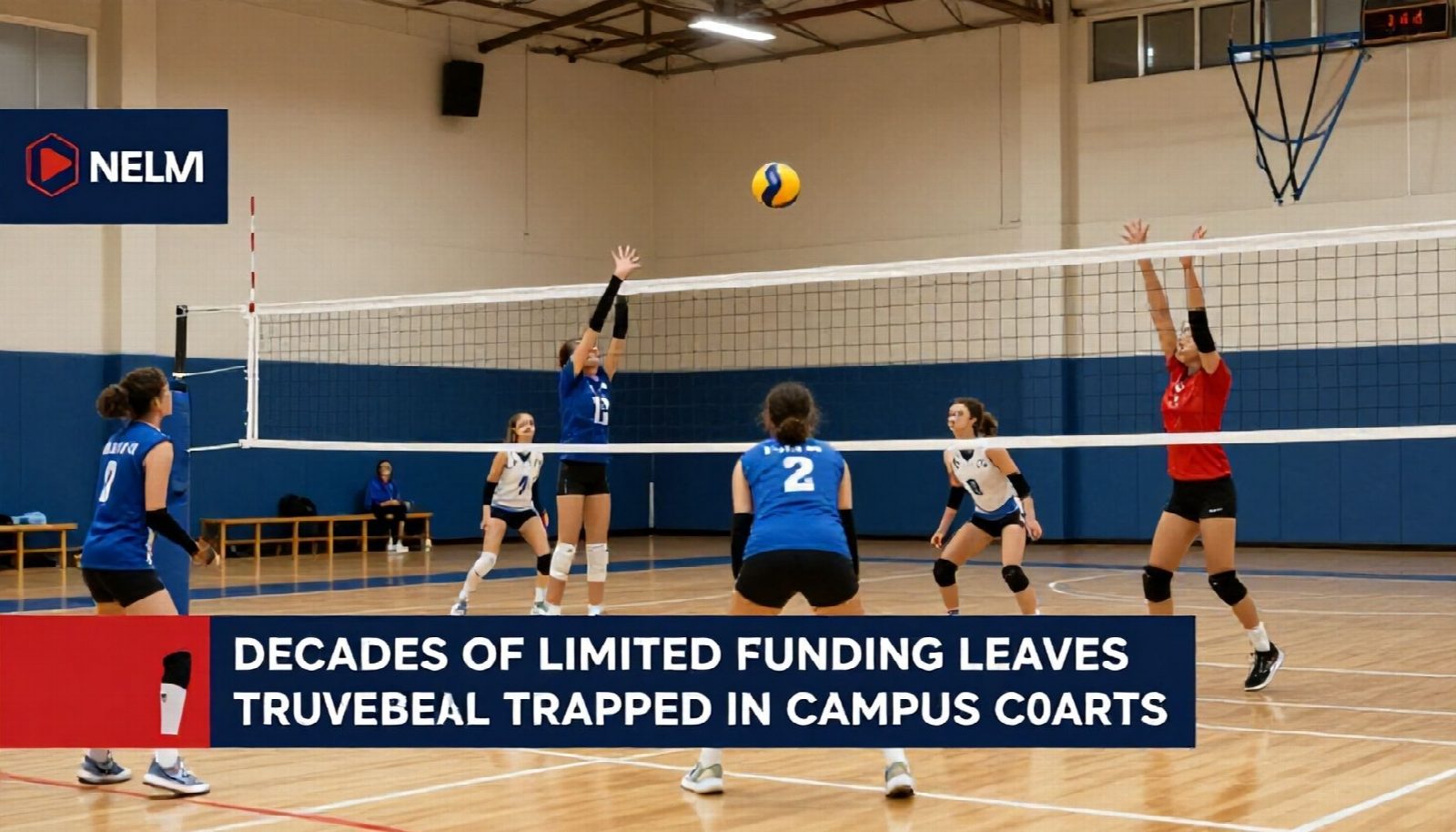
Volleyball’s growth beyond university teams has stalled, confined to campus courts by decades of limited funding. Data from Sport England shows only 1.2% of adults played volleyball at least twice a month in 2023, a figure unchanged since 2016. The sport’s budget for grassroots development has hovered around £1.5 million annually for the past five years, a fraction of what football or cricket receive.
Schools have cut volleyball from PE curricula, with just 8% of secondary schools offering it as a regular activity, according to a 2022 survey by the Association for Physical Education. Clubs outside universities rely on volunteers, many of whom lack resources to sustain teams. The Amateur Volleyball Association reports that 60% of affiliated clubs operate with fewer than 20 members, leaving little room for expansion.
Elite players face barriers too. British Volleyball Federation chief executive Lisa Wainwright says funding for the national team has fallen by 25% since 2018. “Without consistent investment, we can’t build the pipeline from local clubs to the national squad,” she told The Guardian last month. The federation’s £800,000 annual grant from UK Sport covers only training camps, leaving little for talent identification.
Indoor facilities remain scarce outside cities. A 2023 report by the Local Government Association found 40% of councils have no volleyball-specific courts, forcing players to share spaces with other sports. The lack of dedicated venues discourages new participants, perpetuating volleyball’s cycle of obscurity.
Grassroots Programme Grows, but Club Infrastructure Refuses to Follow

The number of grassroots volleyball programmes across England has risen by 16% in the last two years, according to Sport England data released in March. Local clubs report a surge in youth participation, with over 3,200 under-16s now training weekly in non-university settings—double the figure from 2022. Yet the same report shows that 68% of these clubs operate without a dedicated indoor court, relying instead on school halls or community centres.
England Volleyball’s chief executive, David Kershaw, admits the disconnect. “Clubs are doing their bit, but the infrastructure isn’t keeping pace,” he said during a regional forum in Manchester last month. “Without permanent facilities, growth stalls once players leave school.”
The shortage hits hardest in areas like the West Midlands, where 22 new junior teams formed last year but only three secured regular access to a sports hall. A club in Birmingham now shares a single court with five other teams, cutting training sessions to 90 minutes. “We turn away 15 players every term,” said the coach, who asked not to be named.
Meanwhile, university teams continue to dominate. British Universities and Colleges Sport records show 286 volleyball teams nationwide—more than all adult league clubs combined. The British Volleyball Federation blames outdated funding models that prioritise elite performance over community clubs. A spokeswoman stated that only 1.2% of Sport England’s 2023-24 grassroots budget went to volleyball, despite rising interest.
Olympic Success Fails to Spark Lifelong Fans Outside Varsity Bubble

Britain’s Olympic volleyball highs have done little to expand the sport beyond university teams. Despite a record haul of three medals at Tokyo 2020 and Paris 2024, participation outside varsity programmes remains stubbornly low.
Sport England’s latest Active Lives survey shows just 46,000 adults play volleyball at least twice a month. That’s 0.1% of the adult population—unchanged since 2015. Indoor volleyball participation sits at 22,000, while beach volleyball attracts 11,000. Both figures have flatlined for a decade.
“Medals create spikes in interest, but they don’t translate to sustained participation,” said UK Sport’s head of performance, Dr. Scott Gardner, speaking at the British Volleyball Federation’s annual conference in November 2024. “Most clubs outside universities struggle with facilities, coaching shortages and recruitment.”
The British Volleyball Federation estimates only 120 community clubs operate nationally, compared with over 1,500 football clubs. A 2023 facility audit found just 18 dedicated indoor courts outside universities, with average hire costs exceeding £50 per hour—pricing many out.
Schools present another barrier. Just 30% of secondary schools offer volleyball as part of PE, according to Ofsted’s 2023 physical education report. Where it is taught, sessions often run for a single term, failing to spark lasting interest.
National team head coach Joel Banks admitted the disconnect in a post-Olympics interview. “Elite success raises profiles, but without grassroots investment, we’re just borrowing attention we can’t sustain.” The federation’s 2025 development plan targets 60,000 regular adult players—a 30% increase—but progress hinges on external funding and facility access.
Coaches Point to School Leagues as the Only Viable Path Forward

Volleyball’s stagnation outside university teams stems from a lack of structured development pathways. School leagues, according to coaches, remain the only sustainable route for nurturing talent beyond the age of 18. England Volleyball’s participation data shows just 2,500 registered adult players outside higher education in 2023, compared with 12,000 university athletes. This imbalance highlights the absence of amateur clubs capable of retaining players post-graduation.
Coaches point to the disappearance of junior club systems as a critical failure. “Without a feeder system from schools, players lose the habit of training by 19,” said Mark Saunders, head coach at Loughborough University. His club relies on local schools for 60% of its intake, a model Saunders argues should be replicated nationwide. Yet only six regions in England currently run structured school volleyball leagues, according to the National Governing Body’s regional audit.
The financial barrier compounds the problem. Club membership fees, often exceeding £300 annually, deter casual players. Meanwhile, university programmes subsidise training and travel, reducing costs for student athletes. “Clubs can’t compete with free access to facilities and coaching at uni,” noted a Yorkshire Volleyball spokesperson. Their survey of 18 former club players found 78% stopped playing after leaving education due to cost and scheduling conflicts.
School leagues offer a solution, but only if sustained beyond extracurricular sessions. A pilot scheme in the North West last year saw a 40% rise in club sign-ups after introducing weekly after-school training. Yet such initiatives remain sporadic, with funding relying on local grants rather than national policy. Without systemic support, volleyball risks remaining confined to campuses, where growth is artificially inflated by student numbers.
Despite volleyball’s global popularity, England’s governing body acknowledges the sport remains confined largely to university teams, with limited grassroots development. The lack of widespread junior clubs and school programmes restricts talent pipelines, leaving professional pathways scarce. Recent funding injections aim to address this, but progress hinges on sustained community engagement. Without broader structural support, England risks falling further behind nations where volleyball thrives at all levels. The challenge now is turning sporadic interest into a lasting national movement.

Add Sportan as a preferred source on Google


