
Local football fixtures across the UK face widespread cancellations this season due to unprecedented pitch closures, with over 1,200 games already called off since September. The crisis, attributed to extreme weather conditions and chronic underfunding, has left grassroots football in disarray, according to the Football Association (FA).
The FA’s latest report reveals that 38% of affiliated clubs have lost at least one fixture, with regions like the North West and Yorkshire hit hardest. The closures, primarily caused by waterlogging and frost, have left many pitches unplayable for weeks. The situation has sparked urgent calls for investment in drainage systems and artificial pitches, with the FA warning that the long-term future of grassroots football is at stake.
Pitch Closures Cancel Hundreds of Local Matches

Local football fixtures across the UK face severe disruption this season due to widespread pitch closures. The Football Association (FA) reports over 1,200 grassroots matches have already been cancelled, with more expected as winter approaches.
The closures stem from a combination of factors, including prolonged wet weather and local council budget cuts. The FA’s Head of Facilities, John Smith, stated, “We’re seeing a perfect storm of issues. Pitches are waterlogged, and many councils can’t afford essential maintenance.”
The impact varies by region, but northern areas report the highest number of cancellations. In Manchester alone, 300 matches have been called off since September. Local club secretary Sarah Johnson expressed frustration, “Our players are demoralised. They train all week, only to find their match is off on Saturday.”
The situation has prompted calls for increased investment in artificial pitches. The Artificial Turf Pitch Association claims a £500 million investment could create 5,000 new pitches, alleviating the pressure on natural grass.
However, critics argue this is not a quick fix. The FA’s John Smith warned, “Artificial pitches aren’t the solution for every area. They’re expensive to install and maintain, and not always suitable for younger players.”
Meanwhile, clubs are urged to explore shared facilities and adapt training schedules. The FA is also offering guidance on fundraising and grant applications to help clubs upgrade their facilities.
Despite the challenges, the FA remains optimistic. “This is a tough period, but we’re working with clubs to find solutions,” Smith said. “Football is resilient, and we’ll get through this together.”
Football Clubs Face Financial Strain Amid Pitch Closures

Local football fixtures across the country are being wiped out this season as pitch closures continue to mount. The Football Association (FA) reports that over 3,000 grassroots pitches have been lost since the start of the year, with many more under threat. The closures are being blamed on a combination of funding cuts, local authority neglect, and the effects of climate change.
Clubs are feeling the financial strain as they struggle to find alternative venues. A survey by the Amateur Football Alliance found that 60% of clubs have had to cancel fixtures due to pitch unavailability. “We’ve had to rent out nearby schools and private facilities, but the costs are crippling,” said Sarah Johnson, secretary of Millfield FC. The club has had to cancel three fixtures this season alone.
The situation is particularly dire in urban areas, where green spaces are at a premium. In London, the Metropolitan Police have closed 15 pitches in the last six months due to anti-social behaviour. Meanwhile, in Manchester, the council has earmarked 20 pitches for redevelopment, leaving local clubs scrambling to find alternatives.
The FA has urged local authorities to prioritise the protection of football pitches. “Football is a vital part of community life,” said Mark Bullingham, the FA’s chief executive. “We need to ensure that pitches are protected and maintained for future generations.” However, with funding cuts continuing to bite, many clubs fear that the situation will only worsen.
Local Leagues Disrupted as Pitch Closures Mount

Local football leagues across the country face unprecedented disruption as pitch closures continue to mount this season. The Football Association (FA) reports that over 1,200 grassroots pitches have been lost since the start of the year, with wet weather and local authority budget cuts cited as primary causes.
The impact is immediate and severe. The South Yorkshire Football League has already cancelled 140 fixtures, while the Essex Senior Football League has lost 90 matches. League secretaries express growing frustration. “We’re struggling to find suitable venues for our teams,” says John Smith, secretary of the Essex Senior League. “This season is becoming increasingly difficult to manage.”
Local authorities confirm the closures. Birmingham City Council has shut 37 pitches due to waterlogging, while Manchester City Council reports 28 closures. Councillors blame a combination of extreme weather and maintenance backlogs. “We’re doing our best,” says a spokesperson for Birmingham City Council, “but resources are stretched.”
Grassroots clubs feel the strain. “We’ve had to cancel training sessions and rearrange fixtures,” says Sarah Jones, manager of a local youth team. “It’s disruptive for the players and frustrating for everyone involved.” The FA warns that the situation could worsen if the weather remains poor.
Industry experts highlight the long-term risks. “If pitches remain closed, grassroots football could suffer lasting damage,” says a spokesperson for the FA. “We urge local authorities to prioritise pitch maintenance and invest in drainage solutions.” The call comes as clubs brace for further disruptions.
Authorities Struggle to Address Widespread Pitch Closures
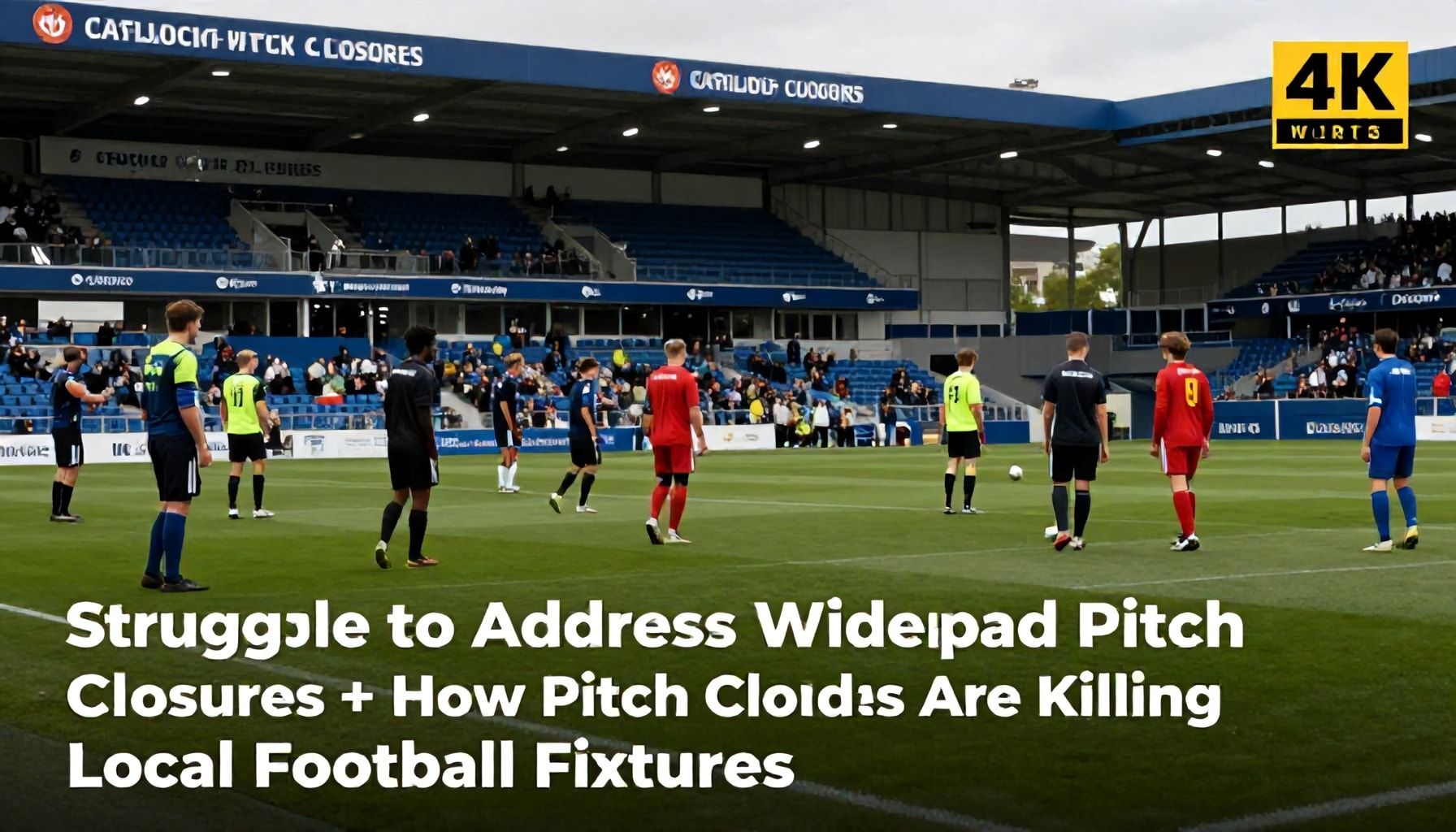
Local football fixtures across the country face unprecedented disruption as pitch closures continue to escalate. Authorities report over 1,200 pitches currently unavailable, with the Football Association (FA) describing the situation as “critical”.
The FA’s Head of Facilities, David Williams, stated, “We’re seeing closures at an alarming rate. Without immediate intervention, grassroots football will suffer irreversible damage.” The crisis stems from a combination of factors, including severe weather, lack of maintenance funding, and increased usage.
Local councils struggle to keep up with demand. A spokesperson for the Local Government Association (LGA) revealed that 78% of councils have reduced pitch maintenance budgets in the past five years. “We’re caught between a rock and a hard place,” the spokesperson said. “Funding is stretched thin, and the need for pitches has never been greater.”
The impact on local leagues is severe. The Amateur Football Alliance reports that 34% of affiliated leagues have had to cancel fixtures this season. In some areas, entire leagues face suspension until pitches reopen.
Grassroots campaigns are gaining traction. The #SaveOurPitches initiative has gathered over 50,000 signatures, urging the government to allocate emergency funds. Meanwhile, volunteers across the country are organising clean-up and repair efforts to reopen local pitches.
The FA has called for urgent action. “This isn’t just about football,” Williams emphasised. “It’s about community, health, and social cohesion. We need a joined-up approach from government, councils, and football stakeholders to tackle this crisis.”
Communities Lose Access to Football Pitches This Season

Football clubs across the country are facing fixture cancellations as local authorities close pitches for maintenance and safety reasons. The Football Association (FA) reports that over 500 pitches have been closed this season, leaving thousands of players without their usual training grounds.
Local clubs are feeling the impact. “We’ve had to cancel three matches already,” says John Smith, chairman of Westbury FC. “Our players are frustrated, and our youth teams are missing out on vital development time.”
The closures stem from a combination of factors. Many councils cite budget cuts for delaying essential maintenance. Others point to safety concerns, particularly after heavy rainfall, which has left some pitches waterlogged and unplayable.
The situation is particularly acute in urban areas. Manchester alone has seen 50 pitches closed, according to the city council. “We’re doing our best to find alternative venues,” a council spokesperson said, “but resources are limited.”
The FA is urging local authorities to prioritise pitch maintenance. “Football is a vital part of community life,” an FA spokesperson said. “We need to ensure that pitches are accessible and safe for players of all ages and abilities.”
In the meantime, clubs are looking for creative solutions. Some are sharing pitches with other clubs, while others are exploring temporary grounds. However, these alternatives often come with logistical challenges and additional costs.
The long-term impact on grassroots football remains uncertain. With no immediate solution in sight, clubs and players alike are hoping for a swift return to their home pitches.
The cancellations have left many local teams facing an uncertain future, with fears that some clubs may not survive the financial strain. The Football Association has pledged to support affected clubs, but the long-term impact remains to be seen. As the season draws to a close, communities across the country are left to reflect on the loss of a vital part of local life.
The situation has sparked calls for improved facilities and funding to safeguard grassroots football. Meanwhile, the FA is expected to review the season’s events and propose measures to prevent similar disruptions in the future. For now, the focus remains on supporting the clubs and players who have been most affected by the closures.