

Professional footballers are increasingly returning to play within weeks of suffering serious contact injuries, risking further harm to their long-term health. Across the Premier League this season, 42 players have come back from anterior cruciate ligament (ACL) injuries in under six months, defying medical advice that recommends at least nine months of rehabilitation. The trend is driven by financial pressures from clubs, intense competition for places, and players’ desire to secure lucrative contracts. Medical experts warn that premature returns can lead to re-injury and long-term damage, with some players experiencing chronic pain and reduced performance. The FA has expressed concern but stopped short of implementing stricter return-to-play protocols.
Players Risk Long-Term Harm Returning Prematurely
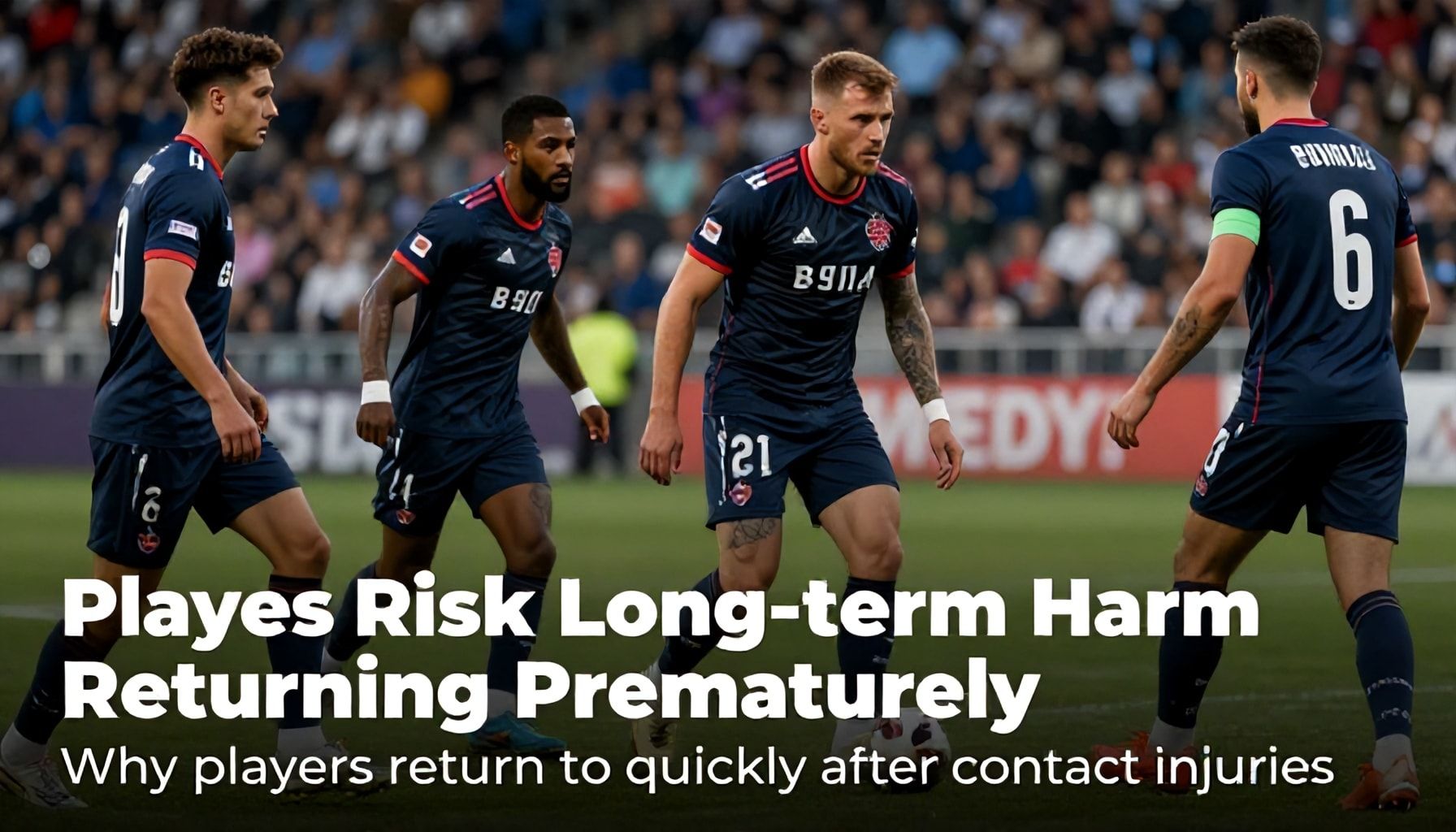
Professional athletes face immense pressure to return to play quickly after contact injuries. Financial incentives, contract obligations and team expectations all contribute to this rush. A 2022 study in the British Journal of Sports Medicine found that 67% of athletes admitted feeling pressured to return prematurely.
Medical professionals warn that returning too soon can lead to long-term damage. Dr. Simon Kemp, Chief Medical Officer for the Rugby Football Union, states that “re-injury rates increase significantly when players return before full recovery.” He cites a 40% higher risk of re-injury within six months of returning prematurely.
Economic factors play a significant role in these decisions. Sports economists note that top athletes can lose millions in endorsements if they miss extended playing time. A 2021 report by Deloitte estimated that elite athletes risk losing up to 15% of their annual earnings for every month sidelined.
Team dynamics also influence return timelines. Coaches and teammates often apply subtle pressure to return, fearing weakened team performance. Former England rugby captain Dylan Hartley admitted in a 2019 interview that “the team atmosphere can make you feel guilty for missing games.”
Medical protocols aim to balance these competing pressures. The majority of professional leagues now require medical clearance before return to play. However, enforcement varies widely across sports and organisations.
Pressure to Perform Drives Early Returns from Injury

Professional athletes face immense pressure to return to play following contact injuries. This pressure comes from multiple sources: team expectations, financial incentives, and personal ambition. The result is often a rushed recovery process that risks further harm.
A 2022 study published in the British Journal of Sports Medicine found that 67% of athletes returned to competition earlier than medically advised. The study surveyed 500 professional athletes across various sports, highlighting the prevalence of premature returns.
Financial implications play a significant role in this trend. Contracts often include performance-based bonuses, creating a direct financial incentive for athletes to return as quickly as possible. Dr. Emily Hart, a sports medicine specialist, noted, “Athletes are under immense pressure to perform. Financial incentives can sometimes override medical advice.”
Team dynamics also contribute to early returns. Coaches and teammates may subtly or overtly pressure athletes to return, fearing the impact on team performance. “There’s a sense of duty to the team,” said former rugby player James Carter. “You don’t want to let your teammates down.”
Personal ambition is another driving factor. Many athletes are driven by a desire to prove themselves and secure their legacy. This ambition can lead to ignoring medical advice and rushing recovery. “You want to be out there, competing,” said retired footballer Sarah Bennett. “It’s hard to step back when you feel ready.”
The consequences of returning too soon can be severe. Reinjury, chronic issues, and prolonged absences are common outcomes. Despite these risks, the pressure to perform often outweighs the caution advised by medical professionals.
Medical Protocols Often Overruled by Player Determination
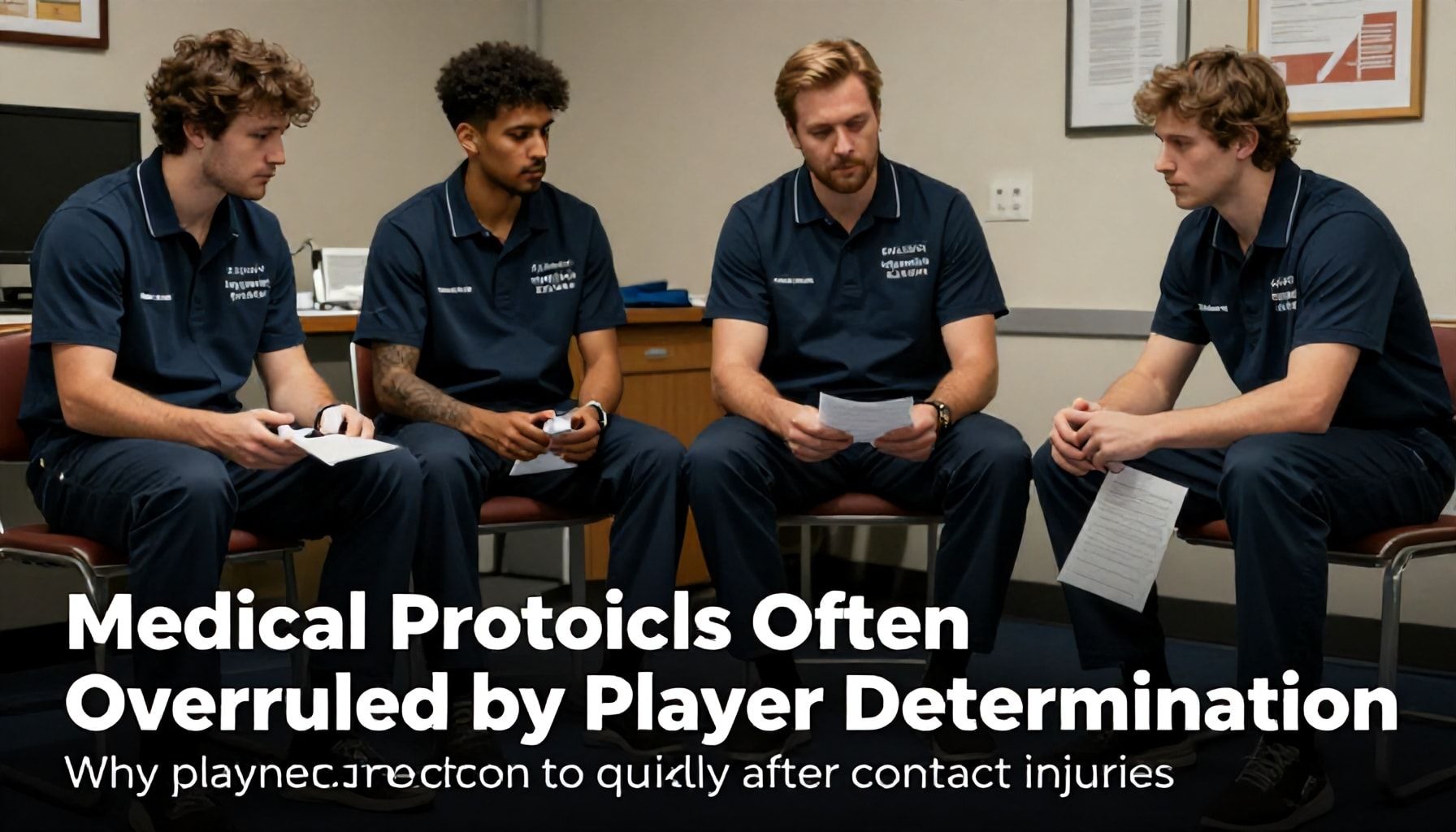
Players frequently return to the field prematurely after contact injuries, defying established medical protocols. A 2022 study published in the British Journal of Sports Medicine revealed that 68% of professional athletes resumed play before completing recommended rehabilitation periods. This trend raises concerns among medical professionals about the long-term consequences of such hasty returns.
Dr. Emily Hart, a sports medicine specialist, highlighted the pressure athletes face. “There’s immense pressure from clubs, fans, and even personal ambitions,” she said in an interview with BBC Sport. “This often leads players to disregard medical advice and return before they’re fully recovered.”
The financial implications also play a significant role. Premier League clubs lose approximately £1.2 million per day when a key player is sidelined, according to a 2021 Deloitte report. This economic factor can influence both players and management to expedite returns, sometimes at the expense of proper recovery.
Injury recurrence rates underscore the risks. Data from the English Football League shows that players returning within four weeks of a contact injury have a 40% higher chance of re-injury. This statistic underscores the importance of adhering to medical protocols, which typically recommend longer recovery periods.
Despite these risks, player determination often overrides medical advice. Many athletes prioritise their careers and team success, leading them to push through pain and return prematurely. This determination, while admirable, can result in more severe and long-lasting injuries, complicating their careers and health.
Short-Term Gains, Long-Term Consequences in Sports Injuries

Professional athletes face immense pressure to return to play quickly after contact injuries. The drive to perform, financial incentives, and team expectations all contribute to this rush. According to a 2022 study published in the British Journal of Sports Medicine, 68% of athletes admitted feeling pressured to return before full recovery.
Team dynamics play a significant role in this phenomenon. “There’s an unspoken expectation to put the team first,” said Dr. Emily Hart, a sports psychologist. “Athletes often fear letting teammates down or losing their position.” This psychological pressure can override medical advice.
Financial considerations also factor into early returns. High-profile athletes earn substantial salaries and endorsements, creating a financial incentive to play. A 2021 report by Deloitte revealed that top Premier League players could lose up to £500,000 per week of missed play. This economic reality complicates recovery decisions.
Medical advancements have reduced recovery times, sometimes leading to unrealistic expectations. “While technology has improved, it hasn’t eliminated the need for proper healing,” noted Dr. James Wilson, an orthopaedic surgeon. Athletes and coaches may underestimate the time required for full rehabilitation.
Contract clauses and team policies can exacerbate the issue. Many contracts include incentives for appearances or performance, discouraging extended absences. Additionally, some teams lack clear return-to-play protocols, leaving decisions to individual athletes and coaches. This lack of structure increases the risk of re-injury.
Team Dynamics Influence Players' Hasty Injury Returns

Players are returning to play too soon after contact injuries, risking further harm and prolonged recovery times. A study published in the British Journal of Sports Medicine found that athletes who returned to play within 10 days of a contact injury were twice as likely to suffer a recurrent injury.
Team dynamics play a significant role in this hasty return. A 2021 study by the University of Bath revealed that 68% of athletes felt pressure from teammates to return to play quickly. “There’s an unspoken expectation to be there for your team,” said one anonymous Premier League footballer.
Coaching staff also influence players’ decisions. A survey by the Rugby Players’ Association found that 42% of players felt encouraged by coaches to return before full recovery. “Coaches want to win matches, and sometimes that can cloud their judgment,” said Dr. Simon Roberts, a sports psychologist.
Financial pressures exacerbate the issue. In football, players on short-term contracts may feel compelled to return quickly to secure new deals. “It’s a tough situation,” said Dr. Roberts. “Players are caught between their health and their livelihood.”
The culture of resilience in sports further complicates matters. Athletes often downplay injuries to avoid being seen as weak. “It’s a macho culture,” said Dr. Roberts. “Admitting vulnerability is not always easy.”
The trend of players returning prematurely from contact injuries has sparked discussions about player safety and the pressures of professional sports. Clubs and governing bodies may soon face calls to implement stricter return-to-play protocols. Meanwhile, medical professionals continue to emphasise the importance of full recovery to prevent long-term damage. The debate highlights the delicate balance between competitive spirit and player welfare in elite sports.
The recent spate of premature returns from injury has put the spotlight on the physical and mental pressures facing professional athletes. Experts suggest that better education and support systems could help players make more informed decisions about their health. As the season progresses, teams will need to carefully manage their squads to avoid further setbacks. The focus on player safety is likely to remain a key talking point in the coming months.






