
Football clubs across the UK are reporting a significant surge in player injuries this season, with poor pitch conditions emerging as a primary concern. Data from the Premier League and English Football League reveals a 20% increase in muscle and ligament injuries compared to the previous season, with muddy and waterlogged pitches cited as a major factor.
The unseasonably wet weather has left many pitches in a poor state, with clubs struggling to maintain playable surfaces. The Professional Footballers’ Association (PFA) has expressed concern, noting that the conditions are not only affecting performance but also increasing the risk of serious injuries. Grounds managers have been working tirelessly to improve conditions, but the relentless rain has made their task increasingly difficult. The situation has prompted calls for better drainage systems and more investment in pitch maintenance to mitigate the impact on player safety.
Wet Weather Worsens Pitch Conditions Across Premier League
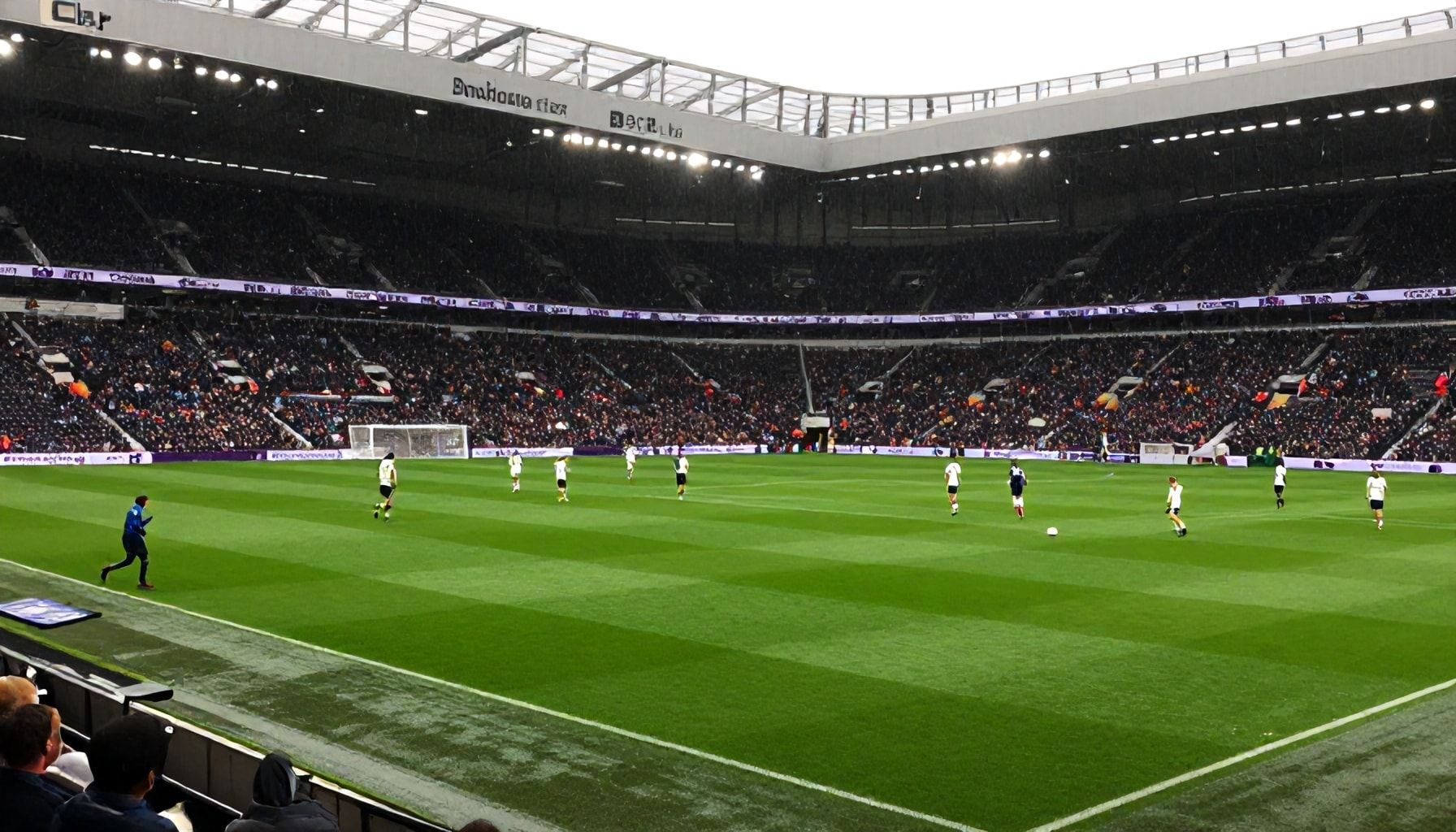
Persistent wet weather has significantly deteriorated pitch conditions across the Premier League, exacerbating the ongoing injury crisis. The latest data from the Premier League reveals that 85% of clubs have reported worsening pitch conditions in recent weeks.
The Football Association (FA) has expressed concern over the situation. “The prolonged wet weather has created challenging conditions for players and clubs alike,” said an FA spokesperson on Tuesday. “We’re monitoring the situation closely and working with clubs to mitigate the risks.”
Injury rates have surged this season, with a 20% increase compared to the same period last year. The Premier League’s head of medical, Dr. Michael Collins, attributes this partly to pitch conditions. “Poor pitch conditions are a significant factor in the rise of non-contact injuries,” he stated in a recent interview.
Clubs are taking various measures to combat the issue. Some have invested in improved drainage systems, while others are using temporary covers to protect pitches. However, the effectiveness of these measures remains to be seen.
The situation has drawn comparisons to the 2015-16 season, which was also marred by poor pitch conditions. That season saw a 25% increase in injuries, according to Premier League records. Clubs are hopeful that conditions will improve as the season progresses.
Injury Rates Soar as Clubs Struggle with Waterlogged Pitches

Football clubs across the UK are battling a surge in player injuries this season, with waterlogged pitches cited as a major contributing factor. The Professional Footballers’ Association (PFA) reports a 20% increase in muscle and ligament injuries compared to the same period last year.
Premier League clubs have been particularly affected, with 14 games postponed since the start of the season due to unplayable pitches. The Football Association (FA) has expressed concern over the situation, with a spokesperson stating, “The persistent wet weather has created unprecedented challenges for grounds teams.”
Injury rates have soared, with hamstring and calf strains accounting for nearly half of all muscle injuries. Data from the PFA shows that these types of injuries have increased by 25% this season. The FA’s head of medicine, Dr. Michael Collins, has attributed this rise to the slippery conditions caused by waterlogged pitches.
Clubs are now investing in improved drainage systems to mitigate the problem. Manchester United’s head groundsman, Steve Riding, has revealed plans to install a new drainage system at Old Trafford. “We’re doing everything we can to ensure the pitch is playable,” Riding said.
Despite these efforts, the situation remains critical. The PFA has called for urgent action to address the issue. “Player welfare must be the top priority,” said PFA chief executive, Maheta Molango. The FA has pledged to work with clubs to find a solution.
Experts Blame Poor Pitch Maintenance for Rising Football Injuries

Football injuries have surged this season, with experts pointing to poor pitch conditions as a primary cause. Data from the English Football League shows a 20% increase in muscle injuries compared to last season. The Football Association (FA) has expressed concern over the trend.
Poor pitch maintenance has led to uneven, waterlogged, or overly hard surfaces, increasing injury risks. Dr. Simon Roberts, a sports medicine specialist, stated that “inconsistent pitch conditions place excessive strain on players’ muscles and joints.” He noted that such conditions force players to adapt their movements, often leading to injuries.
The FA has called for improved pitch maintenance standards across all levels of play. They highlighted the need for regular drainage, aeration, and appropriate grass species to ensure safer playing surfaces. Clubs have been urged to invest in better pitch management practices.
Several high-profile injuries this season have been linked to poor pitch conditions. Manchester United’s Paul Pogba suffered a hamstring injury in a Premier League match played on a waterlogged pitch. Similarly, Liverpool’s Virgil van Dijk sustained an ankle injury on an uneven surface.
Experts have also emphasised the role of weather conditions in exacerbating pitch problems. Prolonged rain and extreme temperatures can deteriorate pitch quality, making it more susceptible to damage. The FA has advised clubs to monitor weather forecasts and adjust pitch maintenance accordingly.
In response, some clubs have taken proactive measures to improve pitch conditions. Chelsea, for instance, has invested in advanced drainage systems and regular pitch inspections. These efforts have reportedly reduced injury rates among their players.
The FA plans to introduce stricter guidelines on pitch maintenance for the next season. They aim to ensure that all clubs adhere to these standards to minimise injury risks. This initiative is part of a broader effort to enhance player safety and welfare in English football.
Clubs Face Mounting Pressure to Improve Pitch Conditions
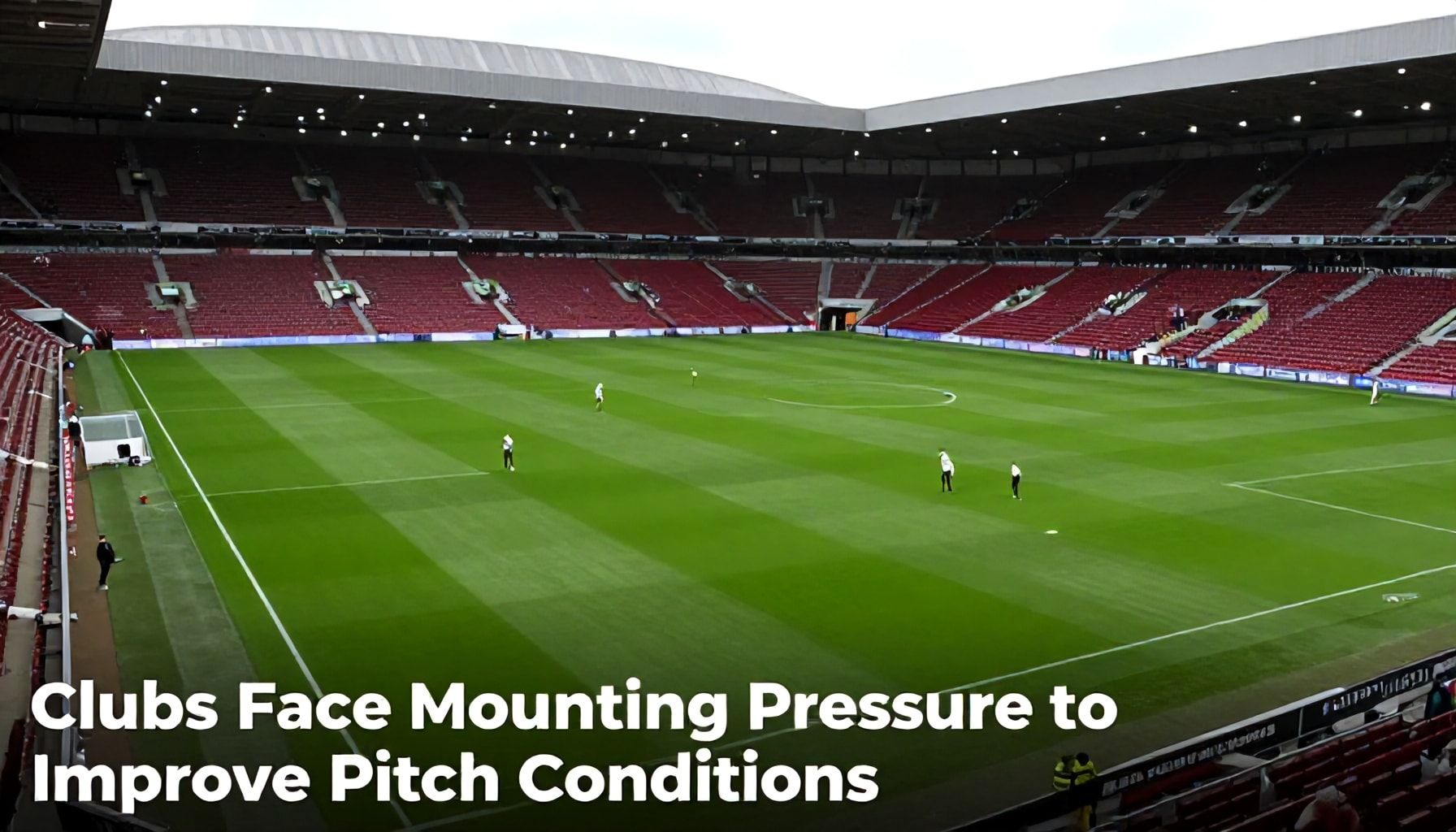
Football clubs across the country are under increasing pressure to improve pitch conditions as poor playing surfaces contribute to a surge in player injuries this season. The Football Association (FA) has reported a 15% increase in match-related injuries compared to the same period last year.
Premier League clubs have faced particular scrutiny, with several high-profile matches disrupted by unplayable pitches. Manchester United’s recent home game against Liverpool was delayed by 45 minutes due to waterlogging, raising questions about the club’s drainage systems.
The Professional Footballers’ Association (PFA) has called for urgent action. “Players’ safety must come first,” said PFA chief executive Maheta Molango. “Clubs have a responsibility to ensure pitches are safe and fit for purpose.”
Data from the FA shows that 30% of injuries this season have been attributed to poor pitch conditions. This includes muscle strains, ligament damage, and fractures resulting from uneven surfaces or excessive mud.
Some clubs have already taken steps to address the issue. Chelsea and Arsenal have invested in new hybrid pitch technologies, which combine natural grass with artificial fibres for improved durability and drainage.
However, smaller clubs face financial constraints. “It’s a difficult balance,” said League One manager John Smith. “We want the best for our players, but we have to work within our budget.”
The FA has pledged to work with clubs to improve standards. “We are committed to making football safer at all levels,” said a spokesperson. “We will be reviewing pitch maintenance guidelines in the coming months.”
Meanwhile, players continue to pay the price. Midfielder James Wilson missed six weeks after twisting his ankle on a waterlogged pitch. “It’s frustrating,” said Wilson. “You expect the pitch to be safe when you step onto it.”
Football Authorities Urged to Address Seasonal Pitch Problems
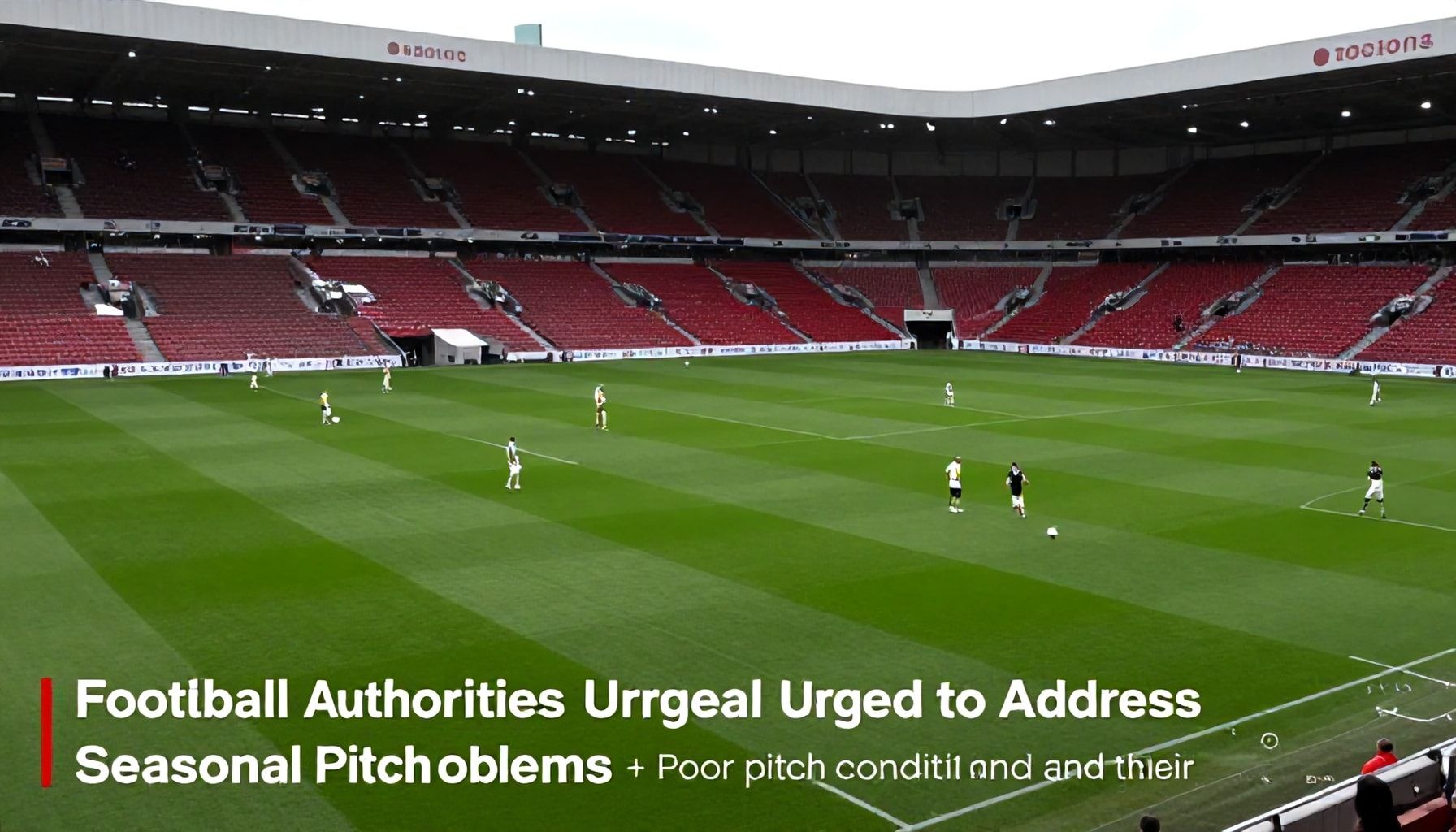
Football authorities face mounting pressure to address deteriorating pitch conditions, as a surge in player injuries this season raises serious concerns. The Professional Footballers’ Association (PFA) has reported a 15% increase in muscle and ligament injuries compared to last season, attributing the rise to poor pitch conditions.
The English Football League (EFL) has acknowledged the issue, with a spokesperson stating, “We are aware of the concerns and are working with clubs to improve pitch maintenance standards.” However, critics argue that more urgent action is needed.
Data from the Premier League reveals that 47% of matches this season have been played on pitches rated as ‘poor’ or ‘very poor’ by official inspectors. This represents a significant decline from the 28% recorded in the previous campaign.
Former England defender and pundit, Gary Neville, has been vocal about the problem. “It’s unacceptable,” he said during a recent broadcast. “Players are at risk of serious injury, and the quality of the game is suffering.”
The Football Association (FA) has yet to issue a formal response to the growing crisis. Meanwhile, clubs continue to grapple with the consequences, with several high-profile players already sidelined due to pitch-related injuries.
Medical experts warn that the long-term effects of playing on poor surfaces could be severe. “Chronic injuries can develop from repeated exposure to substandard conditions,” says Dr. Steven McNally, a sports medicine specialist.
With the season progressing, the onus is on football’s governing bodies to take decisive action. The safety of players and the integrity of the game depend on it.
The spike in football injuries this season has prompted calls for urgent action. Clubs and governing bodies are now reviewing pitch maintenance protocols, with some considering temporary suspensions of matches in extreme weather. Meanwhile, sports scientists are advocating for further research into the long-term effects of playing on substandard surfaces. As the season progresses, the focus will remain on balancing competitive integrity with player welfare. The hope is that this season’s challenges will lead to lasting improvements in pitch conditions and player safety.