

Former university rugby players across the UK are finding it increasingly difficult to maintain their passion for the sport after graduation, with touch rugby clubs struggling to retain participants outside academic environments. The decline in post-university participation, reported by the Rugby Football Union (RFU), has been attributed to time constraints, lack of local clubs, and the challenge of transitioning from competitive university teams to more casual, community-based settings. The RFU’s latest survey reveals that only 30% of university players continue to engage in rugby activities post-graduation, a stark contrast to the 75% who played regularly during their studies. This trend is particularly evident in urban areas, where the concentration of touch rugby clubs is significantly lower compared to university campuses. The RFU is now calling for increased investment in community-based rugby initiatives to address this growing issue.
Post-University Rugby Clubs Face Participation Challenges
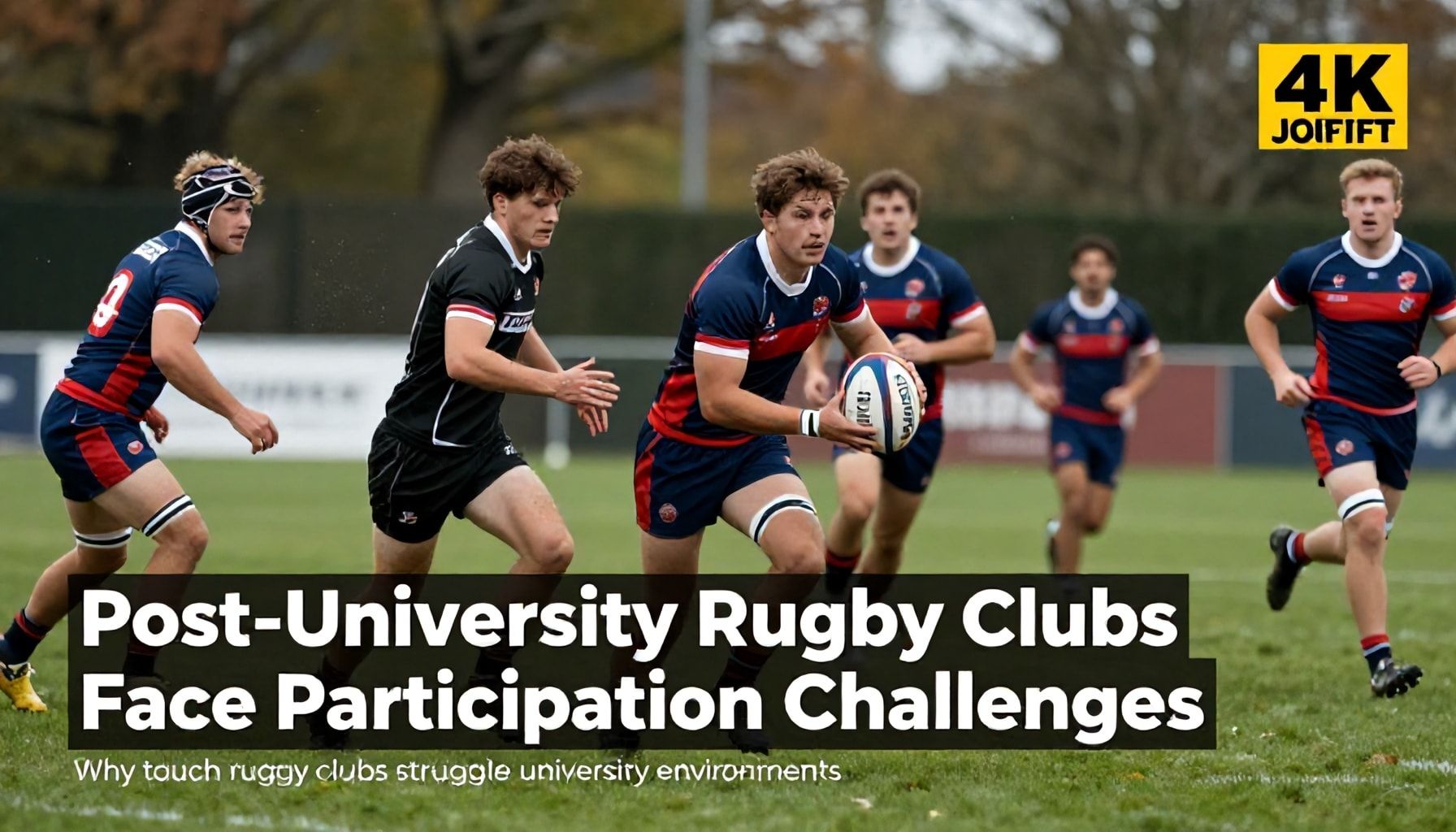
Post-university rugby clubs face significant participation challenges. Many players leave the sport after graduation, with participation rates dropping by up to 70% within two years. This decline is attributed to lifestyle changes, career demands, and the difficulty of maintaining team structures outside university environments.
Touch rugby clubs, in particular, struggle to retain players. Unlike traditional rugby, touch rugby relies heavily on social networks formed during university. Without the structured environment of university sports clubs, organising regular matches becomes difficult. Many players find it hard to commit to training and fixtures after graduation.
Financial constraints also play a role. University clubs often receive funding and support from student unions. Post-university, clubs must self-fund, leading to higher costs for players. This financial burden can deter former students from continuing their involvement.
Additionally, the lack of a centralised governing body for touch rugby exacerbates the issue. Unlike traditional rugby, touch rugby does not have a well-established league system outside universities. This makes it challenging to find competitive matches and maintain player interest.
Experts suggest that creating regional leagues and improving communication between clubs could help. “Establishing a structured league system would provide a clear pathway for players to continue their involvement,” said a spokesperson for the Rugby Football Union. However, implementing such changes requires significant effort and coordination.
Despite these challenges, some post-university touch rugby clubs have found success. Clubs that focus on social events and flexible training schedules have managed to retain members. These clubs emphasise the social aspect of the sport, which is a key factor in player retention.
Overall, post-university touch rugby clubs face an uphill battle. Addressing the issues of social networks, financial constraints, and lack of structure is crucial for their survival. Without intervention, the decline in participation is likely to continue.
Touch Rugby Clubs Struggle to Retain Players After University

Post-university touch rugby clubs face significant challenges in retaining players, with participation rates dropping sharply after graduation. The Rugby Football Union (RFU) reports a 40% decline in players aged 21-25 over the past five years. Many players struggle to balance full-time work with training and matches, according to club captains.
The social aspect of university rugby clubs also plays a crucial role in retention. “At university, rugby is a big part of the social scene,” says Dr. Emily Carter, a sports sociologist at Loughborough University. “After graduation, players often prioritise careers and starting families, leaving less time for social sports.”
Geographical dispersion further exacerbates the issue. University clubs benefit from a concentrated student population, whereas post-university clubs struggle to maintain numbers as players relocate for work. The RFU’s 2023 participation survey found that 60% of players leave their clubs within two years of graduating.
Financial constraints also impact post-university clubs. Many players can no longer afford membership fees, training equipment, or travel costs. “It’s a significant investment for young professionals,” notes RFU development officer, James Wilson. “Clubs need to find innovative ways to reduce costs and make the sport more accessible.”
Despite these challenges, some clubs are adapting. Hybrid training schedules, flexible membership fees, and corporate sponsorships are helping to stem the tide. However, the RFU acknowledges that more needs to be done to support post-university touch rugby clubs.
Declining Participation Rates Hit Post-University Rugby Clubs

Post-university rugby clubs, particularly those specialising in touch rugby, are experiencing a significant decline in participation rates. According to the Rugby Football Union (RFU), the number of registered touch rugby players outside university environments has dropped by 15% over the past three years.
The transition from university to the workplace presents a major challenge. Many players find it difficult to balance the demands of full-time employment with the time commitment required for regular training and matches. “The structured environment of university makes it easier to commit to sports,” says Dr. Emily Carter, a sports sociologist at Loughborough University. “Once graduates enter the workforce, priorities often shift.”
Financial constraints also play a role. University clubs often receive funding from student unions, which helps subsidise equipment and venue hire. Post-university clubs, however, must rely on membership fees, which can be prohibitive for some players. The average cost of joining a touch rugby club outside university is £200 per year, according to a survey conducted by the RFU.
Additionally, the social aspect of university rugby clubs is hard to replicate. The close-knit communities formed during university years often dissipate once players graduate and move to different cities or countries. “The camaraderie and social events that come with university rugby are a big draw,” notes Carter. “Recreating that outside of university is a significant hurdle.”
Efforts to reverse the trend include targeted marketing campaigns and flexible training schedules. However, the decline in participation rates remains a pressing issue for post-university touch rugby clubs.
Challenges Emerge for Rugby Clubs Transitioning from University

Rugby clubs transitioning from university environments face significant participation challenges. The shift from structured academic schedules to unstructured post-graduation life disrupts regular training and match commitments. Many players struggle to maintain the same level of engagement without the built-in social and academic networks of university life.
Financial constraints exacerbate the issue. University clubs often receive funding from student unions or institutional support. Post-graduation, clubs must rely on membership fees and external sponsorships, which can be unpredictable. This financial instability limits resources for training facilities, equipment, and travel.
Time management becomes a critical factor. University students have fixed schedules, allowing for consistent training times. Graduates, however, often juggle full-time jobs, family responsibilities, and other commitments. This makes it difficult to coordinate regular training sessions and matches.
Social dynamics also play a role. University rugby clubs benefit from a constant influx of new students, ensuring a steady supply of players. Post-graduation, clubs must actively recruit and retain members, which can be challenging without the natural turnover of a university environment.
Experts highlight the need for strategic planning. “Clubs need to adapt their structures to accommodate the realities of post-graduation life,” says Dr. Emily Carter, a sports sociologist. This includes flexible training schedules, community engagement, and diversified funding sources.
Despite these challenges, many clubs have found success through innovation. Some have partnered with local businesses for sponsorship, while others have implemented hybrid training models that cater to varying schedules. These strategies demonstrate the resilience and adaptability of post-university rugby clubs.
Post-University Rugby Clubs Seek Solutions to Engagement Crisis

Post-university rugby clubs, particularly those focused on touch rugby, face significant challenges in maintaining engagement. Many players transition out of competitive rugby after university, seeking less physically demanding alternatives. However, touch rugby clubs struggle to retain these players long-term.
A key issue is the lack of structured pathways for players to progress. Unlike traditional rugby codes, touch rugby often lacks clear development frameworks. This makes it difficult for clubs to offer meaningful challenges or recognition to players.
Financial constraints also play a role. Many post-university touch rugby clubs operate on tight budgets, limiting their ability to invest in coaching, facilities, or marketing. Without adequate resources, clubs find it hard to compete with other sports or leisure activities.
Player motivation shifts after university. Many graduates prioritise careers, families, or other commitments, leaving less time for sports. Touch rugby clubs must adapt to these changes in player availability and priorities.
Some clubs have attempted to address these challenges through innovative approaches. For example, introducing social events alongside training sessions can boost engagement. However, these efforts often lack consistency, leading to fluctuating participation rates.
Industry experts highlight the need for better coordination between clubs and national governing bodies. “There’s a clear gap in support for post-university touch rugby clubs,” said a spokesperson for the English Touch Association. “More resources and guidance are needed to help these clubs thrive.”
Despite these challenges, some clubs have found success by fostering strong community ties. By creating inclusive environments, they attract and retain players who value social connections as much as the sport itself. This approach underscores the importance of community in sustaining post-university touch rugby clubs.
The future of post-university rugby clubs remains uncertain, with participation challenges threatening their long-term viability. Many clubs are exploring innovative solutions, such as merging with local community teams or expanding their membership to include non-students. The RFU has pledged to support these clubs through funding and resource-sharing initiatives. However, the path forward will require creative thinking and collaboration to ensure these clubs continue to thrive beyond the university years.






