The Premier League has made significant strides in mental health support for players, while lower leagues in English football continue to lag behind, according to a recent report. The study, published by the Professional Footballers’ Association (PFA) in 2023, reveals a stark contrast in resources and initiatives across different tiers of the game. The Premier League’s comprehensive mental health program, launched in 2019, includes dedicated chartered psychologists, workshops, and a 24/7 helpline, costing approximately £5 million annually. In contrast, many clubs in League One, League Two, and the National League struggle to provide even basic mental health services, with some relying solely on voluntary support. The disparity highlights the financial divide in English football, where top-flight clubs have the resources to prioritise player welfare, while lower-league clubs grapple with tighter budgets. The PFA report calls for urgent action to address this imbalance and ensure all players receive adequate mental health support, regardless of their league.
Premier League sets new standards for player mental health support
The Premier League’s enhanced mental health support package stands in stark contrast to provisions in lower leagues. While the top flight offers comprehensive services, including access to independent charities and mental health professionals, Football League Trust CEO Chris Morgan highlights a stark disparity. “The resources available at Premier League clubs simply aren’t replicated across all levels,” he states.
Financial disparities underpin this uneven support. Premier League clubs benefit from substantial broadcasting revenues, enabling investment in dedicated mental health services. In contrast, lower league clubs operate on tighter budgets, often lacking resources for comprehensive support systems.
The EFL’s mental health support framework, while present, varies significantly in scope and quality. The league provides access to the PFA’s 24/7 helpline and a network of counsellors. However, the availability of on-site mental health professionals remains inconsistent, particularly in League One and League Two.
Former League Two player Alan Navarro sheds light on the challenges. “In the lower leagues, you’re often expected to just get on with it,” he says. “The pressure is immense, but the support isn’t always there.” Navarro’s comments underscore the urgent need for improved provisions across all levels of professional football.
The Premier League’s lead in mental health support has set a benchmark. However, the uneven distribution of resources across leagues raises concerns. The football community continues to advocate for equitable support, ensuring all players receive the care they need, regardless of their league.
Lower leagues struggle to match top-tier mental health provisions
A stark disparity exists in mental health support across English football leagues. The Premier League’s comprehensive provisions stand in contrast to the limited resources available in lower divisions. This imbalance raises concerns about player welfare at non-elite levels.
The Premier League introduced its mental health strategy in 2019. It includes 24/7 helplines, dedicated staff, and partnerships with charities. Clubs in the Championship and below often lack such structured support systems.
Financial disparities contribute significantly to this divide. Premier League clubs benefit from substantial broadcasting revenues. In contrast, League Two clubs operate on budgets sometimes less than £5 million annually.
Dr. Alex Hazlett, a sports psychologist, highlights the gap. “Top-flight clubs have the resources to employ full-time mental health professionals,” he said in a 2023 interview. “Lower league players often rely on part-time or voluntary support.”
The EFL Trust has made strides to address this issue. It launched a mental health awareness campaign in 2021. However, funding remains a persistent challenge for lower league clubs.
Player transfers between leagues exacerbate the problem. Players moving from the Premier League to lower divisions may struggle to access similar support. This transition can be particularly challenging for those with pre-existing mental health conditions.
The PFA offers some assistance across all leagues. It provides confidential counselling services and training for players and staff. Yet, the organisation acknowledges the need for more targeted support in lower divisions.
Calls for increased funding and resource allocation have grown louder. Advocates argue for a more equitable distribution of mental health resources. Ensuring all players, regardless of league, have access to adequate support remains a critical goal.
Mental health initiatives vary dramatically across football divisions
The Premier League has made significant strides in mental health support, while lower divisions struggle to match these standards. The top flight introduced a comprehensive mental health strategy in 2019, including a 24/7 helpline and dedicated staff. In contrast, many clubs in League One and League Two lack dedicated mental health resources.
A recent survey by the Professional Footballers’ Association (PFA) revealed that 63% of players in the lower leagues feel their clubs do not provide adequate mental health support. The survey, conducted in 2023, highlighted a stark disparity in resources and initiatives between the top tier and the rest. “The gap is concerning,” said Dr. Daniel van Dam, PFA’s Head of Mental Health.
Financial disparities play a significant role in this uneven support. Premier League clubs have the resources to invest in mental health programmes, whereas lower league clubs often operate on tight budgets. “It’s a matter of funding,” explained Gary Neville, former Manchester United defender and current pundit. “The Premier League has the money to allocate to these areas, but the same can’t be said for the lower leagues.”
The English Football League (EFL) has acknowledged the issue and is working on a framework to improve mental health support across all divisions. However, progress has been slow, and many players continue to feel unsupported. The EFL’s latest initiative, launched in 2023, aims to provide basic mental health training for staff and players, but critics argue more needs to be done.
The Premier League’s proactive approach sets a benchmark, but the lack of uniform support across all divisions remains a pressing issue. Without increased investment and commitment from governing bodies, the disparity in mental health support is likely to persist.
Top-flight clubs lead the way in mental health awareness campaigns
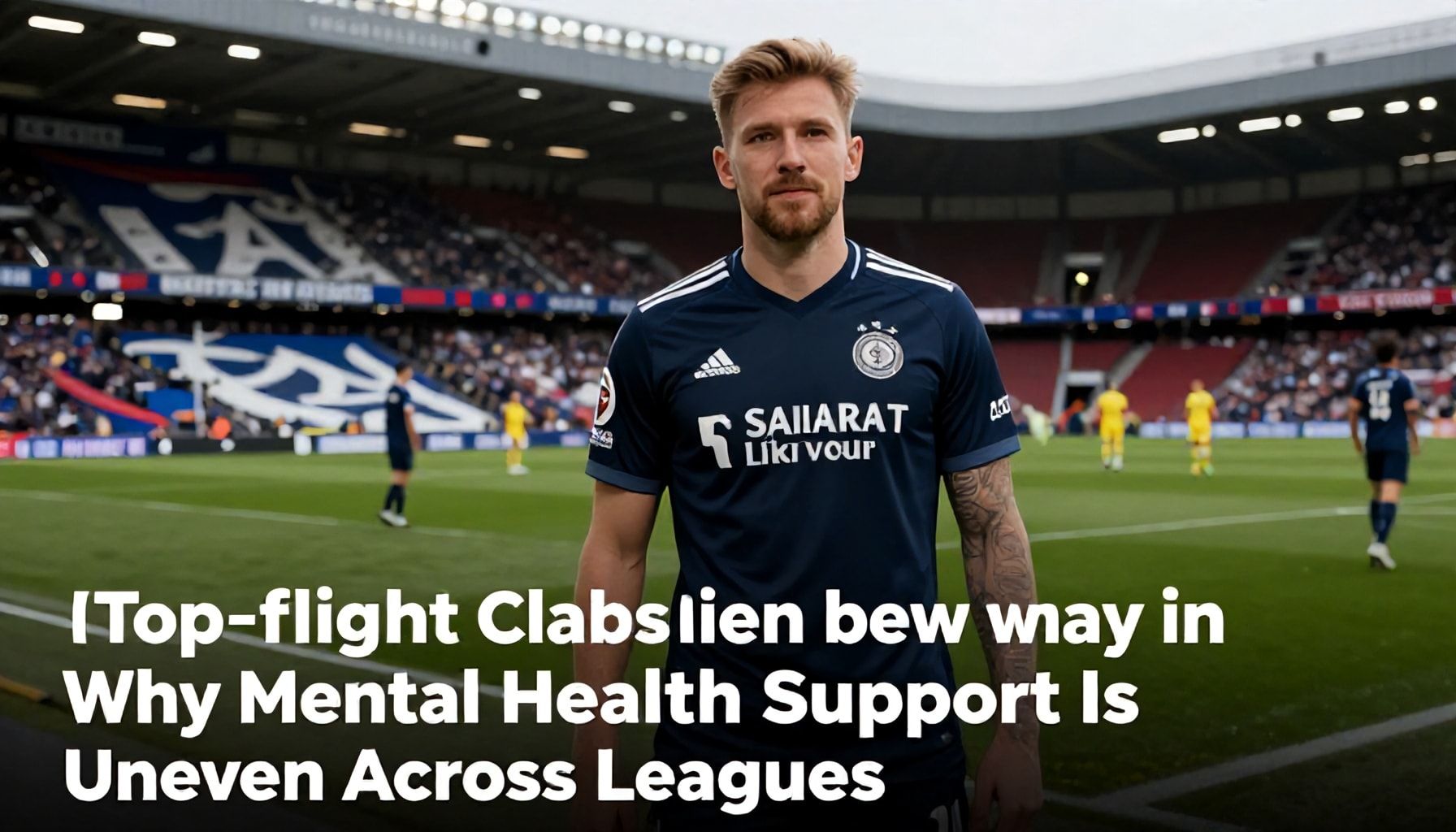
A stark disparity exists in mental health support across English football leagues, with Premier League clubs setting the standard while lower divisions struggle to keep pace. The top-flight’s financial muscle allows for comprehensive programmes, including dedicated staff and partnerships with charities. In contrast, many lower-league clubs grapple with tight budgets, leaving players and staff with limited access to specialist care.
The Premier League’s collective approach has driven significant progress. In 2019, the league launched a three-year mental health campaign, backed by £2.5 million in funding. This initiative has enabled clubs to implement robust support systems, including counselling services and workshops. The league’s collective bargaining agreement also mandates that all clubs have mental health policies in place.
Lower-league clubs face considerable challenges in matching these efforts. A 2020 survey by the Professional Footballers’ Association revealed that only 38% of players in League One and League Two had access to mental health support. The survey also highlighted that many clubs lacked the resources to provide adequate training for staff. “The financial disparity is stark,” said a spokesperson for the League Managers Association. “It’s a case of haves and have-nots.”
The mental health charity Mind has called for greater investment in grassroots football. “It’s crucial that support is available at all levels,” said a spokesperson. “Players and staff in lower leagues are not immune to mental health issues.” The charity has urged the Football Association to take a more active role in bridging the gap. Meanwhile, some lower-league clubs are taking matters into their own hands, forging partnerships with local mental health services to provide basic support.
Challenges persist in providing equal mental health support across leagues

The Premier League’s comprehensive mental health support stands in stark contrast to the patchy provision across lower leagues. While all 20 top-flight clubs have dedicated mental health staff, the picture is far less uniform below the Championship.
The Football League Trust’s 2023 report revealed that only 57% of League One and Two clubs employ full-time mental health professionals. This disparity leaves many players without consistent access to crucial support services.
Financial constraints significantly impact lower league clubs’ ability to provide adequate mental health provision. The average wage in League Two is £1,500 per week, compared to £25,000 in the Premier League, limiting resources available for non-playing staff.
Former League Two player Chris Barker highlighted the issue: “In lower leagues, mental health often takes a backseat to immediate playing concerns. Many clubs simply can’t afford the same level of support as top-flight teams.”
The Professional Footballers’ Association (PFA) acknowledges the challenge but insists progress is being made. “We’re working with clubs at all levels to improve mental health provision,” said a PFA spokesperson last month.
However, the gap in support remains evident in the number of players accessing help. Premier League players made 1,200 counselling sessions in 2022-23, while lower league players made just 300 sessions in the same period.
As the Premier League continues to set the standard for mental health support in football, the stark contrast with lower leagues raises questions about accessibility and resources. While top-flight clubs have invested heavily in dedicated staff and initiatives, many lower-league players and staff struggle to find adequate support. The Premier League’s commitment to mental health awareness may inspire other leagues to follow suit, but significant challenges remain in ensuring equitable access to mental health resources across all levels of the game.