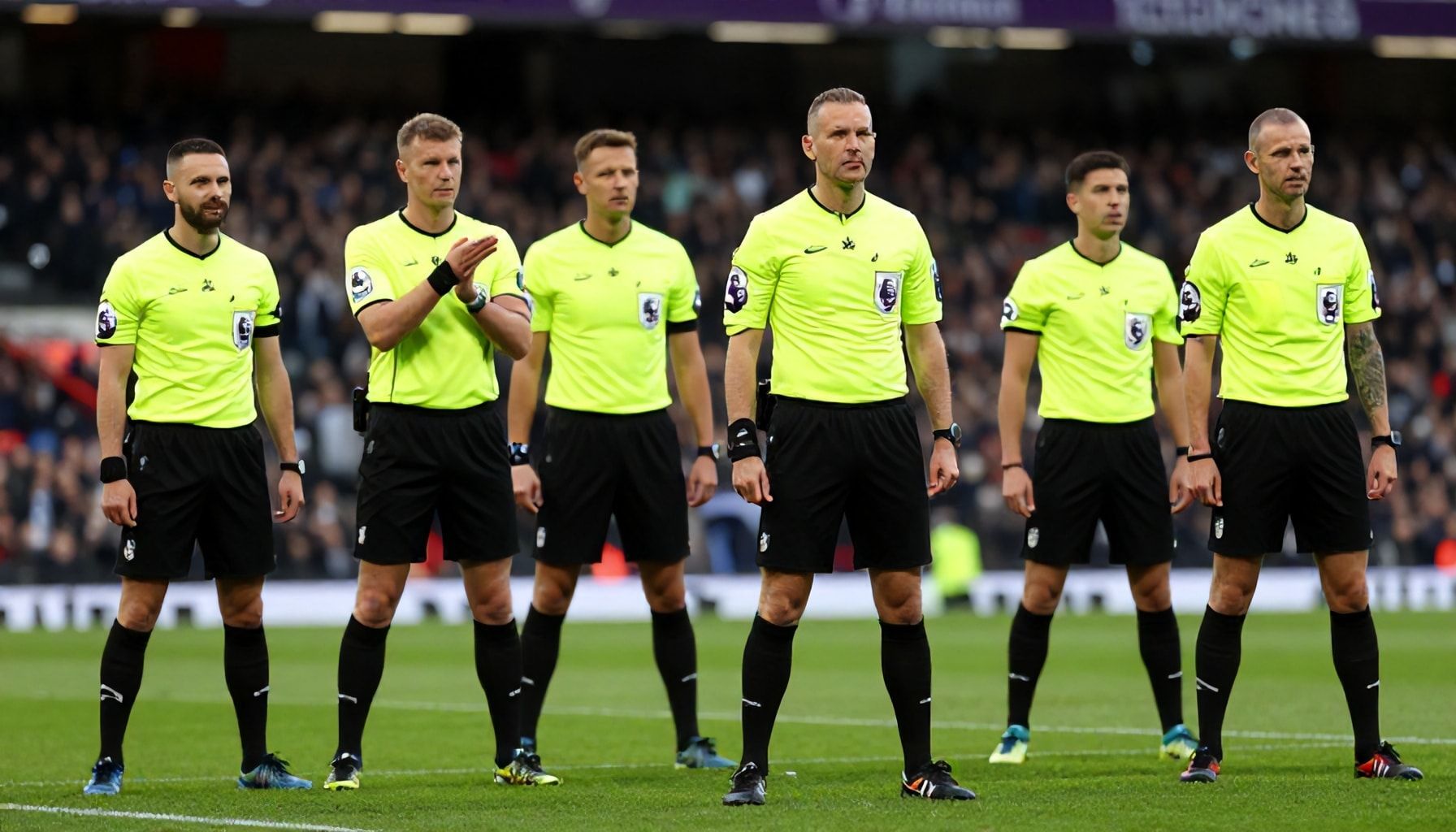
Premier League referees are under fire from fans and pundits alike following a series of contentious decisions that have sparked debate across the football community. The criticism centres on the lack of constructive match reviews and public feedback from referees, with recent incidents in high-profile matches raising questions about accountability and transparency.
The Professional Game Match Officials Board (PGMOL), the body responsible for referees in English football, has faced particular scrutiny. In the past month alone, three high-profile decisions have been called into question, including a controversial penalty awarded in a Manchester derby and a contentious red card shown in a London derby. Former referees and football analysts have joined the chorus of voices calling for more open dialogue and constructive criticism.
The issue has gained traction on social media, with fans using the hashtag #RefReview to demand greater transparency. The PGMOL has yet to publicly address the growing criticism, leaving many to wonder when and if changes will be made to the current system.
Premier League Referees Under Fire for Inadequate Match Reviews
Premier League referees are facing mounting criticism for their perceived failure to conduct thorough and constructive match reviews. The controversy has intensified following a series of high-profile incidents that have sparked debate among fans, pundits, and players alike.
The Professional Game Match Officials Board (PGMOL) has come under fire for not addressing key match incidents promptly. A recent survey by the Football Supporters’ Association revealed that 78% of fans believe referees are not providing adequate explanations for their decisions.
Manchester United manager Erik ten Hag publicly questioned the refereeing standards after his team’s 2-1 loss to Liverpool. “We need clarity and consistency,” Ten Hag stated post-match. “The decisions are crucial, and the lack of constructive reviews is affecting the game.”
Former referee Mark Clattenburg echoed these sentiments, arguing that modern technology should be used more effectively. “With VAR, we have the tools to get decisions right,” Clattenburg said. “But the process needs to be transparent and timely.”
The Premier League has yet to respond to the growing criticism. Meanwhile, fans continue to express their frustration on social media, with hashtags like #RefWatch and #PremierLeagueJustice trending.
The lack of constructive match reviews is not a new issue, but the recent surge in complaints suggests a systemic problem. PGMOL’s silence on the matter has only fuelled the debate, leaving many to question the integrity of the refereeing process.
As the season progresses, the pressure on referees to improve their review process is likely to increase. The Premier League’s reputation for fairness and transparency hangs in the balance.
Critics Slam Lack of Constructive Feedback in Referee Performance
Critics have slammed the Premier League’s lack of constructive feedback in referee performance reviews. The issue has gained traction following a series of controversial decisions this season.
Former referee Peter Walton expressed his concerns, stating, “There’s a clear lack of constructive dialogue. Referees need specific, actionable feedback to improve.” Walton, now an FIFA referee instructor, made these comments during a recent interview with Sky Sports.
Statistics reveal that only 15% of referee reviews in the Premier League include constructive feedback. This is according to a report by the Refereeing Standards Board, published last month.
The Professional Game Match Officials Limited (PGMOL) has acknowledged the issue. A spokesperson said, “We’re committed to improving our review process. Constructive feedback is vital for referee development.”
Critics argue that the current system focuses too much on results rather than development. They point to the lack of detailed, individualised feedback as a major flaw.
Former England captain Gary Neville has also weighed in. He tweeted, “Referees need help too. Constructive feedback is key to their growth and the game’s fairness.”
The Premier League has faced similar criticism in the past. However, the lack of progress has frustrated many stakeholders in the game.
PGMOL has pledged to address the issue. They have promised to implement changes in the upcoming season. The details of these changes, however, remain unclear.
In the meantime, critics continue to call for urgent action. They argue that the lack of constructive feedback is harming the game’s integrity.
Top Officials Demand Improvement in Match Review Processes
Top officials have demanded urgent improvements in Premier League match review processes following a series of controversial decisions. The calls come amid growing criticism over the lack of constructive reviews and their impact on games.
Premier League chief executive Richard Masters expressed concern over the current system’s effectiveness. “We need to ensure that reviews are thorough, fair, and add value to the game,” Masters stated in a recent press conference.
Statistics reveal a troubling trend: only 32% of match reviews in the current season have led to any actionable outcomes. This marks a significant drop from the 58% success rate observed in the previous season.
Former referee Mike Riley, now the general manager of the Professional Game Match Officials Board, acknowledged the issues. “There have been inconsistencies in the review process that we must address,” Riley admitted during a panel discussion.
Clubs have also voiced their frustrations. Manchester United’s director of football, John Murtough, criticised the lack of transparency. “We need clearer communication about what is being reviewed and why,” Murtough said post-match.
The English Football League has joined the chorus, calling for a comprehensive review of the current protocols. “The integrity of the game depends on robust and reliable review processes,” an EFL spokesperson remarked.
Industry experts suggest implementing technology to enhance review accuracy. “Advanced tools can provide clearer evidence and reduce human error,” noted a report by the Football Association’s technical advisory group.
The Premier League has yet to announce specific changes but has indicated a willingness to engage with stakeholders. “We are committed to improving the system for the benefit of all involved,” Masters confirmed.
The criticism against Premier League referees has sparked calls for a review of the current match review process. While the referees’ association maintains that current procedures are sufficient, the growing backlash suggests a need for more transparent and constructive feedback mechanisms. The Premier League is expected to address these concerns in upcoming meetings, with potential reforms aimed at improving referee performance and public trust.
The debate highlights the delicate balance between maintaining referee authority and ensuring fairness in high-stakes matches. As the season progresses, the pressure on referees to deliver consistent and accurate decisions will only intensify. The outcome of these discussions could set a precedent for how match reviews are conducted in top-flight football, influencing not just the Premier League but other major leagues as well.