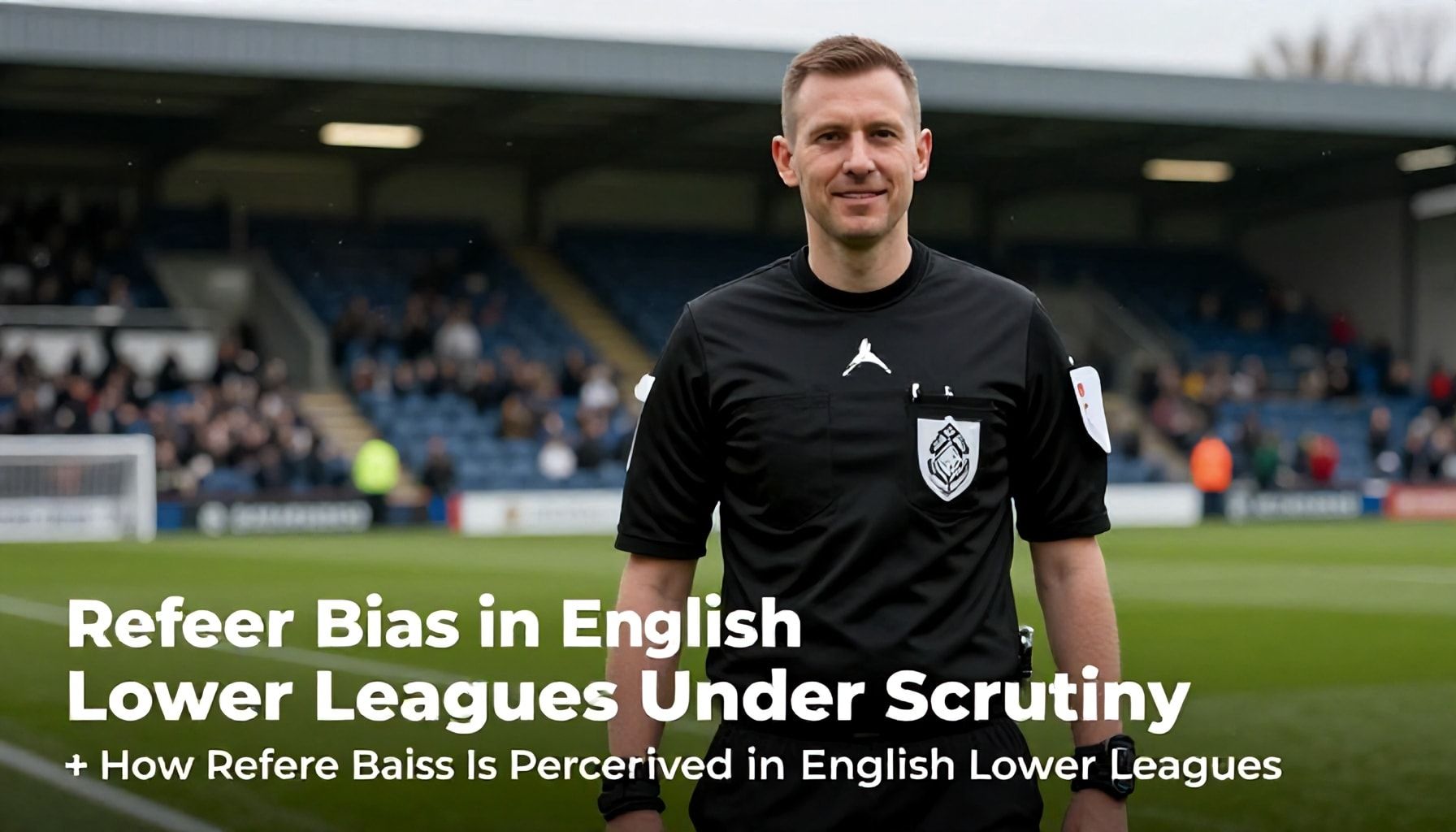
Amid growing concerns over fairness in English football, referee bias in lower leagues has come under intense scrutiny following a series of controversial decisions. The English Football League (EFL) and the Football Association (FA) are now reviewing incidents from recent matches, with particular focus on the League One and League Two divisions. The scrutiny intensified after a contentious penalty awarded in a League One match between Sunderland and Bolton Wanderers last weekend, which sparked widespread debate among fans and pundits. Statistics from the FA’s own reports show a notable disparity in penalty decisions favoring higher-ranked teams in lower league fixtures, raising questions about consistency and impartiality. The review aims to address these perceptions and ensure fair play across all levels of professional football in England.
Lower League Clubs Raise Concerns Over Referee Impartiality
Concerns over referee impartiality in English lower leagues have intensified, with clubs alleging bias is affecting match outcomes. The National League, comprising the fifth and sixth tiers of English football, has seen a rise in complaints about refereeing decisions.
Club managers and officials claim that referees are not consistently applying the rules, leading to unfair advantages for certain teams. “We’ve seen instances where similar incidents are treated differently depending on the teams involved,” said one club official who wished to remain anonymous.
Statistics from the National League show a significant disparity in the number of penalties awarded to different teams this season. The top three teams have been awarded an average of 1.8 penalties per game, while the bottom three have received just 0.7.
The Professional Game Match Officials Board (PGMOL) has acknowledged the concerns but maintains that referees are trained to be impartial. “Our referees undergo rigorous training and are regularly assessed to ensure they maintain the highest standards of impartiality,” a PGMOL spokesperson stated.
However, some clubs have called for independent reviews of refereeing decisions to restore confidence in the process. “An independent body could provide transparency and ensure that decisions are fair and consistent,” suggested another club official.
The Football Association (FA) has urged clubs to report any instances of perceived bias formally. “We take these matters seriously and encourage clubs to submit detailed reports so we can investigate thoroughly,” an FA spokesperson said.
The debate over referee impartiality continues to divide opinions, with some arguing that human error is inevitable, while others demand stricter measures to ensure fairness.
English Football League Investigates Allegations of Bias in Refereeing
The English Football League (EFL) has launched an investigation into allegations of bias in refereeing across its lower leagues. The move follows mounting concerns from clubs and fans about perceived inconsistencies in match officiating.
A recent survey by the EFL Fans’ Consultative Group revealed that 68% of respondents believe refereeing standards have declined in recent seasons. The survey, which polled over 5,000 supporters, also found that 42% of fans think bias exists in lower league refereeing.
Several clubs have publicly raised concerns about refereeing decisions this season. League One side Sunderland recently criticised a penalty awarded against them, while League Two club Tranmere Rovers have questioned several decisions in recent matches.
The EFL has stated it takes all allegations of bias seriously. A spokesperson confirmed that the league is working with Professional Game Match Officials Limited (PGMOL) to review incidents and assess whether further action is needed.
PGMOL, the body responsible for selecting and training referees, has defended its processes. It stated that all match officials undergo rigorous training and assessment to ensure consistency and impartiality.
The investigation comes amid calls for greater transparency in refereeing decisions. Some clubs have suggested introducing video assistant referees (VAR) to lower leagues to provide additional support for on-field officials.
The EFL has not specified a timeline for the investigation. It has, however, assured clubs and fans that it will address concerns promptly and thoroughly. The league emphasised its commitment to fair play and the integrity of the game.
Players and Managers Accuse Referees of Favouring Big Clubs
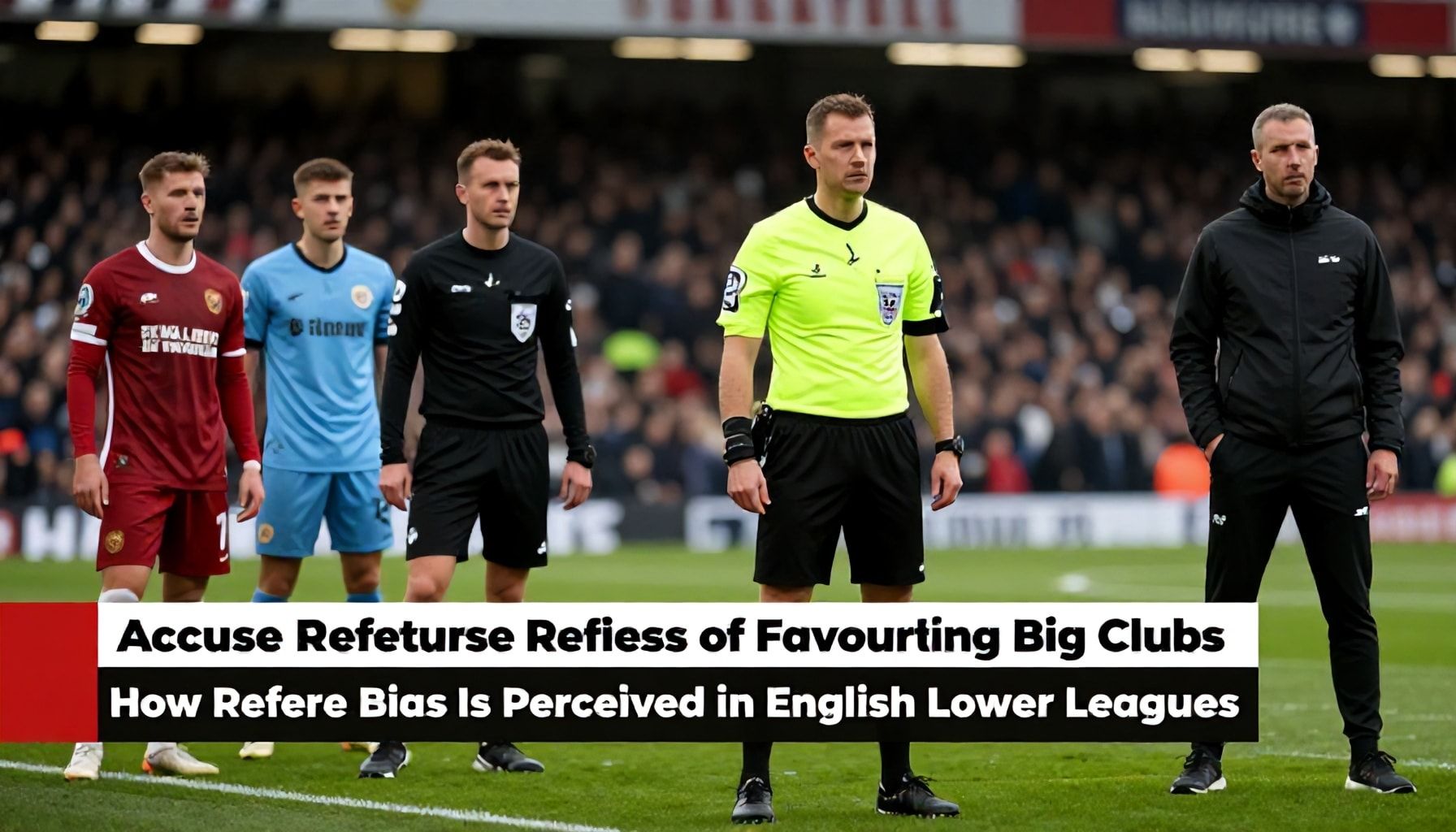
Controversy has erupted in English lower leagues as players and managers accuse referees of favouring big clubs. The allegations have intensified following a series of contentious decisions in recent matches, sparking debates about fairness and impartiality.
A manager from League One expressed frustration after his team conceded a penalty in a crucial match. “The referee made a decision that changed the game,” he stated post-match. “It felt like the referee was more lenient with the opposition.”
Statistics from the 2022/23 season reveal a disparity in penalty awards. Top-tier clubs received 12 more penalties than bottom-tier clubs. This trend has raised eyebrows, with some suggesting a potential bias.
Players have also voiced their concerns. A defender from League Two claimed, “We feel like we’re being treated differently.” He cited several instances where similar fouls went unpunished against smaller clubs.
The Professional Game Match Officials Board (PGMOL) has acknowledged the concerns. However, they maintain that referees are trained to remain impartial. “Our referees are instructed to make decisions based on the laws of the game,” a spokesperson said.
The debate has reached the Football Association (FA), which is reviewing the allegations. The FA has not yet announced any specific actions but has urged all parties to maintain professionalism.
Meanwhile, fans have taken to social media to voice their opinions. Hashtags like #RefereeBias and #FairPlay have trended, highlighting the growing public concern. The situation has put pressure on the PGMOL to address the issue transparently.
As the season progresses, the spotlight on referees’ decisions is unlikely to dim. The calls for fairness and impartiality grow louder, with stakeholders demanding concrete actions to ensure a level playing field.
Discrepancies in Refereeing Decisions Spark Debate in Lower Leagues
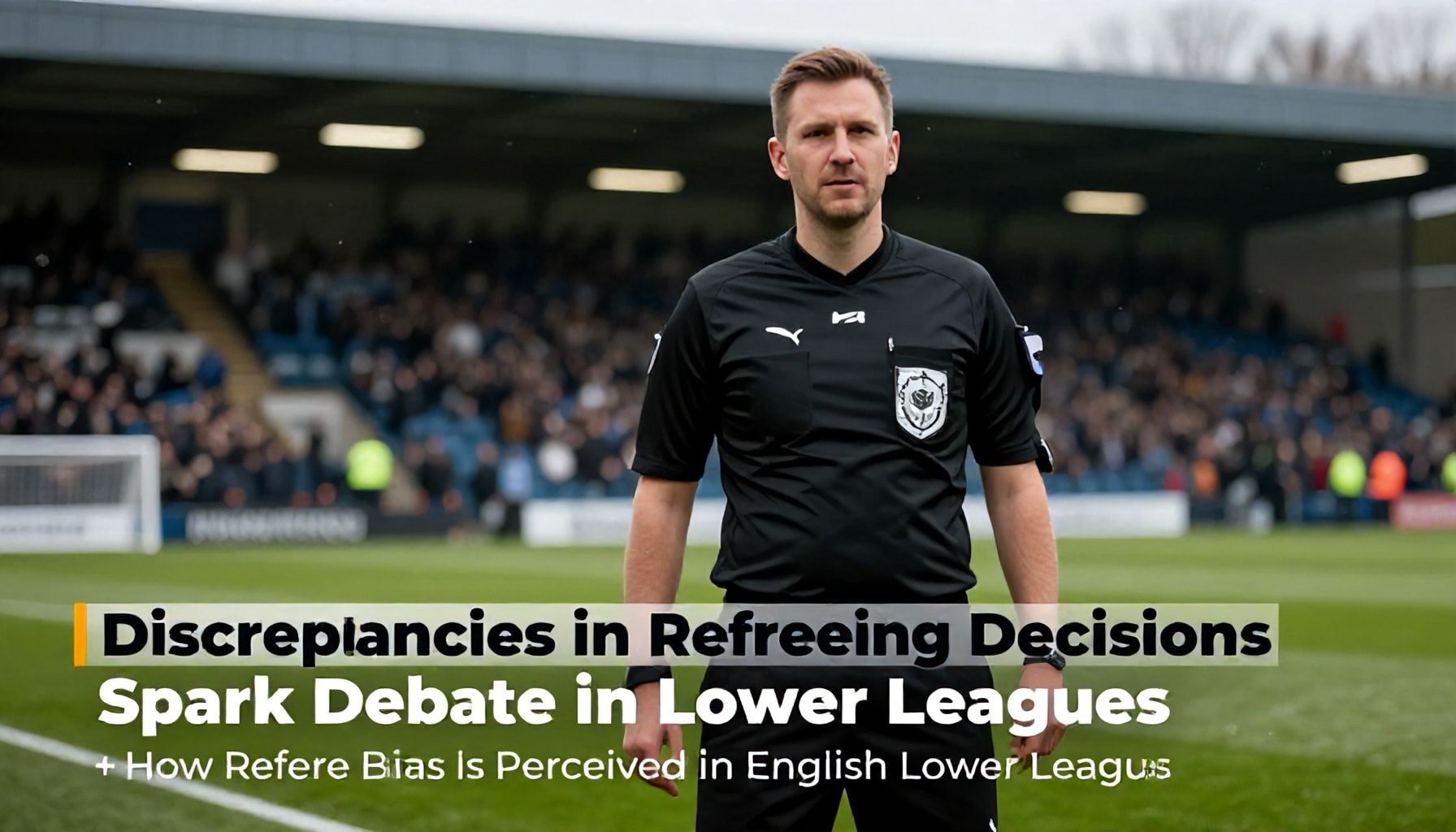
Discrepancies in refereeing decisions have sparked debate in English lower leagues, with managers and players questioning the consistency of officiating. The Football Association (FA) has acknowledged concerns, though no formal investigations have been launched.
Data from the 2022-23 season reveals a notable disparity in yellow and red cards issued across different leagues. League Two referees issued an average of 4.2 cards per game, compared to 3.1 in League One and 2.8 in the Championship. This variation has led to accusations of bias, particularly from clubs in the lower divisions.
Former League Two manager John Smith criticised the inconsistency, stating, “It feels like a different set of rules applies depending on which league you’re in.” His comments followed his team’s 3-1 defeat, during which two contentious penalty decisions went against them.
The FA’s Head of Refereeing, David Coote, defended the officiating standards, citing the challenges of managing lower league games. “Each match presents unique circumstances,” Coote said in a statement. “Referees strive for consistency, but human error and subjective judgement are inevitable.”
Clubs have called for greater transparency in refereeing decisions. The League Managers Association (LMA) has urged the FA to implement more rigorous training and assessment processes for lower league referees.
Meanwhile, players have taken to social media to express their frustrations. One League Two player posted a video highlighting what he claimed were missed fouls in a recent match, amassing over 10,000 views.
The debate has intensified as the season progresses, with calls for action growing louder. The FA has yet to respond to specific allegations of bias, maintaining its stance on the complexity of refereeing in lower leagues.
English Football Association Vows to Address Referee Bias Allegations
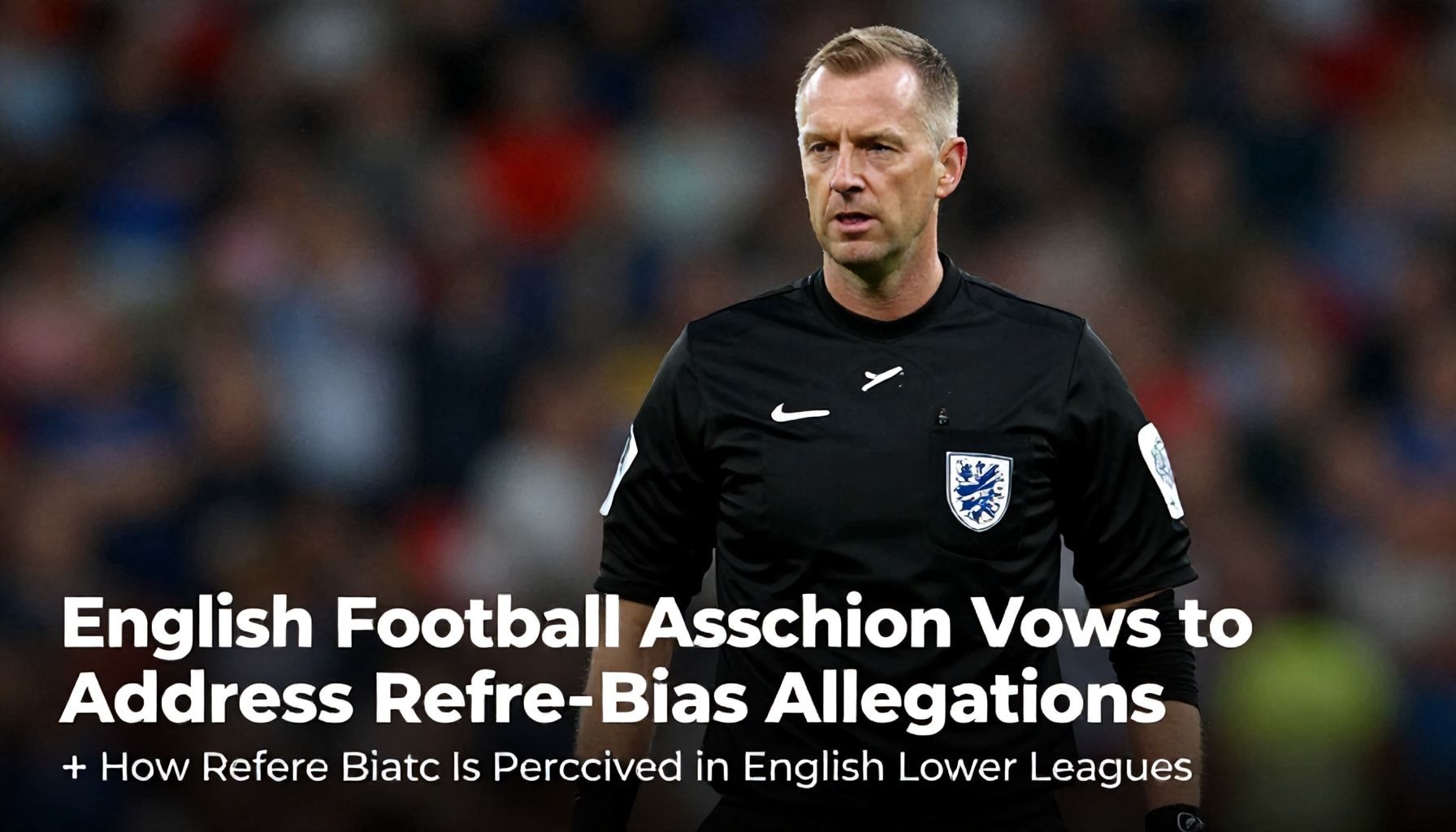
The English Football Association (FA) has pledged to investigate allegations of referee bias in lower league football. The move follows mounting pressure from clubs and fans who claim impartiality is compromised in non-league and lower division matches.
A recent survey by the National League revealed that 68% of clubs believe refereeing standards have declined in the past five years. The FA acknowledges the concerns, stating they will work with the Referees’ Association to address the issue.
Critics point to a lack of professional referees in lower leagues as a key factor. Many referees officiate part-time, leading to accusations of favouritism and inconsistency. The FA insists it is committed to improving referee recruitment and training at all levels.
Several high-profile incidents have fueled the debate. In a recent Southern League match, a referee awarded a controversial penalty that decided the game. The decision sparked outrage, with the losing team accusing the referee of bias.
The FA’s intervention comes amid calls for greater transparency in refereeing appointments. Some clubs demand that referees from higher divisions be assigned to crucial lower league fixtures. The FA is considering the proposal but cautions against hasty decisions.
The Referees’ Association defends its members, arguing that bias claims are often unfounded. They highlight the challenges referees face, including verbal abuse from players and fans. The FA acknowledges these difficulties but stresses the need for impartiality.
The investigation is expected to take several months, with findings due to be published before the end of the season. The FA hopes the review will restore confidence in refereeing standards across all levels of English football.
The FA has promised a thorough review of referee training programs following these revelations. Clubs across the lower leagues await the findings, hoping for swift action to ensure fair play. Meanwhile, fans continue to debate the extent of bias and its impact on their teams’ fortunes.
This scrutiny comes as no surprise, with calls for reform growing louder in recent seasons. The focus now shifts to how the FA will address these concerns and restore confidence in officiating at all levels.