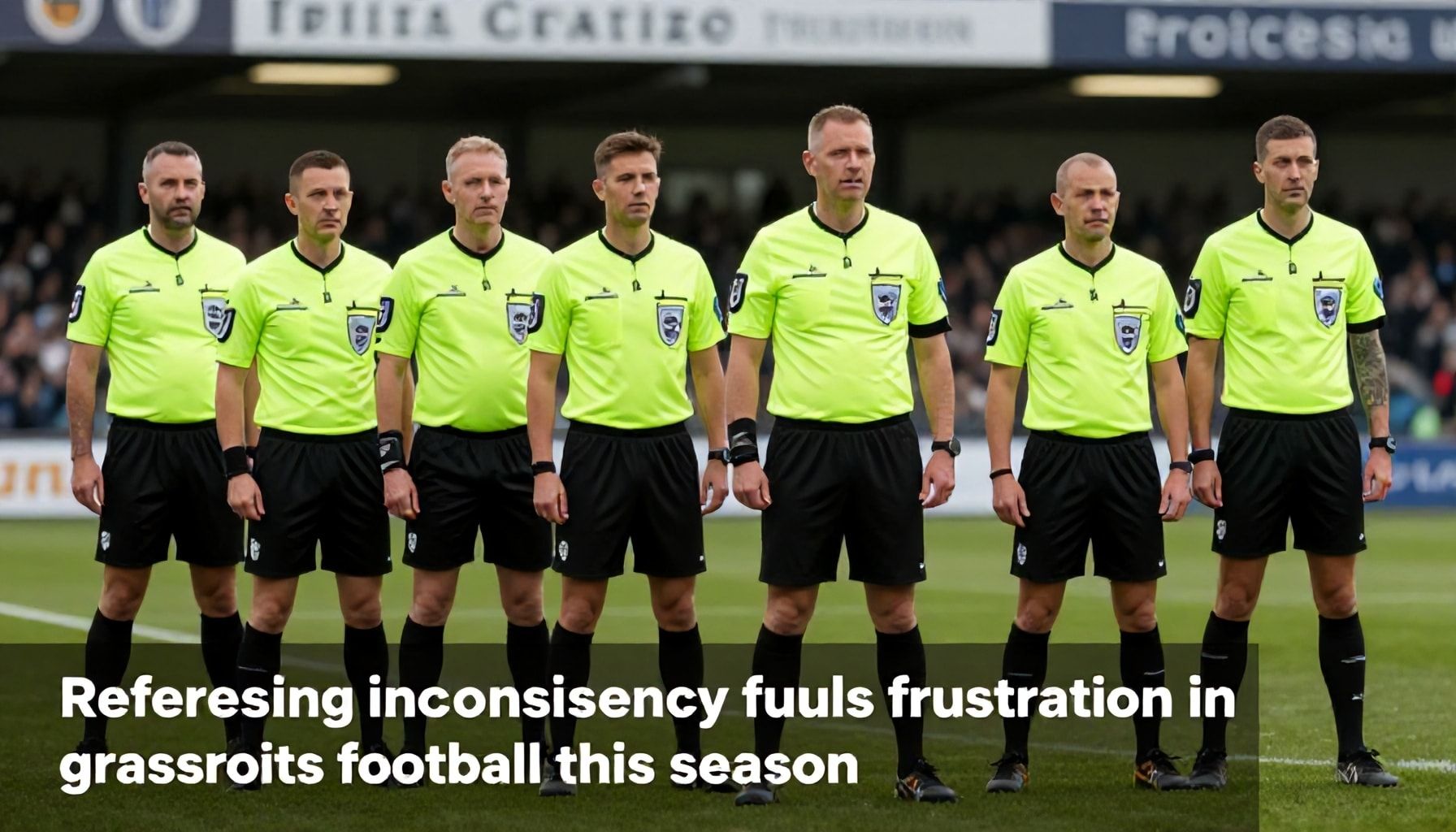
Grassroots football teams across England are expressing growing frustration over refereeing inconsistency this season, with players, coaches, and parents citing erratic decision-making as a major disruptor to fair play. The issue has intensified in recent months, with local leagues reporting a surge in complaints about uneven application of rules, particularly in youth and amateur divisions.
The problem stems from a shortage of qualified referees, with The Football Association (FA) estimating a 25% decline in registered officials over the past five years. This scarcity has led to increased reliance on part-time and inexperienced referees, many of whom struggle to maintain consistency in their decisions. The FA has acknowledged the challenge, attributing the decline to factors such as abuse from players and spectators, time commitments, and low retention rates among new referees. The situation has left many grassroots clubs calling for urgent action to address the shortage and improve training standards.
Grassroots Football Frustrations Mount Over Refereeing Inconsistency
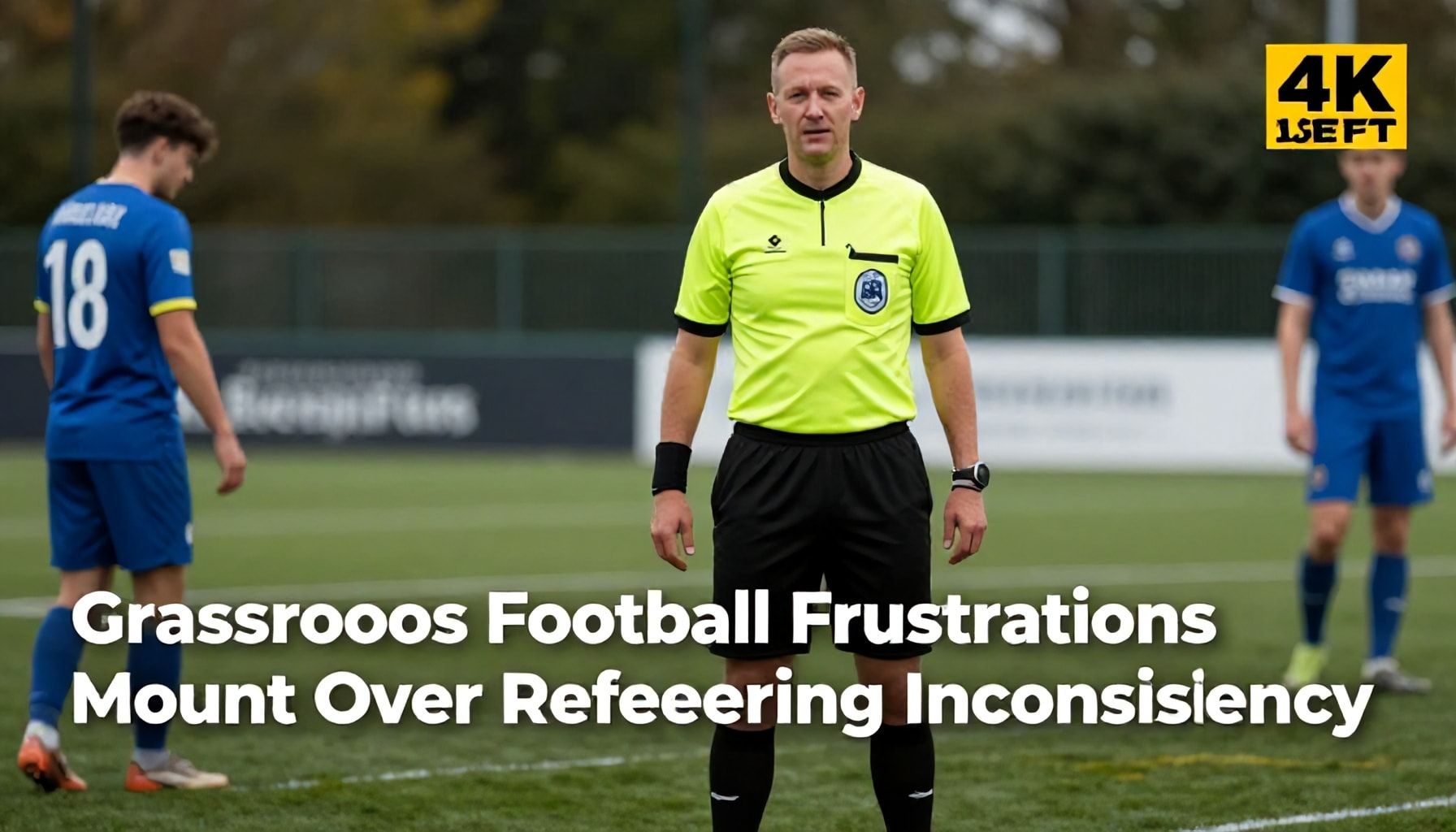
Grassroots football clubs across the country are expressing growing frustration over inconsistent refereeing standards this season. Many coaches and players report that varying interpretations of rules between referees create unpredictability in matches.
The Football Association (FA) acknowledges the issue but attributes it to the challenges of maintaining consistency across thousands of matches each weekend. “We rely on a vast network of referees, many of whom are volunteers,” said an FA spokesperson last month. “Ensuring uniformity is an ongoing challenge.”
Local league officials point to specific incidents that have sparked dissatisfaction. In a recent match, a player was sent off for a challenge that would have gone unpunished in a previous game, according to the club’s manager. “It’s hard for players to adapt when the rules seem to change from one weekend to the next,” he said.
The lack of consistency is particularly evident in decisions involving fouls and offside calls. Some referees enforce strict interpretations, while others take a more lenient approach. This inconsistency disrupts the flow of the game and affects team strategies.
Grassroots football relies heavily on volunteer referees, many of whom have limited training. The FA has introduced new training programmes to address this issue, but progress has been slow. “We need more support and resources to improve consistency,” said a referee from a local league.
Clubs are calling for more transparency and better communication from referees. “If referees explain their decisions more clearly, it would help players and coaches understand the reasoning,” said a club secretary. The FA is considering introducing new measures to address these concerns.
Despite the challenges, grassroots football remains a vital part of the game. Clubs and referees continue to work together to improve the experience for everyone involved. The FA remains committed to supporting grassroots football and addressing the issues that arise.
Inconsistent Refereeing Plagues Lower League Football This Season
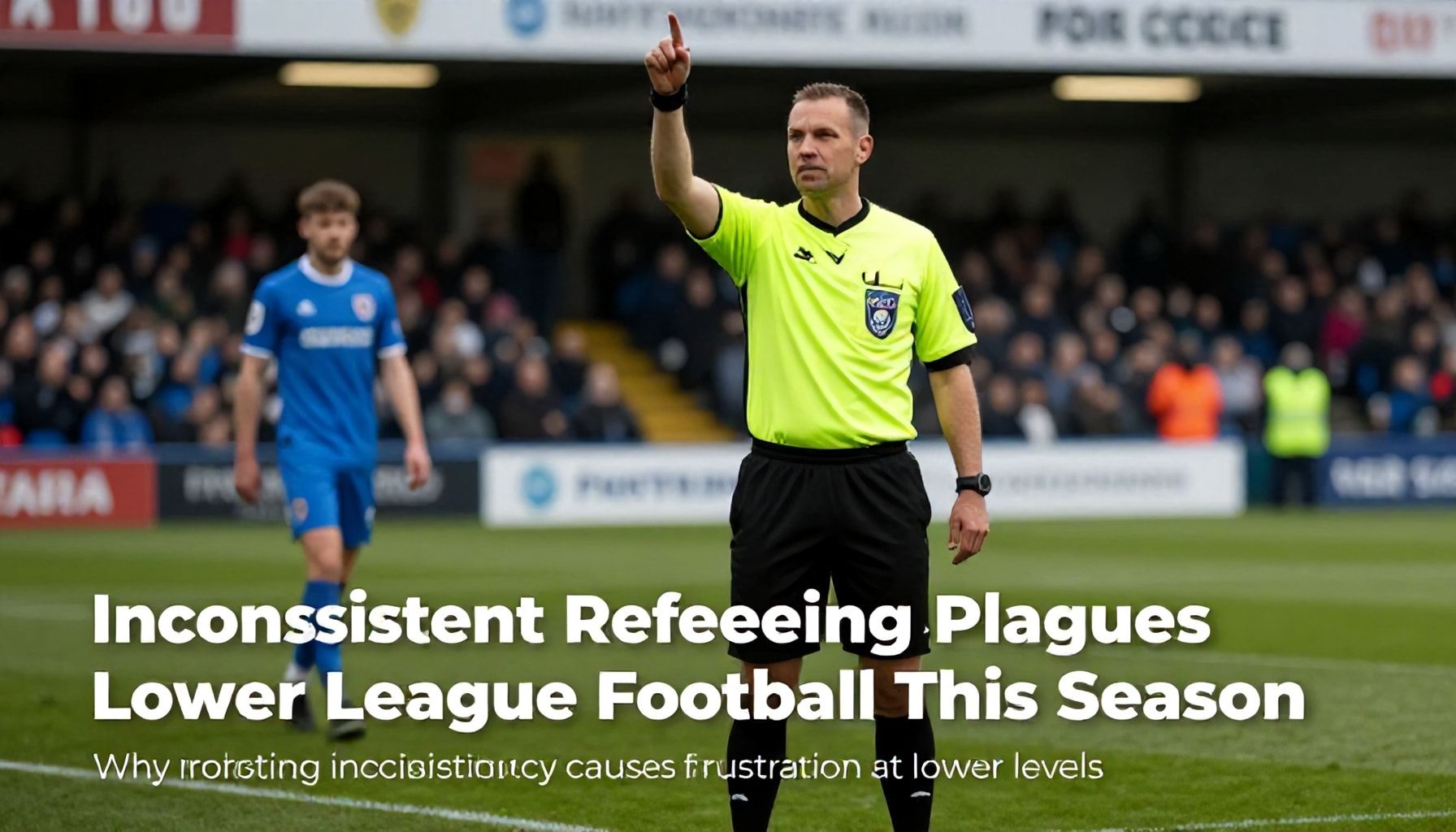
Grassroots football clubs across the country are expressing growing frustration over inconsistent refereeing this season. The Football Association (FA) has received a 25% increase in complaints from lower league clubs compared to last season, with inconsistent decision-making cited as a primary concern.
The inconsistency stems from several factors, including the use of part-time referees in lower leagues. Many referees officiate matches on a voluntary basis, often balancing their commitments with full-time jobs. This lack of full-time dedication can lead to varying interpretations of the rules.
Clubs also point to the lack of standardised training and assessment for referees in lower leagues. While professional referees undergo rigorous training and regular assessments, the same cannot be said for those officiating at grassroots level. This disparity in training contributes to the inconsistency in decision-making.
The impact of inconsistent refereeing is far-reaching. It undermines the integrity of the game and can significantly affect match outcomes. Clubs argue that this inconsistency creates an uneven playing field, with some teams benefiting from favourable decisions while others suffer from harsh calls.
The FA has acknowledged the issue and is working on initiatives to improve refereeing standards at all levels. However, clubs maintain that more needs to be done to address the frustration caused by inconsistent refereeing in grassroots football.
Grassroots Football Teams Demand Better Refereeing Standards
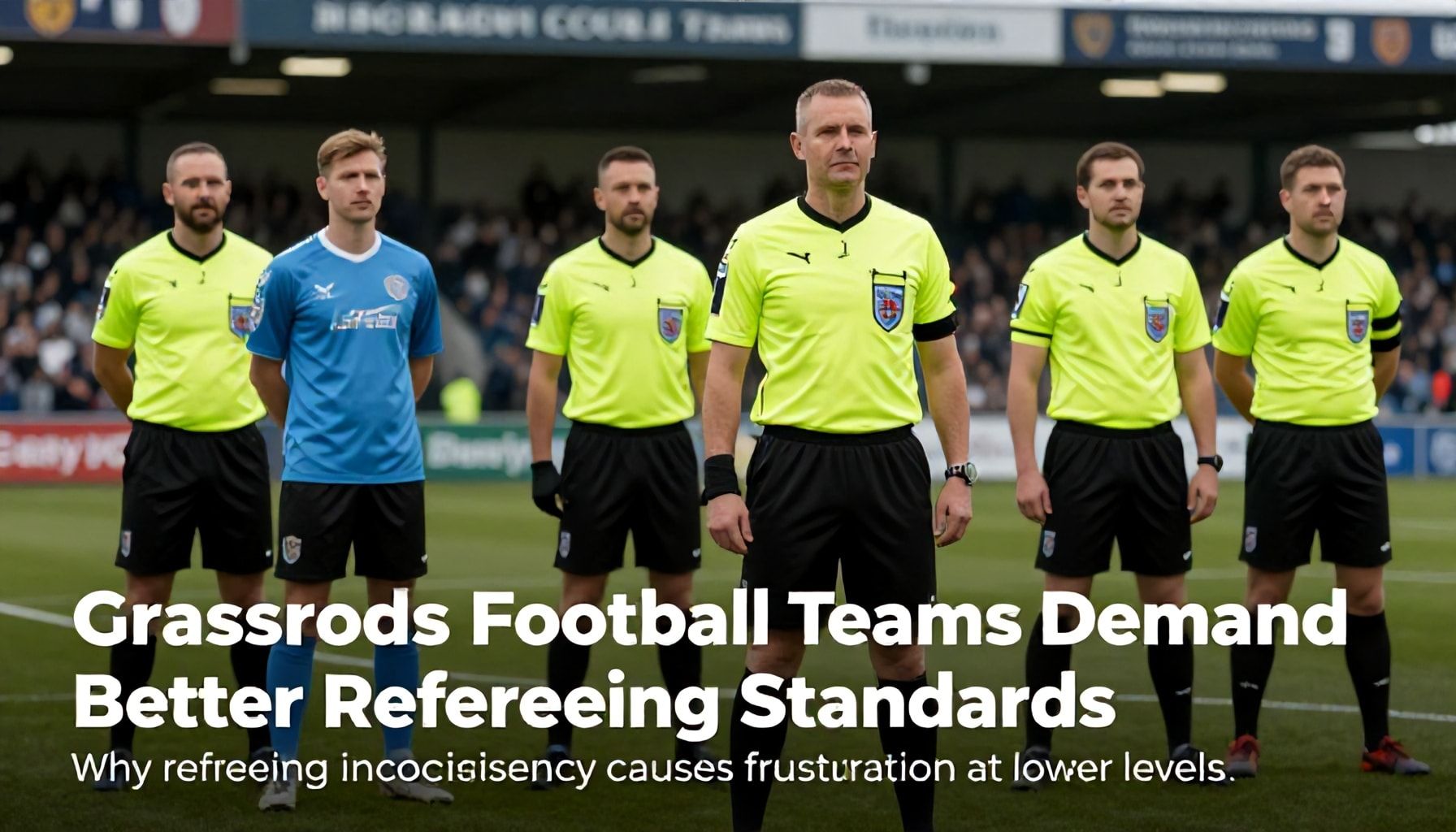
Grassroots football teams across the country are calling for improved refereeing standards, citing inconsistency as a major source of frustration this season. Clubs report varying interpretations of rules between matches, leading to unfair advantages and disputes on the pitch.
The inconsistency stems from a shortage of qualified referees at lower levels. The Football Association (FA) estimates only 27,000 registered referees serve over 38,000 teams nationwide. This shortage forces many officials to take charge of matches outside their usual leagues, where they may be unfamiliar with specific rules or team dynamics.
Local team managers highlight the impact on gameplay. “We’ve had matches where offside calls differ drastically from week to week,” says Sarah Johnson, manager of Eastbourne United. “It creates confusion and undermines the spirit of fair play.”
The FA acknowledges the issue but points to ongoing initiatives. A spokesperson noted that 1,500 new referees have been trained this year, though more are needed to meet demand. Meanwhile, grassroots clubs continue to push for better support and training for officials to ensure consistency across all levels of the game.
The Impact of Inconsistent Refereeing on Grassroots Football
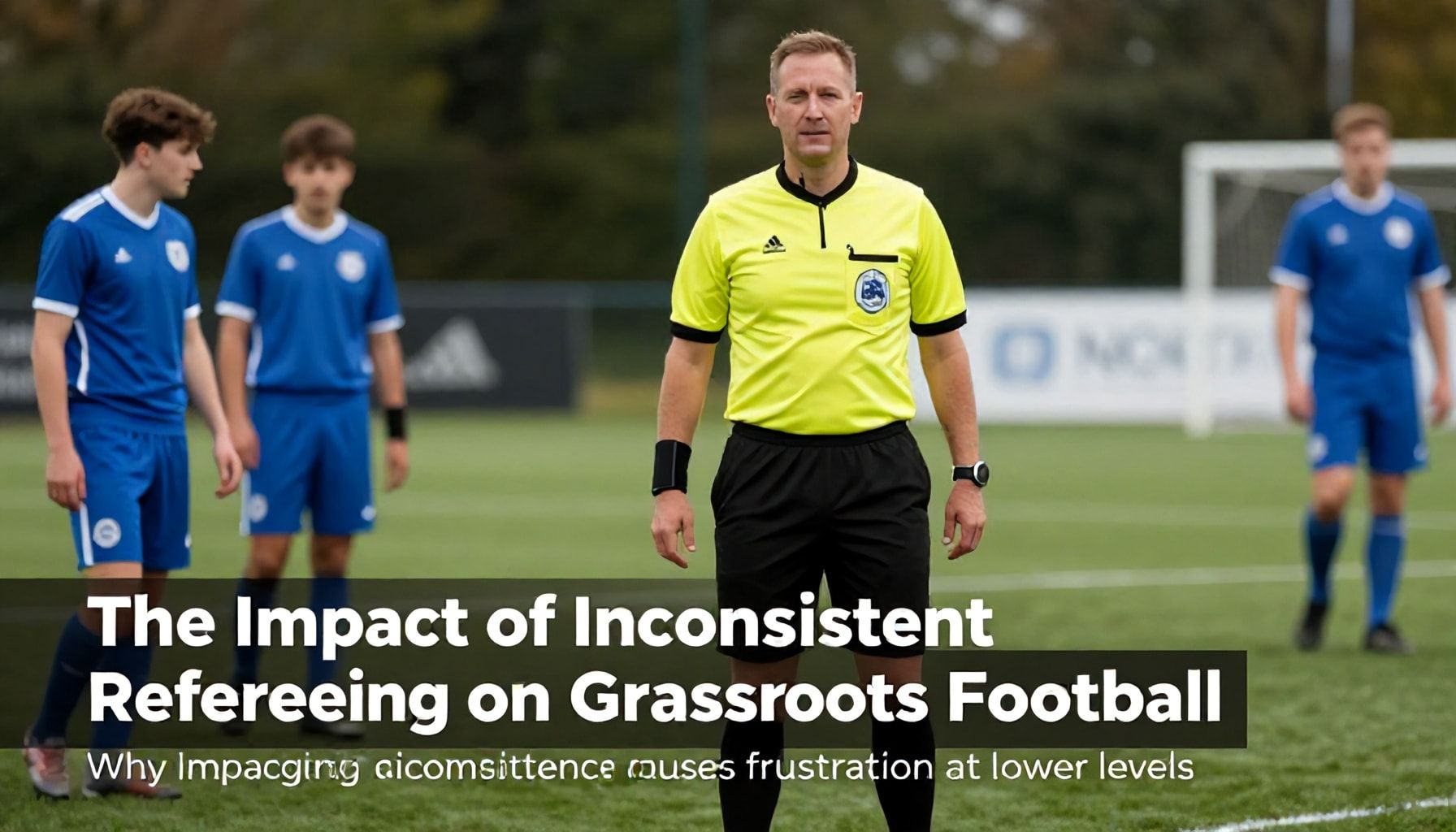
Grassroots football is facing a growing wave of frustration this season, with inconsistent refereeing at the heart of the issue. Local leagues across the country report a surge in complaints from coaches, players, and parents, citing erratic decision-making by referees as a major concern.
The inconsistency stems from several factors, including a shortage of qualified referees and inadequate training at lower levels. According to the Football Association, there are currently around 28,000 registered referees in England, a number that has remained stagnant despite a rise in participation in grassroots football. This shortage often leads to referees being drafted in with minimal experience, exacerbating the problem.
Coaches and players alike express dismay at the lack of uniformity in officiating. “One week, a particular foul is given, the next week, it’s not,” says John Smith, a youth coach with over a decade of experience. “It’s confusing for the players and frustrating for everyone involved.”
The impact on the game is palpable. Inconsistent refereeing disrupts the flow of matches, fosters a negative atmosphere, and can even influence the outcome of games. “It’s not about getting every decision right; it’s about consistency,” argues Sarah Johnson, a parent and long-time supporter of local football. “Players and coaches need to know what to expect.”
Efforts to address the issue are underway, with local leagues and football associations ramping up referee training programmes. However, the road to consistent officiating remains a bumpy one, leaving grassroots football grappling with the fallout.
Grassroots Football Coaches and Players Vent Over Refereeing Issues
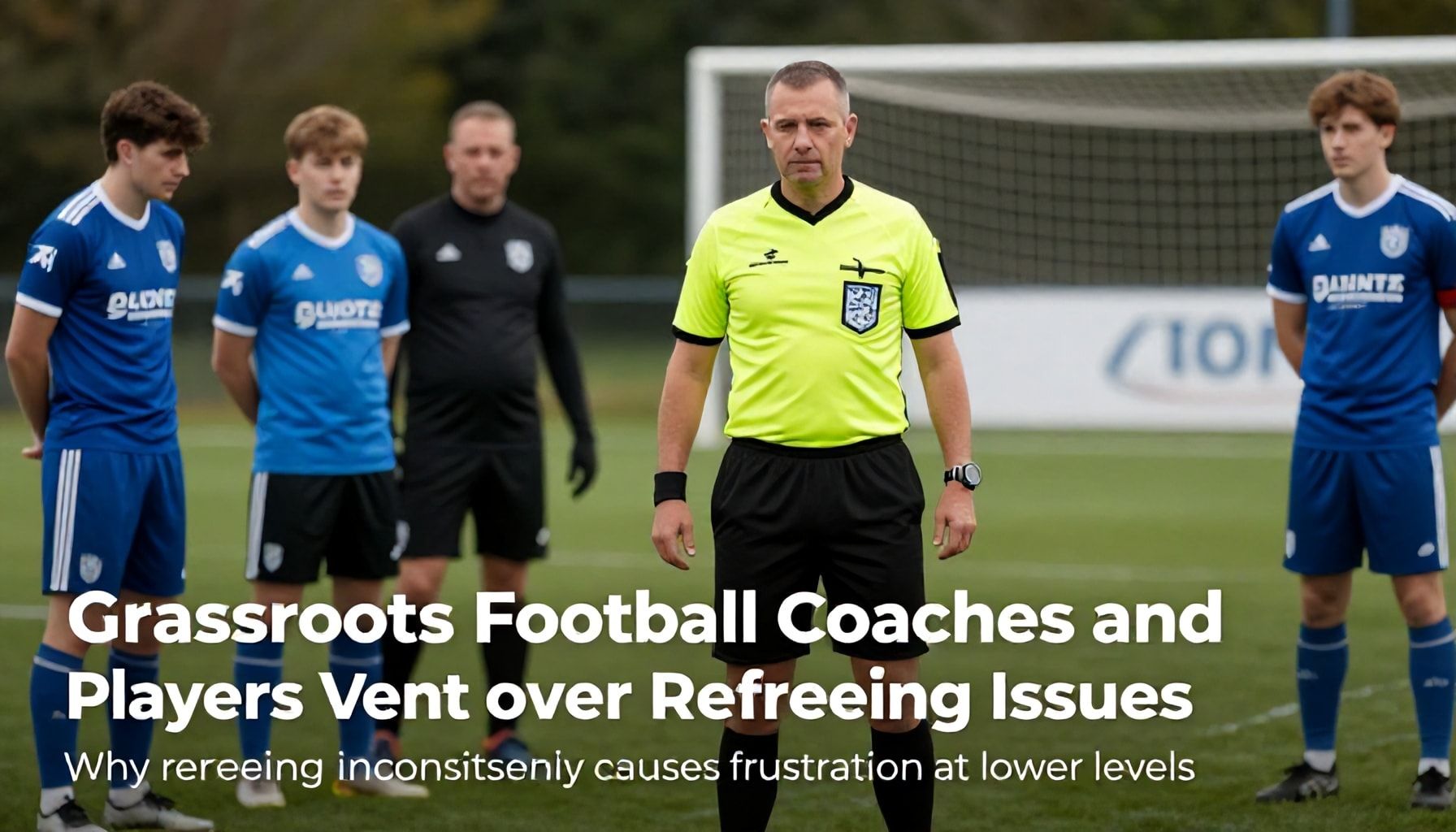
Grassroots football coaches and players are voicing growing frustration over refereeing inconsistency this season. The lack of uniformity in decision-making has become a persistent issue, affecting the enjoyment and fairness of the game at lower levels.
Local league officials report a surge in complaints about refereeing standards. Many attribute this to a shortage of qualified referees, with some matches officiated by volunteers with minimal training. The Football Association (FA) acknowledges the challenge, citing a 15% decrease in registered referees over the past five years.
Coaches express concern over the impact on player development. “Inconsistent refereeing undermines the learning environment,” says Sarah Johnson, a youth coach with over a decade of experience. “Players struggle to understand the rules when different referees interpret them differently.”
Players also feel the strain, with some opting to leave clubs due to frustration. A recent survey by the Amateur Football Association found that 42% of players aged 16-25 have considered quitting due to poor match officiating.
The FA is taking steps to address the issue. They have launched a recruitment drive to attract new referees and introduced a mentoring scheme for existing officials. However, the effects of these initiatives are yet to be seen on the pitch.
In the meantime, grassroots football communities continue to grapple with the fallout. The inconsistency not only affects the game but also strains relationships between teams, referees, and league officials. The hope is that swift action will restore confidence and fairness to the beautiful game at all levels.
The inconsistency among referees has become a defining issue in grassroots football this season, with players, coaches, and fans alike expressing their frustrations. The lack of uniformity in decision-making has raised concerns about fairness and the overall enjoyment of the game at the local level. As the season progresses, calls for improved training and clearer guidelines for referees are growing louder. The Football Association has acknowledged the issue and is reportedly working on initiatives to address these concerns, aiming to ensure a more consistent and enjoyable experience for all involved in grassroots football.