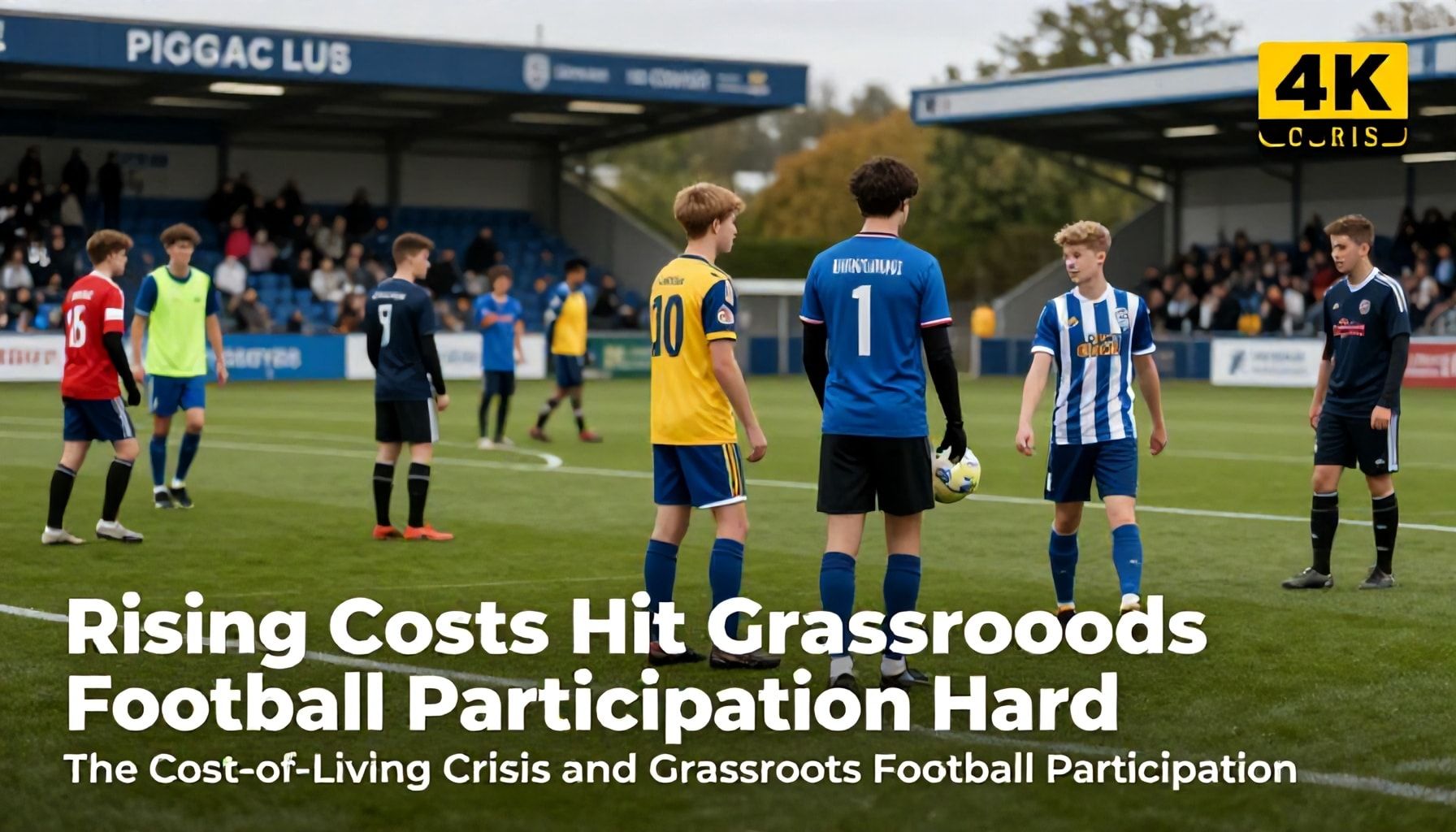
Grassroots football participation has plummeted across the UK as rising living costs force families to make tough financial decisions. Since the start of the year, local leagues have reported a 30% drop in registrations, with many clubs facing closure due to unsustainable losses. The Football Association (FA) warns that the cost-of-living crisis is disproportionately affecting children from lower-income households, with participation rates among 5- to 11-year-olds falling by nearly 40% in some regions. Parents cite rising fuel costs, food prices, and increased childcare expenses as key factors in their decision to withdraw from youth football programs. The situation has prompted calls for government intervention, with charities and local authorities urging the introduction of subsidies to keep grassroots football accessible.
Grassroots Football Faces Participation Crisis Amid Rising Costs
Grassroots football participation is declining sharply across the UK as rising costs price out young players and their families. The Football Association (FA) reports a 12% drop in youth team registrations over the past two years, with local leagues struggling to field enough players.
The cost-of-living crisis has exacerbated long-standing financial pressures on grassroots football. Equipment, pitch hire, and travel expenses have all surged, with many families now facing bills of £500-£800 per child annually. A survey by the FA found that 42% of parents are considering withdrawing their children from the sport due to financial concerns.
Local clubs are feeling the strain. “We’ve lost 30% of our junior players this season alone,” says Sarah Johnson, secretary of a club in Yorkshire. “Many families just can’t afford the fees anymore.” The situation is particularly acute in deprived areas, where participation has fallen by as much as 20%.
The FA has acknowledged the crisis, with CEO Mark Bullingham stating, “We’re deeply concerned about the impact of rising costs on grassroots football.” However, solutions remain elusive. Some clubs have frozen fees or introduced payment plans, but many fear these measures won’t be enough to stem the tide.
Experts warn that the decline could have long-term consequences for the sport. “If we don’t act now, we risk losing a generation of players,” says Dr. James Wilson, a sports sociologist. The FA has pledged to work with government and local authorities to find sustainable solutions, but with no immediate relief in sight, the future of grassroots football remains uncertain.
Cost-of-Living Crisis Forces Local Football Clubs to Cut Back
Grassroots football clubs across the UK are facing severe financial strain due to the ongoing cost-of-living crisis. Rising energy bills, fuel costs, and inflation have forced many clubs to make difficult decisions, impacting both players and communities.
The Football Association (FA) has reported a significant drop in participation rates. According to their latest figures, youth football registrations have fallen by 12% over the past year. This decline is attributed to families struggling with the increased costs of kit, travel, and membership fees.
Local clubs are feeling the pinch. The cost of pitch hire has surged by up to 30% in some areas, according to a survey by the National Grassroots Football Survey. Many clubs are now passing these costs onto players, making it unaffordable for some families.
Some clubs have resorted to cutting back on training sessions and tournaments. “We’ve had to reduce our weekly training from three to two sessions,” said John Smith, chair of a local club in Manchester. “It’s heartbreaking to see kids missing out, but we just can’t afford to keep up with the rising costs.”
The crisis is not just financial. Many clubs rely on volunteers, who are also feeling the strain. Higher fuel costs and the need to prioritise paid work have led to a shortage of volunteers, further impacting club operations.
The FA has acknowledged the challenges but insists it is working on solutions. “We are exploring ways to support grassroots football, including funding initiatives and partnerships with local councils,” said an FA spokesperson. However, many clubs feel more immediate action is needed.
The situation highlights the broader impact of the cost-of-living crisis on community sports. Without intervention, the decline in grassroots football participation could have long-term consequences for the sport at all levels.
Football Participation Drops as Families Struggle with Expenses
Grassroots football participation has fallen sharply as families grapple with rising living costs. The Football Association (FA) reports a 12% drop in youth registrations over the past year, with similar declines in adult amateur leagues.
The FA’s chief executive, Mark Bullingham, attributes the decline to financial pressures. “Many families are making tough choices about discretionary spending,” he said in a statement last month. “Football, which has traditionally been seen as affordable, is now feeling the pinch.”
Equipment costs have risen significantly, with a standard football boot now averaging £60, up from £40 two years ago. Travel expenses for matches and training sessions have also increased, with fuel prices reaching record highs.
Local clubs are struggling to retain players and volunteers. The Amateur Football Alliance (AFA) found that 38% of grassroots clubs have seen participation drop by more than 20%. “It’s not just about the cost of playing,” said AFA spokesperson Sarah Johnson. “Many parents are also volunteering less due to increased work commitments and financial strain.”
Some clubs are adapting by offering payment plans or reducing fees. However, smaller clubs with limited resources are finding it difficult to keep up. The FA has pledged £1 million to support grassroots football, but experts argue more funding is needed to address the crisis.
The decline in participation raises concerns about the long-term health of the sport. Without intervention, the pipeline of talent feeding into professional academies and national teams could be severely impacted.
Rising Costs Threaten Future of Grassroots Football Development
Grassroots football participation faces severe challenges as rising costs squeeze community clubs. The cost-of-living crisis has forced many local teams to cut back on training sessions and competitions. The Football Association (FA) reports a 15% drop in youth team registrations over the past year.
Transport costs have emerged as a major barrier for many players and volunteers. A survey by the FA found that 40% of grassroots clubs have seen participation decline due to fuel price increases. “Families are making tough choices about where to spend their money,” said FA Chief Executive Mark Bullingham.
Pitch hire fees have also risen sharply, putting financial strain on volunteer-run clubs. Many local authorities have increased charges by up to 20% in the past 12 months. “We’re struggling to balance the books,” admitted Sarah Johnson, chair of a community club in Manchester.
Equipment costs have become another significant burden for grassroots teams. The price of footballs, bibs, and training equipment has risen by an average of 12% since 2022. “We’re having to fundraise more than ever just to keep our basic equipment up to date,” noted a club secretary from Birmingham.
The situation has led to concerns about the long-term impact on grassroots football development. Experts warn that without intervention, many talented young players may miss out on opportunities. The FA is calling for government support to help alleviate the financial pressures facing community clubs.
Communities Lose Out as Financial Pressures Hit Local Football Hard
Grassroots football is facing a severe participation crisis as the cost-of-living crisis tightens its grip on communities across the UK. Local football clubs report significant drops in player numbers, with some losing up to 30% of their squads in the past year alone.
The Football Association (FA) has expressed grave concerns about the situation. “We’re seeing a real struggle at the grassroots level,” said an FA spokesperson last week. “The financial pressures are pushing people away from the game.”
Travel costs and pitch fees are the primary culprits. With fuel prices soaring, many parents can no longer afford to ferry children to training sessions and matches. Meanwhile, pitch hire costs have risen by an average of 15% in the past year, according to a survey by the Amateur Football Alliance.
Food banks are now a lifeline for some clubs. In one case, a youth team in Liverpool received food donations to ensure players had meals before matches. “It’s heartbreaking,” said the team’s manager. “But without this help, some kids wouldn’t be able to play.”
The crisis is hitting women’s and girls’ football particularly hard. Participation in women’s grassroots football has dropped by 25% since 2020, according to the FA. “There’s a real risk of losing a generation of female players,” warned a women’s football development officer.
Local authorities are also feeling the pinch. Many are reducing funding for sports facilities, citing budget cuts. This is forcing some clubs to close or merge, further reducing opportunities for players.
The situation has sparked calls for government intervention. The FA and other sports bodies are urging the government to provide emergency funding to support grassroots football. Without intervention, the long-term impact on the game could be severe.
The decline in grassroots football participation due to rising costs has sparked calls for urgent intervention. The FA has pledged to work with local authorities and clubs to explore solutions, including subsidised training programmes and equipment sharing schemes. Meanwhile, community campaigns are gaining traction, with volunteers organising fundraising events to keep local teams afloat. The long-term impact on youth development and community cohesion remains a pressing concern, as the sport faces an uncertain future without sustainable funding models.