
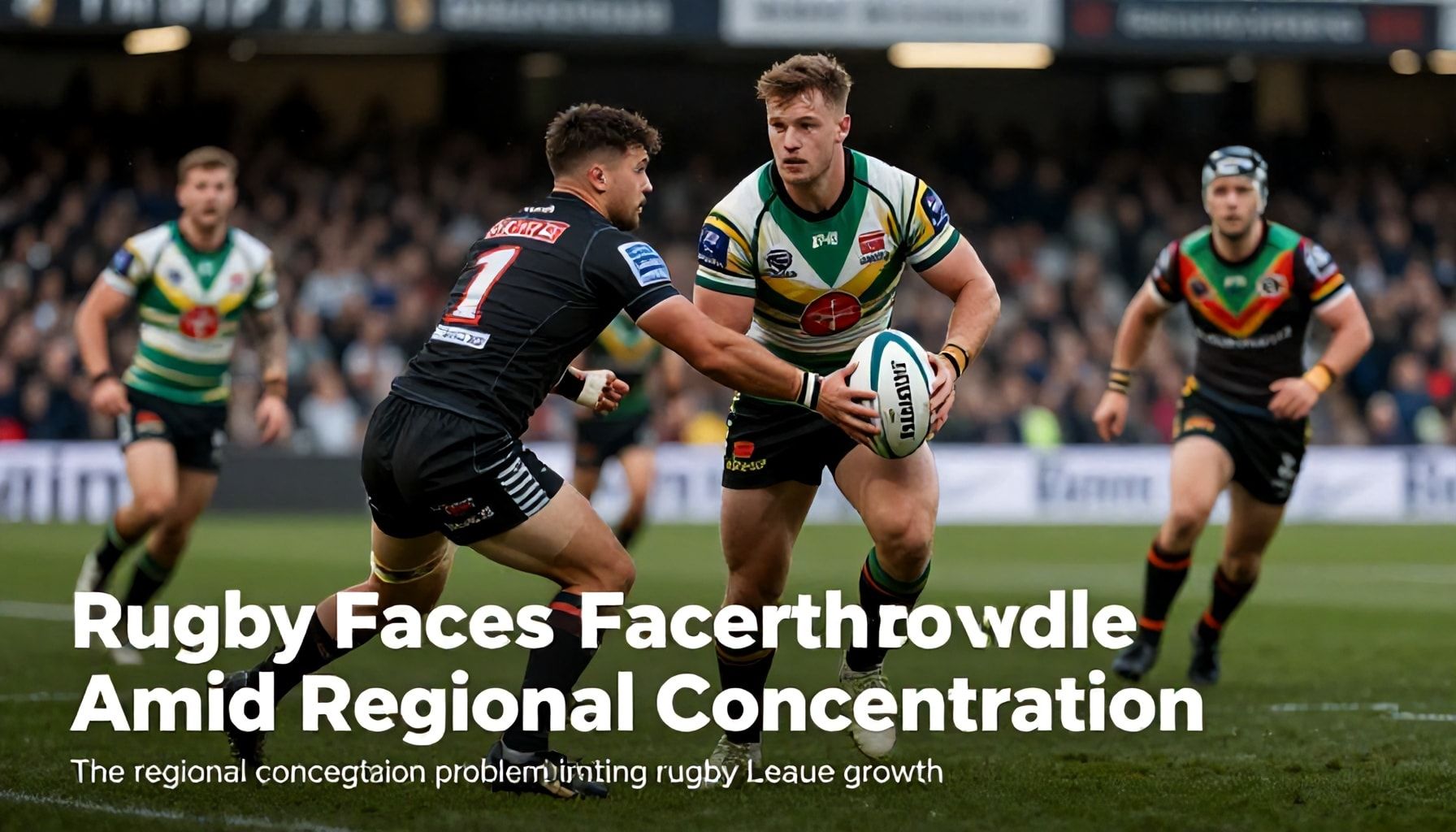
The Rugby Football League (RFL) is grappling with significant growth challenges, primarily stemming from the sport’s heavy regional concentration in northern England. With 90% of professional clubs and 70% of participants based in the north, the sport struggles to expand its footprint across the UK.
The RFL’s latest participation figures reveal a stark contrast between the north and other regions, with only 10% of registered players and minimal professional representation in the Midlands, South, and Wales. This geographical imbalance limits the sport’s visibility, funding opportunities, and talent pool, according to a recent report by the RFL’s independent growth task force. The concentration issue has persisted for decades, despite efforts to establish clubs and development programs in other areas. The RFL aims to address this challenge through targeted initiatives, but progress has been slow, with no new professional clubs established outside the north in over a decade.
Rugby League's Regional Struggles Threaten National Expansion

Rugby League’s growth ambitions face significant hurdles due to its heavy regional concentration. Currently, 14 of the 16 Super League clubs are based in the north of England, with only London Broncos and Toronto Wolfpack providing geographical diversity. This imbalance threatens the sport’s national expansion plans.
The Rugby Football League (RFL) has acknowledged the issue, with Chief Executive Ralph Rimmer stating, “We need to spread the game more widely to ensure long-term sustainability.” The RFL has set a target of having 50% of its clubs outside the north by 2025, but progress has been slow.
Financial disparities exacerbate the problem. Northern clubs benefit from established fan bases and commercial partnerships, while southern teams struggle to compete. London Broncos, for instance, have faced financial difficulties despite being in the capital.
Efforts to expand the game have included development programmes and community initiatives. However, these have had limited success in creating sustainable clubs. The RFL has invested £1 million annually in grassroots development, but conversion to senior teams remains low.
Industry experts point to the need for strategic investment and infrastructure development. “We need more facilities and better marketing to attract new fans,” said one anonymous source. Without addressing these issues, Rugby League’s growth will continue to stagnate.
The sport’s governing body is exploring new strategies to tackle the regional imbalance. Potential solutions include relocating existing clubs and establishing new teams in underserved areas. However, these plans are still in the early stages and face significant challenges.
Growth Constraints Emerge as League Faces Geographic Challenges

Rugby League’s growth faces significant hurdles due to its heavy geographic concentration. The sport remains predominantly clustered in Northern England and parts of Australia, limiting its national and international expansion.
In England, 80% of professional clubs are based in the North. This regional dominance creates challenges in attracting new fans and developing talent outside these areas. The Rugby Football League (RFL) acknowledges this issue but progress has been slow.
Australia’s situation mirrors England’s, with most clubs and fans concentrated in New South Wales and Queensland. The National Rugby League (NRL) has attempted to establish teams in other states, but these ventures have often struggled to gain traction.
The lack of geographic diversity affects participation rates. In England, only 15% of registered players come from outside the North. This concentration makes it difficult to grow the sport’s grassroots base.
Efforts to expand have faced setbacks. The Toronto Wolfpack’s sudden collapse in 2020 highlighted the challenges of establishing sustainable teams outside traditional heartlands. The RFL’s attempts to introduce a “London” team have also faced criticism for being too closely tied to existing Northern clubs.
Industry experts point to financial and cultural barriers. “The cost of establishing new clubs and facilities is enormous,” said one league official. “Without local support and infrastructure, it’s an uphill battle.”
The sport’s governance structure also plays a role. Decisions often favour established clubs, making it difficult for new teams to gain entry. This perpetuates the cycle of regional concentration.
Despite these challenges, there are signs of progress. The RFL has launched initiatives to promote the sport in schools across England. However, changing the geographic landscape of rugby league will require sustained effort and investment.
Rugby League's Concentration Issue Limits Grassroots Development
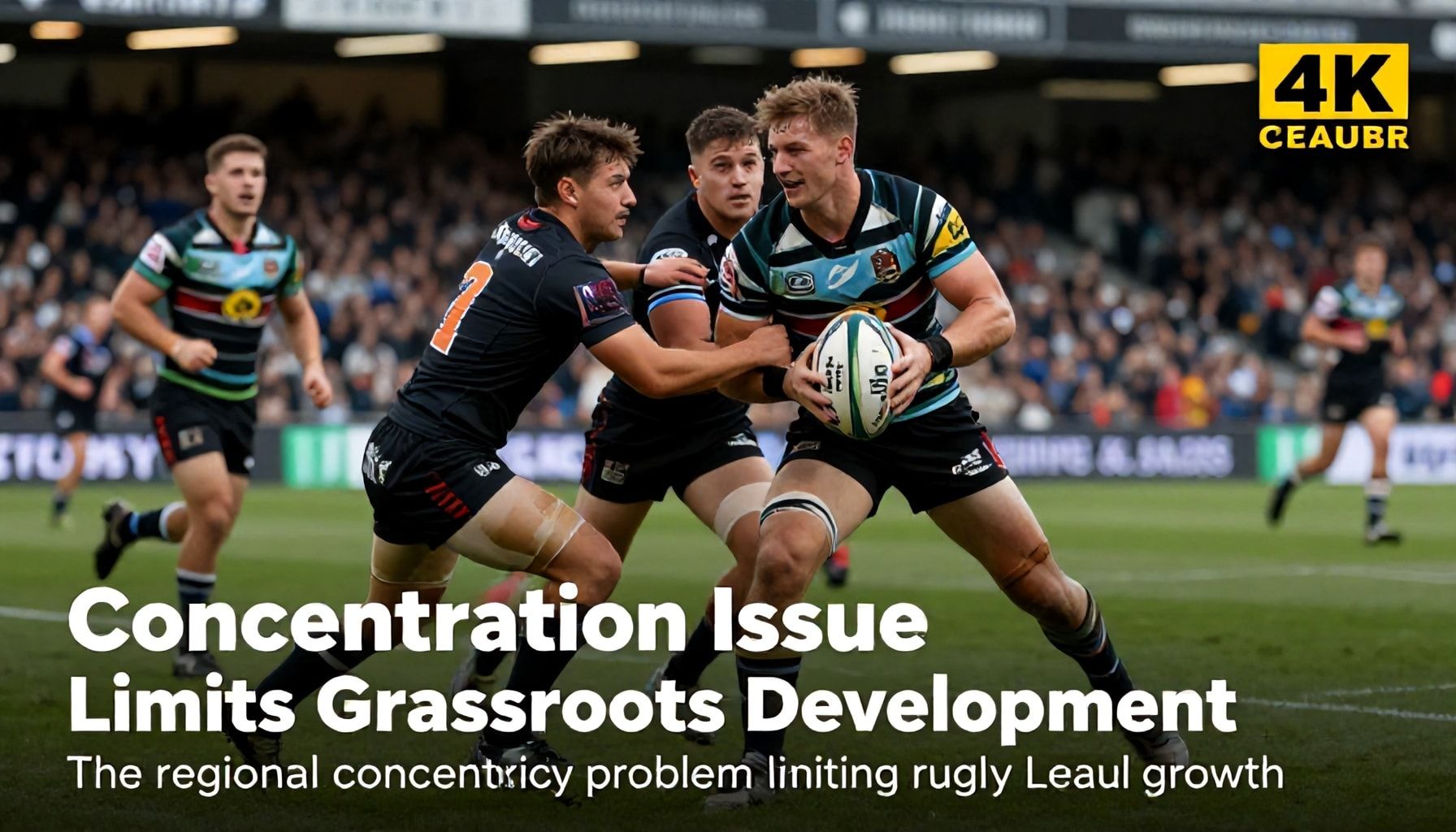
Rugby League’s growth faces significant hurdles due to its heavy regional concentration. The sport’s development is heavily skewed towards specific areas, limiting its expansion and grassroots participation. According to the Rugby Football League (RFL), over 80% of registered players are concentrated in the North of England, with Yorkshire and Lancashire alone accounting for nearly 60% of the total.
This regional imbalance creates a vicious cycle. Established clubs in these areas attract more resources, infrastructure, and talent, making it difficult for new clubs to emerge and thrive elsewhere. The RFL’s Chief Executive, Ralph Rimmer, acknowledged the challenge, stating, “We recognise that the concentration of resources and talent in certain regions is a barrier to growth.”
Efforts to address this issue have been ongoing but slow. The RFL has implemented initiatives like the ‘Rugby League 365’ programme, aiming to increase participation nationwide. However, progress has been limited. In 2022, only 15% of new registrations came from outside the traditional heartlands, highlighting the scale of the challenge.
Financial constraints exacerbate the problem. Smaller clubs struggle to compete with established ones due to limited funding and resources. The lack of investment in grassroots development outside key regions hampers the sport’s ability to attract and retain new players. Without significant intervention, the regional concentration issue is likely to persist, stifling Rugby League’s overall growth.
Expansion Plans Hindered by Regional Participation Disparities
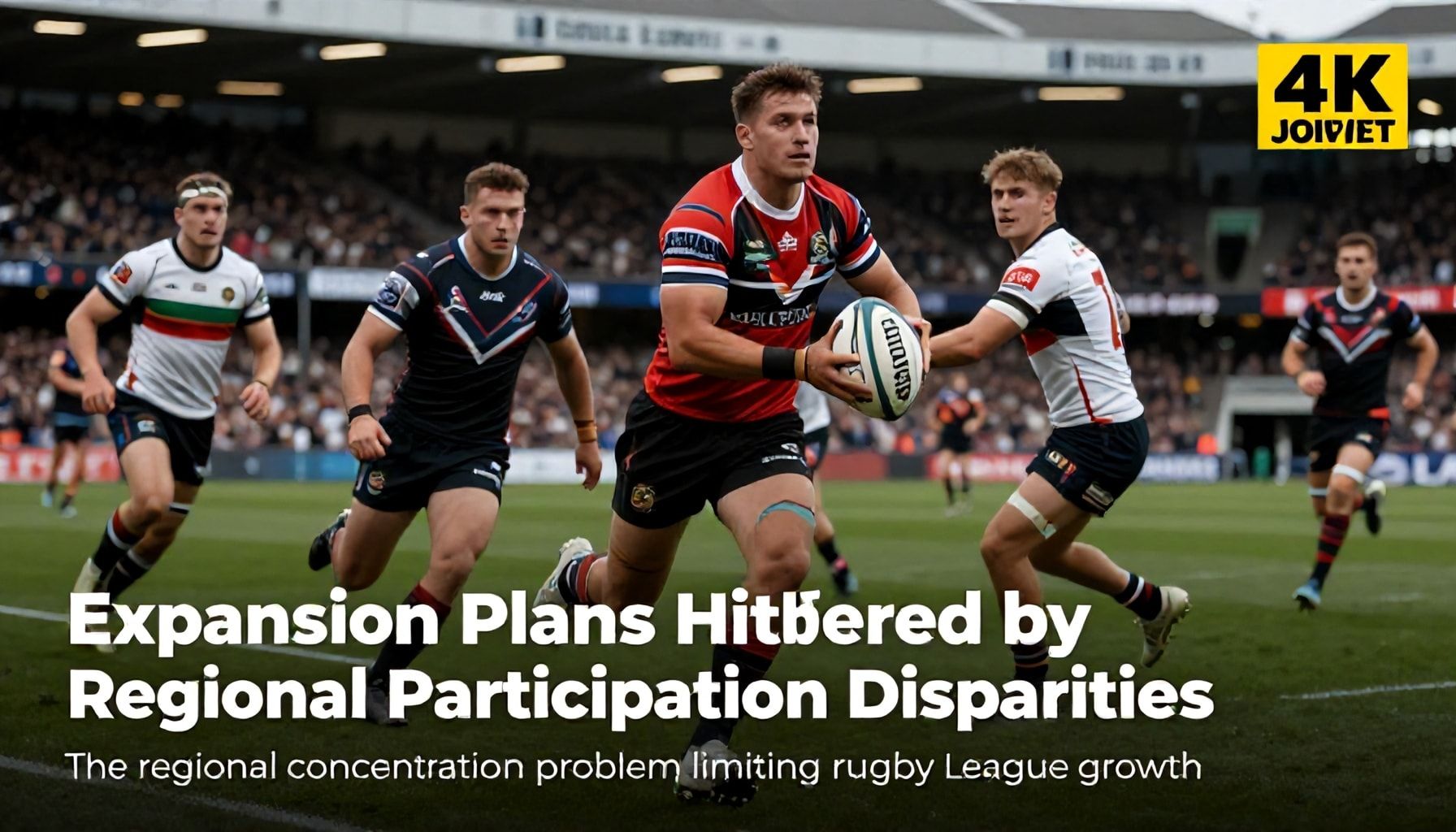
Rugby League’s ambitious expansion plans face significant hurdles due to stark regional participation disparities. The sport’s growth is heavily concentrated in traditional strongholds, with 80% of registered players in just three countries: Australia, England, and France.
In contrast, emerging markets show minimal engagement. Africa, for instance, has fewer than 5,000 registered players across the continent. This imbalance threatens the sport’s global development, according to Rugby League International Federation (RLIF) officials.
The RLIF has identified key barriers to growth in underrepresented regions. Limited infrastructure, lack of funding, and cultural preferences for other sports are primary obstacles. “We’re not just competing with other rugby codes,” said RLIF President Nigel Wood. “We’re competing with football, cricket, and other dominant sports in these markets.”
Efforts to broaden rugby league’s appeal have yielded mixed results. Development programmes in the USA and Canada have seen modest success, with player numbers increasing by 15% annually over the past five years. However, progress in Asia remains sluggish, with Japan and South Korea struggling to attract new participants.
Industry experts argue that targeted investment is crucial. “We need to see more resources allocated to grassroots programmes in these regions,” said a sports development consultant. “Without that, we’re unlikely to see significant growth.”
The RLIF has pledged to address these challenges through strategic partnerships. Collaborations with national sports bodies and international federations aim to boost participation and visibility. However, tangible results may take years to materialise.
League Officials Address Concerns Over Uneven Growth Patterns

Rugby League officials have acknowledged concerns over the sport’s uneven growth patterns, with regional concentration limiting its expansion. The Rugby Football League (RFL) has identified that 70% of participants are based in the North of England, creating a significant imbalance.
The RFL’s Chief Executive, Andrew Lees, stated, “We recognise that the sport’s growth has been disproportionate, and we’re committed to addressing this issue.” Lees made the comments during a press conference at the League’s headquarters in Red Hall, Leeds.
The RFL has launched a strategic plan to tackle the regional concentration problem. The plan includes investing £2 million over the next three years to develop the sport in underrepresented areas.
One of the key initiatives is the establishment of 50 new community rugby league clubs in the Midlands and South of England. The RFL aims to increase participation in these regions by 20% annually.
The RFL has also partnered with local authorities and schools to promote the sport in new areas. Lees highlighted, “We’re working closely with education providers to integrate rugby league into physical education curriculums.”
Despite the challenges, the RFL remains optimistic about the sport’s future. Lees concluded, “We believe that with targeted investment and strategic partnerships, we can achieve sustainable growth across the UK.”
The future of Rugby League hangs in the balance as the sport grapples with its regional concentration. While the North of England remains the heartland, efforts to expand into new territories face significant challenges. The sport’s governing bodies are now focusing on grassroots development and strategic partnerships to broaden its appeal. Success in these areas could pave the way for a more sustainable and inclusive future. However, without substantial investment and innovative approaches, Rugby League risks remaining a niche sport, confined to its traditional strongholds. The coming years will be crucial in determining whether the sport can overcome these hurdles and achieve long-term growth.






