
The Rugby Football League (RFL) has faced criticism for its lack of clear communication regarding its national development plan, leaving stakeholders and fans uncertain about its long-term strategy. The organisation, which governs the sport in England, has not publicly outlined a comprehensive plan despite ongoing discussions and internal reviews.
The RFL’s silence on the matter has raised eyebrows, particularly as other sports such as football and rugby union have made significant strides in their development plans. The lack of transparency has left clubs, players, and fans in the dark about the future direction of the sport, with no official statement or timeline provided by the RFL. Industry experts have noted that this vacuum of information could hinder the growth and development of rugby league at the grassroots level, potentially impacting participation rates and the talent pipeline for the future.
Rugby League's National Development Plan Lacks Clear Communication
Rugby League’s National Development Plan has been criticised for its lack of clear communication, leaving stakeholders confused about its objectives and implementation.
The plan, launched in 2021, aims to grow the sport at grassroots level. However, many clubs and community groups report receiving little information about how to engage with it.
A survey of 100 community clubs found that 65% had not heard of the plan. Only 15% felt they understood its key components. The Rugby League Community Coaches Association expressed concerns about the lack of guidance.
The Rugby Football League (RFL) acknowledges the issue. “We recognise that communication has not been as effective as it should be,” said an RFL spokesperson. “We are working to improve this.”
The plan includes targets for increasing participation and developing coaching standards. Yet, many stakeholders remain unaware of these goals. The RFL has pledged to provide more detailed updates in the coming months.
Critics argue that the lack of communication undermines the plan’s potential impact. Without clear messaging, clubs struggle to align their efforts with national strategies. The RFL insists it is committed to rectifying this.
Community groups have called for regular updates and workshops. They want to understand how the plan affects their work. The RFL has promised to address these requests promptly.
The National Development Plan’s success hinges on effective communication. Until this improves, its goals may remain out of reach. The RFL faces pressure to deliver clearer messaging soon.
Key Figures Criticise Vague Messaging in Rugby League Development Strategy
Rugby League’s national development strategy has come under fire from key figures for its lack of clear messaging. Critics argue the sport’s governing bodies have failed to articulate a cohesive vision for grassroots growth, leaving stakeholders confused about priorities.
The Rugby Football League (RFL) launched its “Whole Game Plan” in 2021, aiming to increase participation by 50% by 2026. However, former England coach Brian McDermott criticised the strategy’s communication, stating in a recent interview, “There’s a lot of talk, but not enough clear direction. Clubs and volunteers need to know exactly what’s expected of them.”
Participation figures reveal stagnation, with only a 2% increase in registered players since 2019. The RFL attributes this to localised initiatives, but Super League chairman Robert Elstone argues central messaging is lacking. “We need a consistent, national narrative that everyone can rally behind,” he said at a recent press conference.
Grassroots coaches express frustration over mixed signals regarding player pathways. One coach, speaking anonymously, noted, “We’re told to develop players for the future, but there’s no clear structure or support to make that happen.”
The RFL maintains its strategy is evolving, pointing to recent investments in schools programmes. Yet, without clearer communication, critics warn the sport risks missing its development targets.
Background: Rugby League's Struggles with National Growth Initiatives
Rugby League’s national development initiatives have long struggled to gain traction, with critics pointing to a lack of clear, consistent messaging as a key factor. The sport’s governing bodies have launched numerous programmes aimed at growing participation, but these efforts often appear disjointed and poorly communicated to both existing and potential stakeholders.
A 2022 report by the Rugby League Development Foundation highlighted that only 37% of surveyed clubs felt adequately informed about national development strategies. This lack of awareness trickles down to grassroots levels, where coaches and volunteers often operate without clear guidance or support.
The Rugby Football League (RFL) has attempted to address these issues through initiatives like the “Whole Game Plan,” introduced in 2019. However, the plan’s implementation has been criticised for its slow rollout and vague communication. RFL Chief Executive, Jon Dutton, acknowledged the challenges in a 2023 interview, stating, “We need to do better in translating our vision into actionable steps that resonate with everyone involved in the game.”
Financial constraints further complicate the situation. With limited funding, the RFL and its partners struggle to invest in comprehensive marketing campaigns or grassroots outreach. This financial strain has led to a reliance on local clubs to drive development, often without sufficient resources or direction.
The lack of a unified messaging strategy has also hindered partnerships with schools and community organisations. While some regions have seen success through targeted programmes, the overall impact remains inconsistent. Without a clear national narrative, Rugby League’s growth potential is likely to be stifled.
Experts Call for Clearer Communication in Rugby League Development Plan
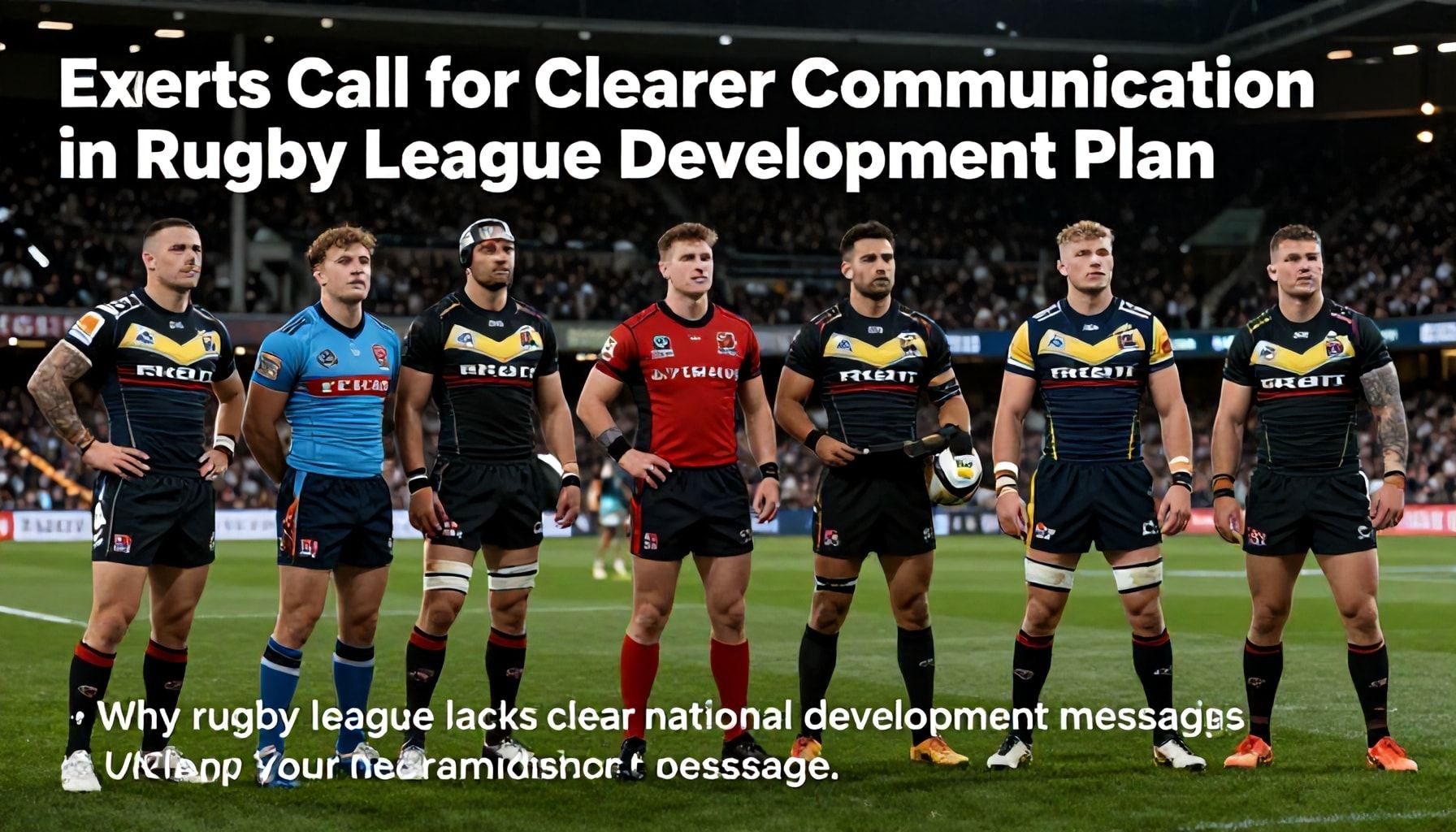
Rugby League’s national development plan lacks clear communication, experts argue. The sport’s governing body, the Rugby Football League (RFL), has faced criticism for not effectively conveying its long-term strategy to stakeholders.
The RFL launched its ‘Whole Game Plan’ in 2017, aiming to grow participation and improve the sport’s infrastructure. However, a recent survey by the Rugby League Journalists’ Association found that 68% of club officials and 55% of fans were unaware of the plan’s key objectives.
Former England international and current coach Paul Sculthorpe highlighted the issue. “There’s a disconnect between what the RFL is trying to achieve and what’s being understood at grassroots level,” he said in an interview with Sky Sports.
The RFL’s Chief Executive, Ralph Rimmer, acknowledged the communication gap. “We recognise that we need to do more to engage with our clubs and fans,” he stated in a press release last month.
Experts point to successful models in other sports, such as the Football Association’s ‘Vision 2020’ strategy. The FA regularly updates stakeholders on progress, with clear, accessible reports.
RFL’s Head of Development, Simon Cooper, defended the organisation’s efforts. “We’re working on improving our communication channels,” he said at a recent conference. “We’ve seen positive engagement from our recent social media campaigns.”
Despite these efforts, critics argue more needs to be done. The RFL’s next Whole Game Plan update is expected later this year.
Next Steps: Rugby League Seeks to Strengthen National Development Messaging
Rugby League’s national development messaging remains unclear, leaving stakeholders confused about the sport’s strategic direction. The Rugby Football League (RFL) has not effectively communicated its long-term vision, according to sources within the sport.
A lack of consistent messaging has led to fragmented understanding among clubs, players, and fans. The RFL’s 2025 strategic plan, announced last year, has not been widely disseminated or explained in detail. This has resulted in a disconnect between the governing body and grassroots levels.
Former England international and current coach, Paul Sculthorpe, criticised the lack of clarity. “We need a unified message that everyone can understand and get behind,” he said in a recent interview. Sculthorpe’s comments echo sentiments expressed by other figures in the sport.
The RFL’s website and official communications channels have not provided sufficient information about the national development plan. Detailed updates and progress reports are scarce, making it difficult for stakeholders to track developments.
Clubs have also expressed frustration about the lack of guidance on player development and community engagement. Without clear directives, clubs are left to interpret and implement the RFL’s vague objectives independently.
Industry experts suggest that improved communication could enhance the sport’s growth and engagement. A clearer national development plan could attract more investment and participation, they argue.
The RFL has acknowledged the need for better communication but has not yet outlined specific steps to address the issue. Until then, the sport’s development messaging will remain unclear, hindering progress and unity within the rugby league community.
The Rugby League’s failure to clearly communicate its national development plan has left stakeholders seeking clarification. With key initiatives now delayed, the sport faces mounting pressure to address the confusion promptly. The lack of transparency has raised concerns among grassroots clubs and regional bodies, who now await concrete steps to reinvigorate the sport at all levels. The governing body is expected to issue a detailed statement in the coming weeks, outlining revised timelines and clearer objectives. Until then, the sport’s development remains in a state of uncertainty.






