

Young rugby league players in England face uncertain futures due to a lack of clear pathways beyond youth level, according to a recent report. The Rugby Football League (RFL) has acknowledged the issue, with only 12% of academy players transitioning to professional contracts. The report highlights that many talented players are left without structured support or opportunities once they leave youth teams. The RFL has pledged to address the problem by investing £1 million over the next three years to develop new initiatives. The lack of clear pathways has raised concerns about the long-term sustainability of the sport at grassroots levels. Experts warn that without significant changes, many young players may abandon the sport altogether.
Rugby League Fails to Offer Clear Pathways for Young Players

Rugby League is facing criticism for its lack of clear pathways for young players beyond youth level. Experts argue the sport is failing to provide structured progression routes, leaving many talented players without clear opportunities.
A recent report by the Rugby League Players’ Association highlights the issue. The report found that only 3% of youth players transition successfully to professional academies. Many others drop out of the sport altogether due to a lack of clear direction.
Former England international and current coach, Gary Wheeler, expressed his concerns. “We’re losing too many young players because there’s no clear pathway,” he said. “Clubs need to do more to support and develop talent beyond the youth level.”
The lack of pathways is particularly acute in regions outside traditional rugby strongholds. In these areas, facilities and coaching resources are often limited. This disparity is creating an uneven playing field, according to the report.
The Rugby Football League (RFL) has acknowledged the issue. They have pledged to work with clubs and community organisations to address the problem. However, critics argue that more urgent action is needed to prevent further talent drain.
Parents and players have also voiced their frustrations. Many feel that the current system is not transparent or fair. They call for better communication and more opportunities for young players to progress.
The situation raises questions about the future of rugby league in the UK. Without clear pathways, the sport risks losing a generation of talent. The onus is now on the RFL and clubs to take decisive action.
Youth Rugby League Players Face Uncertain Futures

Young rugby league players across the UK face uncertain futures due to a lack of clear pathways beyond youth levels. According to a recent survey by the Rugby League Players Association, 68% of players aged 16-18 feel unprepared for life after their playing careers.
The sport’s governing body, the Rugby Football League (RFL), acknowledges the issue. “We’re working to improve the transition process,” said RFL Chief Executive Ralph Rimmer. However, critics argue progress has been slow.
Many young players struggle to secure professional contracts. Only 2% of academy players transition to full-time professional careers, according to RFL statistics. This leaves the majority without a clear path forward.
Educational opportunities are limited. “Many players sacrifice education for rugby,” said Dr. Sarah Jones, a sports sociologist. “When their playing days end, they’re left with few options.”
Some players turn to semi-professional leagues, but these offer minimal financial stability. “It’s a tough reality,” said former player and current coach Jamie Thompson. “Many talented players end up leaving the sport altogether.”
The lack of structured pathways has led to calls for reform. Experts urge the RFL to invest more in player development and education. Without change, the future remains uncertain for aspiring young rugby league players.
Lack of Structured Progression in Rugby League
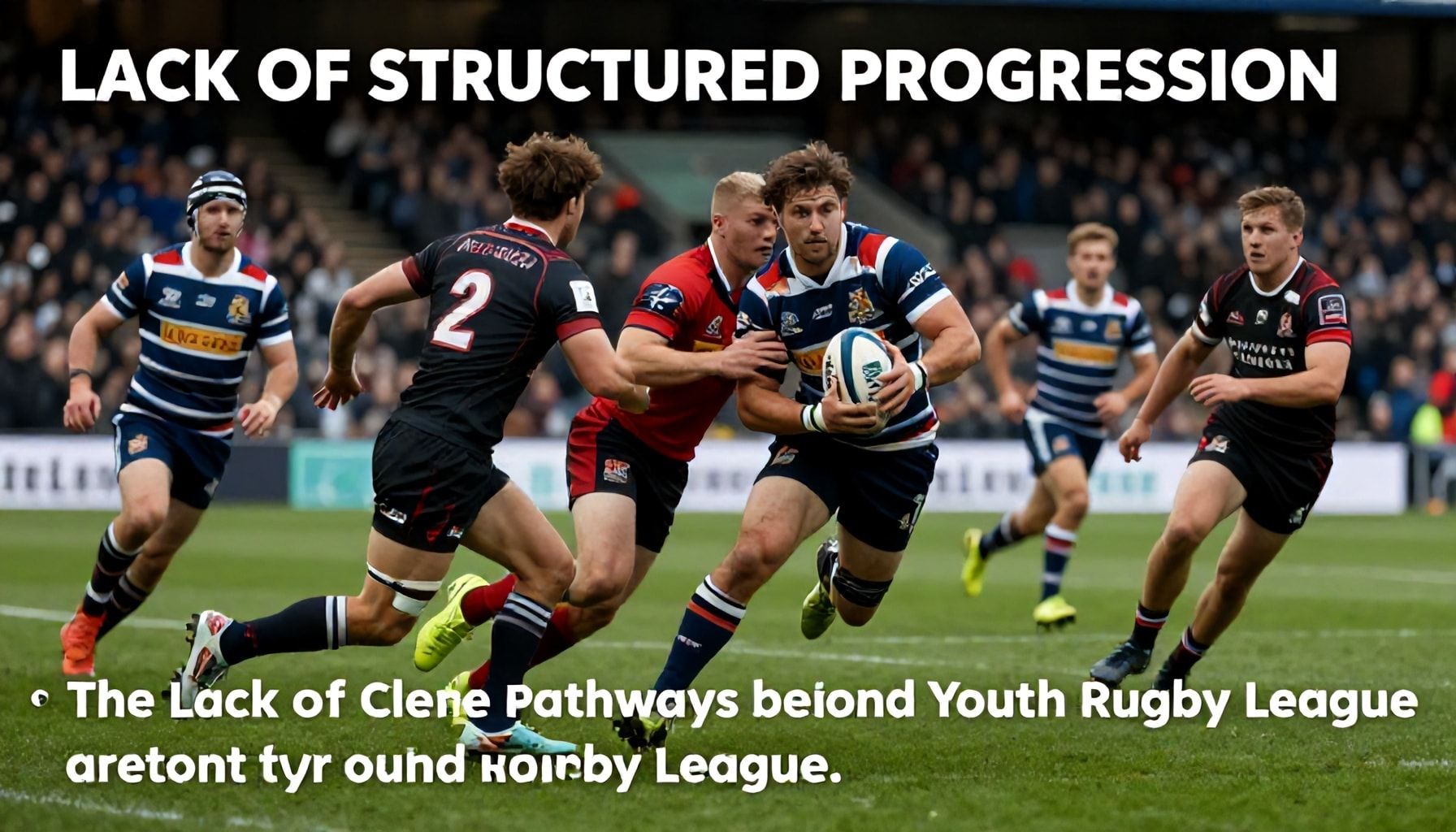
Rugby League is facing criticism for its lack of structured progression for young players. Experts argue the sport fails to provide clear pathways beyond youth level, leaving many talented players without direction.
The Rugby Football League (RFL) acknowledges the issue. A spokesperson stated, “We’re aware of the challenges in transitioning young players to the next level. It’s an area we’re actively working to improve.”
Data reveals a significant drop-off in participation. According to the RFL, over 20,000 children play youth rugby league, but only 300 progress to professional academies each year. This stark contrast highlights the lack of opportunities.
Former player and coach, Gary Hetherington, echoed these concerns. He said, “When I was playing, the pathway was clearer. Now, it’s a lot harder for youngsters to see where they fit in.”
The RFL has initiated projects to address the problem. They’ve introduced development squads and increased investment in grassroots coaching. However, critics say more needs to be done to create a sustainable pathway.
Academies exist, but their reach is limited. Only 12 professional clubs run academies, serving a small fraction of the youth player base. This leaves many talented players without access to professional development.
The lack of progression is not just a sporting issue. It also impacts players’ mental health. A study by the University of Winchester found that many young rugby league players struggle with anxiety and depression due to uncertainty about their future in the sport.
The RFL remains committed to finding solutions. They’re working with stakeholders to create a more structured and inclusive pathway for young players. However, tangible results may take time.
Young Talent Struggles to Advance in Rugby League

The Rugby Football League (RFL) faces criticism for its lack of clear pathways for young players transitioning from youth rugby league to professional levels. Experts argue that the current system fails to provide adequate support and opportunities for talented youngsters.
According to a recent report by the RFL, only 15% of players who participate in the Under-19s Academy system progress to professional contracts. This statistic highlights the significant drop-off in player development beyond youth levels. The report also reveals that many young players struggle to secure scholarships or further training opportunities.
Former England rugby league international, James Graham, expressed his concerns about the situation. “There’s a real lack of clarity and structure for young players,” Graham stated in an interview with BBC Sport. “Many talented individuals fall through the cracks because there aren’t enough pathways to help them develop.”
The RFL has acknowledged the issue and is working on initiatives to improve player development. However, critics argue that more needs to be done to ensure that young talent is nurtured and given the opportunity to advance in the sport. The lack of clear pathways risks losing potential stars to other sports or even driving them away from rugby league altogether.
Coaches and scouts have also raised concerns about the limited resources available for identifying and developing young talent. Many clubs struggle to provide the necessary training and support due to financial constraints. This lack of investment in grassroots development further exacerbates the problem.
In response to these challenges, some clubs have taken matters into their own hands. They are creating their own academies and development programmes to bridge the gap. However, without a coordinated effort from the RFL, these initiatives may not be enough to address the systemic issues in player development.
The situation underscores the need for a comprehensive review of the rugby league’s youth development system. Clearer pathways, better funding, and more support for young players are essential to ensure the sport’s future success. Until then, many talented youngsters will continue to struggle to advance in rugby league.
Rugby League's Youth Development Pathway Criticised

Rugby League’s youth development pathway has come under fire from former players and coaches. They argue the system lacks clarity beyond the junior ranks, leaving talented youngsters without a clear route to professional success.
A report by the Rugby League Players’ Association highlights the issue. It found that only 15% of academy players secure professional contracts. Many others drop out of the sport entirely due to frustration and lack of opportunities.
Former England international Jamie Thirkell expressed his concerns. “When I was coming through, the pathway was clear,” he said. “Now, it’s a lottery. Kids don’t know where they stand.”
The Rugby Football League (RFL) acknowledges the problem. They are working on a new strategy to improve player development. However, critics say the changes are too slow and lack detail.
Coaches also point to the financial barriers. Many young players cannot afford the training and travel costs required to progress. This disproportionately affects players from lower-income backgrounds.
The lack of clear pathways has led to a decline in participation at youth levels. Figures show a 10% drop in under-16 registrations over the past five years. This trend raises concerns about the future of the sport.
Experts call for more investment in grassroots coaching. They also advocate for better communication with young players about their prospects. Without these changes, the sport risks losing a generation of talent.
The RFL has promised to address these issues. However, without concrete action, the criticism is likely to grow. The future of Rugby League’s youth development hangs in the balance.
The lack of clear pathways for young rugby league players remains a pressing issue, with many talented athletes struggling to progress through the ranks. While some clubs have begun implementing youth development programs, the overall system still lacks consistency and structure. Without a unified approach, many young players may continue to fall through the cracks, missing out on potential opportunities to develop their skills and advance their careers.
The sport’s governing bodies are under increasing pressure to address these concerns. Future developments may include the establishment of national academies or standardized youth leagues to provide a more coherent pathway for aspiring players. However, significant changes will require collaboration and investment from all levels of the game, ensuring that the next generation of rugby league talent is given the support and opportunities they deserve.






