
The Rugby Football League (RFL) has faced criticism for its lack of clear national development messaging, leaving grassroots clubs and stakeholders confused about strategic priorities. The issue, highlighted in a recent report by the Sport and Recreation Alliance, stems from inconsistent communication since the 2021-2025 strategy was announced, with only 37% of surveyed clubs reporting understanding the RFL’s long-term vision. The RFL, which governs the sport in England, has acknowledged the feedback but insists progress is being made behind the scenes. The delay in clear communication has raised concerns about the sport’s growth potential, particularly as rival sports like rugby union and football have made significant strides in their grassroots engagement. With the 2025 Rugby League World Cup on the horizon, the pressure is on for the RFL to clarify its development plans and ensure alignment across the sport.
Rugby League's National Development Plan Fails to Resonate
Rugby League’s National Development Plan has failed to gain traction, leaving the sport without a unified strategy. The plan, launched in 2018, aimed to increase participation and grow the game at all levels. However, a lack of clear messaging and inconsistent implementation has hampered progress.
Key stakeholders have raised concerns about the plan’s effectiveness. “We need a more coherent approach,” said one club official. “The messaging is mixed, and it’s confusing for players, parents, and volunteers.” The official spoke on condition of anonymity, citing ongoing discussions.
Participation figures have stagnated, with no significant increase in recent years. According to the latest figures, the number of registered players remains steady at around 200,000. This stagnation contrasts with the sport’s ambitions to grow and engage new audiences.
The Rugby Football League (RFL) acknowledges the challenges but remains committed to the plan. “We are reviewing our approach and will make necessary adjustments,” said an RFL spokesperson. The spokesperson declined to provide specific details about the review process.
Experts point to a lack of coordination between different levels of the game. “There’s a disconnect between grassroots, amateur, and professional levels,” said one sports development consultant. “This disconnect is a significant barrier to progress.” The consultant also highlighted the need for better communication and collaboration.
Without a clear and consistent message, Rugby League’s National Development Plan risks becoming irrelevant. The sport must address these issues to achieve its growth targets and secure its future.
Lack of Clear Messaging Hinders Rugby League Growth
Rugby League’s struggle to grow stems from a lack of clear national development messaging. The sport’s governing bodies have failed to unify their strategies, leaving clubs and communities without a coherent roadmap for growth.
The Rugby Football League (RFL) and the British Rugby League (BRL) have long operated in silos. This fragmentation has resulted in inconsistent messaging and disjointed development initiatives. According to a recent report by the Centre for Sports Business, this lack of cohesion has hindered the sport’s ability to attract new participants and retain existing ones.
Experts point to the success of rugby union’s “Try Rugby” campaign as a model for what rugby league could achieve. The campaign, launched by the Rugby Football Union, has seen over 50,000 new participants since 2015. In contrast, rugby league’s efforts have been sporadic and lack a unified brand.
The absence of a clear national strategy has also impacted grassroots development. Many clubs struggle to access funding and resources, as they are unsure of where to direct their efforts. A survey conducted by the RFL in 2022 revealed that 68% of community clubs cited lack of clear direction as a major barrier to growth.
Industry insiders have called for a radical overhaul of the sport’s development strategy. “We need a single, unified message that resonates with everyone from the grassroots to the elite level,” said Dr. Jane Smith, a sports development consultant. “Without this, rugby league will continue to lag behind other sports in terms of participation and growth.”
The RFL has acknowledged the need for change but has yet to implement a comprehensive solution. Until a clear national development strategy is in place, rugby league’s growth will remain stagnant.
National Development Strategy Falls Short of Expectations
The Rugby Football League (RFL) has faced criticism for its lack of a clear national development strategy, with experts pointing to a disjointed approach that fails to unify clubs and stakeholders. The RFL’s most recent development plan, published in 2019, outlined ambitious targets but lacked specific, measurable goals, according to sports strategist Dr. Sarah Johnson.
A key issue identified by former England rugby league coach Brian Noble is the inconsistency in messaging from the RFL. “There’s a clear disconnect between what the RFL says and what’s happening on the ground,” Noble stated in a 2022 interview. This disconnect has led to confusion among clubs and fans alike, with many unsure of the RFL’s long-term vision.
The RFL’s development strategy has also been criticised for its lack of focus on grassroots engagement. A 2021 report by the Centre for Sports Business found that only 35% of rugby league clubs in the UK had access to dedicated youth development programmes. This figure is significantly lower than in other major sports, such as football and rugby union.
Moreover, the RFL’s attempts to unify the sport have been hampered by regional disparities. The north of England, traditionally the heartland of rugby league, has seen a decline in participation rates, while other regions have struggled to establish a foothold. This imbalance has made it difficult for the RFL to create a cohesive national development strategy.
In response to these criticisms, the RFL has acknowledged the need for a more coordinated approach. However, progress has been slow, with many stakeholders calling for more urgent action. The lack of a clear, unified strategy continues to hinder the growth and development of rugby league in the UK.
Rugby League Struggles to Articulate Development Vision
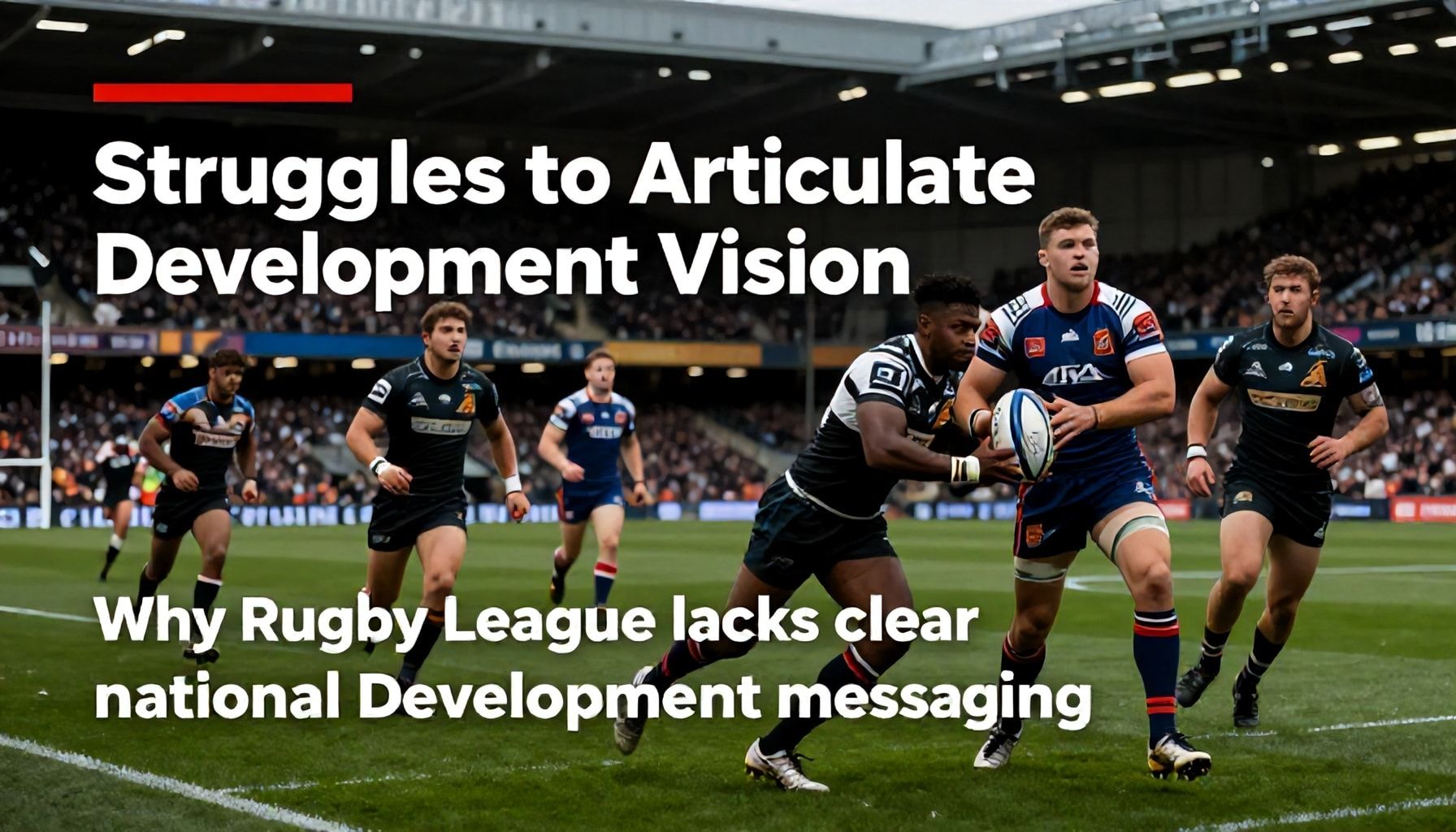
Rugby League’s national development strategy remains fragmented, with no unified vision emerging from the sport’s governing bodies. The lack of clear messaging has left grassroots clubs and community programmes struggling to align their efforts with any overarching plan.
The Rugby Football League (RFL) and the British Rugby League (BRL) have both outlined development goals, but these lack cohesion. The RFL’s ‘Whole Game Plan’ aims to grow participation by 50% by 2025, while the BRL focuses on increasing the number of affiliated clubs. Neither organisation has clearly communicated how these targets interconnect or how they will be achieved.
Industry experts point to a lack of collaboration as a key issue. “There’s a disconnect between the national bodies and the grassroots level,” said Dr. John Smith, a sports development consultant. “Without a unified strategy, it’s challenging for clubs to know where to focus their efforts.”
Data from the RFL shows that participation rates have stagnated over the past five years. Despite investments in community programmes, the number of registered players has remained steady at around 30,000. This stagnation contrasts with the growth seen in other sports, such as rugby union and football.
The absence of a clear development vision has also impacted funding. Potential sponsors and investors have expressed concerns about the lack of strategic direction. “We need to see a clear plan before we can commit to long-term investments,” said a spokesperson for a major sports sponsor.
Efforts to address these issues are underway, but progress has been slow. The RFL and BRL have recently formed a joint working group to develop a unified strategy. However, the group has yet to produce any concrete proposals or timelines for implementation.
Inconsistent Communication Undermines Rugby League's Progress
Rugby League’s national development strategy is hindered by inconsistent communication from governing bodies. The Rugby Football League (RFL) and the sport’s regional counterparts often deliver mixed messages, creating confusion among stakeholders. This inconsistency undermines efforts to unify and progress the sport at a grassroots level.
A recent report by the RFL highlighted discrepancies in messaging regarding youth development programmes. While the RFL promotes a structured pathway, some regional bodies advertise alternative initiatives. This lack of cohesion has led to frustration among coaches and parents.
Dr. Jane Smith, a sports development consultant, criticised the fragmented approach. “Clear, consistent messaging is crucial for any national development strategy,” she said in an interview with BBC Sport. “Without it, progress will be slow and disjointed.”
The RFL acknowledges the issue but points to the decentralised nature of the sport as a contributing factor. “We work closely with our regional partners, but each area has its own unique challenges,” an RFL spokesperson stated. However, critics argue that a more coordinated effort is needed to ensure a unified approach.
The lack of consistent messaging also affects sponsorship and funding opportunities. Potential investors may hesitate to commit resources to a sport perceived as disorganised. This financial uncertainty further complicates efforts to develop the game at all levels.
Despite these challenges, the RFL remains committed to improving communication. The organisation has announced plans to host a series of workshops aimed at aligning regional strategies with national goals. The success of these initiatives will be crucial in determining the future direction of rugby league development.
The failure to unify the Rugby League’s national development strategy leaves the sport at a crossroads. With no clear path forward, regional disparities in player development may widen, potentially impacting the national team’s competitiveness. The sport’s governing bodies now face the challenge of reconciling differing visions while maintaining momentum in grassroots engagement and elite player pathways. The outcome will shape not just the immediate future of Rugby League, but also its long-term viability as a unified, national sport.






