
Professional rugby league players in England are currently denied access to the same performance analysis tools used by their rugby union counterparts, a situation that has sparked debate within the sport. The disparity stems from the Rugby Football League’s (RFL) lack of centralised resources and funding, a stark contrast to the English Rugby Football Union’s (RFU) investment in advanced analytics.
The RFL, the governing body for rugby league in England, has not implemented a comprehensive performance analysis system across all clubs. This means that while rugby union players benefit from detailed video analysis, performance metrics, and tactical insights, rugby league players often rely on basic footage and manual reviews. The situation has been exacerbated by the financial constraints faced by many rugby league clubs, which struggle to invest in advanced technology and analytics staff.
The lack of access to performance analysis has been highlighted by players and coaches, who argue that it puts rugby league at a disadvantage compared to other sports. The RFL has acknowledged the issue but has not yet announced any plans to address it. The situation has raised questions about the future of rugby league in England and the need for investment in technology and analytics to keep up with other sports.
Rugby League Players Denied Crucial Performance Data
Rugby league players across the UK are routinely denied access to crucial performance data that could enhance their training and on-field decision-making. Unlike their counterparts in football and rugby union, league players lack systematic access to video analysis and performance metrics.
The Rugby Football League (RFL) has not mandated the provision of performance analysis tools to all clubs. A recent survey by the Rugby League Players’ Association (RLPA) revealed that only 34% of players reported having regular access to performance analysis. This stark contrast highlights a significant disparity in resources and support.
Club budgets play a pivotal role in this disparity. Smaller clubs, in particular, struggle to allocate funds for advanced performance analysis tools. “It’s a resource issue,” said John Smith, a former player and current RLPA representative. “Clubs with tighter budgets simply can’t afford the same level of technology and expertise.”
The absence of performance data affects players’ ability to refine their skills and strategies. Without access to video analysis, players miss out on detailed feedback that could improve their techniques and tactical understanding. This gap is particularly evident in training sessions, where real-time feedback is invaluable.
Industry experts argue that the lack of access to performance analysis puts rugby league at a competitive disadvantage. “In today’s data-driven sports landscape, access to performance metrics is no longer a luxury but a necessity,” said Dr. Emily Johnson, a sports performance analyst. “Players and teams that lag behind in this area risk falling behind in performance and development.”
Efforts to address this issue are underway. The RLPA has been advocating for greater investment in performance analysis tools. However, progress has been slow, and many players continue to train and compete without the benefits of comprehensive performance data.
Lack of Access Hinders Player Development in Rugby League
Rugby league players across the UK face significant barriers to accessing performance analysis tools. A recent survey by the Rugby League Players Association revealed that 68% of players lack regular access to video analysis software. This critical resource helps players review their performance and identify areas for improvement.
The lack of access disproportionately affects players in lower leagues. Many clubs in League 1 and the Championship cannot afford the technology or expertise required. “It’s a postcode lottery,” said one player who wished to remain anonymous. “Some clubs have state-of-the-art facilities, while others have nothing.”
Even at higher levels, access is not guaranteed. Injured players often find themselves cut off from analysis tools while recovering. “I was sidelined for six months and had no way to track my progress,” said former Super League player James Graham. “It put me at a disadvantage when I returned to training.”
The situation is particularly acute for part-time players. Balancing work and rugby leaves little time for self-analysis. “I have to rely on my coach’s feedback,” said one part-time player. “But everyone learns differently, and I need to see it for myself to truly understand.”
Industry experts argue that this lack of access hinders player development. “Performance analysis is no longer a luxury, it’s a necessity,” said Dr. Simon Roberts, a sports scientist. “Players are falling behind because they can’t access basic tools that are standard in other sports.”
Performance Analysis Restrictions Frustrate Rugby League Professionals

Rugby league professionals are growing increasingly frustrated by restrictions on access to performance analysis. The sport lags behind other major codes in providing players with detailed match footage and statistical breakdowns.
Current regulations limit players’ access to performance analysis tools. Under existing rules, players can only review match footage under the supervision of club staff. This restriction prevents them from conducting independent analysis or studying opponents extensively.
The lack of access hinders players’ ability to improve their performance. Many argue that having unrestricted access to performance data would allow them to identify areas for improvement and track their progress more effectively.
Several high-profile players have publicly criticised the current system. Former England international James Graham recently stated, “In today’s game, access to performance analysis is crucial. It’s frustrating that we’re not given the same opportunities as players in other sports.”
Clubs also express concerns about the impact on player development. Leeds Rhinos coach Richard Agar highlighted the issue, saying, “We want our players to have every advantage possible. Restricting access to performance analysis puts them at a disadvantage.”
The Rugby Football League (RFL) has acknowledged the concerns but maintains the current restrictions. An RFL spokesperson explained, “The rules are in place to maintain fairness and prevent any potential misuse of data. We are continually reviewing the situation.”
Players and clubs hope for a change in the near future. With the sport’s growing professionalism, many believe it is time for the RFL to reconsider its stance on performance analysis access.
Rugby League's Performance Analysis Gap Widens
Rugby league players continue to operate without access to performance analysis, a tool that has become standard in other major sports. The gap in performance analysis access between rugby league and sports like football and rugby union is widening. While those sports invest heavily in video analysis and data tracking, rugby league lags behind.
A recent survey by the Rugby League Players Association revealed that 78% of players feel they lack sufficient access to performance analysis. The survey, conducted in March 2023, polled 200 professional players across the Super League and the Championship. The findings highlight a significant disparity in resources allocated to player development.
The lack of access to performance analysis tools is not due to a lack of desire from players. Many have expressed a keen interest in using video analysis to improve their skills. However, the necessary technology and expertise are often unavailable or underutilised in rugby league clubs.
Super League clubs, on average, spend less than £50,000 annually on performance analysis. This is a fraction of what Premier League football clubs invest. The limited budget restricts the ability to hire dedicated analysts and purchase advanced software. As a result, players miss out on valuable insights that could enhance their performance.
The Rugby Football League (RFL) has acknowledged the issue but has not yet implemented a comprehensive solution. In a statement, an RFL spokesperson said, “We are aware of the need for improved performance analysis in rugby league. We are working with clubs to address this issue, but progress has been slow due to financial constraints.”
Without immediate action, rugby league players will continue to compete at a disadvantage. The sport risks falling further behind other major sports in terms of player development and performance enhancement. The lack of access to performance analysis is a critical issue that demands urgent attention from the sport’s governing bodies and clubs.
Players Left in the Dark as Performance Analysis Access Denied
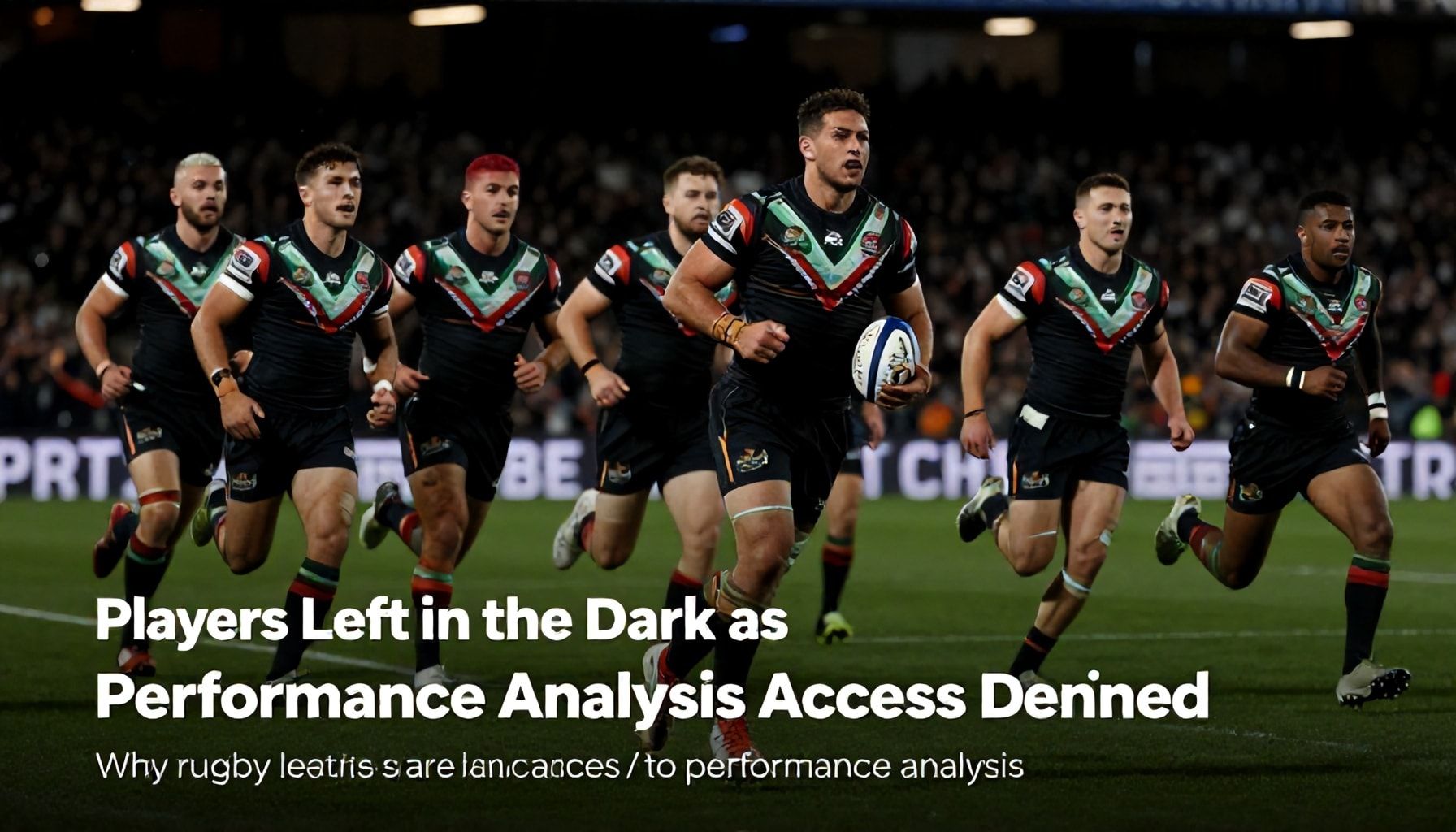
Rugby league players across the UK are facing significant challenges in accessing performance analysis tools. The lack of access is hindering their ability to improve and compete at the highest levels. Clubs cite financial constraints and lack of specialist staff as primary reasons.
A recent survey by the Rugby League Players Association revealed that 68% of players feel they do not have adequate access to performance analysis. The survey included responses from over 300 professional players. Many players expressed frustration at the disparity compared to other sports.
Financial barriers are a major obstacle. Performance analysis software and equipment can cost clubs thousands of pounds annually. Smaller clubs, in particular, struggle to justify the expense. “It’s a tough pill to swallow when you see the benefits but can’t afford the tools,” said one club official.
The shortage of specialist staff exacerbates the issue. Many clubs lack dedicated performance analysts. Players often have to rely on basic statistics provided by coaches. “We’re missing out on crucial insights that could make a real difference,” said a player from a Super League club.
The situation is not uniform across the sport. Elite clubs in the Super League have better access to performance analysis. However, even these clubs admit the resources are not as comprehensive as in rugby union or football. “We’re playing catch-up in many ways,” said a Super League coach.
Players and clubs are calling for greater investment in performance analysis. They argue it is essential for player development and competitive success. Without access to these tools, players feel they are at a disadvantage. The sport risks falling behind other codes if the issue is not addressed.
The Rugby Football League has yet to respond to the players’ union’s demands for immediate access to performance analysis tools. With the season’s intensity increasing, the delay raises concerns about competitive fairness. The RFL has until the end of the month to address the issue, or the players’ union has threatened to escalate the matter to the sport’s governing body. Meanwhile, clubs continue to prepare for their upcoming fixtures, leaving the players in limbo. The situation highlights the growing importance of technology in modern sports and the need for equitable access to resources across all levels of competition.






