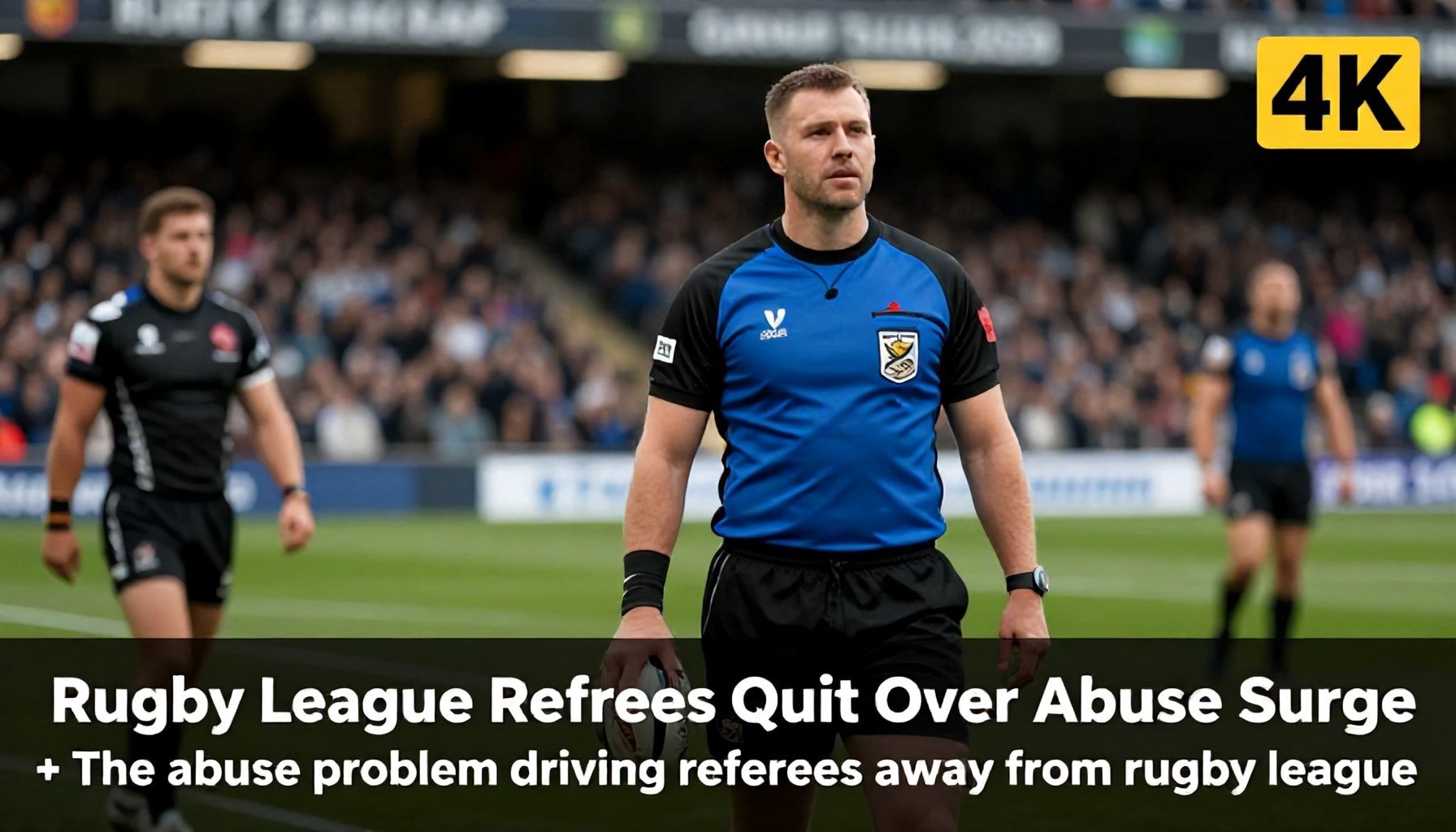
Referees are abandoning rugby league at an alarming rate due to escalating abuse from players and spectators, according to a damning report released yesterday by the Rugby Football League (RFL). The crisis has seen 30% of referees quit in the past year alone, with many citing verbal and physical harassment as their primary reason for leaving. The RFL’s survey of over 1,000 referees across England revealed that 85% had experienced abuse in the past 12 months, with incidents ranging from online trolling to physical altercations on the field. The problem has reached such severity that the RFL has warned of potential match cancellations if the trend continues. The organisation is now calling for urgent action from clubs, players, and fans to address the toxic culture within the sport.
Rugby League Faces Referee Shortage Amid Abuse Crisis
Rugby league is grappling with a severe referee shortage as a surge in abuse drives officials away from the sport. The Rugby Football League (RFL) has reported a 20% drop in active referees over the past year, leaving many clubs struggling to fill fixtures.
Incidents of abuse towards referees have reached unprecedented levels, with the RFL recording a 35% increase in reported cases. This escalation has been attributed to a toxic mix of increased pressure on players, heightened expectations from fans, and a lack of respect for match officials.
The RFL’s Head of Match Officials, Simon Cooper, has described the situation as “critical”. He stated, “We are seeing a significant number of referees leaving the game due to the abuse they face. This is not just about foul language; it’s about physical intimidation and threats that are driving people away.”
Clubs across the country are feeling the strain, with some forced to cancel or postpone matches due to a lack of available referees. The crisis has reached such a point that the RFL has had to implement a ‘referee sharing’ scheme, where officials are pooled and allocated to clubs in need.
The RFL has launched a campaign to tackle the abuse crisis, including stricter penalties for clubs whose players or fans are found guilty of abuse. However, the long-term impact of the shortage remains uncertain, with fears that the sport could face a ‘tipping point’ if the trend continues.
Meanwhile, grassroots rugby league clubs are calling for more support from the RFL to help combat the issue. They argue that without urgent action, the future of the sport at the community level is at risk.
Surge in Abuse Leads to Mass Exodus of Rugby League Referees
Rugby league referees are leaving the sport in unprecedented numbers due to a surge in abuse. The Rugby Football League (RFL) reports a 25% increase in referee resignations over the past year, with verbal and physical abuse cited as the primary reason.
The RFL’s head of officiating, Alex Foster, confirmed the alarming trend. “We’ve seen a significant rise in incidents of abuse directed at referees, both on and off the field,” Foster stated last week. “This has created an unsustainable environment for many officials.”
Incidents range from verbal taunts to physical altercations. In one case, a referee required hospital treatment after being assaulted by a player following a match in Leeds. The RFL reported 120 such incidents in the past season alone.
grassroots level referees have been particularly affected. The Amateur Rugby League Association (ARLA) noted a 30% increase in referee resignations at this level. “Many referees are simply walking away because they no longer feel safe,” said ARLA spokesperson Sarah Johnson.
The RFL has implemented new measures to combat the issue. These include enhanced security at matches, faster disciplinary actions, and a dedicated hotline for reporting abuse. However, the impact of these measures remains to be seen.
The exodus of referees threatens the sport’s future. With fewer officials, matches are being postponed or cancelled, disrupting teams and fans alike. The RFL urges stakeholders to take collective action to address the crisis.
Rugby League's Growing Problem: Referees Quit Over Abuse
Rugby league faces a growing crisis as referees quit in increasing numbers due to relentless abuse. The problem has reached alarming levels, with reports of verbal and physical harassment becoming commonplace. The Rugby Football League (RFL) has acknowledged the severity of the issue, describing it as a significant threat to the sport’s future.
Official statistics reveal a stark picture. In the past year alone, over 20% of referees have left the game, citing abuse as a primary factor. The RFL’s latest report highlights that incidents of abuse have surged by 40% compared to the previous season. This trend is not limited to professional leagues; grassroots rugby is also severely affected.
Players, coaches, and spectators are contributing to the toxic environment. Referees report receiving threats, insults, and even physical altercations during and after matches. The RFL has condemned these actions, emphasising the need for a cultural shift within the sport.
Efforts to address the issue are underway. The RFL has launched initiatives to improve referee welfare and implement stricter penalties for abuse. However, many believe more needs to be done to protect those officiating the game. Without immediate action, the sport risks losing a generation of referees, which could have devastating consequences for rugby league as a whole.
Abuse Crisis Forces Rugby League Referees to Walk Away
Rugby League referees are leaving the sport in alarming numbers due to a surge in abuse. The Rugby Football League (RFL) has reported a 30% increase in referee resignations over the past year. The RFL’s Head of Match Officials, Simon Cooper, confirmed the trend, citing abuse as the primary reason.
Incidents of abuse range from verbal taunts to physical threats. A recent survey by the RFL found that 70% of referees had experienced some form of abuse. The majority of cases occur at grassroots level, with junior and amateur games particularly affected.
The RFL has launched a campaign to tackle the issue. “Respect the Ref” aims to educate players, coaches, and spectators about the impact of abuse. The campaign includes workshops, social media initiatives, and stricter penalties for offenders.
Referees share their experiences of abuse. One referee, who wished to remain anonymous, described being sworn at and receiving death threats. Another reported being physically assaulted during a match. These incidents have left many referees feeling unsafe and undervalued.
The RFL is calling for stronger action from clubs and leagues. Cooper emphasised the need for a zero-tolerance policy towards abuse. He urged clubs to implement stricter disciplinary measures and support referees more effectively.
The situation has raised concerns about the future of the sport. With fewer referees, matches may be postponed or cancelled, disrupting the season. The RFL is exploring ways to recruit and retain referees, but the abuse crisis remains a significant challenge.
The RFL has also sought support from the government. Cooper met with sports ministers to discuss the issue and potential solutions. The RFL hopes that increased awareness and support will help turn the tide against abuse in rugby league.
Rugby League Confronts Referee Retention Crisis Amid Abuse Surge
Rugby League faces a critical shortage of referees as abuse from players, coaches and spectators drives officials away. The Rugby Football League (RFL) reports a 20% drop in referee registrations this season, with many citing verbal and physical abuse as key factors.
A recent survey by the RFL found that 78% of referees had experienced abuse in the past year. The majority reported verbal abuse, while 15% had faced physical threats or assaults. The abuse is not confined to the professional game, with grassroots referees also reporting alarming incidents.
Former referee Chris Campbell quit after receiving death threats during a junior match. “I loved refereeing, but the abuse became too much,” Campbell stated. “No one should have to put up with that.”
The RFL has launched a campaign to tackle the issue, including stricter penalties for abuse and a whistle-blowing hotline. However, many referees remain sceptical about the effectiveness of these measures.
Professional Referee Organisation (PRO) chief executive Tony spread the word that the organisation is working closely with clubs to educate players and coaches about respect for officials. “We need a cultural shift,” he said. “Referees are crucial to the game, and we must protect them.”
Despite these efforts, the referee shortage persists, raising concerns about the future of the sport. The RFL warns that without urgent action, the game could face fixture cancellations and a decline in participation.
The exodus of rugby league referees highlights a growing crisis in the sport, with player behaviour and public abuse cited as key factors. The RFL has vowed to address these issues, promising stricter penalties and better support for officials. Meanwhile, grassroots leagues face immediate challenges in finding replacements, with some matches already postponed. The long-term impact on the sport’s development remains uncertain, as the shortage of referees could deter young players from taking up the game. The situation underscores the urgent need for cultural change within rugby league to protect and retain match officials.